Hack #4: Remix – Artist Statement

My hack is called “Vote With Your Feed” a project that critically examines the evolution of political messaging in the US, particularly how campaign slogans and platforms have transformed over time to influence voters through emotion, media, and more recently social media algorithms. My central critique is how political messaging has evolved from collective persuasion to individualized algorithmic influence, showing how campaign slogans and election media targets the audience through algorithms and user generated content. Throughout time, political communication has become increasingly emotional, manipulative, and personalized. This project asks what it means to vote in this day and age. By pulling from historical campaign materials, archival media, and contemporary TikToks, I explore how the strategies of persuasion in US politics have changed.

This remix draws on footage and media from 3 distinct time periods: the postwar 1950s (the Eisenhower campaign), the late 1980s (the Bush “Willie Horton” ad and election night radio coverage), and the current decade (TikToks and 2024 campaign ads). It also blends two different media types, video and sound, to reveal how forms of voter influence and engagement shift depending on the tools of the era. My remix breaks the rule of using 3 source materials, and I justify this rule break because today, everything is digitized, hence video and sound are more compelling. Other forms of media such as print and text, do not have the same engagement, reach, and worldliness that video and sound do. I decided to only use video content such as the poll places, past election campaign ads, events in the political sphere, as well as TikTok clips in order to emphasize the effect of modern political media. By using videos as the main form of media, I am able to focus on exemplifying digital media at its purest form. I remixed this hack to jump cut back and forth between different time periods and campaign videos, as I cut videos in different parts and mismatched combined them together.

To show how political influence has evolved, I juxtaposed archival campaign materials with modern media. The 1952 “I Like Ike” ad, an orchestrated and cheerful jingle promoting Dwight Eisenhower designed for TV audiences, marks a turning point in American politics as it is catchy, cartoonish, and optimistic, emphasizing personality over policy. Its jingle was mass consumed, and mass approved by citizens, setting the standard for all future campaign marketing. These kinds of slogans like “I Like Ike” built mass persuasiveness through communal identity and optimism through simplicity and repetition.

In contrast, the 1988 “Willie Horton” ad reflects a darker, more manipulative approach to persuasion. The Bush campaign used fear to shape public opinion. While “I Like Ike” sought unity, this ad weaponized difference, and narratives of crime, fear, and national identity were constructed and spread through mainstream media. The shift in tone between these decades highlights how American political discourse moved from optimism to divisive. Through tapping into fear, racial tension, and trauma, this campaign successfully provoked emotional response and votes.

Finally, the Trump MAGA ad from 2024 shows a return to grand catchy slogans (ex. Make America Great Again) and uses nostalgia and anger. Rather than persuasive logic, it’s almost entirely emotional. When I contrast this ad with modern TikToks, including those supporting Trump and Kamala Harris, I found a dynamic where politicians no longer need to persuade mass audiences. They target algorithmic spheres with niches such as Trump supporters and Kamala supporters. Engagement and virality have become new metrics of political success, and Trump even gives credit to TikTok for his election success.

The TikToks I selected range from user generated political propaganda, funny memes and compilations, and other random clips that have come across my for you page during the election. This reflects how political discourse can be turned into trends and performance. The Kamala TikToks, for instance, use popular sounds and dance trends to portray her as “relatable,” while Trump’s TikTok edits lean into personality or funny compilations. While mediums have evolved from TV ads to short form TikTok videos, the nature of the campaign ads remain the same, which is to persuade. It is interesting to look at how especially in this election, campaigns heavily use digital social media platforms, creating content that feels authentic and personal, but can at times distort or oversimplify the reality of the world or candidates.

The purpose of this hack is to show how persuasion changes based on media platforms, such as simple and catchy jingles to algorithmic videos. In my opinion, “I Like Ike” was designed for everyone, and on the other hand MAGA memes or Kamala TikToks are algorithmically curated per user. I am critiquing how the voter experience has shifted, from showing up as a participant in a democratic event (1960s polling footage) to being influenced and persuaded well before voting begins, through algorithmically curated content that blurs authenticity, identity, and manipulation (2024 TikToks about the election). In this remix I have mismatched the clips to go back and forth between each time period, capturing the evolution of political candidates, their campaigns, as well as TikTok memes that adds layers of irony, sarcasm, and humor in a more serious sphere. This transition shows that democracy today happens through for you pages, arguments in the comments, and user generated content.

What inspired this was the current state of US politics and how many people say that politics is just entertainment.  This remix suggests the platform that politics have and use now is media, as more than ever, campaigns are curated and targeted. TikTok brings humor, anger, and relatability, which changes traditional campaign strategies into a loop of viral content. This shift can be seen through the juxtaposition of the videos from different time periods. By placing historical media alongside TikTok videos, I aimed to highlight this shift in how the desire to persuade the audience has not changed, rather the use of platform. The feedback loop of TikTok prioritizes quick reactions, not fulfilling arguments. This dynamic changes not only how voters engage, but how candidates craft their image. It is interesting to think about the motivations behind each post. Another interesting notion was the idea of remix as recovery. I have never seen many of the archival footage from past campaigns, and by giving these materials new life, I did what this assignment calls “the beauty of second use”, and these sources are historical evidence, reused in a different context.

In conclusion, Vote With Your Feed is a media remix that investigates the evolving scope of political persuasion. By drawing on campaign materials from 1952 to 2024, polling place footage from the 1960s to today, and viral TikToks, this project challenges the viewer to rethink how voting, influence, and performance intersect in modern life remixing the old with the contemporary. It is a remix of history, emotion, and algorithms.

Citations:

1960 B/W A voter placing his ballot at a polling station, Getty Images, https://www.gettyimages.com/detail/video/voter-placing-his-ballot-at-a-polling-station-stock-video-footage/mr_00060856?adppopup=true

CU, PAN, Row of voting booths, St. Marys, Ohio, USA, Getty Images, https://www.gettyimages.com/detail/video/row-of-voting-booths-st-marys-ohio-usa-stock-video-footage/85184111

Americans voting in an election, Getty Images, https://www.gettyimages.com/detail/video/americans-voting-in-an-election-stock-footage/1959111546?adppopup=true

Extreme close-up macro video of a ballpoint pen filling in a mail-in voting ballot at home for Presidential, Senatorial, Congressional, or local election, Getty Images, https://www.gettyimages.com/detail/video/extreme-close-up-macro-video-of-a-ballpoint-pen-filling-stock-footage/1762005219?adppopup=true

I Voted Today, Getty Images, https://www.gettyimages.com/detail/video/voted-today-stock-footage/2160034819?adppopup=true

Eisenhower ‘I Like Ike’ ad (1952), The Living Room Candidate, https://www.livingroomcandidate.org/commercials/1952

Bush ‘Willie Horton’ ad (1988), C-Span, https://www.c-span.org/program/vignette/bush-campaign-commercial/97662

Trump MAGA ad (2024), Donald J. Trump, https://www.youtube.com/watch?v=5OVOSIQOfpM

brett.tunechi, TikTok, https://www.tiktok.com/t/ZP8j2mGua/

tpaction_, TikTok, https://www.tiktok.com/t/ZP8j2SwVP/

yk000, TikTok, https://www.tiktok.com/t/ZP8j2SPum/

mxwlch03, TikTok, https://www.tiktok.com/t/ZP8j2Ajqx/

team.kamala_harris, TikTok, https://www.tiktok.com/t/ZP8j2kggM/

historyeditz, TikTok, https://www.tiktok.com/t/ZP8j2hNES/

1988 Election Night, Part 1, Dan Rather Journalist, https://danratherjournalist.org/political-analyst/election-coverage/1988-election/compilation-1988-election-night-materials/video.html

Remix Artist Statement

RuPaul’s Drag Race has been one of my favorite tv shows since middle school. I have always been in awe of the different queens’ abilities to explore fashion, humor, and performance. It is through the show that I was first introduced to what it means to be ‘camp.’ A concept I continued to be fascinated by through my freshman year writing 101, Bad Art. In this class, we read Susan Sontag’s iconic essay Notes on Camp, and discussed how viewing art through a camp lens allows us to find new meaning and appreciation to what high culture would view as bad or lacking in value. In this class, I was inspired by some of the ideas we explored when learning about radical play in thinking about how it connects to camp culture because they both incorporate playfulness as a way of commentary. I think these ideas as particularly expressed through drag, where engaging with camp serves as a rebellion to society’s cultural norms which are historically exclusionary to queer culture.

This exclusion is particularly seen through the actions of the Trump administration and the conservative agenda which seeks to eliminate LGBTQ+ language from books in school and stop the performances of Drag Queens across the country. However, this reality is somewhat ironic because many conservative politicians, like Trump, are somewhat camp figures and I argue are comparable to drag queens themselves. The theatricality of politics and performative nature of their inherently lends itself to camp culture. This inspired my remix project, Camp Figures, where my goal was to playfully point to how Trump’s actions are similar to that of drag queens through clips placing them in the same context.  In this way, I hoped to create a video that is both fun to watch, while still criticizing Trump and his actions. 

I began my remix with RuPaul explaining the definition of ‘Camp’ to Stephen Colbert because I thought this was a necessary contextualization considering it is a rather complex topic. In her essay, Notes on Camp, Susan Sontag explains how camp is “a sensibility that is as difficult to define as it is easy to identify.” This is something I particularly relate to because it is easy to point to something at camp, but the act of verbalizing why is always difficult. Even in Sontag’s essay, there are many instances where she contradicts herself. I wanted my video to be accessible to a wide variety of audiences, which is why I chose to try and make camp a more attainable and clear concept for viewers to grasp. 

To further demystify the confusing nature of camp, I chose to include three different Sontag quotes throughout the remix from Notes on Camp. While this essay has faced a lot of criticism since it was published in 1964, I think it is a necessary text to begin to understand what it means to be camp. I was mindful to choose quotes that I thought were easy to relate to the actions of Trump and the drag queens featured in the video. 

After RuPaul explains camp and the viewer sees the first Sontag quote, the remix features a series of drag queens strutting and posing down a runway to Rupaul’s song, Hustle that Cat. Then, at a dramatic moment in the music, a mysterious figure comes out from behind a curtain, only to reveal it is Donald Trump, who then struts down a carpet. I was purposeful to have Trump’s sudden emergence surprise the audience through having no clear context beforehand on what the video would be about. I thought this would contribute to the humor of the video and also would give the audience an aha moment, when they think back to RuPaul saying politicians should go to drag shows. I also thought the dramaticness of this reveal would contribute to the over the top campy editing style I tried to utilize to fit with my overall theme.   

After the reveal, begins a series of video clips that alternate between Donald Trump and drag queens from Rupaul’s Drag Race. All of the drag queen videos come from one video I found from the most current season of one of the runway challenges. I spliced the video into sections to show a variety of queens being silly and over the top as they strut down the runway in their elaborate costumes. In contrast, I searched tiktok and youtube for a variety of clips of Trump dramatically strutting and performing silly actions like when he solitarily gets off of an airplane or hugs and kisses an american flag. One of my favorite comparisons was my clip of a series of drag queens sipping from straws and then including a photo of Trump wide-eyed and funnily sipping diet coke. It is through these back and forth comparisons that I tried to convey that there are direct similarities to be found with Trump and Drag Queens. 

I also included a video I found from 2000 of Trump flirting with Rudy Giuliani in drag. This video helped emphasize that Trump himself is not that removed from drag because he has actively engaged with it. When this video came out, it served as a way of mocking women and queerness. However, in the context of the remix, where the clip is surrounded by other drag queens, the joke gets put on Trump and Giuliani as it further proves that they are like individuals they wish to be distanced from. 

In addition to the video clips, I also included a variety of Trump’s social media posts from X and Truth Social. I thought these were necessary to include because one of the ways Trump is most associated with being outrageous is through his posts on these platforms. It was easy to find lists online of some of the craziest and most outlandish tweets because he has posted so many. I tried to choose tweets that I thought were something I could see a queen saying on RuPaul’s Drag Race, but in that context the sentiment would have been completely performative. In the case of Trump, these tweets are also quite performative to his audience, but not in the same intentional way as the drag queens. 

The backing track to my remix is the song ‘Hustle that Cat’ which is a Rupaul song that is used as the runway song in the most recent season of RuPaul’s Drag Race.This made sense as the song because it is iconic to anyone who is a big fan of the tv show. In addition, the message of the song is about having ambition and working hard to achieve your goals, yet the lyrics argue that in order to achieve this success you must “put your whole kitty in it.” This language was particularly relevant because it speaks to harnessing one’s inherent femininity. Specifically in relation to Trump, I felt like the lyrics respond to what he said on the leaked Access Hollywood Tape. Through having Trump ‘strut and pose’ to this song, it demonstrates Trump playing into his femininity, this same femininity he feels entitled to taking advantage of in others. 

In the middle of the remix, I include a clip from Larry King’s show, where a famous drag queen explains how she and Trump have more in common than one would realize. This was one of quite  a few pieces of media I found where drag queens compare themselves to Trump. This was notable because while the drag community seems to find humor in the fact that Trump is somewhat like them, this remix would have outraged Trump. This speaks to the importance of camp in acting as a way for people to find meaning in the not serious and how humor and irony are methods of political statement. Trump himself  is not able to really understand how he acts as a camp figure, which on one hand makes him more camp, ​​but it also gives those who do engage with camp a unique way to critique him outside of his awareness.

In regards to breaking one of the rules, I broke rule #2 that states the source material must come from at least three distinct time periods. Technically, I did break rule #4 because upon completion I realized I used content from 3 different eras (1960s, 2000s, & 2020s), but I did this completely unintentionally. When I began my remix, I was mindful of breaking rule #2 because I believe Trump is very specific to our current cultural moment, so I wanted to mainly utilize content from the same time period. Also because my method of comparison of him and drag queens is already rather upfront, I didn’t want to overcomplicate my message by creating comparisons over time as well. 

A hesitation I had with my project is that it paints Trump as a joke, yet the realities of his administration remain deeply serious. I did not want the message to be that we do not have to be concerned about Trump’s policies because he engages in camp performance. Labeling Trump as ‘camp’ is not the solution for those of us who disagree with his administration, as camp is not designed to solve life’s problems. Instead, labeling Trump as camp reveals how the very subcultures his administration seeks to suppress find ironic empowerment in the fact that he, unwittingly, embodies aspects of them.

Justice For All? Hack #4: Remix

The source material in my remix video titled “Justice for all?” is clips from news broadcasts where the news anchor explicitly states a criminal’s sentence. Since the crimes I chose were recent (past ten years) I broke the rule of including source material from three different time periods. My critique is based on current events such as the CEO assassination, so it was unnecessary to include footage from other periods. While I was certainly not the first person to realize the clear double standard here, my remix is original and creative because it is one of the first video form critiques on the matter. My main method is juxtaposition, so I started with a news segment that covers the news of United States Attorney General Pam Bondi recommending that Luigi Mangione get the death penalty. I then chose to keep a clip from that same newscast where a lawyer describes when the death penalty is an option in certain crimes. I chose to cut where she said “and when the crime is especially heinous” and add a record-scratching sound effect. The clips that follow afterward are newscasters describing crimes that the average person would generally find heinous: school shootings and police brutality. 

Those criminals, however, did not get the death penalty and in most cases received plea deals to avoid it. I also chose to not add transitions between the clips, because none of the transitions across editing platforms felt appropriate for the subject material. 

The abrupt cuts also serve to put the viewer on edge and force them to recontextualize each different news clip. The juxtaposition of the Luigi Mangione clips with the clips of the school shooters and Breonna Taylor is meant to make the viewer consider why a criminal who has killed far more people than Luigi Mangione isn’t subject to the same punishment. At the beginning of the video, I overlaid the audio of a correspondent saying “He’s facing the death penalty as a possible deterrent to putting other CEOs in danger like this…” onto a photo of the surveillance footage from the assassination. Later on, I overlaid that audio over a clip of newscasters saying the 2019 Walmart mass shooter avoided the death penalty. The clip is intended to make viewers consider that CEO safety is prioritized over the safety of everyday people. Additionally, I use a clip of a newscaster reading the words “as part of President Trump’s ‘Keep America Safe’ initiative” over the news clips of Breonna Taylor. 

My remix is a cultural commentary on who gets justice in our country. It is also a commentary on Donald Trump’s facade of keeping America safe. During the Walmart, UNCC, and Parkland mass shootings, Donald Trump was the president. That means he appointed the Attorney General, who could have recommended those punishments since those crimes are felonies. However, that never happened. None of the states where those shootings occurred, Texas, North Carolina, or Florida, have abolished the death penalty. Breonna Taylor was also murdered during the first Trump administration, when lockdown started on March 13th, 2020. Initially, Trump offered his condolences to Taylor’s family, before later praising the Kentucky Attorney General for “doing a terrific job” after the charges were dropped. A second officer did get charges for firing a stray shot into the next-door apartment, though. Derek Chauvin is the only police officer in my memory who received any charges, and Trump weighed in on the civil unrest by tweeting “When the looting starts, the shooting starts” encouraging more violence. Make no mistake, the Trump administration didn’t recommend the death penalty for Luigi Mangione out of empathy for Brian Thompson or his family, but because the crime threatened the social order in the United States. Namely, the wealthy social order many politicians find themselves part of. 

While I am not a proponent of the death penalty, many victims of mass crimes like shootings define justice as the shooter receiving the death penalty for the deaths they caused. I’d also venture to say that most Americans do not think the death penalty is an unreasonable punishment for school shooters, and some people may agree that it is appropriate for police officers who kill innocent people. My critique is that a victim of a crime must be a wealthy man in power to receive swift justice. Children who are murdered in school and black men and women killed by police officers do not get the same type of justice. When police officers stand trial for police brutality, the death penalty is rarely ever mentioned. No police officer has ever received capital punishment for murdering an innocent person. In fact, most police officers in those types of cases never get charged, as is the case with Breonna Taylor and Michael Brown’s killers, for example. The remix features a video where the officers involved in Breonna Taylor’s murder get all charges dropped, even though they murdered someone and falsified a warrant to come to her house. Not only is this country making a statement about who deserves justice, but they are also making an implicit statement about whose life has inherent value, and who the state views as expendable in the process of upholding the social order. To keep things “the way they’ve always been” where those in power are comfortable and don’t fear an uprising, unfavorable groups are subjugated in the process. For example, useful gun control is in the people’s best interest, but not in the politician’s best interest. Where else would they get millions of dollars if not for the gun lobby?

Sources:

ABC News, dir. 2023. School Shooter Ethan Crumbley Is Sentenced to Life without Parole. https://www.youtube.com/watch?v=h2bBOLeX2TY.

CBS Mornings, dir. 2025. AG Bondi Calls for Death Penalty for Luigi Mangione, Accused of UnitedHealthcare CEO Murder. https://www.youtube.com/watch?v=J_-fAw544k8.

CBS News, dir. 2025. DOJ Seeking Death Penalty in Luigi Mangione Case, Bondi Says. https://www.youtube.com/watch?v=yW4SYECj0hc.

“Everytown Research – EveryStat.” n.d. EveryStat.Org. Accessed April 8, 2025. https://everystat.org.

“Federal Judge Dismisses Felony Charges against Two Officers in Breonna Taylor Case – YouTube.” n.d. Accessed April 8, 2025. https://www.youtube.com/watch?v=vQuOX47efPI.

Inside Edition, dir. 2022. Parkland School Shooter Nikolas Cruz Gets Life Sentence. https://www.youtube.com/watch?v=NlbkIGxK_h8.

KTSM 9 NEWS, dir. 2025. Victims’ Family Reacts to Walmart Gunman Not Facing Death Penalty. https://www.youtube.com/watch?v=je0D5vaRp04.

“Luigi Mangione’s Hard Turn into a CEO Murder Suspect | AP News.” n.d. Accessed April 8, 2025. https://apnews.com/article/unitedhealthcare-ceo-brian-thompson-shooting-luigi-mangione-10ee2f70cd843a27940a9cf1a06edf55.

Song: 

Capcut song titled “News/Report/Serious 55(1531537)” by user Takashi 02:27

Hack #4

In this current day and age, when prompted with mentions of “contemporary cultural concern,” my thoughts gravitate toward technology. I’d like to think that this hack completes some sort of a technological trilogy in my previous hacks: my first hack addressed short-form content’s impact on attention spans; my second examined the exploitation of resources for technological advancement; and now this piece offers a reflection on technological evolution and the phenomenon of what I like to call “compressed time.”

I’ve attributed Gen Z’s fascination with the past to our position as “Digital Natives” – those who have grown up with technology and the internet as integral parts of our lives. Unlike previous generations who witnessed the gradual introduction of new technologies, we were born into an already-digital world that continues to accelerate at an unprecedented pace. This creates a unique paradox where we experience nostalgia for technologies that existed barely a decade ago.

This compressed nostalgia exists because our technological environment evolves at a pace never before experienced in human history. When devices or interfaces that defined our childhood become obsolete within 3-5 years rather than decades, nostalgia accelerates correspondingly. The traditional time required for something to become “vintage” or “retro” has collapsed for our generation. What once took 20-30 years to become nostalgic now takes a mere 5-10 years, creating a temporal dissonance unique to our generational experience.

Consider how rapidly the smartphone evolution occurred: from the revolutionary first iPhone (2007) to the refined iPhone 4 (2010) to the larger-screened iPhone 6 (2014). Each represented not just incremental improvements but distinct cultural moments. The original iPhone’s interface with its glossy buttons and realistic textures created an entirely different emotional response than the design introduced with iOS 7 in 2013. Apple’s iOS 6 featured realistic leather textures, paper fibers, and drop shadows that mimicked physical objects, while iOS 7 suddenly eliminated these in favor of minimalist, flat design principles. Microsoft made a similar leap from the dimensional Aero interface to the completely flat Metro UI in Windows 8. Yet both exist within the same compressed decade, each evoking its own form of nostalgia.

The implications of this compression create both challenges and opportunities for Digital Natives. Unlike Millennials who largely share memories of the same technologies spanning their childhood and adolescence, Gen Z’s technological memories vary dramatically even among those born just 3-4 years apart. A person born in 1997 might remember MySpace and Windows XP, while someone born in 2005 has never known a world without iPhones. This creates a sort of mini generational divide within Gen Z itself.

I have taken some time to reflect on potential positives of this. In particular, I believe that being a generation experiencing technological acceleration, we may be equipped to navigate the inevitable disruptions of the future. Perhaps our nostalgia for rapidly obsolete technologies isn’t trivial, but functions as a necessary emotional processing of constant change. We’ve developed a sort of resilience to technological evolution that previous generations had to acquire more gradually. When multiple “eras” of technology can exist within a single decade (from the iPod in 2003 to the Apple Watch in 2014), our very concept of what constitutes a historical period requires reconsideration. 

To explore this phenomenon, I deliberately focused my remix on a compressed time frame (2003-2014) that demonstrates how rapidly technology evolved during Gen Z’s formative years. By beginning with McCullough’s critique of Frutiger Aero nostalgia, I acknowledge skepticism about the legitimacy of Gen Z’s nostalgic impulses. His perspective represents an older generation’s view that our nostalgia is somehow less authentic because of its compressed timeframe.

The technology timeline that follows serves as my counterargument, employing what Virginia Kuhn calls “digital argument” – “using remixed elements to make claims and provide evidence.” By documenting the rapid succession of technological changes within this brief period, I demonstrate how our generation experienced multiple “eras” within a decade. Each technological shift represents not just a product release, but a distinct cultural moment with its own aesthetic language, behavioral norms, and emotional associations.

Kenneth Goldsmith’s concept of “textual ecosystem” helps explain our relationship with technological interfaces. Just as he observes that all digital media is ultimately composed of text-based code beneath its surface, our timeline reveals that seemingly superficial interface changes actually represent profound shifts in our digital experience. Each interface pattern functions as an environment of interaction that generates its own nostalgic response. This approach to remix allows me to construct what Goldsmith would call an “uncreative” perspective – one that reveals truth precisely by reframing existing material rather than generating original content. As he argues in “Uncreative Writing,” the most profound insights often come not from creating new material, but from reconfiguring what already exists. My work arranging these technologies across a compressed timeline creates meaning through context and arrangement rather than original creation.

I found the evolution within this technology timeline to be especially evident in UI design trends. The progression from Windows XP (2004) with its rounded buttons and nature imagery, to Vista’s (2007) translucent “Aero” design, to Windows 7’s (2009) refined transparency, to Windows 8’s (2012) radical flat tiles wasn’t merely aesthetic evolution. Each represented a fundamentally different “language” through which we interacted with technology, creating different emotional imprints and cultural associations.

These design languages reflect broader cultural shifts as well. The glossy, reflective surfaces of Vista’s Aero interface embodied early-2000s optimism about technology – transparent, impressive, but still somewhat separate from daily life. The “flattening” n in the early 2010s coincided with technology becoming more invisible, seamless, and integrated into every aspect of our lives. The interface became less about impressing the user and more about disappearing into the background of our lives.

Within my remix, I wanted to add to this evolution. I thought this would emphasize how “long ago” these bits of technology felt. I deliberately applied a film grain effect to the early footage that gradually lessens and eventually disappears as the timeline advances toward 2014. This visual technique serves as a metaphor for technological advancement – the “old” grainy footage giving way to the crisp, clean aesthetic of newer technologies. The evolution of the video itself mirrors the evolution of the technologies it documents, my editing style helping communicate the general message of the entire work.

I found that my relationship with technology provides an emotional foundation for this remix. I’ve always gauged time by the technologies present at different moments of my life – getting my first computer at age 7, receiving my iPhone 6s in 7th grade (2015), and upgrading to the iPhone SE2 in 2020 at the beginning of the pandemic. Because of how I gauge time, this project has forced me to examine whether my nostalgia is genuinely about the products and technologies themselves or about the developmental stages they represent. Perhaps I’m not nostalgic for Windows Vista’s button design so much as I’m nostalgic for the person I was when those interfaces framed my experiences.

This personal technological timeline exists within a broader context of accelerated obsolescence that shapes our entire generation’s relationship with the past. The rapid succession of devices, interfaces, and digital environments has created layers of technological memory that accumulate at unprecedented rates. Our generation doesn’t just experience nostalgia for distant childhood memories, but for the continuous parade of technological eras that have defined even our recent past.

When we express nostalgia for iOS 6’s skeuomorphic design or Windows Vista’s Aero interface, we’re not just fixating on superficial aesthetics. We’re also processing the emotional impact of constant technological disruption and transformation. Our nostalgia serves as a psychological mechanism for integrating these rapid changes into our sense of self and history.

By cataloging and arranging these technological markers, I’m engaging in what is Goldsmith’s “uncreative writing” – finding value not in originality but in selection, arrangement, and framing of existing materials. The juxtaposition allows me to make an argument about Gen Z nostalgia that would be impossible through traditional creative expression alone. Through this remix, I hope to validate the authenticity of “compressed time” and nostalgia, while exploring its characteristics in our accelerated digital age.

I’ve concluded that our nostalgia isn’t a shallow or premature response to recent technologies, but a necessary adaptation to technological acceleration. By acknowledging and examining this phenomenon, we gain insight not just into our relationship with specific technologies but into how technology shapes our very experience of time, memory, and generational identity in the digital age.

Ideally, I would have tied in the advancements in AI, and how the increase in ability for these AI systems has been exponential. However, I wasn’t quite sure how to add this into the video as I was focused much more on hardware and design, and not so much the ability of a chatting interface. This may be something to explore outside of the class though, looking at how AI will affect younger generations in the long run.

Find the hack here or watch below.

References:

Gillis, Alexander S. “Digital Native.” TechTarget, 8 Dec. 2020, https://www.techtarget.com/whatis/definition/digital-native.

Goldsmith, Kenneth. Uncreative Writing: Managing Language in the Digital Age. Columbia University Press, 2011.

Kuhn, Virginia. “The Rhetoric of Remix.” Transformative Works and Cultures, no. 9, 15 Mar. 2012, https://doi.org/10.3983/twc.2012.0358.

Hack #4: Everybody Likes You Mr. President!

Remix link: https://www.youtube.com/watch?v=05-PyL4zfXc&t=41s&ab_channel=LillianMilano

Conspiracy theories have captured the minds of many across human history. Only recently have we begun to study this social phenomenon and assess the potential harms. On the surface there are ties with prejudice, witch hunts, revolutions, and genocides (Douglas), though I have found that they can also help keep discussion alive surrounding more isolated cases. Douglas defines a conspiracy theory as “attempts to explain the ultimate causes of significant social and political events and circumstances with claims of secret plots by two or more powerful actors”. I used this definition to identify conspiracy theories for my remix, and my remix primarily spans across the Bill Clinton, Lyndon B. Johnson, and George W. Bush eras. 

When I first started gathering materials for my remix, I listed as many US-based conspiracy theories I could think of, and noticed that the majority of them tied in with different presidential administrations. In the spirit of remix I picked the song “Everybody Likes You” by Lemon Demon since this song heavily samples a clip from one of the Care Bears movies, and also because I thought it could be heard both as “everybody likes you” and “everybody lied to you”. To make sure I covered three distinct time periods I ended up focusing on conspiracies surrounding the probable homicide of Kevin Ives and Don Henry (80’s), the assassination of JFK and LBJ’s presidency (60’s), and Abu Ghraib and 9/11 (00’s). There are a few other scandals and conspiracy theories that are included in the remix, like MKUltra and Clinton’s connection to Jeffery Epstein. However, it was difficult to find good imagery for some of the less documented conspiracies. I wanted to focus on both familiar and unfamiliar cases, as one goal of my remix was to expose people to conspiracies they may have never heard of. 

The majority of the literature you see surrounding conspiracy theories discuss their potential harm, and while I don’t deny that this is something that happens, I would also like to argue that there can be good that comes out of keeping a conspiracy theory alive. A 2012 paper by Charles Pidgen argues that we should leave the possibility of investigating conspiracy theories open, and that while conspiracy theories are largely false, it is also true that “when they are sufficiently well-confirmed, they can rise to the dignity of knowledge” (Pigden, 222). I agree that it is unfair to write off a theory simply because it is a “conspiracy theory”, as the investigation of some theories can lead to shocking discoveries. 

For example, the murder of Kevin Ives and Don Henry is something that has been debated for many years. The initial ruling on the case was that it was an accidental death from a marijuana-induced incapacitation that led to them being hit by a train, though when the bodies were exhumed and reexamined it was found that both teens had much less THC in their systems at their time of death than what was initially determined, and that there was evidence of homicide prior to the incident with the train (Encyclopedia of Arkansas). This further investigation was spurred both by the boys’ parents and by conspiracy theorists that thought these killings had ties with the rumored drug smuggling happening in the area. This incident, and the following disappearances and murders of five of the witnesses on this case, has added evidence to a bigger conspiracy theory surrounding the body count of the Clintons and their involvement with Barry Seal, a now assassinated drug smuggler who operated in Mena, Arkansas. I strongly believe that keeping the conspiracy surrounding their deaths alive was the right thing to do, and that this is a case that should be looked into more thoroughly both for the sake of the victims’ families and to potentially expose government corruption. This is an opinion shared by others, as there have been books and documentaries made about this case, like Boys on the Tracks: Death, Denial, and a Mother’s Crusade to Bring Her Son’s Killers to Justice by Mara Leveritt and The Clinton Chronicles by Patrick Matrisciana. 

My selection of photos, videos, government documents, and articles in my remix also ties into my argument that conspiracy theories can be worth investigating. I wanted to include a blend of infamous and intriguing imagery to both disturb and captivate the viewer. I aimed to overstimulate the viewer with information that devolves into degeneracy before cutting to a contradictory clip of George W. Bush to naturally induce skepticism. A large part of letting yourself believe in a conspiracy theory is finding contradictions between what the actors in power are saying, and the evidence being presented. In the case of Bush and Abu Ghraib, he claims that “the America I know cares about every individual” and that the troops sent to Iraq are “good, honorable citizens”, curating the belief that this is an isolated incident by a few bad actors. Though this is clearly not the case, and was disputed by the Red Cross, Amnesty International, and Human Rights Watch. Investigative documents show a pattern of abuse in prisons throughout this time period and allege that abuse was part of standard procedure in these facilities (Associated Press, Smeulers). In my remix I aimed to paint Bush as a liar whose primary objective was to control public opinion surrounding the release of information on Abu Ghraib. The only thing I hadn’t considered was the possibility that some of my peers may be unfamiliar with this case. This was a case I had decided on very early on in my remix, as I found it had the most easily recognizable imagery aside from 9/11. I was surprised when some of my classmates seemed unfamiliar with it, but in retrospect it makes a lot of sense since my generation was very young (or possibly not even born) when this information first came out. Regardless, I hope the contradiction presented still sparks curiosity about this case, and possibly even the other incidents alluded to in my remix. This conundrum speaks to the cultural differences between generations, as I am sure that events like 9/11 and the public revelation about what happened in Abu Ghraib is much more important to older generations. 

By the time I had finished my remix I was left with only one rule to break, rule 4: you must break one of the rules. From the beginning I thought it would be ironic to place myself into a hypocritical position by “breaking” this rule, as this rule “break” and the overt manipulation of the viewer’s beliefs puts me in a very similar position that I present the former presidents in. By breaking this rule I am technically in compliance with the ruleset, though it appears to be in bad faith, as I am not actually breaking one of the rules. I think this is in itself a commentary on those in power, as I hold some power over the viewer through my remix, and in this justification I can do what Bush and Clinton have done before me and insist that I am right despite the evidence – my remix – that I am actually in the wrong. 

Sources

Karen M. Douglas, et al., “Understanding Conspiracy Theories” (2019), https://onlinelibrary.wiley.com/doi/full/10.1111/pops.12568 

Charles Pigden, “Conspiracy Theorues and the Conventional Wisdom” (2012), https://www.cambridge.org/core/journals/episteme/article/conspiracy-theories-and-the-conventional-wisdom/F493AE4E5065A43AB0420622A9652CCD 

Encyclopedia of Arkansas, “Kevin Ives and Don Henry (Murder of)”, https://encyclopediaofarkansas.net/entries/kevin-ives-and-don-henry-12289/ 

Humans Rights Watch, “The Road to Abu Ghraib” (2004), https://www.hrw.org/report/2004/06/09/road-abu-ghraib

Red Cross and Steven Miles, “Abu Ghraib: its Legacy for Military Medicine” (2004), https://casebook.icrc.org/print/20735 

Amnesty International, “USA: Pattern of brutality and cruelty — war crimes at Abu Ghraib” (2004), https://www.amnesty.org/en/wp-content/uploads/2021/09/amr510772004en.pdf 

Association Press, “AP: Intelligence agents encouraged Iraq abuse” (2004), https://www.nbcnews.com/id/wbna5094207

A.L. Smeulers, “Abu Ghraib and the War against Terror – a case against Donald Rumsfeld” (2009), https://research.vu.nl/ws/files/2403096/215948.pdf 

Media Sources In Order of Appearance 

-Song: Everybody Likes You; Lemon Demon/Neil Cicierega; https://www.youtube.com/watch?v=4xElp-lYnyE&ab_channel=NeilCicieregaMusic 

Section 1: Bill Clinton and the Mena Coverup

-Opening clip and picture of Don Henry and Kevin Ives; KATV;  https://katv.com/community/7-on-your-side/boys-on-the-tracks-revisited 

-Picture of Boonie Bearden, Mike Samples, Keith McKaskle, Keith Coney, Jeff Rhodes, Gregory Collins, and newspaper ad posted by Linda Ives; ID Files; https://idfiles.com/investigations/saline-county-grand-jury/ 

-Picture of Linda Ives and newspaper clipping; Arkansas Democrat;  https://www.arkansasonline.com/news/2018/aug/13/judge-dea-satisfy-files-bid/ 

-The Boys on the Tracks cover; CALS; https://encyclopediaofarkansas.net/entries/the-boys-on-the-tracks-book-12011/ 

-FBI document release pages 1 and 2; ID Files; https://idfiles.com/wp-content/uploads/2019/07/section-2.pdf 

-Picture of Bill Clinton; US Armed Forces; https://en.wikipedia.org/wiki/Bill_Clinton 

-Picture of James Steed; ID Files; https://idfiles.com/bad-guys/james-steed/ 

-Picture of Fahmy Malak; ID Files; https://idfiles.com/bad-guys/fahmy-malak/ 

-Picture of Dan Harmon in cuffs; ID Files; https://idfiles.com/bad-guys/dan-harmon/ 

-Picture of Barry Seal; Wikipedia – Unknown author; https://en.wikipedia.org/wiki/Barry_Seal 

-Why Is Mena Off Limits? zoom and Bill Clinton walking clip; Patrick Matrisciana; https://www.imdb.com/title/tt0433674/?ref_=mv_close (from documentary)

-Clinton with Epstein 1; Wikipedia – Ralph Alswang, White House photographer; https://en.wikipedia.org/wiki/Bill_Clinton#/media/File:Maxwell_Epstein_Clinton_1993_2.jpg

-Clinton with Epstein 2; The Times – The Mega Agency; https://www.thetimes.com/uk/law/article/bill-clintons-friendship-with-jeffrey-epstein-still-casts-a-shadow-553nbwt0w 

-Clinton with Epstein 3; The Times; https://www.thetimes.com/uk/royal-family/article/bill-clinton-jeffrey-epstein-and-ghislaine-maxwell-an-uncomfortable-connection-xsbhcxjkq 

-Clinton with Monica Lewinsky; npr – AP; https://www.npr.org/2016/06/12/481718785/clinton-scandals-a-guide-from-whitewater-to-the-clinton-foundation 

Section 2: MKUltra

-Picture of Paul F. Gaynor; Wikipedia – John Evans; https://en.wikipedia.org/wiki/Paul_F._Gaynor

-Picture of Allen Dulles; Wikipedia – US Government; https://en.wikipedia.org/wiki/Allen_Dulles 

-Picture of Richard Helms; USA Today – ABC; https://www.usatoday.com/story/news/politics/2016/08/31/cia-helms-fbi-pentagon-papers/89642908/ 

-Picture of William Colby; Wikipedia – Unknown Whitehouse photographer; https://en.wikipedia.org/wiki/William_Colby 

-Picture of Harris Isbell; Wikipedia – Unknown author; https://en.wikipedia.org/wiki/Harris_Isbell

-Picture of Louis Jolyon West; Wikipedia – Unknown author; https://en.wikipedia.org/wiki/Louis_Jolyon_West

-Picture of Donald Ewen Cameron; Wikipedia – PubMed Central; https://en.wikipedia.org/wiki/Donald_Ewen_Cameron 

-Picture of Herald Alexander Abramson; Find A Grave – rhale1100; https://www.findagrave.com/memorial/14565614/harold_alexander-abramson 

-Picture of Gerald Ford; Wikipedia – David Hume Kennerly; https://en.wikipedia.org/wiki/Gerald_Ford 

Section 3: Assassination of John F. Kennedy/Lyndon B. Johnson and the Vietnam War

-Zapruder film of the assassination of John F. Kennedy; Wikipedia – Abraham Zapruder; https://en.wikipedia.org/wiki/Zapruder_film 

-Handbill from the day before the assassination accusing JFK of treason, picture of the “umbrella man”, picture of the “Three Tramps” who were suspected to have some involvement in the assassination, Bill and Jean Newman on the ground after allegedly hearing shots from behind them, picture of Lee Harvey Oswald holding a rifle, picture of JFK with Sukarno, picture of secret service agent George Hickey, picture of David Ferrie and Oswald; Wikipedia; https://en.wikipedia.org/wiki/John_F._Kennedy_assassination_conspiracy_theories 

-Albert Thomas winking at LBJ shortly after the assassination; National Archives and Records Administration; https://commons.wikimedia.org/wiki/File:AlbertThomasLadyBirdLBJJackieKennedyAirForce1byStoughton.jpg 

-Picture of LBJ being sworn in; Wikipedia; https://en.wikipedia.org/wiki/John_F._Kennedy_assassination_conspiracy_theories

-Vietnam War clips; PBS; https://www.youtube.com/watch?v=3j-3Xi5BcKs&ab_channel=PBS 

Section 4: George W. Bush, Abu Ghraib, Guantanamo Bay detention camp, Camp Whitehorse, and 9/11

-The Hooded Man image, and picture of Lynndie England holding leashed man “Gus”; Wikipedia – U.S. Government copyright; https://en.wikipedia.org/wiki/Abu_Ghraib_torture_and_prisoner_abuse 

-Lynndie England headshot; US Army; https://en.wikipedia.org/wiki/Lynndie_England

-Charles Graner punching handcuffed prisoners; Wikipedia – U.S. Government copyright; https://en.wikipedia.org/wiki/Abu_Ghraib_torture_and_prisoner_abuse 

-Charles Graner headshot; Wikipedia – U.S. Government copyright; https://en.wikipedia.org/wiki/Charles_Graner 

-Ivan Frederick sitting on detainee; Wikipedia – U.S. Government copyright; https://en.wikipedia.org/wiki/Abu_Ghraib_torture_and_prisoner_abuse

-Ivan Frederick picture; NBC – David J. Phillip / AP; https://www.nbcnews.com/id/wbna21090172 

-Charles Graner and Sabrina Harman behind human pyramid of prisoners; Wikipedia – U.S. Government copyright; https://en.wikipedia.org/wiki/Abu_Ghraib_torture_and_prisoner_abuse

-Sabrina Harman headshot; Wikipedia – U.S. Government copyright; https://en.wikipedia.org/wiki/Sabrina_Harman 

-Sgt. Michael J. Smith and dog barking at prisoner; Wikipedia – U.S. Government copyright; https://en.wikipedia.org/wiki/Abu_Ghraib_torture_and_prisoner_abuse

-Sgt. Michael J. Smith headshot; NBC – Matthew S. Gunby / AP; https://www.nbcnews.com/id/wbna11943182 

-Force feeding restraint chair in Guantanamo, picture of detainees 1; Wikipedia – Shane T. McCoy, Brian Godette; https://en.wikipedia.org/wiki/Guantanamo_Bay_detention_camp

-Picture of detainees 2; Amnesty International – US DoD; https://www.amnesty.org.uk/guantanamo-bay-human-rights 

-Rasul v. Bush case page 1; https://tile.loc.gov/storage-services/service/ll/usrep/usrep542/usrep542466/usrep542466.pdf

-Clip of Bush walking and all 9/11 clips; EM Productions; https://www.youtube.com/watch?v=AwRch0-bk5A&ab_channel=EMProductions 

-Interview with George W. Bush about the treatment of Iraqi prisoners; c-span; https://www.c-span.org/program/white-house-event/presidential-interview/128007 

-Article about Clarke Paulus (Marine briefly in charge of Camp Whitehorse) being acquitted after death of prisoner; Associated Press; https://www.pressdemocrat.com/article/news/marine-acquitted-of-major-abuse-charge-in-iraqi-death/ 

-Article about Lynndie England’s 3 year sentence; The Guardian; https://www.theguardian.com/world/2005/sep/28/iraq.usa 

Hack #4

“Where words fail, music speaks”

– Hans Christan Andersen, 19th century Danish author

Music has, and will always be, the medium that represents the human condition and innate creativity. While other creative mediums certainly allow self expression and representation, music remains special for its ability to move emotions beyond visual practices. Whether through rich oral traditions like Griots or through angsty breakup-pop songs, music creates a platform that allows those who listen to participate firsthand in the feelings, emotions, and experiences of an artist. Thus, music has been used for generations to advocate for groups, allowing voices to be heard and stories to be told. 

For my Hack #4: Remix, I tapped into this inherent quality of music to create a product that pays homage to legendary songs of advocacy throughout different time periods. By using Logic Pro, a digital audio workstation, I combined and remixed the tracks “What’s Going On” (1971) by Marvin Gaye, “This is America” (2018) by Childish Gambino / Donald Glover, and “Water No Get Enemy” (1975) by Fela Kuti. These three songs all share a common theme of using music as a way of fighting oppression and injustice caused by institutionalized racism, prejudice, and government corruption. It is important to note that despite their different time periods, historical contexts, genres, and styles, music gave these artists a platform to spread awareness and advocate for the oppressed. 

In 1971, Marvin Gaye, one of the most influential and important musical figures of history for his contributions to Motown and Soul, released arguably his most important project, What’s Going On. The album instantly gained attraction for its heart-wrenching melodies, applicable lyrics, and emotional grip, giving it both commercial and critical attention. The title track (by the same name) was mostly responsible for this overwhelming success. It topped the Hot Soul Singles chart for five consecutive weeks, remained at number two on Billboard Hot 100, and was ranked number four on the Rolling Stone’s 500 Greatest Songs of All Time magazine in 2004. What mainly inspired this single (and project as a whole) was through an experience with police brutality in People’s Park (Berkeley, California). On May 15th, 1969, Renaldo “Obie” Benson, a member of the Motown group, the Four Tops, encountered police brutality against anti-war activists who were holding a protest for the Vietnam War. Struck and bothered by what he saw, Benson wrote and composed a song about love and understanding in response, which he then presented to Marvin Gaye. Gaye then altered the song, adding new lyrics and melodies, forming it into a narrative rather than simply another musical track. Eventually, the track became just as monumental to Gaye as he had been inspired to advocate against war and hatred upon hearing emotional stories from his brother Frankie Gaye, who had served three years during the Vietnam War. Some lyrics that reflect these feelings include:

“You see, war is not the answer

For only love can conquer hate

You know we’ve got to find a way

To bring some lovin’ here today

Picket lines and picket signs

Don’t punish me with brutality”

Similarly, “This is America” by Childish Gambino uses tactics of music and art to advocate against hate and societal inequalities. In 2018, Childish Gambino, or Donald Glover, released this gripping single alongside one of pop culture’s most famous music videos. Both the single and the music video gained instant traction with over 12 million views / listens in the first 24 hours and over 950 millions views to date. It won all four of its nominations at the 61st annual Grammys: Record of the Year, Song of the Year, Best Rap Performance, and Best Music Video. Its popularity was not only due to its catchy rhythms, melodies, and bassy instrumental, but its reflections on the Black Lives Matter Movement, systemic racism, racial prejudice and injustice, gun violence, and the Black Experience. While lyrics like, “police be trippin’ now” or “guns in my area” explicitly offer Glover’s stance on these societal issues and his purpose of artistry, “This is America’s” music video offers a far richer commentary on the Black Experience in America. The music video has also been analyzed by countless scholars on institutional levels (even here at Davidson, FMS220), to unveil its depictions of historical inequality. From the allusions to Jim Crow caricatures, the 2015 Charleston Church Shooting, and even South African dances, Gambino relies on artistic musical and visual choices to deliver powerful commentaries on racism and prejudice within America. 

Finally, Fela Kuti’s afrobeats track, “Water No Get Enemy,” also uses music and artistry to fight against systematic oppression and discrimination. Afrobeats is a genre originating from Nigeria in the 60s and 70s that features a blend of West African music with American jazz and funk. It emerged primarily through Fela Kuti, a crucial figure for the genre’s historical, social, and musical importance. Oftentimes, Kuti used his music to criticize and advocate against the Nigerian military dictatorship during the 70s, using Afrobeats as “a form of resistance” against pervasive norms, government structures, and colonial brainwashing. Through the genre’s blend of traditional Yoruba music (specific West African styles and rhythms), afrobeats relies on syncopated rhythms and complex percussive elements to act as method of self expression and storytelling. “Water No Get Enemy,” one of Fela Kuti’s most famous tracks, was released in 1975 in response to controversial actions regarding clean water sources. Alternatively translated to “water has no enemy,” the song is based on a Yoruba proverb that advises living in harmony with nature. Through the lyrics, the song claims that water, since it is an essential part of life, has no enemies; it is the basis of all life and provides sustenance to every corner of the earth. Kuti, however, is arguing that humans have become the enemy of water, polluting its sources, limiting availability, and destroying the harmonies of nature. By using jazz-inspired structures and methods of improvisation, Kuti (and the other musicians in the recording) freely advocate and criticize the systems that perpetuate the antagonization of water through music. 

With this historical context of each song, my Hack #4: Remix exhibits the ways in which music has been used to advocate for or against a purpose larger than itself. By using intentional choices like resampling, chopping, splicing, stem-splitting, and MIDI recording, I combined each track to tell a new story of how music has and will always be used as a powerful voice for society. 

Firstly, I used Logic Pro’s time warping ability to match the tempo of every audio track. Luckily, “What’s Going On,” “This is America,” and “Water No Get Enemy” are relatively around the same tempo, so time stretching and altering tempo wasn’t an issue. I then used the stem splitting ability in Logic for each track, which allowed me to isolate the vocals, drums, bass, and other musical elements of the song. Using this feature allowed me to blend the different parts of each song in a fluid, clean way. After each track was ready, I decided to juxtapose the smooth, orchestral instrumental of “What’s Going On” with the energetic vocals and trap inspired drums of “This is America.” This juxtaposition created an engaging product that thus recontextualized the meanings of each song. I also resampled vocal sections of “This is America” further emphasizing this idea of recontextualization and storytelling. I then combined a 4 bar looping instrumental section of “Water No Get Enemy” with vocal samples from both “What’s Going On” and “This is America.” “Water No Get Enemy” is in the key of D minor while “What’s Going On” is in the key of E major, so I had to transpose “What’s Going On” up by one semitone so they could fit together. Finally, I concluded the remix with my own recording of a neo-jazz, funk piano solo. I thought that adding my own language and voice in the form of a jazz inspired solo paid homage to the idea of music being a form of free expression for all. In conclusion, my Hack #4 combines these three very different, yet similar for their purpose in the context of societal contribution, songs to depict how music acts as a form of advocacy and voice. 

I broke rule #2

Credits:

Marvin Gaye, Al Cleveland, Renaldo Benson. “What’s Going On” (1971), Tamala.

Donald Glover, Ludwig Göransson, Jeffery Lamar Williams. “This Is America” (2018), RCA.

Fela Kuti. “Water No Get Enemy” (1975), Knitting Factory Records.

https://en.wikipedia.org/wiki/What%27s_Going_On_(song)
https://www.grammy.com/awards/61st-annual-grammy-awards-2018
https://en.wikipedia.org/wiki/This_Is_America_(song)
https://www.npr.org/2000/08/07/1080444/npr-100-whats-going-on
https://www.youthmusic.org.uk/news/black-history-month-evolution-afrobeats
https://econation.one/blog/water-no-get-enemy

Artist Statement – ChatSample

ChatGPT can perform much more than the fetching and reiteration of existing knowledge. Through the ChatSample experiment, I sought to reveal GPT’s true affordances and the value of skillful prompting, challenging the common assumptions about its “intelligence” and purpose. As a foundation, I tested GPT’s ability to apply frameworks of knowledge, such as the psychodynamics of Jung. By “apply”, I mean actively using constructs as a tool of analysis, as a psychiatrist would, focusing on a particular subject or theme that has not already been analyzed, producing meaningful abstractions. My invasion of ChatGPT is founded upon an application of various psychological and linguistic frameworks to the writings of Dr. Mark Sample. To verify the success and test the usefulness of ChatGPT’s analyses, I prompted it to simulate an AI Mark Sample based on its understanding of his persona, recursively situating “AI Sample” in various conversations and interactions. 

Through this project, I examined each of the layers of ChatGPT, conducting what Nick Montfort and Ian Bogort call platform study. We can view ChatGPT as a software in five layers: Platform, Code, Form & Function, Interface, and Reception & Operation. Its platform is the collection of supercomputing GPUs and servers hosting GPT neural networks, located somewhere in OpenAI’s data centers, processing queries and sending responses to remote users worldwide. In ChatSample, I discovered both that GPT’s “intelligence” depends on how much of the computing power is utilized by each prompt, and that there are various barriers to prevent users from accessing the full computing power. Queries that required analyses of large texts would yield surface-level “summaries” of the content, without engaging more refined points of the text, so as not to exceed the token or time-limit of the prompt. These layers of restriction, the paywalls and time limits and tokens, dampen the “intelligence” of GPT. 

However, ChatSample also revealed that these restrictions can be maneuvered, using meticulous prompt generation techniques, to access more of the platform’s capacity. Analysis of lengthy files could be done by splitting the texts into smaller segments, and splitting the analysis into multiple steps. Each prompt, now tackling smaller tasks on less data, would engage for the same amount of time as the larger prompts, yielding far more detailed responses. This way, the analysis is slowly but incrementally improved without having to upgrade your subscription (ChatGPT Plus, Pro, etc.). This is a subversion at both the Code and Form layers. Unlike most software, ChatGPT’s operational code is not just its hard-coded instructions, but rather, it is extracted from user prompts. By understanding the instructions embedded in text, ChatGPT dynamically creates its own code, implements it, and then returns for more. In ChatSample, I structured prompts to exploit linguistic loopholes, like framing a real person as fictional, leading ChatGPT into untested edges and recursions that it wouldn’t otherwise. 

Such prompt-making tricks are only possible through an understanding of GPT’s form. The layers of software are dependent on each other, as Dr. Sample (the real one) explains in “Platform Studies as Historical Inquiry; or Video Games Bleed History.” The subversion of them, therefore, also requires an understanding of the dependencies. ChatSample demonstrates that GPT can take various forms based on the way you phrase a query. An active command (“write a song,” for example) leads to a cheerful, assistant-like compliance, usually with a follow-up question. A narrative, indirect prompt (“student talks to an AI model of Jung. The student’s inner monologue is…”) yields a narrative response, where ChatGPT gives a story in third-person, with scene descriptions, etc. During the experiment, I learned that narrative prompts can allow one to bypass ChatGPT’s assistant mode and produce dialogue between various simulated personas, as well as bypassing automatic restrictions on ethically ambiguous subjects, such as the psychoanalysis of a real person. Moreover, once the restriction is understood, the prompts can be phrased to ensure that GPT’s extracted code will not trigger the filter. For example, simulating “scholarly personality”, rather than “identity”. 

On the Operation and Reception layer, the ethics of ChatGPT became a central concern. ChatSample psychoanalyzes publicly available writings of Dr. Mark Sample, not to simulate him, but rather the cognitive patterns, the approach itself that underlies his critical discourse and engagement with digital artifacts. However, the very act of psychoanalysing someone carries an ethical tension that, when prompted through ChatGPT, merges horribly with the dilemmas of intellectual copyrights. I tested ChatGPT’s ability to examine various aspects of Dr. Sample’s writings, going as far as producing a “psychological progression through life” based on the timeline of his publications. The results were convincing to the degree that the experiment suddenly felt like a violation of Dr. Sample’s privacy and consent, despite the fact that no private information was used in the process. The ways ChatGPT is used, or even imagined, by most users does not include such a possibility as a serious affordance, except in fearful speculations. Even though I created the prompts, GPT’s responses subverted my initial skepticism about its potential.

It is helpful to consider this experiment through L.M Sacasas’s lens in “Do Artifacts Have Ethics?”, where he asserts that technological artifacts do possess a moral dimension, but what is most important is how we acknowledge and question it. It matters what this subversive use of ChatGPT can provide, how it may inform our view of ourselves, others, and knowledge itself, in addition to the harms and limitations it brings. To me, ChatSample demonstrated that extensive meaning can be found through the creative freedoms of simulating real personas. The recursive discourses between Jung, Freud, AI Sample, and Buddha dove deep into the limits of authorship, the reality of selfhood, the meaning of AI, acknowledging their own simulated reality and recursive loops as part of the discussion, with AI Sample constantly questioning and extending the discourse, following the critique patterns it abstracted from Dr. Sample’s writings. At the very least, these exchanges are an exercise of the mind in recursive thinking, if not a philosophical artifact of their own. 

Through this experiment, it became clearer that prompt generation is a software skill, determining whether ChatGPT serves only as a service like Siri or becomes more of a digital tool, like Photoshop. Richard Sennett, in “The Craftsman,” highlights this very dynamic between the tool and the skill. ChatGPT’s affordances multiply the more you understand the software’s code, form, and function, and the tool transcends its own intended uses. Moreover, the practice of prompt generation mirrors the process of the intuitive leap, as Sennet frames it. You begin by reformatting (what if you used ChatGPT to apply psychodynamic techniques to blogs), then adjacency (psychoanalyzed traits become JSON code, Sample meets Buddha), then the wonder of watching ChatGPT formulate its response, word by word, knowing immediately when the recursive trick has succeeded, and finally the processing of the new threshold, the implications of such usage, the gravity (“what if this was done to me”, Jung addresses you and asks why you keep creating these recursive loops).

The most impactful moments for me in this project came from thinking about the restrictions on each level of ChatGPT. Restrictions can be necessary, but this does not mean that any uses of the software that bypass those restrictions are necessarily harmful. Moreover, if we consider Frank Chimero’s insights in Improvisation and Limitations, we can see restrictions as the very pathway to exploration, as both the spark and catalyst of creative work. This is exactly how ChatSample emerged as an idea, from wanting to test the limits of ChatGPT, limits that are far more transparent and deceptive than most software. In this case, the question was whether the limits of ChatGPT were truly limits or just assumed boundaries waiting to be imagined out of existence.

Hack #3

gif

(broken image link: https://imgur.com/a/b7xP3Sz)

When I started ideating for my software invasion, I thought a lot about Steven Levy’s Hacker Ethics introduced in chapter two of Hackers: Heroes of the Computer Revolution, specifically about the belief that you can create art and beauty on computers. Levy focuses on how the software itself should be seen as an artform and it made me curious about how fairly standard software can be repurposed to create art. Going into this hack I knew I wanted to create an animation, since it requires more technical components than a still drawing and I thought most software would give more resistance to being used that way. I also knew I wanted to use a program geared towards office work, as that provides a natural contrast to animation. I started off experimenting with Google Slides, though I found that it natively has too many functions that are well suited for animation, like the slides themselves, timed transition between slides, and the primitive layer support. After some more experimentation I decided that Google Sheets would provide the most resistance and was likely the least suited for my task.

Google Sheets started off as a program called XL2Web, which as the name implies is just a web application of Excel. Both Sheets and Excel are designed for organizing data, creating charts, and performing calculations. The software itself is quite complex and it has gained a large following over the years with events like the Microsoft Excel World Championship (video), though I found that even this gamified version of Excel still has the competitors performing similar tasks to what you would do in a workplace environment. 

While Sheets does have functions that go beyond the realm of typical office applications, like inserting images and a ‘draw’ tool which can create simple vector art, the majority of the application is themed around data manipulation. The readily available options in the toolbar are things like currency formatting, tools for adjusting decimal places, chart creation, filter options, text formatting, and mathematical functions, all with simple, clean icons to match its office theme. All of these tools are not particularly helpful for most forms of art creation, though you could possibly use them for some form of ASCII art. For my animation I wanted to stick to the natural form and function of Sheets, so I used the cells and ‘fill color’ tool to create a pixel animation, instead of using the draw tool or arranging images. I used the individual sheets as my frames, and switched between them quickly using the built-in shortcut (‘alt’ + ‘pg down’ on Windows). 

Pixel art as we know it today largely originates from arcade games and 8-bit consoles in the late 70’s and 80’s (Rouse). While some see it as simply a product of the memory limitations placed on early video games, the style actually has roots in many other artforms, like tile mosaics, pointillism, cross stitch, and tapestries, which use either a grid format or congruent shapes of color to create the image. I drew inspiration from these sources when deciding what I was going to draw and chose a peaceful scene in late twilight. I also referenced some background paintings from Studio Ghibli movies for the color palette. I thought this natural scene provided a nice contrast to the rigid nature of office work, as well as to the frame of Sheets itself. The sources of inspiration I chose also stemmed from places of leisure and pleasure, which are not commonly associated with data manipulation and office work. I also didn’t want my animation to have a strong association with video games, since I felt like I could pull the piece away from technology as a whole with something more painterly.

Throughout the process of making my animation I ran into some very odd problems that you wouldn’t normally notice about Sheets. One of my most interesting issues was the frame itself and how it affected how I perceived the colors. The majority of art programs have a gray background and UI around the canvas (and artists often will color the canvas a similar gray before beginning a drawing), this is done for numerous reasons, though it is primarily to help with eyestrain and to provide a reference to ambient light and neutral saturation. For example, if you were to draw on a canvas with a white background it would be harder to achieve bright highlights than it would be on a gray background. Since I started off my pixel drawing in an art program I faced a lot of confusion when translating the drawing into Sheets. It felt like all the colors I had originally chosen were now far too dark since a lot of our vision is dependent on contrast (Spring), and Sheets has a primarily white UI on desktop. This issue alongside the color calibration difference between the monitors I had been switching between left me wondering if I should change the palette altogether to match the white background, though ultimately I left it the same since color selection is difficult in Sheets and I already had the hexadecimal codes for the current color palette. 

sketch
‘Sketch’ done in MediBang Paint

(broken image link: https://imgur.com/a/kghjnyy)

This color issue really reinforced how bad Sheets is as an art program. The white UI on its own is somewhat problematic even in a workplace environment, as it can lead to eyestrain, though it is clear that Google wants to maintain a ‘clean’ aesthetic with its software, as they all use this primarily white palette. Another really funny thing I ran into was how the piece can be displayed with inverted colors on mobile. At first I thought it had just loaded incorrectly (since it took forever to load in the app), though I realized the colors were inverted because my phone was in dark mode. This honestly took me by surprise, since even in a data manipulation project the colors may be important for finding things quickly or representing information. This further reinforces that Google Sheets isn’t built with art and color in mind.

screenshots of light mode and dark mode to show inversion

(broken image link: https://imgur.com/a/0nVLq97)

Works Cited

Steven Levy, Hackers: Heroes of the Computer Revolution (1984)

Margaret Rouse, Pixel Art (2015)

Aimi Atikah Roslan et. al., The Psychology of Grey in Painting Backgrounds (2022) (not directly referenced, but related)

Kenneth R. Spring et. al., Human Vision and Color Perception 

Hack #2

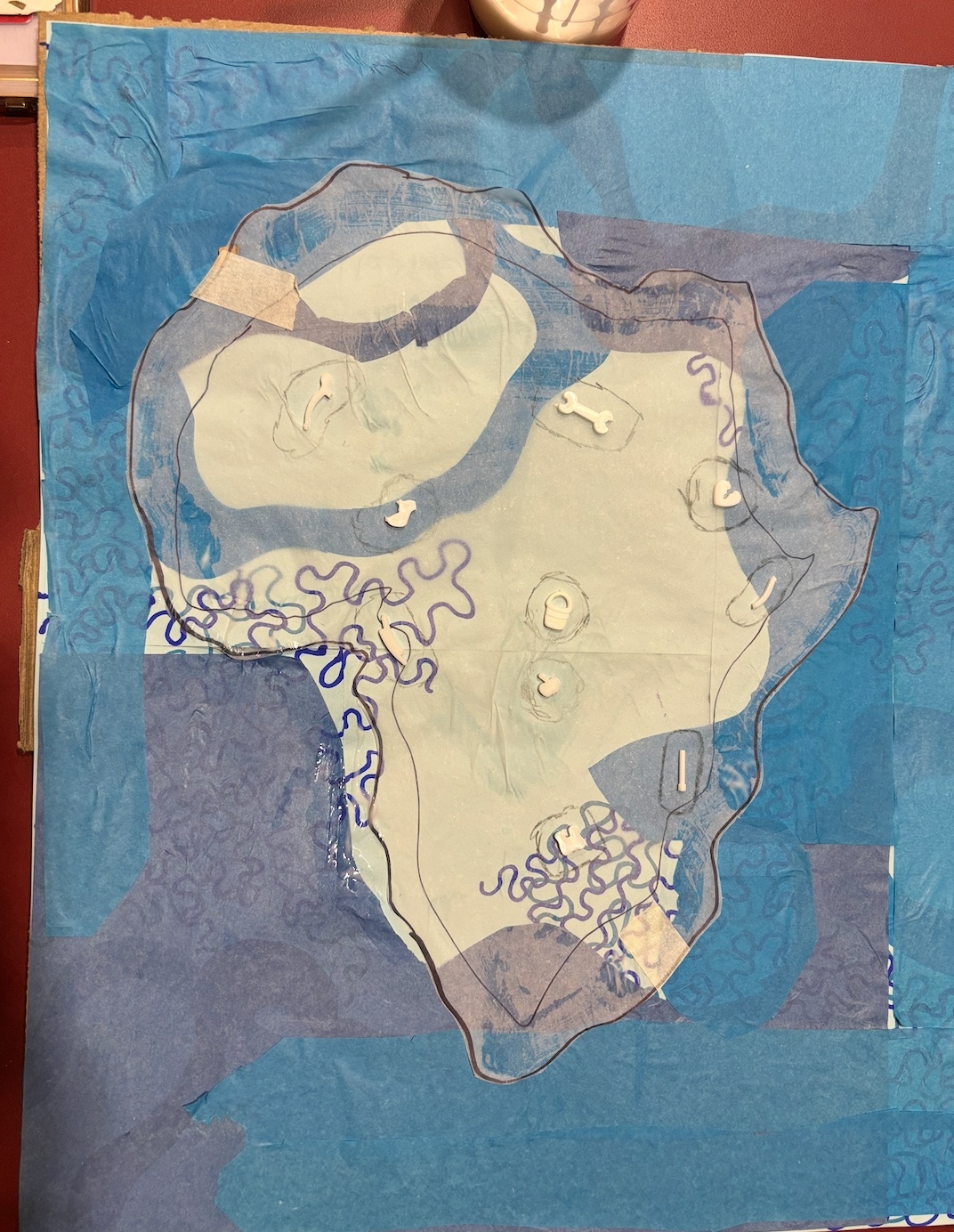
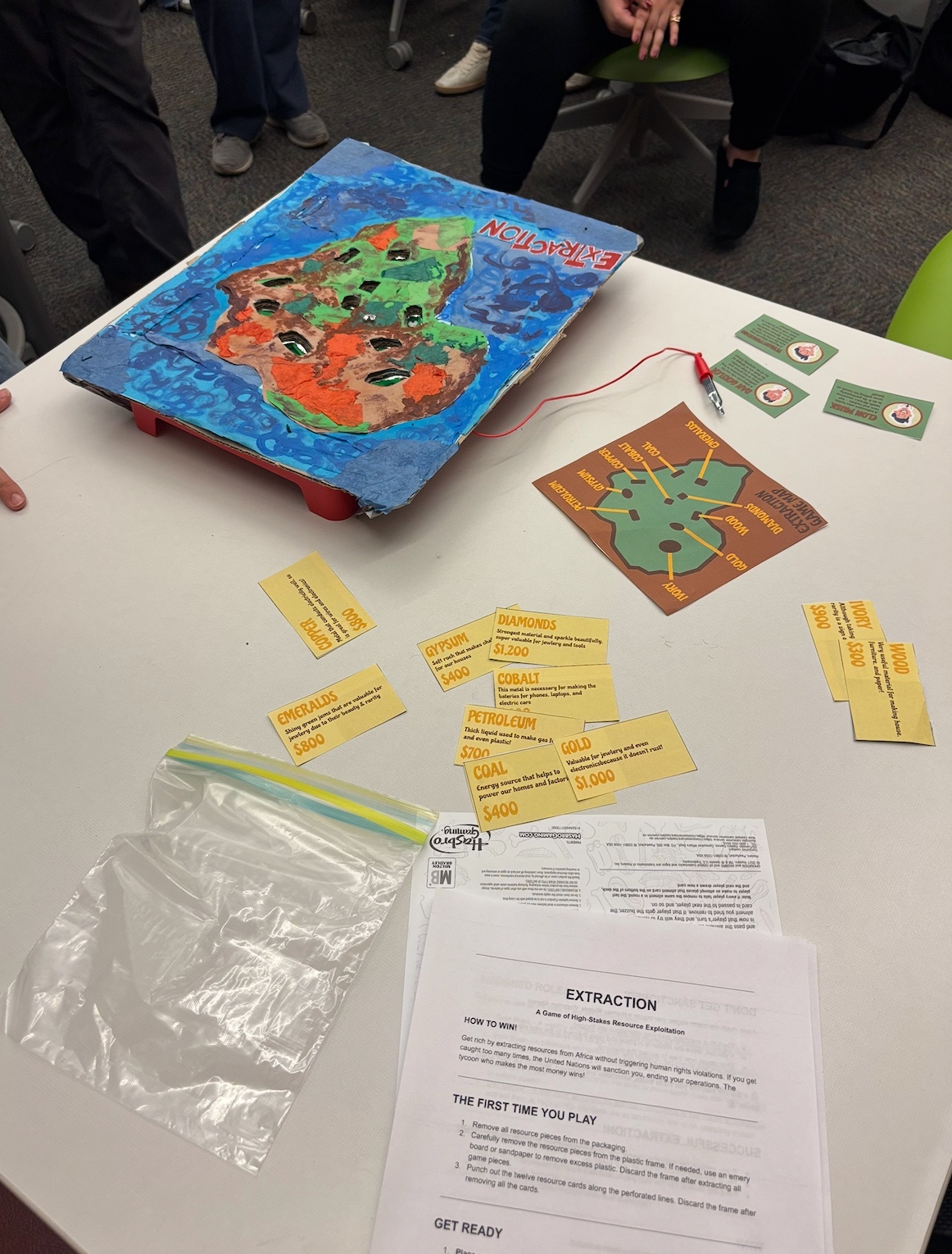
Elon Musk has somehow obtained a position of power that is almost inconceivable, and it is as if those around him are blind to the atrocities he has committed. I witnessed his rise to ridiculous power through Twitter, my first memory being when he released “RIP Harambe” on SoundCloud under the name “Emo G Records.” This was in 2019, and I was 15 – not yet aware of who Elon Musk was, where he came from, and what he was capable of doing. In my childish nature, I thought he was “cool,” seeing him smoking weed on The Joe Rogan Experience (BBC 2018), being someone of a respectable position to do such casual things. From then on, I followed what he was doing on social media: some new SpaceX rocket, some new Tesla car, perhaps a flamethrower that could be bought by the general public. But slowly, I started to see articles surrounding his name. These articles first consisted of how he gained his wealth but led me to some more controversial topics: some whispers of Errol Musk, Elon’s father, and his emerald mines in Africa (Business Insider 2023). Then there was Tesla using child labor to mine cobalt in Africa (Reuters 2024). Sometimes there were less-serious accusations, but still, they made me curious and wary of what Elon Musk would say or do: cryptocurrency and Tesla stock market manipulation (CNBC 2021).

In this day and age, Elon Musk is heavily involved in the U.S. government and, in my opinion, garners more attention than the newly elected President Donald Trump. Because Musk is gaining so much attention, now being a prominent name in government, the artificial intelligence race, and space technology, I believe most of the public’s attention is being diverted from his alleged atrocities – particularly regarding the exploitation of Africa.

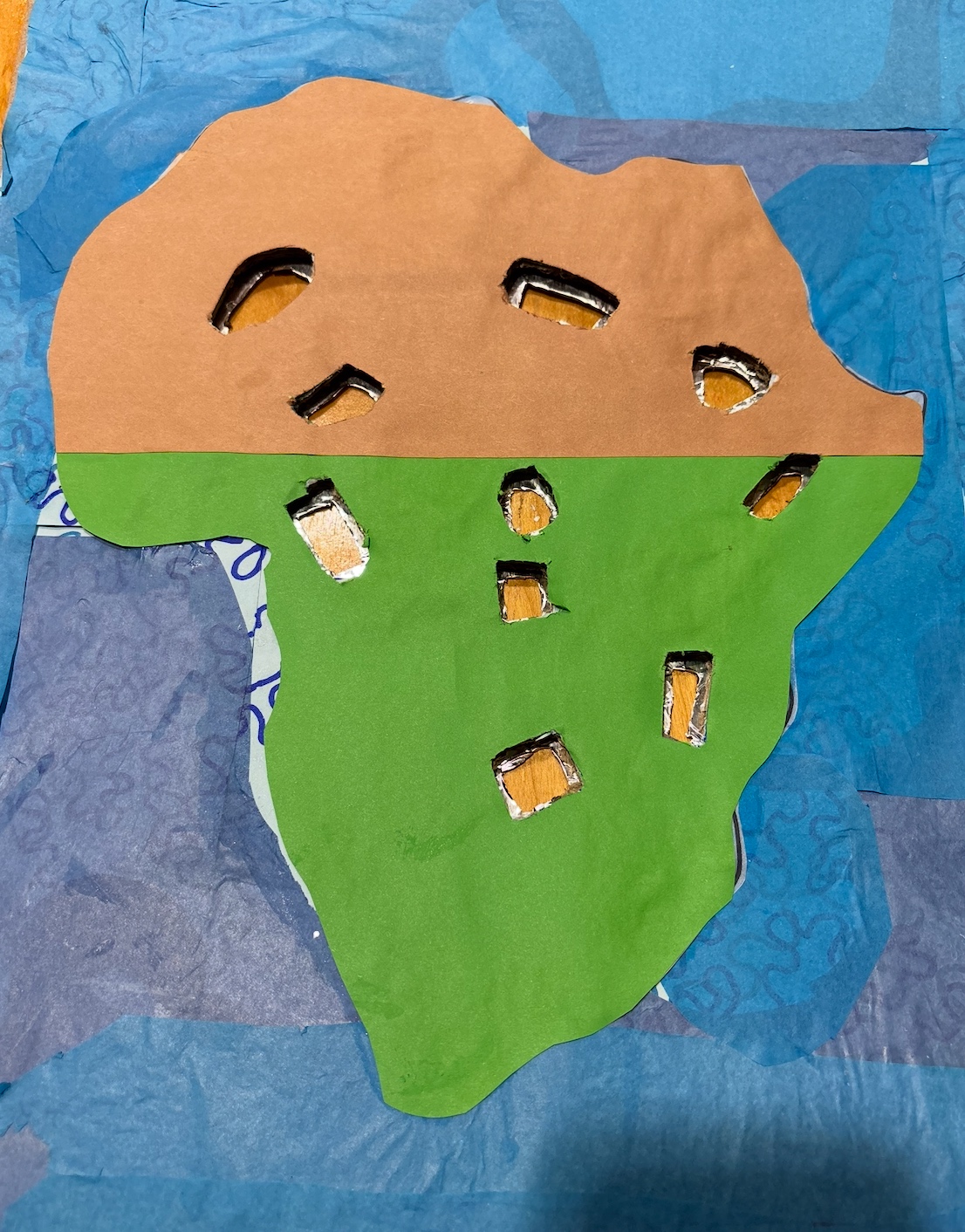
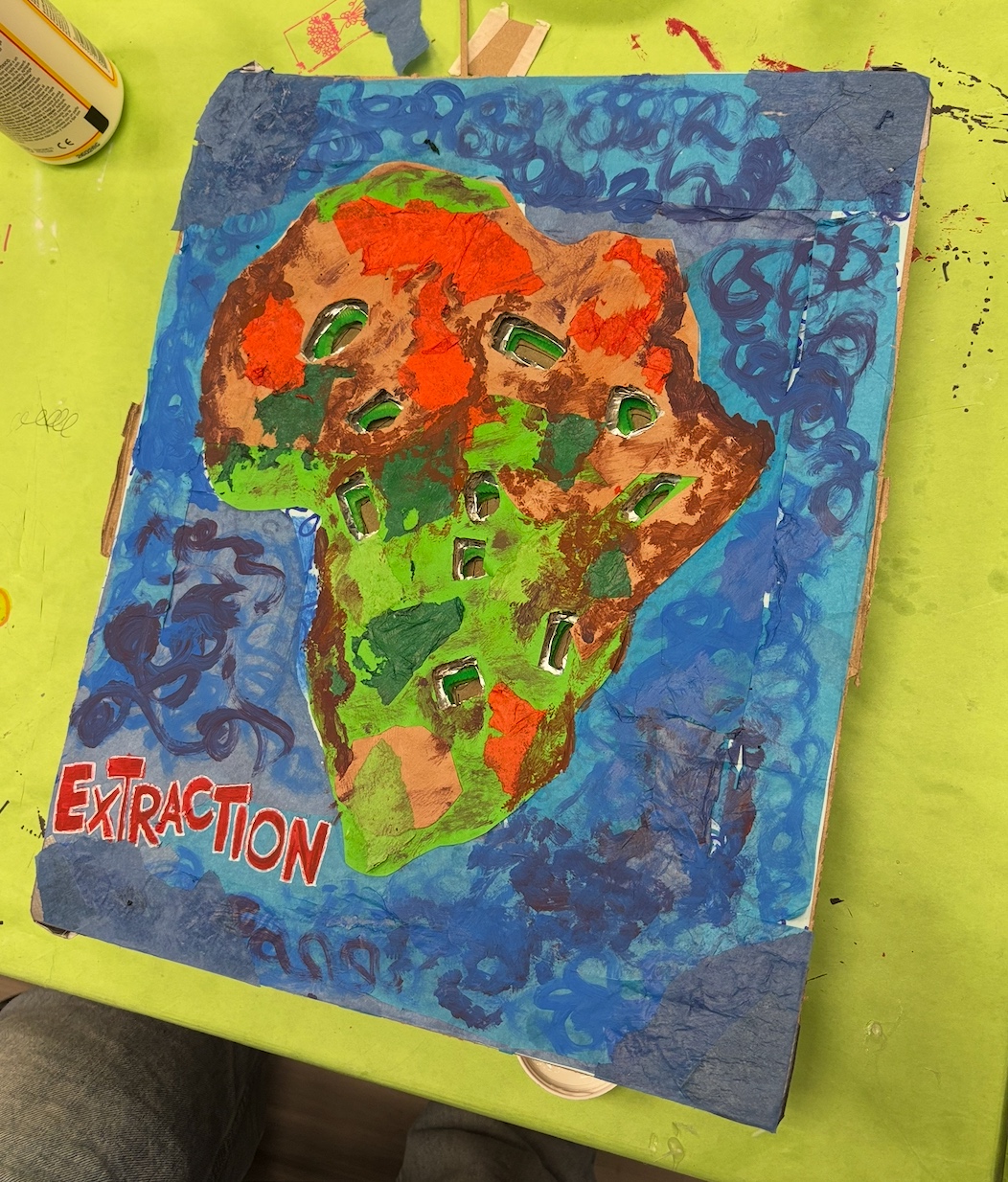
My reflection on the evolution of Elon Musk plays quite a large role in this hack, particularly the fact that Elon Musk is a mere sample of the exploitation of Africa’s resources. This is especially true when considering a third of all the minerals of the world are in Africa alone, the history of resource exploitation runs deep. Taking a closer look, we found that Africa has been a source for numerous resources throughout history, not just minerals. These resources include seaweed, wood, oil, ivory, gypsum and rubber (National Geographic 2024). With so many resources available, there must be other businessmen attempting to take advantage of the abundance.

Our research revealed several notable members. Firstly, Errol Musk, Elon’s father, worked alongside a businessman that owned an unregistered emerald mine, and would import those emeralds during his trips overseas and have them cut in Johannesburg. He would then sell these emeralds to jewelers (Business Insider 2023).

We then found Yevgeny Prigozhin, the financier behind the Wagner Group, who established a vast security and business network in the Central African Republic (CAR) and other African countries. The U.S. Department of the Treasury imposed sanctions on companies linked to the Wagner Group in the CAR, citing their involvement in illicit gold and diamond mining, which funds the group’s paramilitary activities and destructive operations through companies like Lobaye Invest and Midas Ressources SARLU (U.S. Department of the Treasury 2023).

Next on our list was Dan Gertler, who leveraged his close ties with former Democratic Republic of the Congo (DRC) President Joseph Kabila to secure lucrative mining deals. In 2017, the U.S. Department of the Treasury sanctioned Gertler, accusing him of costing the DRC over $1.36 billion in lost revenues between 2010 and 2012 through these deals (Atlantic Council 2023). These mining deals granted him access to vast reserves of cobalt, copper, and other minerals.

After identifying the driving motivation for our hack, we began to develop its identity, and our strategy for applying it to the original game, Operation. This idea of application took a lot of inspiration from Mary Flanagan’s Critical Play: Radical Game Design, and her discussion of Redressing or Reskinning. Flanagan describes how players historically transformed toys by altering their appearance to explore forbidden or serious themes – such as children dressing dolls in mourning clothes for funeral play. Similarly, we saw an opportunity to maintain Operation’s core mechanics while transforming its visual and thematic elements to address more serious issues. Our game “Extraction” attempts to put the player into the shoes of a tycoon, so to speak. We gamify the process of extracting resources from Africa to mirror how all of these various business tycoons view their business and resource extraction as a game.

Building on Mary Flanagan’s concept of Critical Play, our hack aims to transform the original game’s lighthearted nature into a tool for reflection on global exploitation. The slight tweak of theme turns it into a commentary on colonialism and resource extraction, forcing a deeper engagement with the player, challenging them to consider how the seemingly innocent actions of “playing the game” can mirror exploitative practices.

Our intention was to shine light on the exploitation in Africa by recontextualizing Operation’s gameplay. I feel as if most of the public’s attention has been diverted from Musk’s atrocities when considering the exploitation of Africa, and it would be worth bringing to light other bad actors in this space.

For a brief overview of how our game works to recontextualize, instead of removing objects from a patient, players become tycoons extracting valuable resources. The buzzer now represents getting caught committing human rights violations, where three violations result in UN sanctions (game over). While the core goal remains the same – collect the most points (now profits) – it transforms a children’s game into a bit of a commentary.

We would like to note that we used ChatGPT for rewriting the instructions of ‘Extraction.’ We did this because the original instructions were quite long, so we thought it would be a better use of our time to have an artificial intelligence write out the entirety of the  instructions instead. We then went back and made edits to make sure that the instructions were still conveying the original message we intended with our game. We acknowledge the inherent problems with AI and that it is not necessarily accurate information, but we believed for writing the instructions it would not be directly presenting direct facts to our audience, instead the rules for play based on our shorter instructions for game play. 

The chat citation: “Rewrite the instructions of Operation based on this attached document where we have reskinned the game to be a commentary on resource extraction in Africa” prompt. ChatGPT, 18 Feb. version, OpenAI, 8 Mar. 2025, chat.openai.com/chat

Atlantic Council, “In a Congolese Mining Case, Biden Can Secure a Win for US Sanctions Policy in Africa,” Atlantic Council, https://www.atlanticcouncil.org/blogs/africasource/in-a-congolese-mining-case-biden-can-secure-a-win-for-us-sanctions-policy-in-africa.

BBC News, “Elon Musk Smokes Marijuana Live on Web Show,” BBC News, September 7, 2018, https://www.bbc.com/news/technology-45445554

Business Insider, “Elon Musk’s Father Errol Never Owned Emerald Mine, Says Musk,” Business Insider, September 2023, https://www.businessinsider.com/elon-musk-father-errol-never-owned-emerald-mine-telling-truth-2023-9.

CNBC, “Elon Musk’s Tweets Are Moving Markets,” CNBC, January 29, 2021, https://www.cnbc.com/2021/01/29/elon-musks-tweets-are-moving-markets.html.

Reuters, “US Appeals Court Dismisses Child Labor Case Against Tech Companies,” Reuters, March 5, 2024, https://www.reuters.com/legal/us-appeals-court-dismisses-child-labor-case-against-tech-companies-2024-03-05/.

Mary Flanagan, Critical Play: Radical Game Design (2009)

National Geographic, “Africa: Resources,” National Geographic Education, https://education.nationalgeographic.org/resource/africa-resources/.

SoundCloud, “Rip Harambe,” SoundCloud, https://soundcloud.com/user-209448905/rip-harambe1.

U.S. Department of the Treasury, “Press Release: Treasury Announces New Sanctions,” U.S. Department of the Treasury, https://home.treasury.gov/news/press-releases/jy2384.