Both the Gravesites and Websites and Beyond the Grave pieces make it apparent that online profiles and our digital lives are going to be yet another space that we will need to figure out what to do with after we die. But what happens if technology becomes so advanced that our digital profiles allow us to “live” on beyond our body’s lifetime? It may sound hypothetical, but if you combine the technology from “Be Right Back” with another Black Mirror episode that I analyzed in my Snapchat Horror Story, “The Entire History of You,” it suddenly seems like a question we need to confront now.
In “Be Right Back,” we see Martha struggle with how to deal with Ash’s death, and while she’s able to preserve some of his memory through chat-bots and the grow-in-a-bath-body, the technology falls short when it can’t figure out how Ash would have behaved. In “The Entire History of You,” a device implanted in the brain records every single memory, even from birth if parents decide to give their baby one (which happens). If you combined these two technologies – persona replication based on digital information with an entire digital log of how the individual behaved and what they said and how they said it etc. – then it seems that you could make a perfect replica of a dead person. Pair this with some good AI and off your digital persona goes for eternity.
A possibility of what our future “Graves” could look like, i.e. a lot of hard drives. Courtesy of Digital Buzz Blog
The ethics of such technology are obviously questionable, and thus the entire series of Black Mirror, but both the series and the pieces we’ve read demand that we start to explore how technology can handle death in more nuanced ways, and these episodes give us one take on how that could look. And while it may seem like a big can of worms, the possibility that the digital place will be just another space to curate through a will and testament makes the problem seem a bit less overwhelming. I at least, would rather decide for myself.
Deaths on the internet have a funny relationship with time. A Facebook page of someone who died is a snapshot of their life right before they died – their existing profile picture that captures their pre-death self, the posts from friends and family perhaps mixed with the deceased’s own status updates. Year after year, if no one changes the content, this page will look the same. It will not look older with each passing year, nor will it be changed by the passing of the seasons. In some ways, an online memorial is a time capsule that preserves the moment of the death just as it was when it first happened, so visiting the site again could seem almost as if the person just died.
Something important is lost in preserving this person’s memory when time is put aside, however. A gravestone weathers with each passing year, the edges erode, the letters fade. A gravestone shows a history, a context of a time and a place that a website is unable to transmit to the viewer. While the Brubaker et al. article argues that “Digital content can continue to persist without such decay, thereby expanding the reach of mourning and memorializing” (158), I believe that regardless for how long the site stays open, without the decay, the concept of time is warped.
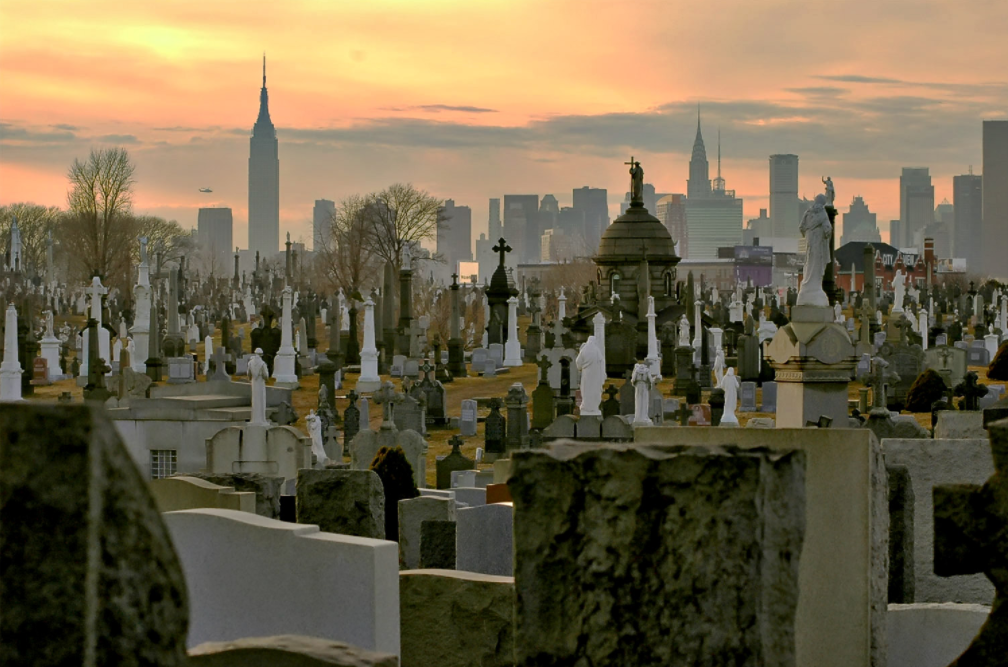
A cemetery of old and new gravestones in Queens, New York. Photo courtesy of Wikipedia
Additionally, the online memorial sites will never be able to replicate the sense of place that accompanies that passage of time in a physical location. At a cemetery, you walk by the other graves, feel the somber atmosphere, experience the passage of time in each season you go, leave tokens on the grave as memories, and feel the emotions more viscerally than through a computer screen. Immersed in place and time, the gravesite, I would argue, has a stronger emotional pull and generates a more powerful connection than a site lost in the endless pages of the internet.
One of the critical features within the post-modern horror genre its ability to enhance all five senses. The voice, for example, enables the audience to not only hear the fear but connect to the speaker on an emotional level. In a sense, the voice becomes a body, which then becomes a whole entity. For the following analysis, I observe two different mediums that rely on one or more than one of the five senses to generate their respective stories: a horror fiction podcast, “The NoSleep Podcast” and a horror film, Hush. Both forms of media use the senses (or lack thereof) to make distinct statements about disability, mental illness, and women in peril.
The NoSleep Podcast: “He Won’t Stop Tapping” (2017)
The “NoSleep Podcast” is a space for amateur horror writers to broadcast their work. Stories are told in the first person which enables the listener to experience the action firsthand. All of the podcasts begin with a specific introduction, combining dark and harsh music with phrases such as, “We’re here to frighten you and mess with your head,” “You’re here because that’s what you want,” and “Join us as the sleepless hours take a pass” to welcome the listener into uncharted territory. Within one of the podcast’s series devoted to survivors, searchers, and strangers is a narrative written by Collette Akile entitled, “He Won’t Stop Tapping.” This is a story about an unnamed young woman who lives alone in a room in an attic that has only one window. She claims she is wary of loud noises, prone to sudden bouts of fear, and has a history of mental illness. The story examines the woman’s struggle as she becomes aware of a mysterious tapping on her bedroom window, which she refuses to investigate because she is convinced that her mind is playing tricks on her. When she finally decides to peer out of her window, she discovers a man perched on her slanted roof. She realizes that the sound is not tapping, but instead, it is the clacking of the man’s teeth. The story then follows her as she begs her male friend to spend the night to assuage her fears and to listen for the tapping to confirm the sound’s existence. The two hear the tapping, but when her friend goes to take a photograph of its source, the man on the roof escapes. The next morning, the narrator’s friend goes missing, which might indicate that he was killed by the mysterious man. The podcast’s final line, “I left my window unlatched” leaves the listener uncertain about the narrator’s fate.
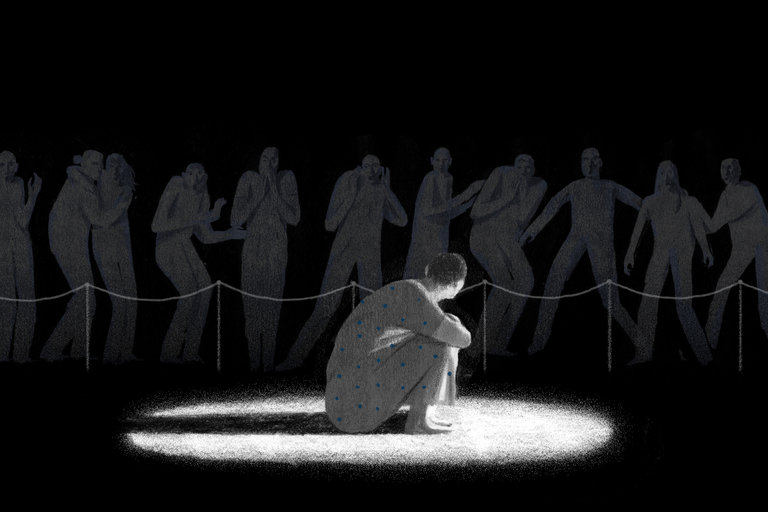
The feeling of isolation is largely associated with mental illness. Find source here.
One of the main areas of focus in the podcast is the concept of a mentally ill woman in peril. The narrator repeatedly admits that she feels like she is being “watched” or “hunted” and notes that she keeps a knife beside her bed just in case she needs to defend herself against an intruder. When she thinks about the threats that might lurk in the outside world, she repeats the mantra, “It’s not real it’s in your head” to herself. Instead of creating distance from the audience, the listener becomes trapped inside the head of the narrator. Even though the narrator is convinced that the tapping sound is just her mind playing tricks on her, we are aware that her mental illness plays a role in the severity of the problem. In his opinion piece in the New York Times entitled, “Mental Illness Is Not a Horror Show,” Andrew Solomon writes, “It’s the proximity of mental illness rather than its obscurity that makes it so scary” (Solomon). The NoSleep Podcast invites the listener to tackle mental illness head on, which contributes to a heightened level of fear as it is unclear whether what is being presented is imagined or real. The narrator also tries to normalize her mental illness, commenting that her mother has also displayed signs of paranoia and anxiety and that her therapist makes her write about what is going on in her life. This, paired with a surprising level of self-awareness, makes the events seem more realistic, thereby lulling the listener into a false sense of security. The narrator admits, “My paranoia saved me. I also know it killed someone.” This level of self-awareness enables the narrator to show the listener that she is aware of the action that transpires. However, the fact that she leaks information such as, “I also know it killed someone” before we actually see who is killed and why makes the content more frightening because we experience the scare more than once.
It is crucial to examine how womanhood plays a specific role in the construction and outcome of this story. The tale is told through the eyes of a female, thereby providing her with control over the story and a sense of power over any other character. In a section entitled, “And Then She Killed Him…Women and Violence in the Slasher Film” within her book, Recreational Terror: Women and the Pleasures of Horror Film Viewing, Isabel Pinedo writes, “The surviving female’s appropriation of the gaze enables her to use violence to defend herself effectively and to drive the narrative forward. We see him from her point of view.” (Pinedo 76). The only information we receive about the man on the roof is what the narrator chooses to tell us, which forces us to trust the speaker because we see the story through her eyes. Yet, she feels the need to question whether or not the tapping was in her head and begs her male friend to spend the night. This indirectly aligns masculinity with intelligence and control and takes away the feminine power that was given to the narrator from the beginning of the story. In the end, the man outside her window does not choose to attack her, but instead he decides to kill her male friend. This gives the power back to the female but strengthens the idea that the podcast focuses on an unbalanced sense of who is in control to confuse and frighten the listener.
The podcast also utilizes real life sounds such as the moving of bedcovers, the noise coming from a television show, and running water from a sink to create a sense of familiarity and security. The tapping also creates a metronomic sound, which is soothing to the ears of the audience. This contrasts with the lack of security the narrator feels when discussing the police. She claims that they would not be able to do much with little evidence about the man sitting on the roof and is convinced that because the sound is in her head, the police would not believe her. When the narrator’s friend goes missing, the police tell her that there is nothing they can do unless he has been gone for twenty-four hours, as he is not considered “missing” until then. As it turns out, according to Uslegal.com, if a person is missing and believed to be in danger, there “is no twenty-four hour waiting period. The law enforcement agency will immediately enter information about the missing person into the Missing Person’s database and the National Crime Information Center’s Missing Person File.” Although this is a horror fiction podcast, the distortion of real life facts is used to make the the listener feel vulnerable and unprotected. Therefore, our sense of security is violated because the police cannot make any immediate progress within the story.
Finally, the use of technology skillfully frames the narrative and makes the actions that occur more relatable. For instance, the narrator texts her friends in the middle of the night when she feels like someone is watching her and we hear her typing on her keyboard as she composes the text messages. Additionally, when the narrator’s male friend hears the tapping, he attempts to take a picture of the man outside on the roof, but before he is able to the sound cuts off and the man disappears. In a sense, the failure of technology adds to the terror because we are conditioned to believe that technology should always work. The uncertainty over technology also enhances what Pinedo writes in another piece within her book entitled, “Recreational Terror: Postmodern Elements of the Contemporary Horror Film” about the open ending. She claims, “in the end, the inefficacy of human action and the repudiation of narrative closure combine to produce various forms of the open ending” (Pinedo, 19). The open ending and our uncertainty about the fate of the narrator allows the listener to control how the story should end.
The trailer for Hush on Netflix.
Hush (2016):
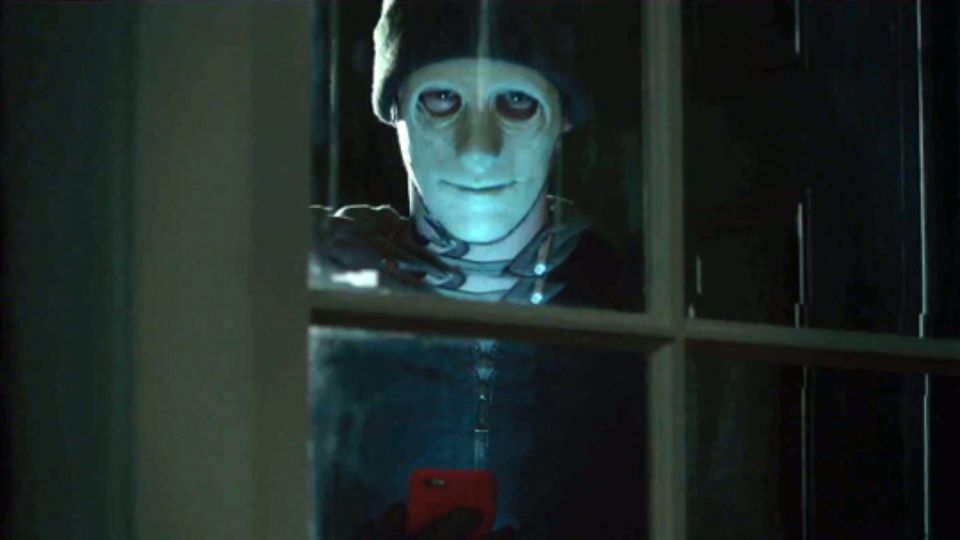
Hush, directed and edited by Mike Flanagan, is a horror film that was released in April 2016 on Netflix. It tells the story of Maddie Young, a deaf and mute author who lives alone in an isolated house in the woods. After a seemingly normal and relaxing evening, Maddie’s friend Sarah is murdered by a masked, psychotic killer, with ambiguous motives outside her kitchen window. Maddie cannot hear any of this and continues with her nightly routine. Once Sarah’s masked killer discovers Maddie’s disability, he’s not content to merely take advantage of the situation and slay her; instead he breaks into her house, takes her phone, and begins taking photographs of her and sends them to her laptop to make her aware of his presence. When Maddie realizes she is being stalked, she locks herself inside the house. The film uses sparse dialogue and muted volume to place the viewer in Maddie’s shoes, and uses piercing and dramatic sounds to reflect the danger of the situation. Maddie makes several failed attempts to escape her house and eventually ends up stabbing the man to death. This film is similar in form and content to “Wait Until Dark” (1967) starring Audrey Hepburn, who plays a blind woman who unwittingly comes into possession of a heroin-filled doll. As a result, she finds herself harassed by three men who enter her home and threaten to stab and burn her alive if she does not give up the goods. The disabled woman in peril is a common trope in horror, but the fact that Maddie is victorious at the end of the film illuminates the idea that able-bodies do not necessarily equate invincibility.
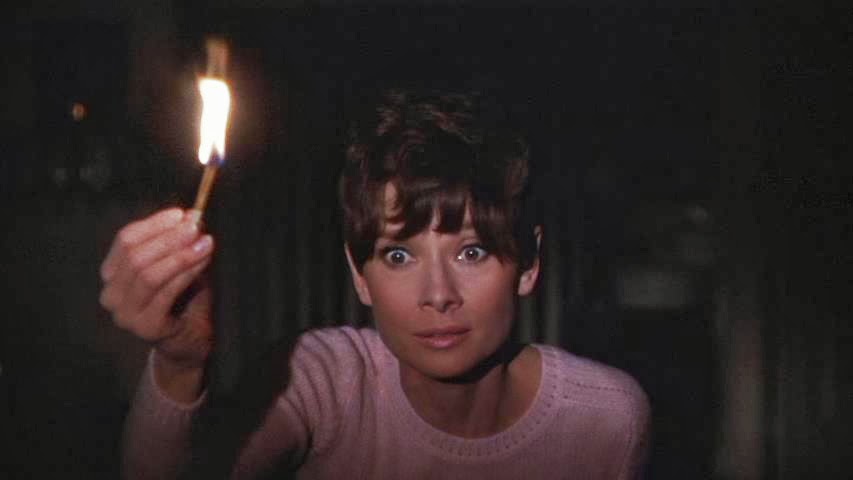
Audrey Hepburn in “Wait Until Dark” (1967). Find source here.
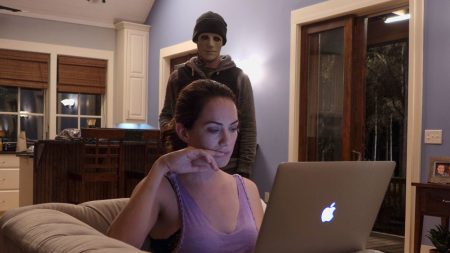
This film takes a close look at the power of disability and the testing of its limitations. Even though Maddie cannot hear or speak, she utilizes the power of her mind and pen to become a famous and successful young author. It is clear that she remains in close contact with her friends and family and lives happily alone. The film begins with loud sounds coming from Maddie’s kitchen as she makes dinner — the chopping of onions, the sizzling of asparagus cooking in oil, and the placing of marinated meat into the oven. This aligns her disabled body with normal tasks involved in the preparation of a meal. Her body is also put in conversation with the technology that she surrounds herself with. Technology provides her with a voice and serves as one of the ways she can communicate with the people around her. She texts her friend Sarah on her cell-phone, composes the end to her next novel on her laptop, and video-chats her sister. Even though Maddie is disabled, she appears able-bodied as she performs everyday life activities with ease. This, in turn, creates an aura of normalcy around her. However, when the masked man learns of her disability, he decides to test it. He taps on the window, scratches his knife across the glass, and stands behind Maddie without her knowing. This gives him the upper hand in the situation and brings powerlessness to Maddie’s disability. As Angela Smith writes in her book, “The Hideous Progeny: Disability, Eugenics, and Classic Horror Cinema,” “cultural narratives often use disability to generate a plot that ultimately reasserts and values normalcy” (Smith 5). Although we see instances where Maddie’s disability does not affect her ability to engage in “normal” tasks, the fact that the masked man can exert control over her because of her impairments provides him with more power at times. In the end, however, Maddie uses her disability to her advantage as she is forced to devise creative solutions regarding how to escape her house. Before she kills the masked man, she sprays insecticide in his eyes and blasts a fire alarm in his ears, thereby temporarily blinding and deafening him, which essentially evens the playing field. Because Maddie was afflicted with sense-crippling bronchial meningitis when she was thirteen she is caught between two worlds — unable to physically hear or talk, but still able to remember those features which enables her to conjure speech in her visions and dreams. Even though shifts between normalcy and disability are present, Maddie’s disability ultimately contributes to her victory.
The masked man tests Maddie’s disability by standing behind her. Find source here.
In her piece “…And Then She Killed Him: Women and Violence in the Slasher Film,” Pinedo argues that postmodern horror film develops a routine in which it stages the spectacle of the ruined body, particularly the female body, which calls for feminist analysis. She states that her discussion of the horror film is motivated by a “desire to disrupt the facile assumptions that the genre does not speak to women but only about them, and that it does this in a degrading manner” (Pinedo 70). I would argue, however, that Hush speaks to and about women in the opposite way as it aligns a disabled woman with power. Some could argue that the inability for Maddie to speak could represent the silencing of women in society, but it also reflects the ability for a woman to face and overcome hardships in spite of numerous setbacks. In her book, “Film, Horror, and the Body Fantastic,” Linda Bradley admits idea that, “the discourse of feminism has given a new language to the horror film” and that many overlook the trend of “the male body becoming the object of focalization or invasion” in horror films (Bradley 104, 105). This idea is illustrated in Hush, as Maddie relies on herself to fight all of the battles and to destroy the male body.
The masked man steals Maddie’s phone, but that does not stop her from fighting back. Find source here.
The horror movie also explores explicit threats to the body, which substantiates what Pinedo writes in her article about the postmodern elements of the contemporary horror film, that “terror is the threat to the body and the concomitant sense that harm could happen to you” (Pinedo 26). The fact that we are shown blood, guts, and gore makes everything seem more human. During one of Maddie’s failed attempts to escape the house, the masked killer fires a crossbow bolt into her leg, leading her to bleed profusely and making it impossible for her to run. Flanagan spends a great deal of time focusing on the after effects of this injury so the audience empathize with her situation. Maddie’s wound is so severe that she is at risk of bleeding out and as a result, experiences many hallucination and visions. Therefore, the threat to the body is equated with a limited amount of time to survive. Maddie recognizes that time is her enemy and decides that the only way to survive is to murder the intruder. If it were not for the pressing nature of the severity of her wound, Maddie may have not made this decision. The harm to her body provides her with the agency she needs to move forward with her plan.
The horror fiction podcast and the horror film focus on mentally ill and disabled women in peril. Although both end with the female protagonist in control of the story, they arrive at this point through the use of different and complementary techniques. First, the film and the podcast highlight the importance in the role of the audience as consumers of horror. In the podcast, we are unable to see what the setting, narrator, or killer look like, and as a result, must create a mental image of everything based on the descriptors we hear. Similarly, in the movie, we are unable to hear any of Maddie’s thoughts because we are placed within the confines of how she views the world because of her disability. In a sense, we have to think for her and devise strategies on our own, which directly incorporates the audience into the action. The two mediums also skillfully utilize silence and sound into the respective stories. The moments of silence in Hush contrast with the heightened audio when violence occurs, which makes the audience feel trapped between two different worlds. Likewise, melodious yet mysterious sound of the tapping in the podcast creates both a sense of security and dread for the listener. Additionally, the two mediums explore how technology can serve as an impediment to the progression of a story. In Hush, all Maddie needed was her phone to call the police, but the masked man stole it from her. In the podcast, the narrator’s friend goes to snap a photograph of the man on the roof, but the man escapes from the shot. Technology could have easily saved the day in both narratives, but it does not, which draws on the importance of the protagonist as the sole force in control of the action. Although these mediums differ in form, they illuminate the power of the woman in post-modern horror narratives despite the labels and weaknesses she may given at the outset. As a result, the woman in peril becomes the woman in power. These two sources of media compliment each other in the ways they ascribe power to the female figure and serve as models for contemporary representations of women in horror.
Works Cited:
Akile, Collette. “He Won’t Stop Tapping.” NoSleep Podcast, 15 January 2017. Web 4 March 2017.
Badley, Linda. Film,Horror, and the Body Fantastic. Westport, CT: Greenwood Press, 1995. Print.
Hush. Directed by Mike Flanagan. Intrepid Productions, 2016. Netflix.
Pinedo, Isabel. Recreational Terror: Women and the Pleasures of Horror Film Viewing. “Recreational Terror: Postmodern Elements of the Contemporary Horror Film.” Journal of Film and Video. 17-31. Print.
Pinedo, Isabel. Recreational Terror: Women and the Pleasures of Horror Film Viewing. “…And Then She Killed Him: Women and Violence in the Slasher Film.” New York: State University of New York Press, 1997. 69-97. Print.
Smith, Angela M. “Introduction.” Hideous Progeny: Disability, Eugenics, and Classic Horror Cinema. New York: Columbia UP, 2011. 1-33. Print.
Just a quick mention on embalming: check out Jessica Mitford’s short story, Embalming Mr. Jones. I read it for an english class and still remember each excruciating detail…
It’s amazing the amount of detail we go to in order to make the dead look “decent,” even if that means that nothing inside (or out) is real.
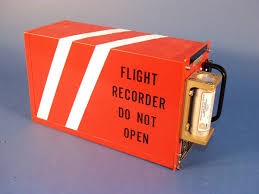
Sterne’s article focuses on the importance of phonography and how it influences everyday life. One example of this in modern times is the black box used in airplanes. The purpose of the black box is to record the conversation in the pit of an airplane, and they often used by authorities to get to the details of a situation whenever a disaster occurs (when a plane crashes, is hijacked, etc).
As you probably already noticed, the black box is not actually black, it’s orange. In fact, it’s not even a box! There are some theories as to why it got it’s name as the “black box,” but none have ever been proved. Some of these theories include:
the original design was a black box
a journalist coined the term and made it become known as a ‘black box” in the media
the only semblance of the piece remaining after a crash is a charred, black box with the recordings inside.
Additionally, it’s not even a box! It’s actually comprised of two separate parts. Check out this post for more information.
Malcolm Gladwell’s Outliers: the Story of Success provides transcripts of actual conversations that took place in the cockpit moments before a disaster. The seventh chapter of Gladwell’s work, “The Ethnic Theory of Plane Crashes,” uses these transcripts to reveal the larger cultural factors at play.
For example, the crew on Korean Air flight 801 were so restricted to the Korean culture of being respectful to a superior (in this case, the captain) that it cost them their lives. This blogeffectively summarises the chapter and provides some decent counterpoints to Gladwell’s theory.
These conversations are useful, because they help airplanes companies figure out how to train their crews effectively to prevent a given disaster.
Click herefor a link to a site titled, “Last Words,” which has the recordings of black boxes from infamous plane crashes.
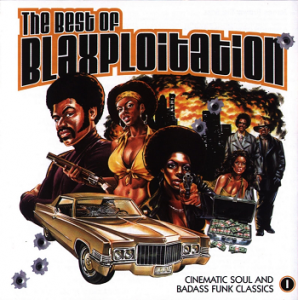
The decade of the 70s saw a sudden surge in the popularity of movies termed ‘Blaxploitation’. Usually produced, directed and starring an all black casts (except for the white villains, of course), these movies were made for urban filmgoers. Meant primarily to entertain black audiences, they increasingly became films about black justice and morality- even though a preponderance of the films’ antiheros and antiheriones were people who lived outside the law or skirted on the edges of it for personal and racial reasons. They, in short, and for all their foibles in production values, became the voice of a culture longing for true justice and acceptance on their own terms (Cook).
‘Blaxploitation‘ filmmaking contributed to the social construction of race during an era where the ideologies of black nationalism and black pride became dominant social expressions of racial identity for African Americans. These films depicted a stronger and more capable image of African Americans who triumphed over (frequently racist) white antagonists. The effect of this change on the construction of cinematic narrative was to flip the terms of the hierarchical white-black opposition (Benshoff 33).
As these movies became more popularised, both African American and white filmmakers began to create political films that intentionally critiqued the white power structure in the US at the time (Benshoff 34). This post will be exploring the ways two popular films featuring African American leads from vastly different times connect to each other through this trope.
William Crain’s Blacula (1972)
Blacula as depicted in “The Grim Adventures of Billy and Mandy” on Cartoon Network.
Blacula held an overtly political significance compared to its horror counterparts at the time, and it rose as a commercial box office success in 1972.
Blacula touches on the conventional African American experience in the 1970s. It has a direct reference to the history of slavery as well as the existence of police brutality implemented upon young African Americans. One reviewer stated, “I have . . . chosen to look upon the entire film as an effort by those responsible to show satirically the black man’s plight as a victim of white vampirism . . . Those who enjoy seeing the establishment take a whipping will be interested in the number of L.A. Police done in by this midnite creeper” (Benshoff 35).
References to Slavery
The “white vampirism” mentioned above is an explicit metaphor for slavery: “bitten by the racist Count Dracula centuries ago, the curse of vampirism becomes the lingering legacy of racism” (Benshoff 38). The white Count Dracula transforms his victim, Prince Mamuwalde, into a vampire who is forced to perpetuate this cycle of enslavement for centuries.Count Dracula gives Mamuwalde the name, Blacula, when the transformation was completed. Count Dracula robbed the prince of his name, life, and identity as a human being. This, “parallels the deculturization process of the slave industry, which denied African prisoners their families, religions, and even names,” (Benshoff 39).
Commentary on Police Brutality
Police brutality permeates throughout the movie and is directly referenced through lines such as, “Funny how so many sloppy police jobs involve black victims.” As in many blaxploitation films, “the police department here is full of racist officers, more than willing to share their racist statements with anyone who will listen,” (Hefner 66). Mamuwalde’s never turns any of his white police victims into vampires, instead he generally kills them by smashing their heads against walls. This violence intentionally acts a cry of defiance against the unjust killings of African Americans by police officers, and it resonated with the audience.
This theme is visited again in Peele’s Get Out and is especially poignant after the latest string of deaths of African Americans caused by police brutality.
Redefining the Monster
Although monstrosity in horror films has often worked to demonize difference (whether racial, sexual, or otherwise), Blacula reverses this dynamic. (Hefner 63). Instead of being seen as a monster, the vampire transforms into an agent of black pride and black power. Blacula is on a quest for revenge, and his goal is to clean up the streets. This character is used as an empowering black figure instead of a reprehensible monster, which serves as a clear break from the vampire tradition (Benshoff 37).
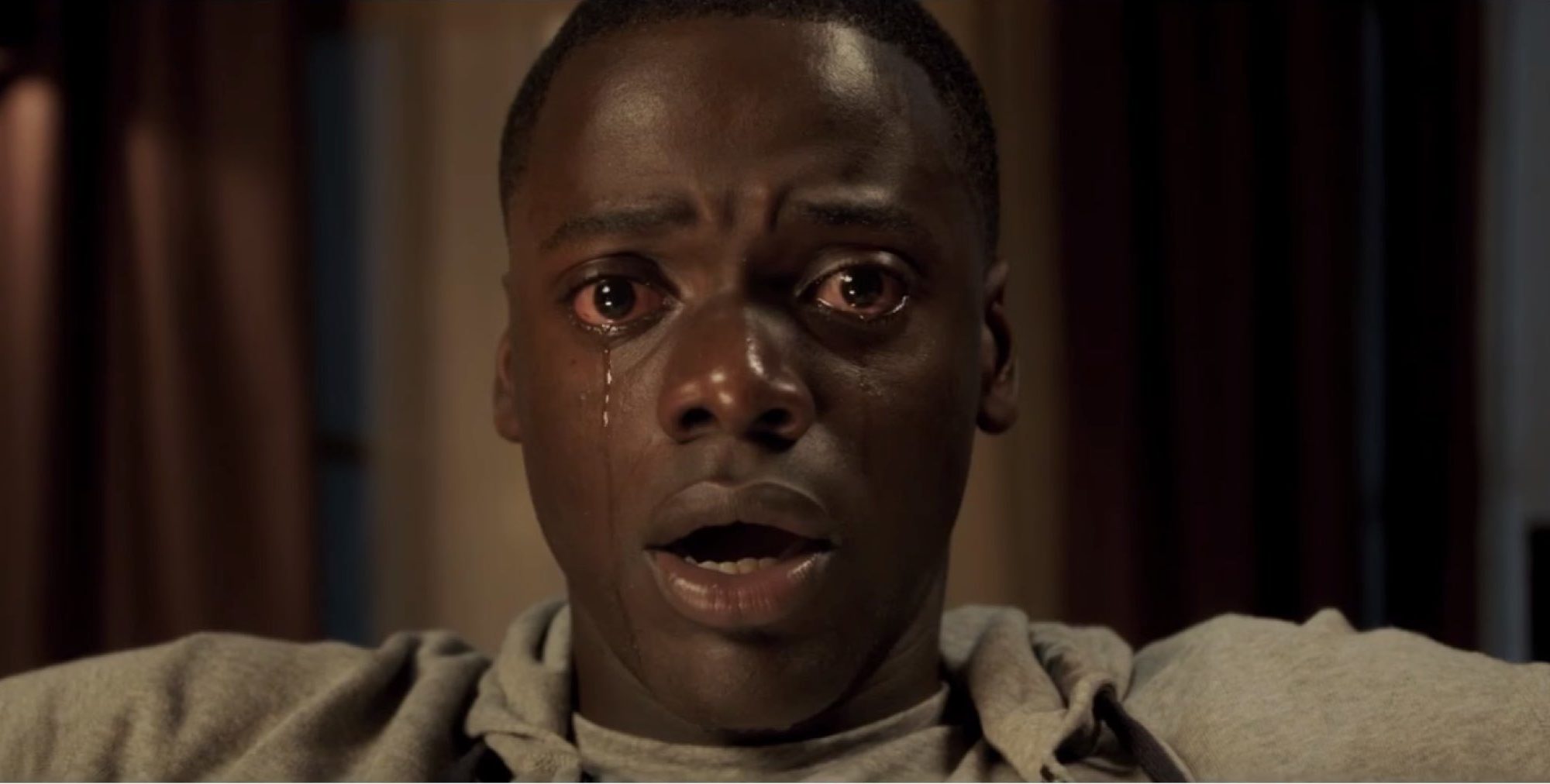
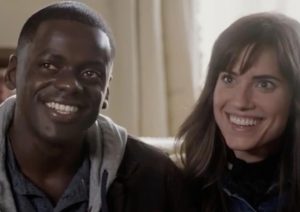
Get Out is a stinging criticism of the white liberalism that carries itself as empathetic towards blacks, but that empathy only extends as far as white control. Peele isn’t taking aim at neo-Nazis and other whites who would angrily shout the n-word. They’re a lost cause. Instead, he’s looking at those who profess their lack of racism, but only do so if they can maintain their dominance over black people in the most insidious manner possible. As Chris pointedly notes to Rose at [a] party full of white people, “Has anyone here ever met a black person that didn’t work for them?” (Goldberg)
References to Slavery
Nostalgia reeks through the provincial “Old South” setting. First of all, the setting is a plantation in the middle of nowhere. Additionally, there is an antiquated television set in the basement, elderly white folk, Bingo, and an excessive use of photography. Photos play a crucial part in this movie, but none of the photos are digital – they are all physical copies (like the ones found in the shoe box – dun dun duun!).
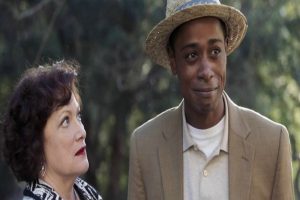
These are all examples of remediation, because they take an antiquated form of technology and transports it to modern times. The use of remediation builds an atmosphere that is reminiscent of the “Old South,” and the pervasiveness of microagressions along with the presence of elderly white people builds on top of the anxiousness of the setting. It’s almost as if the audience is being transported to another era. The way that the characters are dressed is not contemporary (spoiler: Logan, pictured below, has been brainwashed and was formerly known as a street-wise artist named Andre), and the old fashioned etiquette and setting feels both familiar and unsettling. This becomes especially true when we learn that there are two African Americans working on the house grounds. This is a direct reference to slavery, and it is brought up by the owner of the house, Dean, who essentially tells Chris, “I know it looks bad… white land owners and black workers… but we’re not racist and it’s not what you think.”
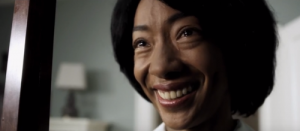
Peele uses a clever tactic to reveal how African Americans are being subjugated to conform to a greater white power structure in modern day society. The two African American workers, Georgina and Walter, are extremely uncanny. Although they are all smiles, there is a real fear and sense of resentment and hostility hiding beneath their bright demeanours.
Time for a few more spoilers…
The family uses a ploy to capture African Americans and take their bodies. Literally, the father, a neurosurgeon, takes the consciousness of an elderly (usually disabled) white person and puts it into the body of an African American. All of the microagressions Chris faced revolved around his bodies act as a direct reference to the way society views black bodies – especially male black bodies – as sexually viable, athletic, capable, and exotic, which is exploited by this film. Why use black bodies as opposed to laser-shooting robots, young white athletes, or awesome chimera hybrids? Why black people?
My answer to that question is because African Americans, along with other marginalized communities, are still being treated as second class citizens. This film serves as a commentary on white power in a supposedly “enlightened” society. Although we understand that racism and prejudice are wrong, these long established views of African Americans continue to be held by the ruling upper (white) class.
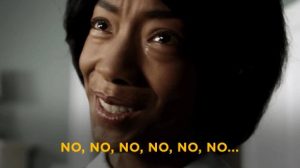
One moment that stands out is a brief interaction between Chris and Georgina, the housekeeper. Chris runs upstairs to escape the oppressive party and is confronted by Georgina. When Georgina asked why Chris is in the room, he replies, “When there’s too many white people I get nervous.” Suddenly, Georgina’s smiley face breaks down. Georgina struggles to refrain from crying and tries to soothe Chris by saying, “No, no, no, no, no.”
She proceeds to tell Chris, “That’s not my experience/ They’re so good to us/ They treat us like family.”This is obviously a lie, because the amount of sheer distress Georgina feels directly contradicts the statements coming out of her mouth.
Georgina is actually one of Rose’s ex-lovers who was lured into the family home, brainwashed, and now inhabited by Rose’s deceased grandmother. This dual personality represents the double consciousness that African Americans hold as they try to reconcile their history in a white-dominated space. “Double consciousness” was coined by W.E.B Dubois and is a term that describes the internal conflict experienced by subordinated groups in an oppressive society.
Commentary on Police Brutality
Rose and Chris are pulled over by a cop in the beginning, and the cop treats Chris as if he is a criminal. Luckily, Rose stands up for Chris and points out the cop’s racist actions (he asked for Chris’s driver’s license even though Rose was the one who was speeding). This interaction is a direct critique on the police department in the US, who is often criticised for being racially biased against African American men.
It’s not the police, but the TSA, who come to the rescue.
I’ve never heard an audience clap and cheer as loud as they did when Rod, Chris’s TSA best friend, stepped out of what we assumed to be a police vehicle in the final scene. Rose is lying on the ground with a gunshot wound to the stomach pleading for help. This is a historical reference to stereotype of the white female victim vs. black male perpetrator. The white female was historically viewed as passive and innocent, while the black male was viewed as sexually aggressive and corrupt. Historically, even if there was no evidence of rape or sexual assault, black men were routinely tried and even lynched for interacting with white women under the assumption that they were a danger to white women. Here, the story twists this stereotype on its head because it was Rose who was chasing Chris with a shotgun. Chris managed to get the gun from her and take her out instead. Suddenly, what looks like a police car comes onto the scene and the audience collectively recoils and gasps, “Nooooooo!” We all knew what was about to happen – Chris was going to be arrested and tried for murder, and no one was going to believe his story about Rose’s twisted family. That’s why when Rod stepped out of the car, the audience cheered with relief and joy (he steals the scene with his sense of humour every single time!).
Redefining the Other
Get Out draws on the visceral experience of being objectified or colonized by another consciousness (Wilkinson).
There is a presence of hyper mediation throughout the film, which is accomplished by changing the point of view to from the objective cinema camera lens to Chris’s photographic camera lens. During the (surprise!) reunion party where all of Rose’s elderly relatives come to the house, Chris is faced with micro aggression after micro aggression on comments on his physical features, genetic build, and bodily capabilities. Chris is paraded about like a spectacle. Chris, in his own way, turns Rose’s family into a spectacle. His camera acts as a tool for hyper mediation, and the audience gets to see through Chris’s point of view. Through the camera lens, we see Georgina waiting for Missy’s next instruction. We also see Dean and a crowd of his relatives pointing towards Chris, as he tries to take a snap shot of them.
Dean pointing towards Chris during the party scene.
They eagerly try to lure him over, but Chris looks away and pretends not to notice. Suddenly, the camera lens is gone and the scene breaks from Chris’s point of view. As he rushes up the stairs to Rose’s bedroom for air, the chatter dies down and everyone turns to watch him leave.
Although Chris is not redefining the vampire, he is redefining the role of African American men in media. He is a genuinely nice guy, a gifted photographer, and a respectable person. He is not a thug, a villain, or an ex-convict. He is just an average guy with no ill-intentions at all. He isn’t the monster in this story, the family is.
Technology
Technology plays a critical role in the movie. For example, Chris’s phone is his only connection to the outside world. He uses the phone to talk to his best friend, Rod, and joke about the odd situation he is in. Strangely – whenever Chris charges the phone, someone else comes and unplugs it.
Additionally, the hypnosis that Logan, Walter, and Georgina are under is reversible by the flash setting on Chris’s phone. When Chris accidentally snaps a photo while trying to videotape Logan’s odd behaviour, the flash goes off and Logan breaks out of his spell. With a stream of blood running down his nose, Logan screams at Chris to, “Get out!”
Redefining a Community through Media
What do these films accomplish? Both box-office hits, these two films redefine the role of African American men and act as a tool for social commentary in a traditionally white space. They each critique the white power structure and serve to remind the audience, symbolically, the plight African Americans have and continue to take. Although they were written with a significant time gap in-between, they tackle similar issues including police brutality and African American identity.
Works Cited
Benshoff, Harry M. “Blaxploitation Horror Films: Generic Reappropriation or Reinscription?” Cinema Journal, vol. 39, no. 2, 2000, pp. 31–50.
Blacula. Dir. William Crain. American International Pictures, 25 Aug. 1975.
Cook, Nickolas. “Top 13: Best of Blaxploitation Horror.” The Black Glove: Horror Culture and Entertainment. Awesome Inc., 04 Nov. 2009. Web.
Get Out. Dir. Jordan Peele. Blumhouse Productions, QC Entertainment, 24 Feb. 2017.
Goldberg, Matt. “‘Get Out’ Review: Jordan Peele Paints a Terrifying Picture of Modern Enslavement.” Collider. 22 Feb. 2017. Web.
Hefner, Brooks E. “Rethinking Blacula : Ideological Critique at the Intersection of Genres.” Journal of Popular Film & Television 40.2 (2012): 62-74. International Bibliography of Theater & Dance with Full Text
Pinedo, Isabel. “Recreational Terror: Postmodern Elements of the Contemporary Horror Film.” Journal of Film and Video48.1/2 (1996): 17-31.
Wilkinson, Alissa. “Get Out Is a Horror Film about Benevolent Racism. It’s Spine-chilling.” Vox. Vox, 24 Feb. 2017. Web.
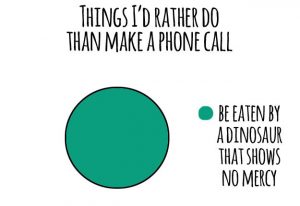
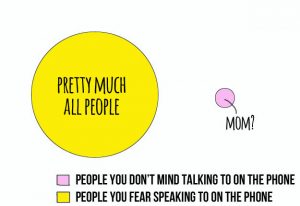
Although modern telephone calls differ from the type of audio reproduction we read about in Jonathan Sterne’s “A Resonant Tomb,” I couldn’t help but think about how the way we communicate in 2017 has evolved throughout the past hundred years or so and has come a long way since the invention of the telegraph. Some people believe that we have reached an age of the death of the phone call – at least, for millennials and younger generations. We tend to prefer text over voicemail to get a message across to someone, and often dread making phone calls. The following memes demonstrate this sentiment:
Nowadays, phone calls are often thought of as an interruption or inconvenience. Moreover, they seem more intimate than a text message conversation, perhaps in large part because of the audio of a personal human voice. With the increase of phone apps and services, we can often even avoid making phone calls to set up appointments. Phone calls have typically become reserved for very close friends, family members, and romantic partners. It’s interesting to note that Skype and FaceTime, which more closely resemble face-to-face interaction, still seem to remain popular. So perhaps it’s not simply the intimacy, but something about the voice itself, or the voice only, that makes us uncomfortable? It’s also interesting to note that with the exception of voicemail, text communication is preserved in the sense that Sterne discusses, while audio communication is fleeting. In fact, while a voicemail or voice recording can only last for so many minutes or hours, a text thread can capture days, weeks, months, even years worth of back-and-forth conversation. It’s quite common for people to delete their text threads with their ex-significant others after they break up. Some people find rereading old text messages to be painful because they are reliving the experience in some ways. Can people be preserved through their texts messages after their death, despite text having no physical human characteristics such as image or voice?
Work Cited
Sterne, Jonathan. “A Resonant Tomb.” The Audible Past: Cultural Origins of Sound Reproduction. Durham: Duke University Press, 2003. Pages 287- 311. Print.
“The oldest and strongest emotion of mankind is fear, and the oldest and strongest kind of fear is fear of the unknown” (Joshie & Schultz, 2001: p.255). Whether it’s the dark, or death, or disease, or any phobia really, it always relates back to variables which are unknown. If you think about it, would death be frightening if we knew for certain there is another life after this one? Of course, when everything is known there is complacency, so I am not claiming that life would be great if we knew everything and nothing would be worrying or terror-inducing. But it just so happens to be that when the future or present is uncertain, there is usually fear along with it. This is the basic theory and philosophy behind any horror narrative. Scary stories that are told around the campfire often include inexplicable details coupled with tension created by a well-paced narration, which result in an audience on the edges of their seats, waiting to hear more, hoping for an explanation. Of course, just like for the magician, when the unknown is explained, it immediately stops being interesting. Storytellers must walk a fine line between explaining enough to keep interest, but not enough where interest is lost, but again, explaining enough where the audience doesn’t feel like their time was wasted experiencing an unresolved story, but not enough again where everything is obvious. The result is the difference between a good horror story, and a bad horror story, which is basically the crux and point of stories.
This brings me to the actual point of this analysis, which is that we find ourselves in quite a predicament today. The rapid growth of technology in the last decade has dramatically shifted the way we think about the world, what we know about it, and how well connected we are. In summation, we know much more about the world, across the board, than we ever did (with information readily available wherever there is a connection to the internet), and we are much better connected as a result, both in real time, and in cultural discrepancies (again, with the introduction of the internet). So this obviously does not bode well for horror stories, which, as established in the introduction, kind of depends on the unknown – keeping the audience in the dark, literally and metaphorically works wonders, until someone turns the light on, and then it stop working entirely. So now we have an influx of horror stories which simply aren’t that scary any more, and we have a whole legion of plotlines and ideas that are entirely irrelevant today, as a result of the technological shift the world has experienced. I will explore both of those points and their implications through the analysis of two movies The Ring (2002) and 28 Days Later (2002).
The Ring is a 2002 remake of the Japanese original Ringu, a movie about a mysterious video tape said to curse whoever watches it with a phone call in which only the words “seven days.” are spoken, after which the person who watched the tape dies seven days later. The video tape features a creepy video of some seemingly disorganized and random snippets, along with the yurei character called Samara who is the ghost in the story that does the killing. The movie itself can be terrifying and leave lasting effects (TV static is never the same after watching the movie) on its viewers. And it is truly interesting how it uses the technology of its time to convey the old ghost story in a new light, literally bringing it to your living room. It’s an interesting premise that you could bring a ghost in your own home through technology. It’s part of its appeal and what makes it so unnerving. We all have TV sets, we’ve all seen TV static, upon watching the movie, the TV set and static are both given new meanings, and serve as unpleasant reminders of Samara. We also mostly know what VHS tapes are and usually have had one around at the time the movie was relevant. In summation, the movie immerses itself in the technology of the time and builds a solid narrative around it, as Kirkland says “Old media technologies contribute a sense of the real perceived as lacking in digital media, yet central to a generically-significant impression of embodiment”. In his paper he makes an argument about remediation, how old and analog technology usually plays the role of a mysterious artifact, tied to the past, and as such, can better be used to convey horror – versus digital technology. If we take for granted that tapes can be haunted, then the logic makes sense. Below is a video of how analog technology, with its stuttering and crudeness, is used to convey a sense of uncertainty and ultimately horror.
28 Days Later is a zombie apocalypse horror-thriller set in London. It was one of the first places to feature the “infected” zombie type, known for its rabid behavior, and terrifying speed, compared to the slow Romero zombies. The movie follows a comatose, Jim, who wakes up in the midst of an apocalypse, entirely unaware of the situation. He roams the abandoned city and reads signs put up by people warning of impending danger and doom. It is all very cryptic at first, but Jim soon finds out the nature of the danger and how much better he had it when he wasn’t awake. A few times in the story, characters offer their experiences of how the whole situation became so bad so quickly, and how everyone was caught off guard. The movie very successfully maintains an aura of mystery through various means. The quick, chaotic editing which serves as foreshadowing of chaos and the deconstruction of moments of order and calm is one method that helps maintain suspense. The music and sound design is another aspect through which the movie keeps viewers on the edge of their seats. Overall the movie is able to maintain its suspense to create truly horrifying and panic-inducing moments through various means, including its plausible story. In the video below, we get a prime example of suspense with meaning. The scene is not just meant as a shallow jumpscare, instead, the shocking nature of the shots end with Mark, one of the survivors, becoming infected and ultimately not be one of the survivors any more.
Suspense scene (make sure your volume is not all the way up!)
This brings me to a major point about both movies. Their plots only seem plausible in the time they are set, but beyond, make little sense. The Ring just received a sequel a month ago, the technological shift meant the story had to change as well. A glaring issue becomes apparent in that, VHS players are not that readily-available today and VHS tapes are just as irrelevant. It doesn’t make sense to continue the old plot, but then any shifting into a new technological direction brings about more questions than it solves. For instance, today, we mostly stream things, would it make sense that Samara has now shifted into cyberspace and haunts its viewers through streaming software? So what happens when someone streams the haunted video on a phone? Do we get a pocket version of Samara? Who exactly dies? The owner of the IP? Why would the video even be streamed on any famous site? Would someone have to upload it to a site like YouTube? Wouldn’t that garner an international following and all traces of the video would inevitably be deleted? You get the point. The world is so connected nowadays, and information travels so quickly, it’s hard to imagine that any of these things could remotely remain tucked away as just a “spooky story” or some myth. In a paper by Haewoon Kwak, Changhyun Lee, Hosung Park, and Sue Moon called “What is Twitter, a Social Network or a News Media? ” we are offered some statistics on how digital information including news can travel. According to the study, once a tweet is retweeted, it almost instantly continues to do so, indicating an incredibly rapid diffusion of information (Kwak et al., 2010) .
In 28 Days Later we get a similar problem. All the explanations of how the infection spread so quickly was through chaos and lack of information. We see posters and papers posted everywhere warning of the danger which leads the viewer to think, in today’s world, social media would be a very effective way to let people know very quickly what the entire situation is. With information travelling so quickly, and being so accessible, and news outlets not being the sole method for hearing breaking news, it becomes hard to imagine how so much chaos could ensue before anyone could react. Many people make the claim that, if you can suspend your disbelief and believe in the “infected” you should also believe that the infection could spread the way it does. But this brings about a crucial difference that again extends not only to both of these movies, but to narration and storytelling as a whole, and how it’s affected by the technological shift of the day.
A story can suspend disbelief even with fictional elements, so long as it abides by its internal logic. If a story defies its own rules, or has faulty logic, the issue directly affects how much a viewer can suspend disbelief. For this reason, technology today, and its development, is so fast, that directors seem to be struggling with catching up. Finding effective ways to portray all this technology, and all of its implications, with a story that maintains mystery and the unknown is becoming increasingly difficult, with sub-par solutions and movies that simply aren’t scary because of their inability to suspend the viewer’s disbelief. Most horror movies depend on the disability of a character to contact anyone for help, which in today’s society is a glaring issue in that we have so many ways of contacting everyone around us, it is hard to believe that secrets and myths, such as the one in The Ring can remain secrets for long. Today, we have easy access to news that isn’t related to news outlets at all. Phones equipped with high definition cameras and high-speed access to the internet even not connected to Wi-Fi (cables aren’t a thing when it comes to connectivity), but through data, allows for quick sharing of events from the spot. Social media becomes a news outlet of its own, with personal stories and accounts being shared with the public on the regular. All of this means that there are less dark places in the world, less places and ideas shrouded in mystery, and ultimately, less things to be afraid of. For horror, this is detrimental, and for horror movies to remain relevant, there needs to be either change on the development front, or even newer technologies which bring about more of their own questions. Regardless, horror movie directors need to desperately find a way to tackle new technologies in making creative new and relevant plots.
Work Cited:
Carleton, R. Nicholas. “Into the Unknown: A Review and Synthesis of Contemporary Models Involving Uncertainty.”Journal of Anxiety Disorders, vol. 17, no. 1, Feb. 2016, pp. 30-43. Available from: http://dx.doi.org/10.1016/j.janxdis.2016.02.007 [16 May 2017]
Joshi, S. T. and Schultz, E. David. H.P. lovecraft encyclopedia. 1st edition. Greenwood Press, 2001.
Kirkland, Ewan. “Resident Evil’s Typewriter Ewan Kirkland Games and Culture.” Games and Culture, vol. 4, no. 2, Apr. 2009, pp. 115 – 126. Available from: doi: 10.1177/ 1555412008325483 [16 May 2017]
Kwak, Haewoon, et al. “What Is Twitter, a Social Network or a News Media?” Proceedings of the 19th International World Wide Web (WWW) Conference, Raleigh, North Carolina, April 26–30, 2010. Edited by Kwak, Haewoon, et al., International World Wide Web Conference Committee, 2010, pp. 1-12.
Hearing the voices and seeing the images of the dead is so commonplace today that I struggled to understand how it was viewed in the Victorian times. Listening to The Beatles or Buddy Holly or watching Robin Williams films isn’t the least bit eerie to modern media consumers. In trying to relate to uncanny experience of hearing a dead person’s voice when recording was first introduced, I thought of two recent representations of dead celebrities. The Audrey Hepburn chocolate ad and the Tupac hologram both created quite a stir for their representations of the dead. Tupac appeared to perform live years after his death, and a young Audrey Hepburn once more graced our screens in footage that wasn’t recorded during her lifetime.
We don’t think twice about listening to the voices of long-dead musicians, but the technology that created Ash in “Be Right Back” strikes us as definitively wrong. Tupac and Audrey exist somewhere in between. The question I’d like to pose is this: Will we ever draw the line at reanimating the dead, or are we engaged in an unstoppable progression towards Ash-like technology?
I obviously can’t predict the future, but I think it’s likely that recreating dead celebrities on screen will only become more commonplace. I don’t think Ash tech is that far off either. Enormous technological advances that may seem to defy nature (such as hearing the voice of someone dead), eventually become normalized. I think, therefore, that while Ash tech may initially seem startling, it could very likely become integrated into our lives the way recording technology has. These two representations make it clear that existing beyond the grave is becoming more of a possibility each day.
Tupac Hologram Snoop Dogg and Dr. Dre Perform Coachella Live 2012, westfesttv, youtu.be/TGbrFmPBV0Y
From their very origins, human beings opted to survive in groups, rather than alone.[1] This came with the realization that there is strength in numbers. But even more so than just numbers, there is efficiency and more room for growth in teamwork, task allocation, and dependency on one another. Individuals can specialize and focus on certain tasks which help the collective, trusting that others will do the same, and the entire group will prosper as a result. When a community is formed, its problems and threats are diminished. It is only natural to assume that this behavior, so crucial to our progress and survival, remains an integral part of what it means to be human. To be human, beyond the individual level, means being a part of a collective consciousness where skills like empathy and understanding are necessary for healthy development. As such, over the centuries, like a vestigial organ, our ability to thrive alone has almost disappeared. We are specialized versions of our ancestral selves, thriving in an environment into which we are molded through our childhood, learning necessary social skills to simply pick up where everyone has left off. Having said all of that, it then becomes evident how problematic for an individual, completely dependent on society and others, it is to survive alone. Like throwing a person that never learned to swim, in the sea, the effects of isolation are not an illusion, they are real, and they can adversely affect health[2] and as an extension facilitate fear.
This knowledge isn’t anything groundbreaking and novel, it is common to us all and it’s safe to assume that we’ve all at some points in our lives experienced some separation from those we love and the panic that ensued. It seems logical as well that when in a state of stress and fear, caused by isolation for instance, we experience other fears more intensely[3]. Horror stories exploit this fear of being isolated, to generally create a more terrifying experience. However, the effect is achieved to varying degrees of success. I find the effect to be most effectively conveyed in video games actually due to their interactive nature. Empathy is only so effective in subjecting a viewer to the difficulties a character in a book or film feels. A video game’s interactivity places your very own interests at stake, creating the strongest bond between character and “audience” since arguably the beginning of all storytelling. In this analysis I will explore how isolation is used as a tool to evoke fear in players, how the narrative and game world supplant that fear, and what the varying effects can be in subtly different approaches and design decisions. The games which I will analyze are Outlast (2013) and Call of Cthulhu: Dark Corners of the Earth (2004).
In Outlast the player takes on the role of freelance journalist Miles Upshur who receives anonymous intel that there are inhumane experiments being conducted at Mount Massive Asylum. The premise sets a powerful tone for the story. It uses common tropes and themes to literally “cut to the chase”, the setting is not at all something unique and fresh, but it gets the job done. The job being letting the player know they’re in for a terrifying ride. It’s clear the game does not set out to create a narrative that’s never seen before, instead, it plays up the fact that it’s a game, offering a fresh gameplay experience first and foremost, everything else is secondary. Ever since you start the game you are alone, you reach the asylum by car and cannot use the front entrance, you must find an alternate route, further emphasizing that you are not welcome and that you do not belong. Being unwelcome is a crucial part of feeling alone and isolated. For example, we feel alone if we find ourselves in a situation where others around us do not want us around in the first place. Outlast uses every trick in the book to isolate you as much as it can. Everyone you talk to is either insane, wants to kill you, or both. Needless to say, it is very effective in its methods. As a bonus, there is no method of combat, stripping you of all power in your surroundings – you’ve guessed it, alienating you even more.
Call of Cthulhu: Dark Corners of the Earth[4] is a far more outdated game, and despite the many game-breaking bugs present in its final release, it belonged to an era of video game development when developers were more inclined to experiment and the mainstream was still in the process of being defined. Call of Cthulhu employs many similar “tactics” to instilling fear in its players, yet still does it in way that’s very different to Outlast. The game opens with a cinematic in Arkham Asylum (unrelated to Batman, and yes, Asylums are used a lot in horror stories), then moves into the first section of gameplay at a manor inhabited by obscure cult members who are holding off a police siege. The protagonist, Jack Walters, manages to enter the manor, witness a mass suicide of cult members, meet the leader of the cult who subsequently dies in the siege, and find a secret entrance to a basement in which the protagonist goes insane, upon which he is admitted to the Asylum shown in the opening sequence. This is all very confusing in the beginning and it is by design, the player is supposed to be confused, experiencing some of the madness of the situation first hand. Six years later, Jack Walters investigates a missing person report in a small port town called Innsmouth. This is where the main story actually begins. The town of Innsmouth is unwelcoming and moody to say the least. NPCs visually all reside in the lowest depths of the uncanny valley, their voices are contorted and odd, and they generally give off the vibe that you should not be here, and that you should leave soon. The atmosphere of the game is incredible in further conveying this feeling. A dark moody setting, decrepit buildings, cold weather, odd conversations between NPCs, the occasional terrifying hallucination due to your character being a recovering asylum patient, and the scripted sequences where you see yourself through the eyes of a stalking creature wandering on the roofs and through the dark alleys of Innsmouth all play into the incredibly powerful atmosphere. The game starts out with no combat, as an investigative puzzle-solving detective game, and turns into an all-out shooter by the end. The game supports both sneaking and combat as playable methods. There is also no HUD, which helps the immersion of the game. And even more notably than the HUD, is the insanity meter, which fluctuates dependent on how many terrifying or grotesque things your character encounters in the game. A full insanity meter causes the protagonist to commit suicide.
Both games are very successful in maintaining a sense of alienation and isolation. Whether it’s by making a player feel unwelcome, or just generally through gameplay aspects mentioned above. Where the comparison between the two becomes important is the varying degrees to which the player is made to feel isolated based on a few crucial differences in approach. In Outlast you enter an Asylum where from the get-go, you not only feel unsafe and unwelcome, but you know that your first encounter with anything breathing will be very unpleasant. In Call of Cthulhu once you reach Innsmouth, the population of the town is displays its xenophobia, but you are generally safe to wander around, speak to people, and although made to feel unwelcome, you can at least speak to people and so you don’t feel as alone. This feeling is dramatically contrasted with the moment the whole town turns against you and becomes very hostile towards your presence. It feels like you walk into a den of lions who are at first disinterested in you, causing tension with every next step to increase, because they are very much aware of your presence, and you know that it’s only a matter of time before you become the prey. This method of contrasting is incredibly powerful in making the hostile parts of the game seem even more, because you are provided a point of reference when you could at least coexist with those around you. Outlast on the other hand doesn’t provide this contrast, as mentioned earlier, opting to barrage you with tension and hostility from the moment you enter the Asylum.
This brings me to the next point. Call of Cthulhu then becomes a stealth game where you are trying to escape the town to save your life. Along the way, you meet characters who seem to be normal, which serve as brief moments to catch one’s breath. Again, Outlast opts for breathers in the forms of entering a ventilation shaft where you know you can’t be caught, but other than logistical and physical barriers, there is no comfort in the presence of “normal” people. Somewhere in Call of Cthulhu you manage to escape the town, and all seems well, until you find yourself in an FBI vehicle headed back for a factory in the town. The horror is real when you finally breathe a sigh of relief that you escaped, only to realize you are going back into the hell which you worked so hard to get out of. This time around you are well equipped, and you have allies. The cruel aspect of this is that just as quickly as they appear, they are one by one picked off. More interesting than this “trope” of losing team members, is how quickly you grow attached to normal people in such bizarre scenarios.[5] It happens once more in the game when you are fighting alongside even better equipped marines, who also all meet their untimely deaths. The game gives you comfort only to take it away and remind you how cold and lonely the game world really is. In contrast to Outlast which maintains the same circumstance, and never attaches you to the idea that there is any person you can trust in the asylum. Going back to the sense of attachment, Call of Cthulhu, by design or not, is able to introduce characters you truly care about, without ever providing backstory, or any important character details. The catch is that in the circumstance, our hardwired ancestral need for teamwork kicks in, there is another normal, conscious individual who is witnessing and experiencing the horrors of this world with you. Madness is such a large theme in Lovecraft’s work, it’s a sigh of relief when you’re not the only one experiencing the insanity and terror of the world.
One must ask themselves, upon playing the two games, which method of approaching the horror of isolation is more powerful. The two options seem to be either isolating a player entirely from the start, with no hopes of return, or offering glimmers of hope only to quickly jolt you back into your terrifying hellish reality. Both methods have their own advantages and disadvantages. Namely, the first option creates a very stressful experience for the player. You are constantly on your toes. It feels like you are holding your breath the entire time you’re playing. However, humans are adaptable by nature, as such, it is entirely possible to grow desensitized to the tension and understand that there is no hope, and that this reality is there to stay. On the other hand, the second option gives a chance to players to take a breath, offering them artificial moments of lowered tension. It’s like walking through a terrifying unwelcoming dark hallway, into a well-lit welcoming room, knowing that you can’t stay there forever, and that the next door leads to another dark hallway. The reluctance to move forward and back into the dark can sometimes become crippling. Having said that, the moments where you can catch your breath can sometimes actually be very helpful in maintain ones composure and actually completing the narrative. There is no one right way. As mentioned, each method has its drawbacks and strengths, and it really depends on the person experiencing the situation. Regardless, it stands that horror is best experienced when made to feel isolated, not by chance, but by nature.
[1] Boyd, Robert, and Peter J. Richerson. “Culture and the Evolution of Human Cooperation.” Philosophical Transactions of the Royal Society B: Biological Sciences 364.1533 (2009): 3281–3288. PMC. Web. 2 Mar. 2017.
[2] Ye Luo, Louise C. Hawkley, Linda J. Waite, John T. Cacioppo, Loneliness, health, and mortality in old age: A national longitudinal study, Social Science & Medicine, Volume 74, Issue 6, March 2012, Pages 907-914, ISSN 0277-9536, dx.doi.org/10.1016/j.socscimed.2011.11.028.
[3] V. Vachiratamporn, R. Legaspi, K. Moriyama and M. Numao, “Towards the Design of Affective Survival Horror Games: An Investigation on Player Affect,” 2013 Humaine Association Conference on Affective Computing and Intelligent Interaction, Geneva, 2013, pp. 576-581.URL: ieeexplore.ieee.org/stamp/stamp.jsp?tp=&arnumber=6681492&isnumber=6681389
[4] Based on Shadow Over Innsmouth by H.P. Lovecraft
[5] Interestingly, this is kind of exactly what Kocurek talks about in his paper, except it’s extended the other way as well. In the game you are fighting monsters, and it is clear they are otherworldly, alien, and not to be cared about. On the other hand, the game does an incredible job of attaching the player to allies in the game, to characters we should care about, who we do not want to see die, and whose deaths are meaningful. This is very important as many games are not able to create this sense of attachment, and usually suffer from not evoking the player’s empathy. It is a very strong, albeit small, aspect of Call of Cthulhu which is worth being inspired by.
Grant, Barry. “Digital anxiety and the new verité horror and sf film.” Science Fiction Film & Television 6.2 (2013): 153-75. Web. 1 Mar. 2017.
Diddi, Arvind, and Robert Larose. “Getting Hooked on News: Uses and Gratifications and the Formation of News Habits Among College Students in an Internet Environment.” Journal of Broadcasting & Electronic Media 50.2 (2006): 193-210. Web. 1 Mar. 2017.