
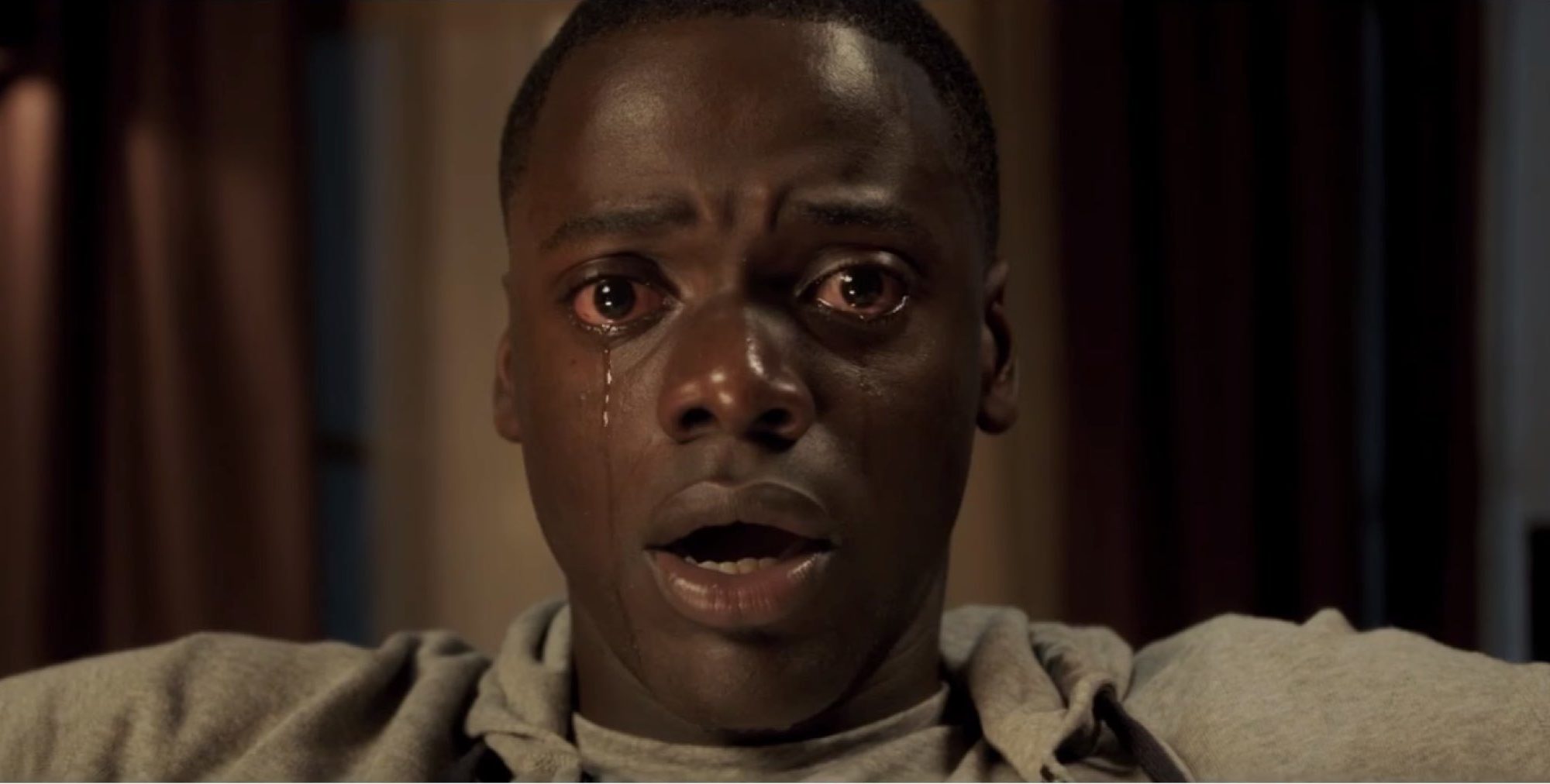
The origins of the trope, Blaxploitation
The decade of the 70s saw a sudden surge in the popularity of movies termed ‘Blaxploitation’. Usually produced, directed and starring an all black casts (except for the white villains, of course), these movies were made for urban filmgoers. Meant primarily to entertain black audiences, they increasingly became films about black justice and morality- even though a preponderance of the films’ antiheros and antiheriones were people who lived outside the law or skirted on the edges of it for personal and racial reasons. They, in short, and for all their foibles in production values, became the voice of a culture longing for true justice and acceptance on their own terms (Cook).
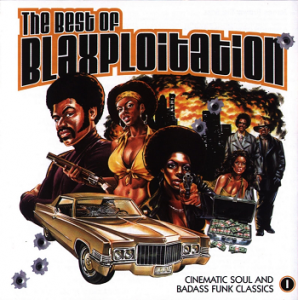
‘Blaxploitation‘ filmmaking contributed to the social construction of race during an era where the ideologies of black nationalism and black pride became dominant social expressions of racial identity for African Americans. These films depicted a stronger and more capable image of African Americans who triumphed over (frequently racist) white antagonists. The effect of this change on the construction of cinematic narrative was to flip the terms of the hierarchical white-black opposition (Benshoff 33).
As these movies became more popularised, both African American and white filmmakers began to create political films that intentionally critiqued the white power structure in the US at the time (Benshoff 34). This post will be exploring the ways two popular films featuring African American leads from vastly different times connect to each other through this trope.
William Crain’s Blacula (1972)

Blacula held an overtly political significance compared to its horror counterparts at the time, and it rose as a commercial box office success in 1972.
Blacula touches on the conventional African American experience in the 1970s. It has a direct reference to the history of slavery as well as the existence of police brutality implemented upon young African Americans. One reviewer stated, “I have . . . chosen to look upon the entire film as an effort by those responsible to show satirically the black man’s plight as a victim of white vampirism . . . Those who enjoy seeing the establishment take a whipping will be interested in the number of L.A. Police done in by this midnite creeper” (Benshoff 35).
References to Slavery
The “white vampirism” mentioned above is an explicit metaphor for slavery: “bitten by the racist Count Dracula centuries ago, the curse of vampirism becomes the lingering legacy of racism” (Benshoff 38). The white Count Dracula transforms his victim, Prince Mamuwalde, into a vampire who is forced to perpetuate this cycle of enslavement for centuries. Count Dracula gives Mamuwalde the name, Blacula, when the transformation was completed. Count Dracula robbed the prince of his name, life, and identity as a human being. This, “parallels the deculturization process of the slave industry, which denied African prisoners their families, religions, and even names,” (Benshoff 39).
Commentary on Police Brutality
Police brutality permeates throughout the movie and is directly referenced through lines such as, “Funny how so many sloppy police jobs involve black victims.” As in many blaxploitation films, “the police department here is full of racist officers, more than willing to share their racist statements with anyone who will listen,” (Hefner 66). Mamuwalde’s never turns any of his white police victims into vampires, instead he generally kills them by smashing their heads against walls. This violence intentionally acts a cry of defiance against the unjust killings of African Americans by police officers, and it resonated with the audience.
This theme is visited again in Peele’s Get Out and is especially poignant after the latest string of deaths of African Americans caused by police brutality.
Redefining the Monster
Although monstrosity in horror films has often worked to demonize difference (whether racial, sexual, or otherwise), Blacula reverses this dynamic. (Hefner 63). Instead of being seen as a monster, the vampire transforms into an agent of black pride and black power. Blacula is on a quest for revenge, and his goal is to clean up the streets. This character is used as an empowering black figure instead of a reprehensible monster, which serves as a clear break from the vampire tradition (Benshoff 37).
Jordan Peele’s Get Out (2017)
WARNING: CONTAINS SPOILERS

Please watch the trailer here .
Get Out is a stinging criticism of the white liberalism that carries itself as empathetic towards blacks, but that empathy only extends as far as white control. Peele isn’t taking aim at neo-Nazis and other whites who would angrily shout the n-word. They’re a lost cause. Instead, he’s looking at those who profess their lack of racism, but only do so if they can maintain their dominance over black people in the most insidious manner possible. As Chris pointedly notes to Rose at [a] party full of white people, “Has anyone here ever met a black person that didn’t work for them?” (Goldberg)
References to Slavery
Nostalgia reeks through the provincial “Old South” setting. First of all, the setting is a plantation in the middle of nowhere. Additionally, there is an antiquated television set in the basement, elderly white folk, Bingo, and an excessive use of photography. Photos play a crucial part in this movie, but none of the photos are digital – they are all physical copies (like the ones found in the shoe box – dun dun duun!).
These are all examples of remediation, because they take an antiquated form of technology and transports it to modern times. The use of remediation builds an atmosphere that is reminiscent of the “Old South,” and the pervasiveness of microagressions along with the presence of elderly white people builds on top of the anxiousness of the setting. It’s almost as if the audience is being transported to another era. The way that the characters are dressed is not contemporary (spoiler: Logan, pictured below, has been brainwashed and was formerly known as a street-wise artist named Andre), and the old fashioned etiquette and setting feels both familiar and unsettling. This becomes especially true when we learn that there are two African Americans working on the house grounds. This is a direct reference to slavery, and it is brought up by the owner of the house, Dean, who essentially tells Chris, “I know it looks bad… white land owners and black workers… but we’re not racist and it’s not what you think.”
Peele uses a clever tactic to reveal how African Americans are being subjugated to conform to a greater white power structure in modern day society. The two African American workers, Georgina and Walter, are extremely uncanny. Although they are all smiles, there is a real fear and sense of resentment and hostility hiding beneath their bright demeanours.
Time for a few more spoilers…
The family uses a ploy to capture African Americans and take their bodies. Literally, the father, a neurosurgeon, takes the consciousness of an elderly (usually disabled) white person and puts it into the body of an African American. All of the microagressions Chris faced revolved around his bodies act as a direct reference to the way society views black bodies – especially male black bodies – as sexually viable, athletic, capable, and exotic, which is exploited by this film. Why use black bodies as opposed to laser-shooting robots, young white athletes, or awesome chimera hybrids? Why black people?
My answer to that question is because African Americans, along with other marginalized communities, are still being treated as second class citizens. This film serves as a commentary on white power in a supposedly “enlightened” society. Although we understand that racism and prejudice are wrong, these long established views of African Americans continue to be held by the ruling upper (white) class.
One moment that stands out is a brief interaction between Chris and Georgina, the housekeeper. Chris runs upstairs to escape the oppressive party and is confronted by Georgina. When Georgina asked why Chris is in the room, he replies, “When there’s too many white people I get nervous.” Suddenly, Georgina’s smiley face breaks down. Georgina struggles to refrain from crying and tries to soothe Chris by saying, “No, no, no, no, no.”



She proceeds to tell Chris, “That’s not my experience/ They’re so good to us/ They treat us like family.”This is obviously a lie, because the amount of sheer distress Georgina feels directly contradicts the statements coming out of her mouth.
Georgina is actually one of Rose’s ex-lovers who was lured into the family home, brainwashed, and now inhabited by Rose’s deceased grandmother. This dual personality represents the double consciousness that African Americans hold as they try to reconcile their history in a white-dominated space. “Double consciousness” was coined by W.E.B Dubois and is a term that describes the internal conflict experienced by subordinated groups in an oppressive society.
Commentary on Police Brutality
Rose and Chris are pulled over by a cop in the beginning, and the cop treats Chris as if he is a criminal. Luckily, Rose stands up for Chris and points out the cop’s racist actions (he asked for Chris’s driver’s license even though Rose was the one who was speeding). This interaction is a direct critique on the police department in the US, who is often criticised for being racially biased against African American men.
It’s not the police, but the TSA, who come to the rescue.
I’ve never heard an audience clap and cheer as loud as they did when Rod, Chris’s TSA best friend, stepped out of what we assumed to be a police vehicle in the final scene. Rose is lying on the ground with a gunshot wound to the stomach pleading for help. This is a historical reference to stereotype of the white female victim vs. black male perpetrator. The white female was historically viewed as passive and innocent, while the black male was viewed as sexually aggressive and corrupt. Historically, even if there was no evidence of rape or sexual assault, black men were routinely tried and even lynched for interacting with white women under the assumption that they were a danger to white women. Here, the story twists this stereotype on its head because it was Rose who was chasing Chris with a shotgun. Chris managed to get the gun from her and take her out instead. Suddenly, what looks like a police car comes onto the scene and the audience collectively recoils and gasps, “Nooooooo!” We all knew what was about to happen – Chris was going to be arrested and tried for murder, and no one was going to believe his story about Rose’s twisted family. That’s why when Rod stepped out of the car, the audience cheered with relief and joy (he steals the scene with his sense of humour every single time!).
Redefining the Other
Get Out draws on the visceral experience of being objectified or colonized by another consciousness (Wilkinson).
There is a presence of hyper mediation throughout the film, which is accomplished by changing the point of view to from the objective cinema camera lens to Chris’s photographic camera lens. During the (surprise!) reunion party where all of Rose’s elderly relatives come to the house, Chris is faced with micro aggression after micro aggression on comments on his physical features, genetic build, and bodily capabilities. Chris is paraded about like a spectacle. Chris, in his own way, turns Rose’s family into a spectacle. His camera acts as a tool for hyper mediation, and the audience gets to see through Chris’s point of view. Through the camera lens, we see Georgina waiting for Missy’s next instruction. We also see Dean and a crowd of his relatives pointing towards Chris, as he tries to take a snap shot of them.

They eagerly try to lure him over, but Chris looks away and pretends not to notice. Suddenly, the camera lens is gone and the scene breaks from Chris’s point of view. As he rushes up the stairs to Rose’s bedroom for air, the chatter dies down and everyone turns to watch him leave.
Although Chris is not redefining the vampire, he is redefining the role of African American men in media. He is a genuinely nice guy, a gifted photographer, and a respectable person. He is not a thug, a villain, or an ex-convict. He is just an average guy with no ill-intentions at all. He isn’t the monster in this story, the family is.
Technology
Technology plays a critical role in the movie. For example, Chris’s phone is his only connection to the outside world. He uses the phone to talk to his best friend, Rod, and joke about the odd situation he is in. Strangely – whenever Chris charges the phone, someone else comes and unplugs it.
Additionally, the hypnosis that Logan, Walter, and Georgina are under is reversible by the flash setting on Chris’s phone. When Chris accidentally snaps a photo while trying to videotape Logan’s odd behaviour, the flash goes off and Logan breaks out of his spell. With a stream of blood running down his nose, Logan screams at Chris to, “Get out!”
Redefining a Community through Media
What do these films accomplish? Both box-office hits, these two films redefine the role of African American men and act as a tool for social commentary in a traditionally white space. They each critique the white power structure and serve to remind the audience, symbolically, the plight African Americans have and continue to take. Although they were written with a significant time gap in-between, they tackle similar issues including police brutality and African American identity.
Works Cited
Benshoff, Harry M. “Blaxploitation Horror Films: Generic Reappropriation or Reinscription?” Cinema Journal, vol. 39, no. 2, 2000, pp. 31–50.
Blacula. Dir. William Crain. American International Pictures, 25 Aug. 1975.
Cook, Nickolas. “Top 13: Best of Blaxploitation Horror.” The Black Glove: Horror Culture and Entertainment. Awesome Inc., 04 Nov. 2009. Web.
Get Out. Dir. Jordan Peele. Blumhouse Productions, QC Entertainment, 24 Feb. 2017.
Goldberg, Matt. “‘Get Out’ Review: Jordan Peele Paints a Terrifying Picture of Modern Enslavement.” Collider. 22 Feb. 2017. Web.
Hefner, Brooks E. “Rethinking Blacula : Ideological Critique at the Intersection of Genres.” Journal of Popular Film & Television 40.2 (2012): 62-74. International Bibliography of Theater & Dance with Full Text
Pinedo, Isabel. “Recreational Terror: Postmodern Elements of the Contemporary Horror Film.” Journal of Film and Video48.1/2 (1996): 17-31.
Wilkinson, Alissa. “Get Out Is a Horror Film about Benevolent Racism. It’s Spine-chilling.” Vox. Vox, 24 Feb. 2017. Web.