Redo Post

Tuesday, March 21 (Week 10)


Who are you saving?

People present the best of themselves on social media. People who live online cultivate a specific brand or image around their name, but are almost nothing like their online profiles in real life. I’ve met people who had thousands of “likes” and followers on Facebook, but who were real doorknobs in real life (not to sound condescending). They were just stuck to their phones all day long, which makes sense.

So, who exactly are you saving when you apply to one of these digital wills for your online personality? Typically, a person will be saving the best image of themselves, which is fitting for a funeral. Of course, we want to remember the best things about our loved ones after they pass. These happy memories will live on and be accessible to view online, as long as the website is still operational. The best part is that you now have total control over how you’re remembered. This isn’t that different from people who plan their entire funerals to a T; complete with the song, speeches, and ceremony procedure all lined out.

Apparently, you can even modify how much of your online profile is revealed. Some digital wills give the applicant the ability to show, or hide, as much of their information as they feel comfortable. According to Rob Walker’s, “Cyberspace When You’re Dead,”:

“Given the degree to which the most popular online platforms involve promoting a quasi-public persona — the “you” who declares fandom of Bob Dylan and Flannery O’Connor, but not the “you” who binges on “Jersey Shore” reruns and TMZ.com — this instinct seems logical. If we try to control the way we are perceived in life, why not in death, too?”

The only risk that accompanies this procedure is that you’re losing the whole person. Why not give family complete access over these materials? They will find all of your belongings, secret letters and diaries, and any other physical materials you tried to hide some way or another. Why are people so eager to wipe out and cleanse their profiles by scrubbing it clean of any sort of dirt? Everyone has dirt somewhere, and it’s all already recorded online somewhere. I don’t understand why all of the online materials of a deceased person can’t be opened by a family with a simple application.

Anyways, the memorials that do survive aren’t exactly perfect. Walker states that online memorials are occasionally guilty of, “wiping out meaningful material and replacing it with ‘a thousand ‘sorry this happened’’ messages.”

Despite the amount of progress that has gone into developing these memorial programs, they are still emerging so there are some bumps along the way… like the time in 2016 when Facebook notified a ton of people that they were dead:

“For a brief period today, a message meant for memorialized profiles was briefly posted to other accounts. This was a terrible error that we now have fixed. We are very sorry that this happened and we worked as quickly as possible to fix it,” said a company spokesperson by email, (Roberts).

You can almost hear the users saying, “I’m not dead yet!”

Works Cited

Roberts, Jeff John. “Facebook Bug Tells Users They Are Dead.” Fortune.com. Fortune, 11 Nov. 2016. Web.

Walker, Rob. “Cyberspace When You’re Dead.” The New York Times. The New York Times, 08 Jan. 2011. Web.


I wanted to do the reflection post, but unfortunately my finals have stacked up and I knew I wouldn’t be able to deliver a decent post.  I would love to talk to you about this class sometime, though! Thanks for an awesome semester!

Quirky Funerals

While coming up with our own traditional death ‘systems” and post-modern/digital death “systems” in class, I began to wonder about what other sorts of wacky death traditions people have.

Although we came up with some gosh darn wacko potential startup companies in class (shoutout to our plant a corpse company!), these definitely took the stakes and raised them even higher…

Funerals don’t necessarily have to be somber events. These memorials and traditions are heavy on quirk.

1. The last hurrah

Miriam Banks was the life of the party—even at her own funeral. When she passed away in June, her daughters honored her memory by recreating apart scenef amiliar to friends and loved ones. Instead of a coffin, the deceased sat at a table with a cigarette in her hand and her favorite beer and whiskey in front of her.

2. Highway to heaven

Billy Standley was so fond of his 1967 Electra Glide cruiser that he spent the last years of his life planning his burial on the motorcycle. When the fateful day finally arrived, a team of five embalmers prepared Standley for his final ride, mounting his body on the bike and dressing him in leather biking gear and a helmet. He led the procession to the cemetery.

3. Go out with a bump and grind

In Taiwan, some people hire strippers to appease wandering spirits and liven up the occasion. The dancers stay somewhat modestly dressed, but they are not shy about jumping on caskets or giving mourners lap dances.

4. Funeral Processions in New Orleans

In New Orleans, the dead go out in style with some jazz, dancing, and a procession that lasts into the evening.

5. The end of the road

George Swanson was buried with his Corvette in 1994. Car enthusiasts might find the Corvette’s death more tragic—the car only had 27,000 miles on its odometer.

6. The #Funeral Live Tweet

When publicist and Twitter addict Michael O’Connor Clarke died of cancer, his friend Mathew Ingram shared an online play-by-play of the memorial service. Ingram lost a few followers along the way, but Clarke’s family in Ireland appreciated the gesture.

Works Cited

Green, Amanda. “12 Strange Funerals and Funeral Traditions.” Mental Floss. N.p., 11 Jan. 2016. Web.

All images courtesy of iStock unless otherwise noted. 

Comedic Scary Movies

Brophy describes the necessary balance in horror films between comedy and horror stating:

“It is humour that remains one of the major features of the contemporary Horror film, especially if used as the undercutting agent to counter-balance its more horrific moments. The humour is not usually well-crafted but mostly perverse and/or tasteless, so much so that often the humour might be horrific while the horror might be humorous,” (29).

According to Pinedo, if the movie incorporates too much humour, then it creates a parody. On the other hand, if the movie incorporates too much terror, then it is a form of terrorism, (29). Scary movies need humour in order to balance it out and make the movie more appealing to the audience. Who would want to sit in a two hour film of pure, unadulterated terror? A masochists, probably, but the average movie goer would most likely not appreciate it.

Some films use humour unintentionally… Examples of these types of movies can be found by visiting this brilliatn list of 17 unintentionally hilarious moments in horror films.

One example that immediately came to mind is this scene from the 80s icon horror movie, Friday the 13th. Although this movie is a horror icon, there are so many unbelievable and drawn out moments that make it fun to watch. Check out this scene below to see what I mean:

Maybe the scene in the original movie didn’t look and sound exactly like this, but boy was that lady running for a long time.

Some movies take it too far and intentionally turn into parody. These include:

www.youtube.com/watch?v=PrFl800iYWI

And my personal favourite…

“Watching a horror film is, like riding a roller coaster, a collective experience. Horror expressly plays on the physical and emotional responses of the audience. It draws screams, nervous gasps, and laughter. Horror elicits audience rebukes and warnings addressed to narrative characters (‘Don’t go in there’), or about narrative characters (‘Heeeeere’s Jason’). A Gary Larson cartoon captures this dynamic: An audience of deer is watching a film in which a deer character approaches a door over which hangs a mounted deer trophy. The audience cringes and one member cries out, ‘Don’t go in there!'”

Sean of the Dead, as well as the other movies apart of this end-of-the-world trilogy, intentionally mix in more humour than horror to help make the film stand out. Don’t misunderstand – there are so many scenes in this movie that are chilling. The zombies are disgusting, a man gets his stomach ripped open on screen, and the ending makes you tear up a bit. . . but man, is this movie hilarious! There is a slight tip in the scales towards comedy, but this movie successfully finds a way to add in just the right amount of horror, emotional turmoil, and empathy to make it one of my favourite movies ever. You find yourself saying things like, “You IDIOT, look around you! It’s the god damn Apocalypse!” And, of course, all of this is in vain… You have to wait for this slow-witted, well-intentioning moron to figure it all out on his own. It’s heart warming, really.
There is a deliberate sense of hypermediacy in movies that fit under the horror comedy drama. The movie is aware of what the audience is expecting and delivers it with a twist of humour. The creators of Sean of the Dead, who are the main actor and his best friend, knew what audiences expected while watching a horror movie. They played off of this “insider knowledge” and manipulated it to put together a funny horror movie.


Works Cited

Pinedo, Isabel. “Recreational Terror: Postmodern Elements of the   Contemporary Horror Film.” Journal of Film and Video48.1/2 (1996): 17-31.

Hachiko, the Faithful

Reading about the story behind His Master’s Voice brought a question to mind.

Do out pets mourn and remember us after we are gone?

If you’ve ever watched Futurama’s Jurassic Bark episode, then you probably think YES, THEY LOVE US JUST AS MUCH AS WE LOVE THEM. At least, that’s what I believe. The story of Hachiko could prove that this sentiment is true.

 Hachiko

Hachiko and his best friend and owner Eizaburo
Hachiko and his owner Eizaburo

Eizaburo Ueno, a professor at Tokyo University, adopted Hachiko from the Odate city in the Akita prefecture. Hachiko, or Hachi, and his new owner soon became inseparable. For the next two years, Hachi would walk in the morning with Eizaburo to the Shibuya Train Station and return in the afternoon to walk Eizeburo back home. On May 21, 1925, Hachi waited at the usual spot for Eizeburo to return but… Eizeburo never showed up.

Unbeknownst to Hachi, Eizaburo had suffered an unexpected cerebral haemorrhage at work and died at his desk. After Eizaburo’s death, Hachi moved in with another family. For the next ten years of his long life, Hachi continued to go to the Shibuya Train Station every morning and afternoon waiting in vain for the return of his beloved owner.

A major Japanese newspaper reporter published Hachi’s story in 1932 making Hachi a national hero in Japan. People started calling Hachi, “Chuken-Hachiko,” meaning, “Hachiko – the faithful dog.” The story of the dog that never gave up gained a lot of attention, and people from all over the world came to visit Hachi and offer him treats at the Shibuya station.

Hachiko in the Japanese newspaper
Hachi in the newspaper

In 1934, a statue of Hachi was unveiled at a grand ceremony in front of  the Shibuya train station.

Haichiko in front of his statue

One year later, Hachi passed away on the street near the train station at the age of twelve. There is a monument of Hachi next to his owner’s tomb in the Aoyama cemetery located in Tokyo, Japan.

grave

Today, the Hachiko bronze statue is a popular attraction; reminding us all of the unconditional love and loyalty our pets can give.

There is also and enormous mosaic dedicated to Hachi in front of the Shibuya train station.

_DSC7126


Works Cited:

Dinh, Michelle Lynn. “The Last Photo of Faithful Dog Hachiko Breaks Our Hearts.” SoraNews24. SoraNews24, 06 Dec. 2013. Web.

Maria. “The Amazing And True Story Of Hachiko The Dog.” Nerd Nomads. N.p., 06 Aug. 2016. Web.

Messenger, Stephen. “Rare Photo Surfaces Of Hachiko, The World’s Most Loyal Dog.” The Dodo. The Dodo, 09 Nov. 2015. Web.

Caitlin Doughty

Caitlin Doughty

Caitlin Doughty is one of my new favourite YouTubers of all time. Doughty is a mortician who runs a YouTube channel dedicated to normalising death and exploring the myths and misconceptions surrounding death in Western cultures.

After releasing a Buzzfeed video discussing these myths and misconceptions, Doughty presented a TedTalk on the same subject.

For example, Doughty debunks the myth that dead bodies are contagious and potentially harmful to the living.  Doughty claims that this is completely false; our detachment from death is what led to this sort of problematic thinking. In fact, in a remote village in Indonesia, the families mummify the dead and hang out with the corpse for years to come. They take the corpse outside, bring it to breakfast, and tuck it in at night in bed with the kids. Families and friends bring the corpse snacks and talk to the corpse, because they believe that the corpse appreciates the offer and can hear the living. These corpses still function as solid members of the family and the community.

This level of intimacy with the dead, however, is non-existent in the West. The West has a broken relationship with death, which according to Doughty is a new phenomenon that occurred within the past century. In the past one hundred years, we have outsourced death and transferred the rituals from the hands of the family to the hands of professionals. Nowadays, people are either buried or they are cremated.

Even talking about death has become a sort of taboo reminiscent of the sex taboo in the earlier centuries. The trending Buzzfeed comments went along the lines of:

“I’m pretty open minded, but this is so weird”

“This girl really creeped me out”

“You’d be crazy to play with a dead person like a doll. Seriously, that lady needs to see a psychiatrist.”

According to Doughty the shocking part isn’t the troll-nature of these commenters or that people believe these things. The shocking part is just how quickly culture changes. This sentiment brings to mind the photographs we looked at in class that people would take with their dead loved ones. People wanted to remember their loved ones and paid extra money to have some proof of their fleeting existence. Even then, wakes were held in the privacy of the home. To us, it seemed weird and unsettling, but to those families it was meaningful and completely natural.

Doughty states that the death care industry is a multimillion dollar corporation that is not interested is handing the reigns back to families. To help this sink in, imagine just for a moment how painfully obscure and unnatural our funerals have become.

For example, let’s investigate chemical embalmment. Chemical embalmment swells up the skin and makes it look puffy and wax-like. All of the insides are hardened and nothing “natural” is left. The body being buried is more of a shell of the person, with the outside fully intact, while the insides are extracted and destroyed. Furthermore, the corpse is slathered with a full face of make-up and buried in an expensive article of clothing. Natural corpses, on the other hand, don’t exactly look as if they are asleep – they look dead. Still, they look natural. There is no painful shade of coral on your dead uncle’s lips combined with a tacky combover and veneers.

The most important message I took away from this TedTalk is to take the time to sit with the deceased and look after them. If someone I love passes away, then I want to be able to respect their body and take care of them on my own. This is someone who is important – not someone who is meant to be immediately carted to the funeral home or to the oven.


Cyber-bullying continues after the death of a Texas teen. . .

Brandy Vela

Brandy Vela, 18 year old victim from Texas

Brandy Vela’s bedroom is covered in Post-it notes. “You will always own a piece of my heart,” says one. “You will never be forgotten,” says another.

Vela committed suicide by putting a gun to her chest while her family begged her not to.

Cyberbullying

Brandy’s sister, Jackie, says the teen had always been mercilessly bullied online for her weight, but the cyberbullying eventually gained more momentum. “People would make up fake Facebook accounts and they would message her and she wouldn’t respond and they would still come at her,” Jackie said. “They would say really, really mean things like, ‘Why are you still here?’ They would call her fat and ugly. She was beautiful, absolutely beautiful; the only thing people could find to pick on her was her weight.”
Jackie says her sister changed her phone number and reported the bullying to police, but was told they couldn’t help her. Brandy also reported these instances of harassment to her high school, but the investigations led to nowhere. “They couldn’t do anything because [the suspects] used an app and it wasn’t traceable and they couldn’t do something until something happened, like they fight,” Jackie said.
Even when the Facebook pages were deleted after they reported them, it was just a matter of days before a new one was created. The profiles had Brandy’s name and photo and said she would “offer sex for free,” Jackie says.


“They would say, ‘I’m a slut and I’m a hoe. Anybody hit me up,’ ” Jackie explains. “It also had her phone number, so she would get text messages and phone calls all the time. It kept her up at night.”

Death

Brandy Vela sent a cryptic message to her sister one night, and her sister raced home with their mother and father to see what was going on. As soon as they arrived, they found Brandy with a gun pointed towards her chest crying and apologising for what she was about to do. The family tried to convince Brandy to put the gun down to no avail. Brandy was pronounced dead at the hospital.

Memorial Gone Wrong

While the family grieved their loss, they say bogus Facebook accounts of the high school senior continued to crop up online. One of the profiles showed guns on a photo of her, while another had a picture of the teen, who was bullied for her weight, as a pig.

“Two days after her funeral, somebody opened up a social media page in her name,” father Paul Vela said. “And people thought the family did it, so it started with people putting sincere condolences. After a few minutes, either four people or the same person posting four times said some things harassing Brandy about being a big fat cow, writing ‘you finally did it’ with a picture of a gun, writing ‘you’re a coward,’ ‘you should have done this a long time ago,’ some really horrific things.”

One of the posts shows a smiling Brandy with the words “my face when you shoot yourself in front of your family.” Another post showed a stick figure holding a gun with the words, “oops am I dead?”

The pages were removed after the family complained to Facebook, but authorities have not been able to determine who was behind the bullying.

I thought of this as a sightings post, because we came across commenting trolls while reading about online memorials. This is an extreme example of that where a person connected to the deceased bullied a girl to the point where she committed suicide and continued to harass the family on the online memorial sites.

Aftermath

Several months later, justice was served. After intense investigation into this cyber crime, police arrested two possible perpetrators. Police say 21-year-old Andres Arturo Villagomez and 22-year-old Karinthya Sanchez Romero, both of Galveston, were behind the harassment. Villagomez was allegedly the ex-boyfriend of Brandy. Sanchez Romero was his new girlfriend.

Works Cited

Hassan, Carma. “Bullied Teen Kills Herself in Front of Family.” CNN. Cable News Network, 01 Dec. 2016. Web.

Keating, Caitlin. “Teen’s Family Reveals the Intense Bullying Before Her Suicide in Front of Them: ‘It Was Stalking’.” PEOPLE.com. Time Inc, 14 Dec. 2016. Web.

POST, JACKIE SALO NY. “Bully Victim Brandy Vela Is Still Be Trolled Online after Shooting Herself.” The Sun. The Sun, 14 Dec. 2016. Web.

Repair and Destruction in Station Eleven (27-47)

“There is a crack in everything. That’s how the light gets in.” Leonard Cohen, Anthem

Repair and destruction operate as the main themes of Station Eleven. From the destruction and reuse of old buildings to the figurative death and rebirth of the characters, repair and destruction offer a new look at Steven J. Jackson’s “Rethinking Repair.”

Jackson’s article mainly focuses on the destruction and reparation of material objects with an emphasis on the qualities of innovation, knowledge/power, and the ethics of care. This post will take those qualities and apply them to two characters, Miranda and Arthur, in order to grasp a deeper meaning behind them.

Death is not the same everyplace, everywhere, and for everyone. Everybody dies but not all in the same way. Some people die while they are still alive.

Miranda: Rebirth

Repair

 “She saw ghosts of herself everywhere here. A twenty-three-year-old Miranda with the wrong clothiers and her hair sticking up, washing her hands and peering anxiously at herself in the ladies’ room mirror; a twenty-seven-year-old recently divorced Miranda slouching across the lobby with her sunglasses in place, wishing she could disappear, in tears because she’d seen herself on a gossip website that morning and the headline was agonising: IS ARTHUR SECRETLY CALLING MIRANDA? (Answer: no.) (Mandel, 205)

Miranda was a living Spector. She hid away in her cartoons and Station Eleven with little regard to her life, her happiness, and her aspirations. Miranda had a rough beginning with the abusive and clingy Pablo, but her life became marginally better once she met Arthur. Her promising romance with Arthur, unfortunately, ended in the most bitter way possible. Miranda hit the lowest point in her life at the anniversary dinner party where Arthur and his mistress were openly flirting and blatantly ignoring her presence. Jeevan’s picture of Miranda in her sunglasses and dangling cigarette at four in the morning helped memorialise the worst moment in her entire life.

Although Miranda was dealt all of these hardships, she managed to find her way out of it. After the divorce, Miranda took her career even more seriously and devoted her life to her job, cartoons, and Station Eleven. She blossomed into a motivated and dedicated worker, had a dramatic makeover, and lived a busy life of travel, creativity, and success. She embraced the quality of innovation by finding new ways to approach her life and take care of herself. This sense of innovation allowed her to cultivate and entirely new and beneficial lifestyle. Before the Georgian Flu took her life, Miranda was able to become the person she was always meant to be. She had shed her previous life, come to terms with it, and was moving on to greater things. She underwent a rebirth forever leaving the old Miranda behind. Once Miranda began to take care of herself, she achieved wonderful things.

As Jackson points out, “To care for something (an animal, a child, a sick relative, or a technological system) is to bear and affirm a moral relation to it. . . Care brings the worlds of action and meaning back together, and reconnects the necessary work of maintenance with the forms of attachment that so often sustain it,” (Jackson 231).

When Miranda learned to value herself and take care of her needs, aspirations, and desires, she learned how to become a stronger person. Instead of hiding away in the shadows, she asserted her own identity and power and was willing to face any challenge that the world offered.

Arthur: Death

Destruction

“It was disappointment, it seemed to her, that had settled over his face, and there was a strained quality about his eyes that she didn’t remember having seen before.” (Mandel, 209)

Arthur, on the other hand, never found the same piece of mind that Miranda did. Instead, Arthur’s light went out while he was still breathing. The young, vibrant, and eager young man had turned into a perpetual performer, a shell of his former self. Disappointment was rampant in his life and led to his multiple divorces, lack of friends, and other stressors in his life.

“Did this happen to all actors, this blurring of borders between performance and life? The man playing the part of the ageing actor sipped his tea, and in that moment, acting or not, it seemed to her that he was deeply unhappy.” (211)

This unhappiness stems from Arthur losing himself. The spirit that once led him to success had been crushed by the overwhelming life of fame. The death of his soul, of the young spirit that led Arthur to greatness, deterred Arthur from finding true happiness.

“Back then, back at the beginning. I was so struck by him. I don’t mean romantically, it was nothing like that. Sometimes you just meet someone. He was so kind, that’s what I remember most clearly. Kind to everyone he met. This humility about him.” (222)

By the end of Arthur’s life, he had lost the compassion, empathy, and genuine qualities that propelled him forward in the first place. Arthur either used up, neglected, or purposefully stomped out any remainder of this spirit and became miserable as a result. There was no more innovation, no sense of repair; there was merely a spiral into destruction.

Works Cited

Jackson, Steven J. “Welcome!” Steven J. Jackson, Cornell University. MIT, n.d. Web.

Mandel, Emily St. John. Station Eleven. Toronto: Harpercollins Canada, 2017. Print.

Profiting off of the Dead

Michael Jackson

Michael Jackson topped an annual list of the top-earning dead celebrities for the fourth straight year. He gained more revenue than fellow musical icons Prince and David Bowie. Jackson, who died in 2009, raked in a bumper $825m in earnings for the 12 months ending 1 October, according to estimates from Forbes. That came mostly from the Jackson estate’s $750m sale of the late singer’s remaining stake in the Sony/ATV music publishing catalog to Sony Corporation.

In 2009, Sony paid $60 million for the rights to the Jackson film, This is It, which subsequently became the highest grossing concert film and documentary of all time. Later, Sony agreed to pay the Jackson estate $250 million for the rights to create 10 musicals over the next seven years. Similar to Michael Jackson, Marilyn Monroe raked in tons of profits after her death. The representatives in charge of her image decided to exploit it and gain monetary rewards by producing cheap knick knacks and derogatory products.

Marilyn Monroe Gangster T-Shirt

With the risk of sounding pretentious, why are people so infatuated with people who died of drug overdoses? This may be due to the fact that both Jackson and Monroe were cultural icons. Still, why are people so keen on idealising these two idols who led disastrous and notorious lifestyles? The fact that Monroe’s producers were pushing so much ridiculous merchandise out the door to reap a profit is despicable, but what about the people buying all of the crap pushed out of the corporate machine?

One author critiqued society’s fascination with Marilyn Monroe stating:

  1. Marilyn Monroe is notoriously known for is her adulterous acts. She was married and divorced by the age of twenty . . . On top of this, she had many affairs with married men. The most well-known with John F. Kennedy. . . Her sleaziness isn’t something commonly talked about when girls start learning about Marilyn Monroe, but it definitely should be.
  2. Marilyn Monroe stared in many movies, which is one of her claims to fame. . . Some would assume that someone who starred in such great movies of the time period must be a great actress. Wrong. In each of her roles, Monroe plays a ditzy blonde who wears tight revealing clothing, is very promiscuous and is only there to accompany the leading male role. . . Girls should have higher ambitions. . .
  3. She wasn’t talented what-so-ever, which can be told by her petty acting jobs as dim-witted characters, but many movie agencies have claimed that Monroe sent naked pictures of herself in order to make herself look presentable for the roles she was auditioning for.

So, why do people keep on buying all of this merchandise? Has her image been tailored by her producers so much that we as a society idolise a completely different person?

On another note, the Telegraph article article immediately brought to mind Vincent van Gogh and Emily Dickinson. Although Monroe and Jackson reaped enormous success during their lifetime and afterwards, van Gogh and Dickinson died virtually penniless with zero recognition. It wasn’t until much later that their talent was recognised. It’s no wonder why Monroe and Jackson reaped more financial gain than van Gogh and Dickinson – van Gogh was a starving artist wandering the streets unable to sell a painting, and Dickinson was a recluse. The fame that ensued afterwards, however, is what draws these two pairs together.

Each of these people’s artistic contributions were recognised in the wake of their death, because the world realised that it had lost something special. These individuals contributed something unique to the world that can never be replicated or replaced. Jackson and Monroe most likely reaped even more benefits, because they died so unexpectedly. The tragedy of their untimely demise definitely ramped up sympathy among the masses; people who like to observe the chaos from afar, but who are careful not to get too close.

Works Cited

Greenburg, Zack O’Malley. “Neverland Ranch – Pg.8.” Forbes. Forbes Magazine, 02 Mar. 2012. Web.

Kirsta, Alix. “Selling the Dead.” The Telegraph. Telegraph Media Group, 03 Feb. 2012. Web.

Reuters. “Michael Jackson Is Top-earning Dead Celebrity, Beating Prince and Bowie.” The Guardian. Guardian News and Media, 12 Oct. 2016. Web.

My Best Friend’s Voice

His Master’s Voice

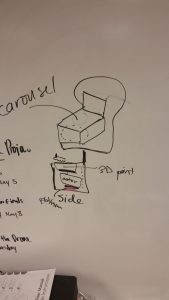
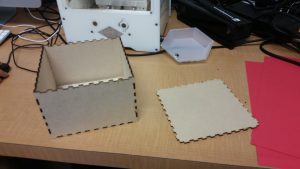
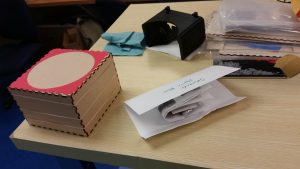
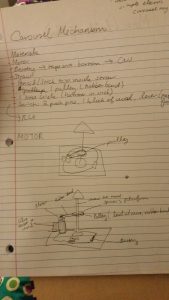
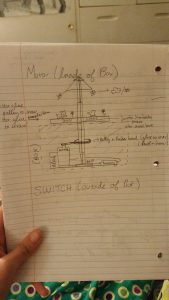
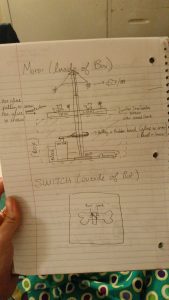
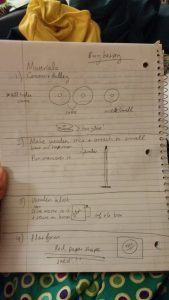
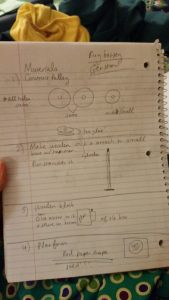
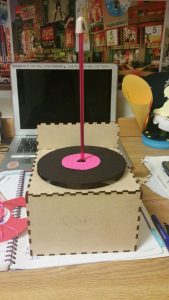
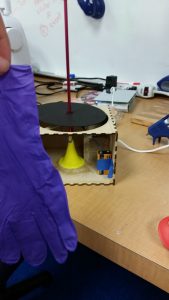
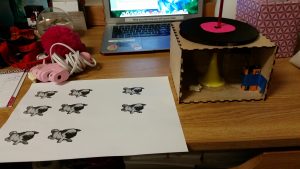
My project was inspired by James Francis Barraud’s His Master’s Voice. The design of my box is meant to mimic his painting. I accomplished this by creating a spinning record player, which is reminiscent of the gramophone in the painting. The twist is that instead of the pet listening to his master’s voice, the master can hear a sound that is associated to his or her pet. For example, this can be the sound of a dog barking, a cat meowing, or a hamster wheel spinning. As Jonathan Sterne points out in The Audible Past, “The sound of the voice, and not necessarily what’s being said, is what matters” (Sterne 303).  Likewise, the sound of the pet, whether it’s the actual voice of a pet or the sounds accompanied with the pet, is what triggers the nostalgic effect of the piece. Nostalgia is the most important factor of my product, because nostalgia can alleviate the grief one feels when losing a loved one. The nostalgia in the product will allow the owner to recreate a fond memory of his or her pet. Studies show that it is possible to help a person through the grieving process by encouraging him or her to reminisce (Tully). With this product, the owner can listen to and see a memory of his or her beloved pet at any time.

The most important factor of my project is the nostalgia factor. “It is not uncommon, especially after the death of a pet, for an owner to sense that he hears or sees his pet in familiar places,”(Tully). This contraption allows the owner to see and hear the pet in a familiar place; the home. This product provides the owner with a private way to grieve for his or her deceased pet. In order for the animation to work, one must manually turn on the contraption, turn off the overhead lights, and position a strobe light against the middle of the object. This setting makes the experience feel more intimate, private, and controlled.

The intention behind this contraption is to give a positive reminder of the vitality of life the pet once possessed, as well as allowing the owner to stay connected with the pet during the grieving process. I highly encourage those who purchase this product to send in a video of their beloved pet, because that video can be turned into a reel and become animated. Having an animated representation of a special moment with one’s beloved pet is endearing and allows the owner to reminisce in a positive way.

The idea of reminiscing a deceased loved one is a topic that we have thoroughly explored in class. We have seen it in the creation of Facebook memorials, on entire websites dedicated to deceased loved ones, and in the Victorian pictures of people with dead family members. Additionally, the commodification of grief has been a highly discussed topic in class. The commodification of grief can be seen in the perfumes made from loved ones, the option to turn the dead into compost, and even in our traditional funeral services. The price of a traditional funeral with flowers, a full service, embalmment, and a practical coffin can easily reach into the thousands. Overall these commodities are monetarily out of reach to middle and working class people. My project, on the other hand, is intended for people from all economic backgrounds. In fact, it’s pretty reasonably priced! It would only cost the buyer $10, which is reasonable considering how much time and effort goes into crafting each individual product. Buyers must complete this form when purchasing one of the boxes:

Please send in the following while purchasing “My Best Friend’s Voice”

  1. Please send in a video complete with sound depicting a special moment with your beloved pet. 
  2. Enjoy!

 As many animal lovers know, losing a pet is devastating. Sometimes, it’s just as difficult to lose a pet as it is to lose a family member. In fact, in North America some studies have found that between 85 and 99% percent of people, “define their dogs as being like a close friend of family member,” (Kogan 2). “While the length and intensity of the mourning period may differ, the grief process is essentially the same whether one mourns the loss of a person or a pet,” (Tully). The grieving process is not linear, and many people experience going back and forth between stages (Tully). Whether the death of the pet was sudden or anticipated, acknowledging the full reality of the loss may take weeks or months. One may come home still expecting his or her pet to run to the door. That person may reach down to stroke the pet only to find that the pet is no longer there. Getting used to the idea that one’s pet is gone takes time. It is normal to move back and forth between protesting and embracing the reality of the death (Wolfelt). My product will help a grieving person during this process, because that person can relive a happy memory when needed.

Let’s face it, we are mommies and daddies to our pets. We feed them, train them, and care for them. Parents are supposed to keep their children safe. We feel responsible for their well-being. It is natural to feel guilt and even a sense of failure when our pet dies, even if he was old. Animals’ life spans are so short in comparison to our own that in some way we feel short-changed. So, what emotion does Bobby feel most of all? “Lonely,” was her simple, poignant response. There’s that word again. Even with eleven other dogs, Bobby is lonely. No other dog or person can fill that spot in her heart where Bett belongs. This is true grief, (Heath).

The physical and audible presence of the pet can be extremely comforting for a grieving owner. Sadness, anger, guilt, relief, helplessness, loneliness and many more are all emotions that are associated with the grieving process, (Tuzeo). Loneliness seems to stand out the most. Ideally, loneliness can be relieved by this product. For example, the audible barking of a dog accompanied by the image of the dog sniffing flower and running through a green field can potentially be powerful for someone who misses that dog.

I based this project off of my own pet, Tinkerbell. Tinkerbell is a fourteen-years-old, fat, lazy, cranky chihuahua (?) who has been my best friend since Elementary School. The year before we got Tinkerbell, our dog, TooToo, attacked a neighbour and had to be put down. We were searching for a new dog and visiting countless shelters until my Mom came across a newspaper ad about a woman selling puppies. My brother and I convinced our mom to take us to the parking lot and see the puppies. Tinkerbell  was the last of the litter as well as the runt of the litter. She was so small that she could fit into the palm of my hand. She grew up to be one hell of a dog. She was notorious for picking on larger dogs and baring her tiny teeth, so we nicknamed her, “Chupacabra.” Now, she’s at that age where she’s having trouble getting up in the morning and needs help going to the bathroom. She still has tons of spunk and sass, but my parents are preparing for the inevitable. Although I’ve been worried that she was going to die since she was five – my best friend pointed out that dogs live for ten years so Tinkerbell was already halfway to death’s door, and I jumped on board and we would both cry over her even though she was completely fine – she continues to be extremely stubborn. I modelled this project with Tinky in mind, but it was almost too hard to put the image of Tink on the contraption since she is still alive. Sure, she’s old, but I don’t want to think about that yet. Instead, I decided to use a video of my other dog, Nabi.


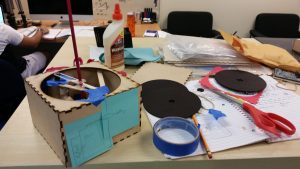
The Building Process!

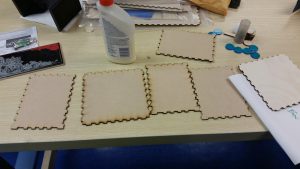
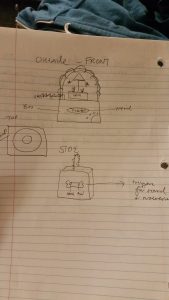
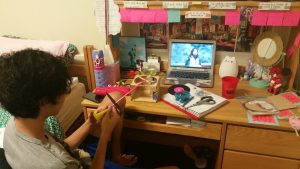
Step One: Designing the Box. This took way longer than I will ever be willing to admit. 

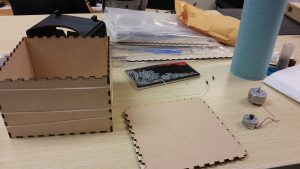
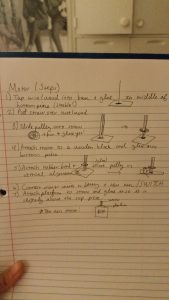
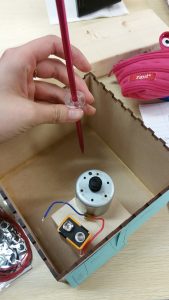
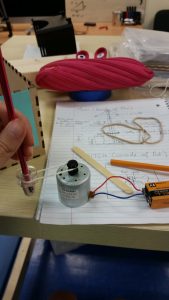
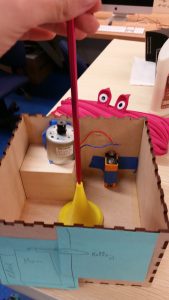
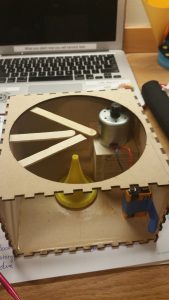
The next step was to figure out how to make the motor… Surprisingly, this was the easy part!

Now, how do I fit it all inside?

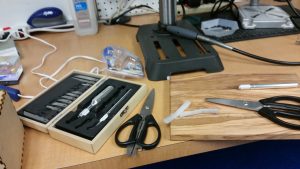
DIY glue stick #never getting that hour of my life back again #RIP Maker Space person’s finger #xacto knife

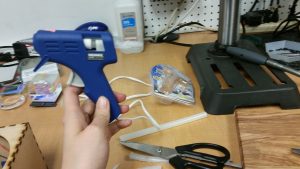
I had to help an RLO staff member prank her co-workers in order to borrow this glue gun. #Clippy lives on
Me realising that I have to tear the box apart in order to wire everything inside.

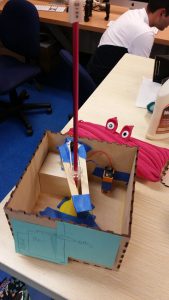
Finally, it all fits!! Eureka!

Annnnnnnnnnnd it breaks….

As soon as I tried to show my boyfriend, it broke. Maybe it’s because I spent an hour turning it on and off, which wore down and broke the string – but who actually knows what happened.

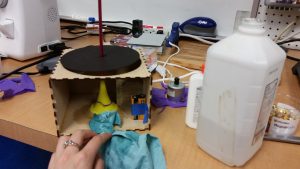
Time to find a new way to hook the motor to the spool inside of my box… I needed the perfect fit, so I improvised with the band inside of a rubber glove. These were semi-effective. Thankfully, I ended up finding the perfect sized rubber band in a random box underneath my bed.

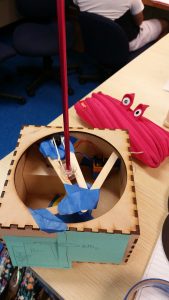
Also this happened, which didn’t really help. I wanted to glue the motor vertically against this block and glue it to the box, but it was too big to fit inside of the box. I needed to saw it down… and gave up after twenty minutes of mindless sawing. Ain’t nobody got time for that! I used the last of my hot glue to put the motor in place instead.

Not only did the string break, the actual contraption came apart and I had to re-glue it all together. I settled the base in place, but once it dried I realised that it was glued WAY off center… So I had to wash off the hot glue and reset the entire piece. It all worked out in the end, but I was not a happy camper at this moment in time haha. 

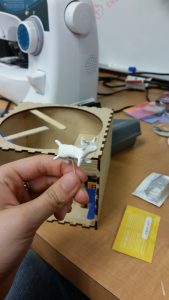
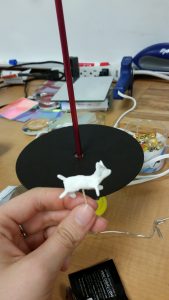
For the figurines, I worked on both 3D printing dogs and making my own dogs from clay, but the dogs kept flying off so I needed a new option…


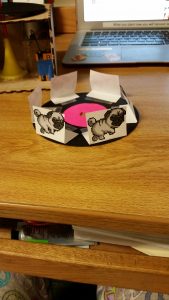
As a result, I made a paper zoetrope of my pet. I used pugs as a demo, because Tinky is so fat that people mistake her for a pug!

Below are a few videos of the design process:

youtu.be/Br0f7_32ZlE

Unfortunately, the sound did not transfer over. There is supposed to be barking associated with the music box!  I will upload a new video!

EDIT: STAY TUNED FOR NEW PICTURES! I am going to add paint and a lever and demonstrate what the animation looks like with a strobe light. 


Works Cited

Blazina, Chris, and Lori R. Kogan. Men and Their Dogs : A New Understanding of Man’s Best Friend.Cham: Springer, 2016.

Heath, Judy. No Time for Tears : Coping with Grief in a Busy World (2). Chicago, US: Chicago Review Press, 2015. Chicago Review Press.

Sterne, Jonathan. “The Audible Past.” Duke University Press. Durham and London, 2003.

Tully, Jane. “Dealing with Death: Good-Bye, Old Friend.” The American Journal of Nursing, vol. 99, no. 8, 1999, pp. 24DDDD–24FFFF., www.jstor.org/stable/3472180.

Tuzeo-Jarolmen, JoAnn. When a Family Pet Dies : A Guide to Dealing with Children’s Loss. London, GB: Jessica Kingsley Publishers, 2006. ProQuest ebrary. Copyright © 2006. Jessica Kingsley Publishers.

Wolfelt, Alan D.. When Your Pet Dies : A Guide to Mourning, Remembering and Healing. Fort Collins, US: Companion Press, 2004. ProQuest ebrary. Copyright © 2004.

From Phonography to Black Boxes in Jonathan Sterne’s “The Audible Past”

Just a quick mention on embalming: check out Jessica Mitford’s short story, Embalming Mr. Jones.  I read it for an english class and still remember each excruciating detail…

It’s amazing the amount of detail we go to in order to make the dead look “decent,” even if that means that nothing inside (or out) is real.

Moving along!

The Mysterious Black Box

Sterne’s article focuses on the importance of phonography and how it influences everyday life. One example of this in modern times is the black box used in airplanes. The purpose of the black box is to record the conversation in the pit of an airplane, and they often used by authorities to get to the details of a situation whenever a disaster occurs (when a plane crashes, is hijacked, etc).

As you probably already noticed, the black box is not actually black, it’s orange. In fact, it’s not even a box! There are some theories as to why it got it’s name as the “black box,” but none have ever been proved. Some of these theories include:

  1. the original design was a black box
  2. a journalist coined the term and made it become known as a ‘black box” in the media
  3. the only semblance of the piece remaining after a crash is a charred, black box with the recordings inside.

Additionally, it’s not even a box! It’s actually comprised of two separate parts. Check out this post for more information.

Malcolm Gladwell’s Outliers: the Story of Success provides transcripts of actual conversations that took place in the cockpit moments before a disaster. The seventh chapter of Gladwell’s work, “The Ethnic Theory of Plane Crashes,” uses these transcripts to reveal the larger cultural factors at play.

For example, the crew on Korean Air flight 801 were so restricted to the Korean culture of being respectful to a superior (in this case, the captain) that it cost them their lives. This blog effectively summarises the chapter and provides some decent counterpoints to Gladwell’s theory.

These conversations are useful, because they help airplanes companies figure out how to train their crews effectively to prevent a given disaster.

Click here for a link to a site titled, “Last Words,” which has the recordings of black boxes from  infamous plane crashes.