The Consent of the Networked

Politically, “consent of the governed” refers to the idea that a government’s power derives from the people that legitimize it. In practice, this means that a democratic system can only stand with the support of the people. In today’s technologically centered and ever-progressing society, “consent of the governed” must retain its motivation, but take on new interpretation in the context of data-mining and social media. In “How Your Data Are Being Deeply Mined,” Alice Marwick examines the consequences of modern data culture in terms of personal privacy and the impossibility of living a life “off the record,” so to speak. With the reality that data brokering is becoming more invasive and less transparent, Marwick ends her discussion by highlighting that, “Those of us concerned with privacy must continue to demand that checks and balances be applied to these private corporations.”

In her book, Consent of the Networked, Rebecca McKinnon emphasizes this idea. She argues that we, as consumers, must require the same regulations and rights in the digital context that we require in the physical context. This suggests that as society and technology evolve innovatively, so must our laws. This will be even more important as artificial intelligence progresses indefinitely. Matthew Gold, in Trending: The Promises and the Challenges of Big Social Data states that as technology progresses it will, “Combine the human ability to understand and interpret­ which computers can’t completely match yet-and the computer’s ability to analyze massive data sets using algorithms we create.” As computers progress to the point that they have the cognitive ability of humans, and data-mining increases exponentially, we have a responsibility to demand the same regulation of computers as we would of humans. Further, in order to maintain the consent of the networked,  governments must produce internet policies regarding data as innovative as the technology itself. Only then will it protect the peoples’ civil liberties in the digital world.

Developing an Opinion on Edward Snowden’s Leaks

When I first started reading the article, my knowledge of the Snowden leak was very limited. I knew he had taken classified documents and made them available to the public so that the public would be aware of privacy violations; however, anything beyond that I had not given a great deal of thought. After reading and listening through the article, I was still left with a sense of “Does it really matter?” All the article did was present to the reader that their privacy was being violated and that it was not a good thing; I never got any insight as to why violating a person’s data privacy was a bad thing, instead, the idea that it was bad was forced repetitively down my throat. So I spent some time in introspection and browsing through different articles online and I developed a very basic and short list of reasons why it was a bad thing (beyond the idea of it violating the Constitution).

  1. I found a TED Talk that was given by the journalist, Glenn Greenwald, with whom Snowden confided his story. In it, he gives his argument to the people who argue “We don’t actually need privacy if we are not acting like criminals.” His response is to give them one of his email addresses and asks them to send him the addresses and passwords for all of their email accounts. He has never received one.
  2. It leads the American public to believe that America is not as Democratic (yes I do know that we are more of a Republic than a democracy) as was once thought.
  3. Snowden only took some of the classified documents…there are many other secrets that are undoubtedly as bad if not worse than the documents he lifted.

My opinion on the matter is much more complex than this blog post (and my list of reasons) allows, but hopefully by pointing out that the article only tells us that the leaks are bad, and not the potential implications of the leaks, you develop an opinion that goes beyond the surface.

Greenwald’s TED Talk:

Edward Snowden: Domestic Enemy or International Hero?

In the wake of the 9/11 terrorist attacks, the US government had never been so exposed in failing to protect the country. The NSA, namely, admitted that they had failed in their intelligence gathering abilities and it was evident that surveillance needed to change in order to prevent another terrorist event from happen again. In the article published by “The Guardian,” the authors claim that the strong increase in surveillance can be credited to the 9/11 attacks and the major increase in cell phone and internet usage the past 10 years.

Enter Edward Snowden in 2013, who exposed the “unethical” actions of the NSA by releasing classified government information to the public. Amongst the documents that Snowden released, the US government was exposed for spying on its citizens using unethical methods, such as partnering with large communication companies and hacking online encryption codes meant to protect US citizens. Snowden rationale was that, “harming people isn’t my goal. Transparency is.”

So where does the finger pointing begin? As a government employee, Snowden was certainly exposed to classified information that, like much government information, was not meant to be seen by the public. So by releasing said information, he violated the obligation to his government and his nation. However, Snowden also exposed the NSA for, what he believed to be, questionable surveillance activity and gave attention to the questions: How much does the NSA know about our lives and have they taken domestic surveillance too far since 9/11?

The reason why I would favor the latter part of the previous argument is because of what the government could “hold over our heads” based on information they have collected. In the interview with Ladar Levison, Levison states that “a lot of people have nothing to hide” but “by collecting all of this information and making it only accessible to a small group of people, we are creating a world that is that close to becoming a totalitarian state.”

Nonetheless, Edward Snowden has created a near revolution that merge together elements of civil liberties, national security, and government surveillance power. Perhaps Snowden’s wrongdoing has sparked a change in the way we think about government surveillance that otherwise may have not come about for another couple of years.

Is The NSA Wrong?

nsa-auge

Edward Snowden leaking the NSA surveillance information has clearly caused both a media and social uproar. At this point in time, when American citizens perception of the government is very poor due to extreme partisanship and a recent government shutdown, this scandal only enhanced the publics lack of trust in the United States Government.

However, even though there clearly are multiple  opinions on the the constitutionality and morality of the NSA surveillance, this situation does differ from other similar situations. One relational situation is the IRS targeting scandal. Both of these situations involve the government taking surveillance of persons without them being away of this fact. Both of these situations also raise the questions of if the government is over-reaching its bounds and infringing upon privacy rights by partaking in such actions. However, the clear difference in these situations are that with the IRS, it was a matter of targeting a group of people based on political beliefs. With the NSA, it does not appear that their is any targeting that is not permitted within the “three hops” rule. Although this does allow for a vast amount of people to have surveillance taken upon them, it is still thought that their is probable cause for such surveillance to occur.

Even though the reported number of incidents prevented due to NSA the surveillance went from 54 to 1, it raises the obvious question, is one enough? Although it may be very unnerving to think of how much the NSA knows about you, if this information truly did prevent American lives from being lost, isn’t it worth it? Due to Snowden’s leakage, this debate has begun and will continue for many years, especially given the current political climate.

http://www.veteranstoday.com/wp-content/uploads/2013/10/nsa-auge.jpg


blowerblowerFile-Utah_Data_Center_of_the_NSA_in_Bluffdale_UtahFile-Utah_Data_Center_of_the_NSA_in_Bluffdale_UtahFile-Utah_Data_Center_of_the_NSA_in_Bluffdale_Utah (1)ap132411996867

In an era of fiber optic cables, enabling data to travel up to speeds of 2/3rds the speed of light, and the continuous flow of information across the web puts mass amount of data right at the fingertips of the NSA. As we have already talked about, anonymity is practically impossible when attempting to live a convenient life. However, it wasn’t until 2013 with the release of the Snowden files did we realize that not only were we not anonymous, but in fact we were actually quite well known.

Using handy counter on The Guardian website and a stop watch, I calculated that the NSA collects, according to The Guardian, around 20 terrabytes of information per minute. Most of this data would be turned around and stored in the NSA’s new Utah Data Center which, according to Fox News, cost the taxpayers $1.7 billion to build. Forbes.com estimated that this site could hold up to 12 exabytes of information. To put that in perspective lets do a calculation:

1 exabyte= 1,000,000 terabytes

12 exabytes= 12,000,000 terabytes

@ 20 terabytes per minute (12,000,000/20)

The NSA could hold 600,000 minutes of data

600,000 @ 60 minutes per hour (600,000/60)

The NSA could hold 10,000 hours of data

10,000 hours @ 24 hours per day (10,000/24)

The NSA could hold over 416 days worth of data

The NSA could hold all the data they collect, which using the talked about dragnet and the “three hops” would be most of the data available, for over 416 days. After they filter through the data to determine threat levels of information and remove the information deemed non-threatening, they would have enough space to hold enough data on all terrorist SUSPECTS AND THEIR FIRST TWO HOPS OF FRIENDS for far greater than any of them will actually live. At a time where cyber attacks are a real threat to not only nation security, but also things like economic attacks, identity theft, and anti-western hacking groups, can we trust the government with out data? What right does the government have to bully corporations without warrants like Lavabit to give over users data? These are both questions that need to be answered and are finally being talked about thanks to Edward Snowden.


More information can be found here:

http://www.forbes.com/sites/kashmirhill/2013/07/24/blueprints-of-nsa-data-center-in-utah-suggest-its-storage-capacity-is-less-impressive-than-thought/

http://www.foxnews.com/tech/2013/06/13/what-we3-know-utah-nsa-mega-data-warehouse/

Can There Be More “Snowdens”?

The “NSA Files Decoded” article notes that the NSA dramatically expanded the scope of its surveillance operations after 9/11, in an attempt to close the perceived gaps in America’s security network that may have allowed the attack to succeed. Put simply, September 11th, 2001 was a huge “wake-up call” for the NSA, and served as the catalyst for a great deal of reform and restructuring within the organization.

The Snowden leaks, I’m sure, have forced the NSA to re-evaluate its operations yet again. Whereas 9/11 pointed to a weakness in how the NSA and similar organizations collect information, Snowden’s actions seem to reveal a weakness in how these groups protect their intel.

I, for one, am amazed (and impressed) that a single man was able to leak so much. Of course, “knowing” (or, at least, having access to) necessarily comes before “leaking”, and Snowden definitely knew a lot. Regardless of whether the leaks end up producing any limitations on the organization’s activities, I’m sure that the NSA must be taking every measure possible to prevent this sort of incident from happening again. They can’t really afford “another Snowden,” so to speak.

To this end, the NSA is almost surely re-evaluating exactly who has access to their intel, and just how much access these individuals are granted. Yet they can only do so much. For now, humans are a necessary danger. To make sense and use of the mountains of information they collect, the NSA needs at least some high-authority individuals with the keys to the kingdom. And while these endowed individuals exist, so too does the possibility for more whistleblowers. Whistleblowers who, when acting responsibly, keep tabs on and boldly announce what even the most advanced AI can’t yet compute: the (im)morality of the actions they are witness to. The world needs more Snowdens/leakers/whistleblowers/whatevers – I just hope that there’s still room for them.

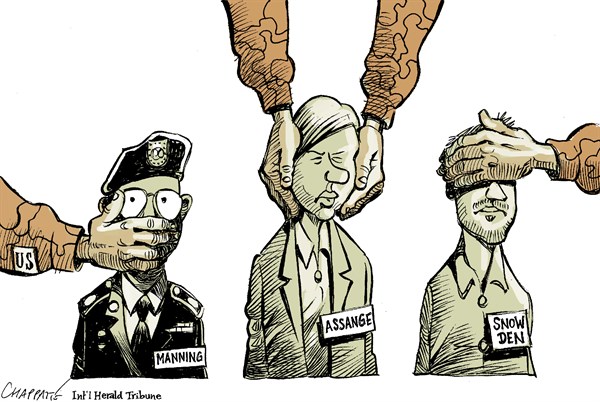
http://thecontributor.com/humor/five-cartoons-about-bradley-manning-and-war-whistleblowers

The Unseen Slaves of History

The series of letters discussed in Klein’s “The Image of Absence” are beneficial to understanding how the style of communication used back then would affect the work of modern day researchers looking over the letters. The age in which Jefferson, Evans, and Hemings lived was not one in which it was easy to communicate easily between far-flung acquaintances. Therefore, the letters sent back and forth between Jefferson and Evans reveal the many issues that this form of communication cause for historians hoping to glean some information from these letters. For example, the very first correspondence between Evans and Jefferson never actually mentions the name of James Hemings, nevertheless his image is still brought up as Jefferson’s “former employee” and he cannot be overlooked since the letter revolves around Jefferson’s desire for James’s return. How can we fairly examine James Heming’s responses and decisions regarding Jefferson’s request, when we never truly see his own writing? This is reinforced by Klein’s assertion later that “in a listing of search results, these letters do little more than reinscribe the absence of James Hemings in the Jefferson archive”. By showing that Hemings is totally absent from Jefferson’s archive of direct correspondence, Klein is able to highlight the lack of a voice for slaves and ex-slaves within the historical perspective. This is extremely important for understanding how historians must formulate theories on the opinions and life perspective of slaves. Any sort of writing must be taken with a grain of salt that it was most likely altered or edited by a white man after first created by a slave.


Reducing Context Cluelessness

James Hemings’ identity was nearly lost as a result of archival silence

Typically, historians look to understand the happenings of the past exactly as they were. To understand the past, context is generally a high priority. In Lauren Klein’s paper regarding Thomas Jefferson’s letter collection, words and phrases were pieced together to form a new inscription about the identity of a previously unknown slave named James Hemings. Klein explained the recent discovery of Hemings’ identity as a result of “archival silence.” Because of gaps in archival record, Heming’s identity was lost deep in the annals of Jefferson’s literature. Without knowing the context and time period when Thomas Jefferson was writing his letters, the language can be confusing and misunderstood. It was taboo for someone of Jefferson’s position and status to write of slave laborers, so subtle hints had to be pieced together, much like a puzzle. Fortunately, through the use of text mapping, a new picture came to view, outside of the individual letters themselves.

One article from Technology Review revealed that text mapping can also explain changes in terminology used across time periods. The article made a point to state that terms can change meaning literally overnight. In an internet assessment run just after the release of the Microsoft operating system by researchers at Stoney Brook University, the term “windows” morphed into much more than just a common household feature. Technology changed the entire understanding of the word. Similar to the textplot software in Quantifying Kissinger, Google Trends and other similar features can offer a unique representation moments in history. Paired with the benefits of reducing “archival silence,” the use of text mapping software can help provide comprehensive historical pictures through inscription and representation that could be the future of historical archiving.


Reading Between the Lines…of Data

Lauren F. Klein, in her analysis of Thomas Jefferson and his data-storing tactics, The Image of Absence, comments on multiple ideas regarding the collection and interpretation of data. The most prominent idea featured in Klein’s work is the idea of “archival silence,” an idea that can simply be defined as “gaps in an archival record.” Though Jefferson was meticulous in his record-keeping, he would also reduce mounds of data regarding his slaves into small bits. Klein uses a particular slave of Jefferson, James Hemings, as an example, saying “Jefferson himself was at times required to recognize, if not to redress, the flawed logic that reduced Hemings’s life to a line of data.” Klein views this particular lack of record-keeping by Jefferson as an unfortunate sign of the times, showing that Jefferson played a large role in the silencing and subjugation of African-American slaves.

At the same time, Klein presents the reader with ways to combat the problem of “archival silence,” saying the reader ought to “look to the pathways of connection between persons and among groups.” Klein then presents a graphic showing the patterns of correspondence between Jefferson and others, concerning James Hemings. This graphic is not unlike those presented by Micki Kaufmen and the “Quantifying Kissinger” Team. Both graphics attempt to piece together information that is not explicitly presented in the data collected and attempt to display patterns, or “presences” (as described by Stephen Best and Sharon Marcus), hidden within the data collected.

It is this uncovering of “archival silence” that seems to scare so many individuals today. Many Americans will not soon forget the Edward Snowden scandal, nor the subsequent report that showed the US government was in possession of millions of Americans’ phone records. Why did this scare so many people? Was it because people were afraid that the US Government knew who we were calling each and every day? The could be. But, maybe what is more important is what phone records don’t explicitly show. Maybe, by using Klein’s tactics to uncover archival silence, and by reading the patterns and “presences” within these phone calls, the US government can ascertain more information about the callers than is ever presented within the records themselves. Maybe what citizens have to fear most is not the uncovering of their data, but the patterns hidden behind that very data trail.

Using Jefferson’s Letters to Recreate Networks and Narratives

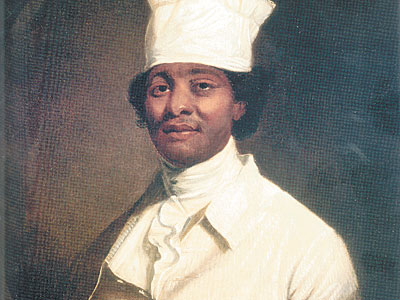
In her article “The Image of Absence,” Lauren F. Klein advocates for the use of data visualizations in recreating historical narratives. Specifically, much of her paper is spent analyzing Thomas Jefferson’s letter collection as catalogued in “The Papers of Thomas Jefferson” digital database. Her primary subject is a man named James Hemings, a slave of Jefferson’s who eventually became a chef at his French estate. Throughout her article, Klein notes that while Jefferson’s letter collection is extensive, researchers are rather limited in the potential claims they can make regarding the Antebellum period due to Jefferson’s narrow point of view. Furthermore, Klein suggests that data visualization methods and specific searches within the collection can elicit more telling information of the time period.

Klein notes that one of the main issues with any written work of this time revolves around the fact that they were published by white, landowning males. Therefore, even works written by slaves don’t yield an accurate portrayal of the networks and social structures that truly existed during Jefferson’s lifetime. Klein urges that in order to reconstruct these narratives, “We must look to the pathways of connection between persons and among groups, the networks of communication in which these men and women engaged, and the distributed impact of the labor they performed” (665). Here, Klein asserts, is where data visualizations can fill the gaps that individual letters and correspondences create. Perhaps the most interesting example of the role of data visualizations in her article, Figure 3 depicts the “networks of relations” embedded in a specific set of letters pertaining to James Hemings’ life. The figure, pictured below, was created by a computing process that identified groupings of words that resemble people’s names in 58 letters referencing Hemings. Klein concludes that figure exhibits the intricate relationships that existed between all members of Jefferson’s network, including his family, political correspondents, friends, plantation staff and his slaves. Examining Hemings’ node on the figure, it becomes clear that unlike the traditional narrative of the time, he was in correspondence with a variety of people, including Jefferson, Jefferson’s friends and even free plantation staff. Additionally, Klein notes that the significant amount of correspondence between Jefferson and the Hemings family suggests that he truly relied on his slaves and actively sought to communicate with them. The overall importance of the figure is to highlight the complex networks and interactions that are often difficult to see in such a one-sided historical narrative as the Antebellum period.


Visualization of the network of relations within the "Hemings  Papers." Width of arc indicates relative frequency of correspondence. Image by Klein
Visualization of the network of relations within the “Hemings Papers.” Width of arc indicates relative frequency of correspondence. Image by Klein