Politically, “consent of the governed” refers to the idea that a government’s power derives from the people that legitimize it. In practice, this means that a democratic system can only stand with the support of the people. In today’s technologically centered and ever-progressing society, “consent of the governed” must retain its motivation, but take on new interpretation in the context of data-mining and social media. In “How Your Data Are Being Deeply Mined,” Alice Marwick examines the consequences of modern data culture in terms of personal privacy and the impossibility of living a life “off the record,” so to speak. With the reality that data brokering is becoming more invasive and less transparent, Marwick ends her discussion by highlighting that, “Those of us concerned with privacy must continue to demand that checks and balances be applied to these private corporations.”
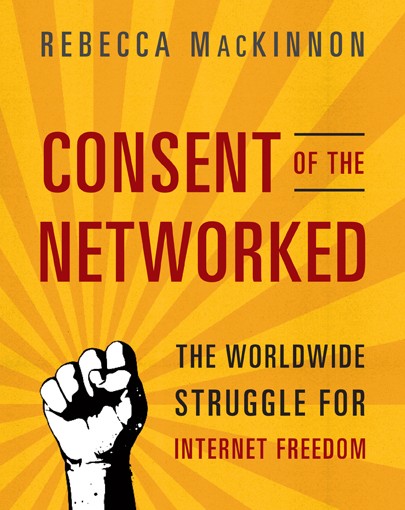
In her book, Consent of the Networked, Rebecca McKinnon emphasizes this idea. She argues that we, as consumers, must require the same regulations and rights in the digital context that we require in the physical context. This suggests that as society and technology evolve innovatively, so must our laws. This will be even more important as artificial intelligence progresses indefinitely. Matthew Gold, in Trending: The Promises and the Challenges of Big Social Data states that as technology progresses it will, “Combine the human ability to understand and interpret which computers can’t completely match yet-and the computer’s ability to analyze massive data sets using algorithms we create.” As computers progress to the point that they have the cognitive ability of humans, and data-mining increases exponentially, we have a responsibility to demand the same regulation of computers as we would of humans. Further, in order to maintain the consent of the networked, governments must produce internet policies regarding data as innovative as the technology itself. Only then will it protect the peoples’ civil liberties in the digital world.

 rysamuels
I agree with your argument that we need to maintain the consent of the networked through internet policies regarding data in order to protect the people’s civil liberties in the digital world. In “How Your Data Are Being Deeply Mined”, Alice Marwick states that there is an “industry of collecting, aggregating, and brokering personal data that’s known as ‘database marketing.” Furthermore, Marwick states how this data include “information about online behavior tracked through cookies, browser advertising, and ‘offline’ buying behavior.” In other words, database marketing gathers Big Data to make generalizations about people from their social media.
Moreover, we see various businesses using social media to scope out potential employees. In the National Football League (NFL), NFL franchises use social media to closely monitor potential players. They collect all the players’ social media data and use it to create a social profile about the player. Then, they use the data to determine what kind of person the player is off the field based on the player’s social media conduct. From the data, players are often labeled to either be a good person with no problems or someone who is troubled as they have inappropriate postings and may create controversies for the team in the future. From this data, NFL franchises decide to buy the player or disregard any interest in the player. Yet, there is a fallacy in this outlook as players may have a false personality on social media either to fool NFL franchises with a well behaved one or trick teams into not buying them in order to stage the team of their choice to sign them.