Hack #2

Elon Musk has somehow obtained a position of power that is almost inconceivable, and it is as if those around him are blind to the atrocities he has committed. I witnessed his rise to ridiculous power through Twitter, my first memory being when he released “RIP Harambe” on SoundCloud under the name “Emo G Records.” This was in 2019, and I was 15 – not yet aware of who Elon Musk was, where he came from, and what he was capable of doing. In my childish nature, I thought he was “cool,” seeing him smoking weed on The Joe Rogan Experience (BBC 2018), being someone of a respectable position to do such casual things. From then on, I followed what he was doing on social media: some new SpaceX rocket, some new Tesla car, perhaps a flamethrower that could be bought by the general public. But slowly, I started to see articles surrounding his name. These articles first consisted of how he gained his wealth but led me to some more controversial topics: some whispers of Errol Musk, Elon’s father, and his emerald mines in Africa (Business Insider 2023). Then there was Tesla using child labor to mine cobalt in Africa (Reuters 2024). Sometimes there were less-serious accusations, but still, they made me curious and wary of what Elon Musk would say or do: cryptocurrency and Tesla stock market manipulation (CNBC 2021).

In this day and age, Elon Musk is heavily involved in the U.S. government and, in my opinion, garners more attention than the newly elected President Donald Trump. Because Musk is gaining so much attention, now being a prominent name in government, the artificial intelligence race, and space technology, I believe most of the public’s attention is being diverted from his alleged atrocities – particularly regarding the exploitation of Africa.

My reflection on the evolution of Elon Musk plays quite a large role in this hack, particularly the fact that Elon Musk is a mere sample of the exploitation of Africa’s resources. This is especially true when considering a third of all the minerals of the world are in Africa alone, the history of resource exploitation runs deep. Taking a closer look, we found that Africa has been a source for numerous resources throughout history, not just minerals. These resources include seaweed, wood, oil, ivory, gypsum and rubber (National Geographic 2024). With so many resources available, there must be other businessmen attempting to take advantage of the abundance.

Our research revealed several notable members. Firstly, Errol Musk, Elon’s father, worked alongside a businessman that owned an unregistered emerald mine, and would import those emeralds during his trips overseas and have them cut in Johannesburg. He would then sell these emeralds to jewelers (Business Insider 2023).

We then found Yevgeny Prigozhin, the financier behind the Wagner Group, who established a vast security and business network in the Central African Republic (CAR) and other African countries. The U.S. Department of the Treasury imposed sanctions on companies linked to the Wagner Group in the CAR, citing their involvement in illicit gold and diamond mining, which funds the group’s paramilitary activities and destructive operations through companies like Lobaye Invest and Midas Ressources SARLU (U.S. Department of the Treasury 2023).

Next on our list was Dan Gertler, who leveraged his close ties with former Democratic Republic of the Congo (DRC) President Joseph Kabila to secure lucrative mining deals. In 2017, the U.S. Department of the Treasury sanctioned Gertler, accusing him of costing the DRC over $1.36 billion in lost revenues between 2010 and 2012 through these deals (Atlantic Council 2023). These mining deals granted him access to vast reserves of cobalt, copper, and other minerals.

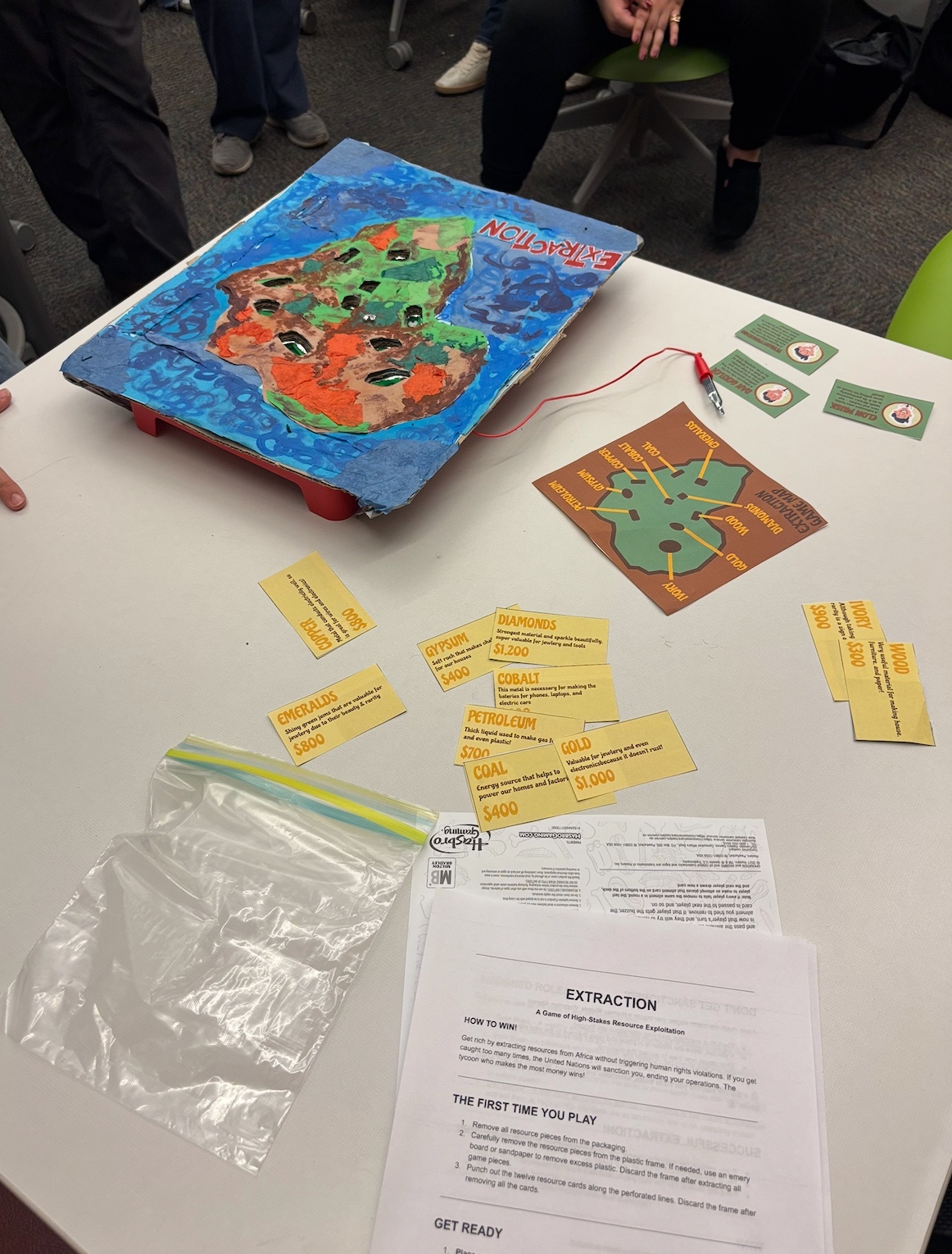
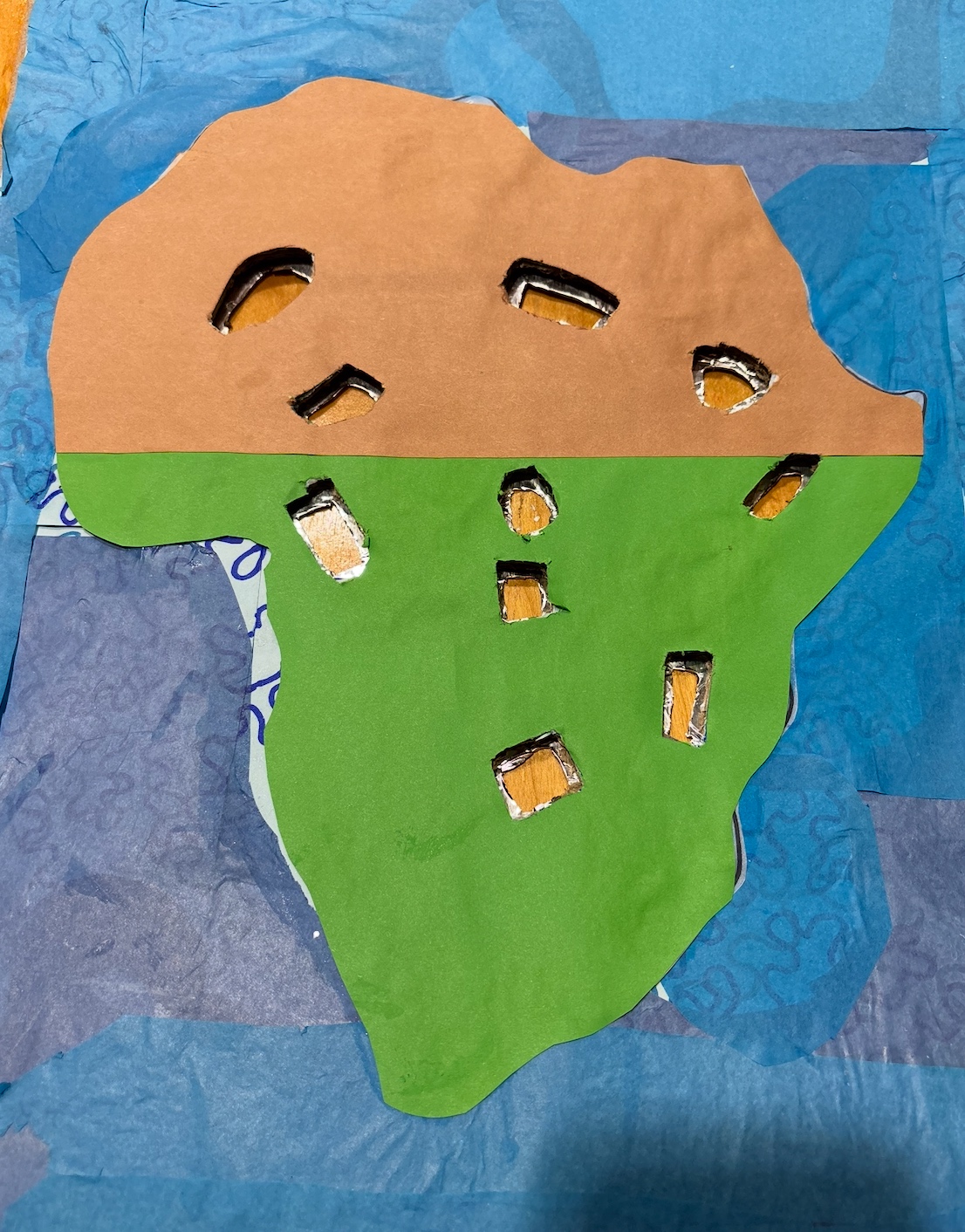
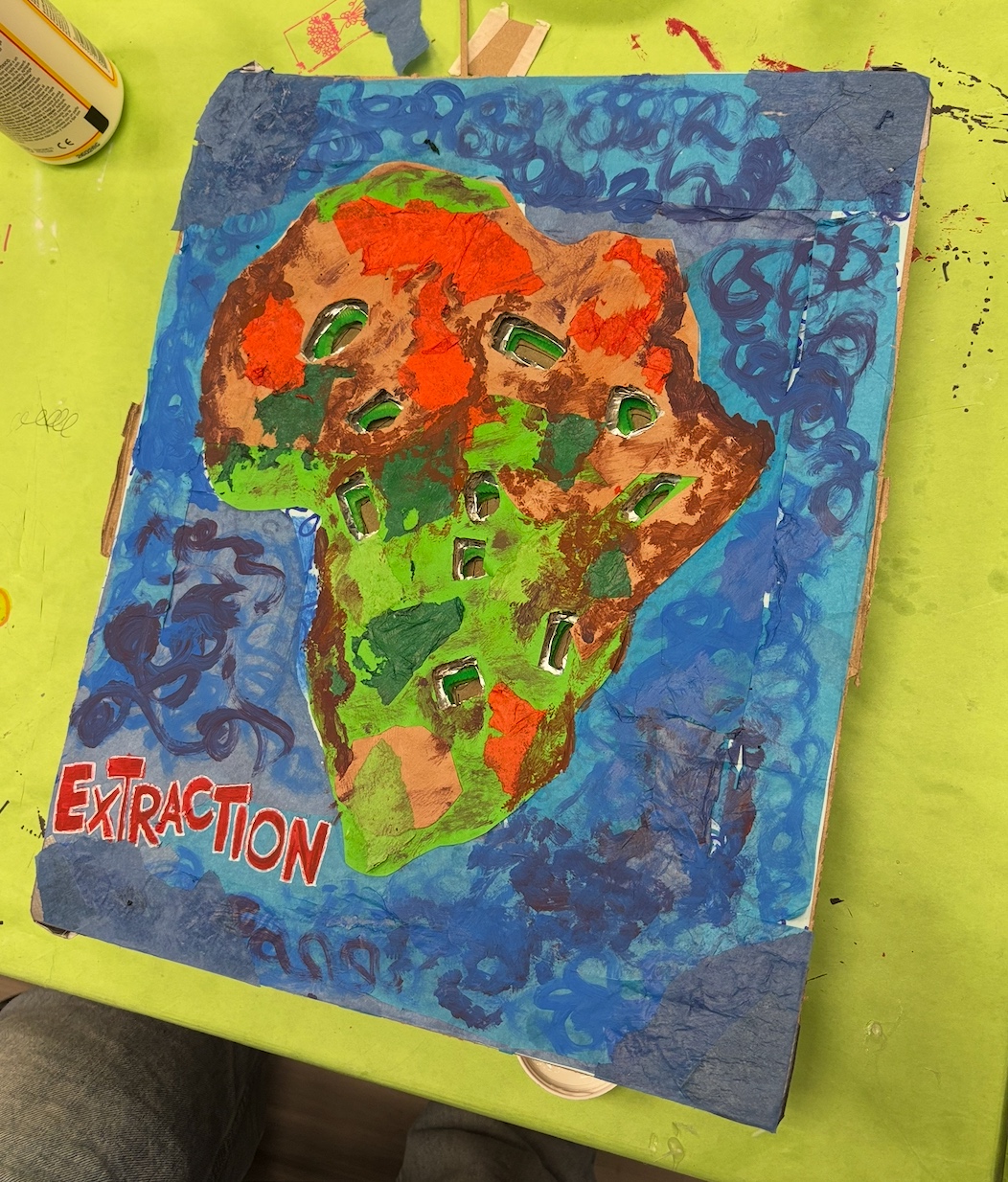
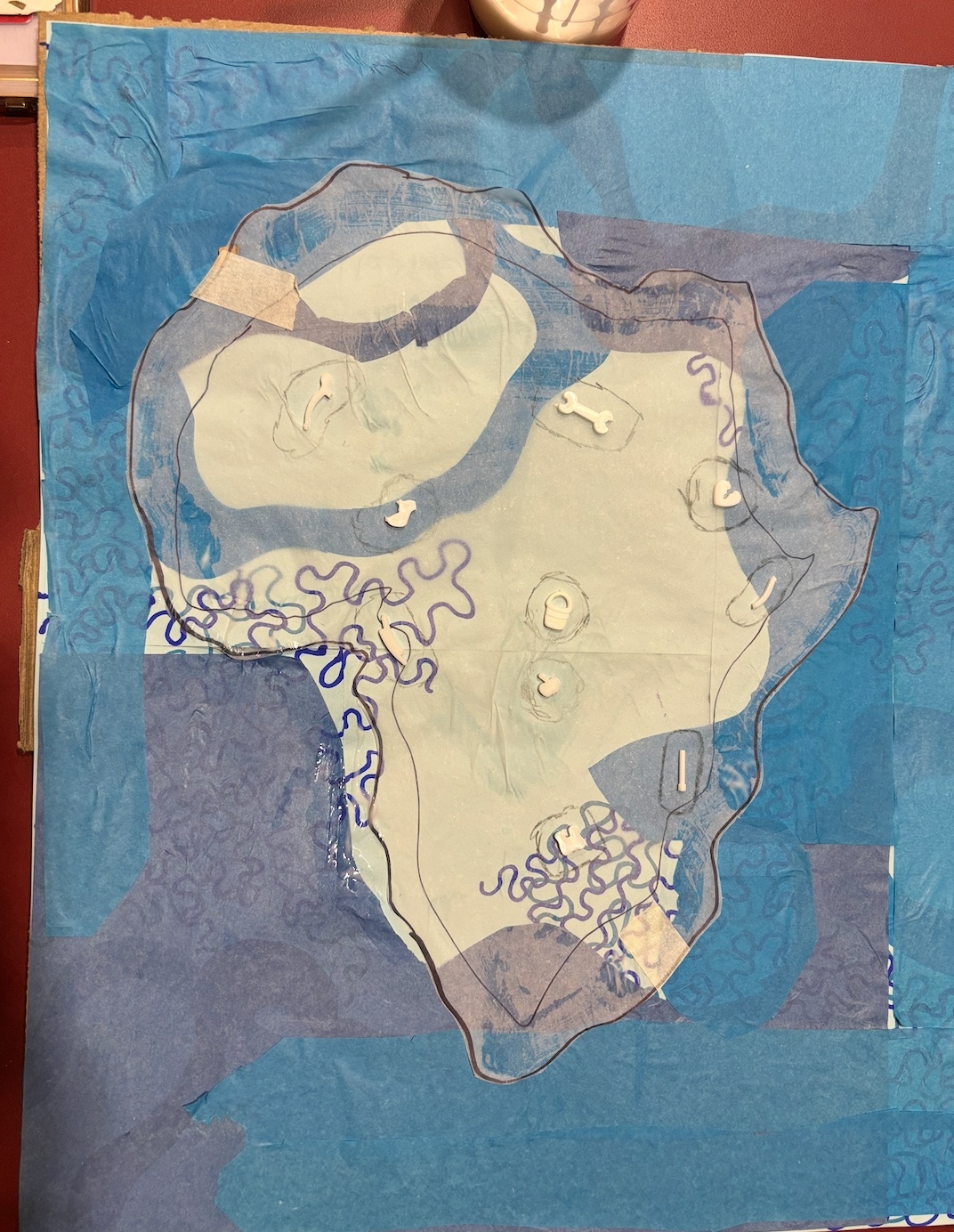
After identifying the driving motivation for our hack, we began to develop its identity, and our strategy for applying it to the original game, Operation. This idea of application took a lot of inspiration from Mary Flanagan’s Critical Play: Radical Game Design, and her discussion of Redressing or Reskinning. Flanagan describes how players historically transformed toys by altering their appearance to explore forbidden or serious themes – such as children dressing dolls in mourning clothes for funeral play. Similarly, we saw an opportunity to maintain Operation’s core mechanics while transforming its visual and thematic elements to address more serious issues. Our game “Extraction” attempts to put the player into the shoes of a tycoon, so to speak. We gamify the process of extracting resources from Africa to mirror how all of these various business tycoons view their business and resource extraction as a game.

Building on Mary Flanagan’s concept of Critical Play, our hack aims to transform the original game’s lighthearted nature into a tool for reflection on global exploitation. The slight tweak of theme turns it into a commentary on colonialism and resource extraction, forcing a deeper engagement with the player, challenging them to consider how the seemingly innocent actions of “playing the game” can mirror exploitative practices.

Our intention was to shine light on the exploitation in Africa by recontextualizing Operation’s gameplay. I feel as if most of the public’s attention has been diverted from Musk’s atrocities when considering the exploitation of Africa, and it would be worth bringing to light other bad actors in this space.

For a brief overview of how our game works to recontextualize, instead of removing objects from a patient, players become tycoons extracting valuable resources. The buzzer now represents getting caught committing human rights violations, where three violations result in UN sanctions (game over). While the core goal remains the same – collect the most points (now profits) – it transforms a children’s game into a bit of a commentary.

We would like to note that we used ChatGPT for rewriting the instructions of ‘Extraction.’ We did this because the original instructions were quite long, so we thought it would be a better use of our time to have an artificial intelligence write out the entirety of the  instructions instead. We then went back and made edits to make sure that the instructions were still conveying the original message we intended with our game. We acknowledge the inherent problems with AI and that it is not necessarily accurate information, but we believed for writing the instructions it would not be directly presenting direct facts to our audience, instead the rules for play based on our shorter instructions for game play. 

The chat citation: “Rewrite the instructions of Operation based on this attached document where we have reskinned the game to be a commentary on resource extraction in Africa” prompt. ChatGPT, 18 Feb. version, OpenAI, 8 Mar. 2025, chat.openai.com/chat
Atlantic Council, “In a Congolese Mining Case, Biden Can Secure a Win for US Sanctions Policy in Africa,” Atlantic Council, https://www.atlanticcouncil.org/blogs/africasource/in-a-congolese-mining-case-biden-can-secure-a-win-for-us-sanctions-policy-in-africa.

BBC News, “Elon Musk Smokes Marijuana Live on Web Show,” BBC News, September 7, 2018, https://www.bbc.com/news/technology-45445554

Business Insider, “Elon Musk’s Father Errol Never Owned Emerald Mine, Says Musk,” Business Insider, September 2023, https://www.businessinsider.com/elon-musk-father-errol-never-owned-emerald-mine-telling-truth-2023-9.

CNBC, “Elon Musk’s Tweets Are Moving Markets,” CNBC, January 29, 2021, https://www.cnbc.com/2021/01/29/elon-musks-tweets-are-moving-markets.html.

Reuters, “US Appeals Court Dismisses Child Labor Case Against Tech Companies,” Reuters, March 5, 2024, https://www.reuters.com/legal/us-appeals-court-dismisses-child-labor-case-against-tech-companies-2024-03-05/.

Mary Flanagan, Critical Play: Radical Game Design (2009)

National Geographic, “Africa: Resources,” National Geographic Education, https://education.nationalgeographic.org/resource/africa-resources/.

SoundCloud, “Rip Harambe,” SoundCloud, https://soundcloud.com/user-209448905/rip-harambe1.

U.S. Department of the Treasury, “Press Release: Treasury Announces New Sanctions,” U.S. Department of the Treasury, https://home.treasury.gov/news/press-releases/jy2384.

Flog #4

This week was not very eventful. I met with Grace to work on our second Hack, and it was quite productive. We did a substantial amount of research on our topic, and came up with a rudimentary plan for our project. I decided I wanted to get ahead slightly on the artist statement, but it led into a long rant about Elon Musk and has atrocities, which also seeped into class the next day.

I was a bit concerned with the timing of everything, I wasn’t sure if we would be able to finish everything in time. Luckily in class, Dr. Sample extended the due date which allowed us more time to work and brainstorm.

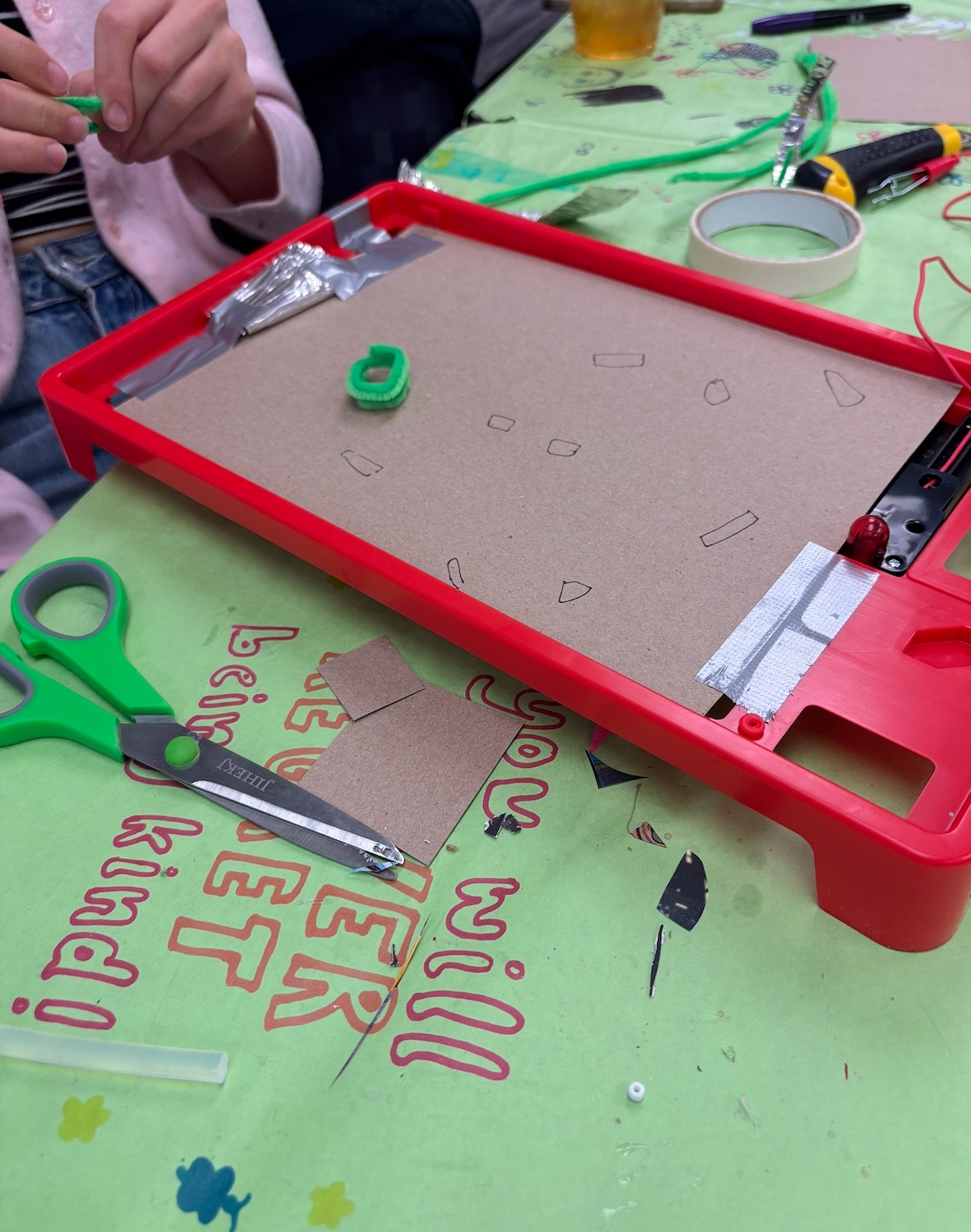
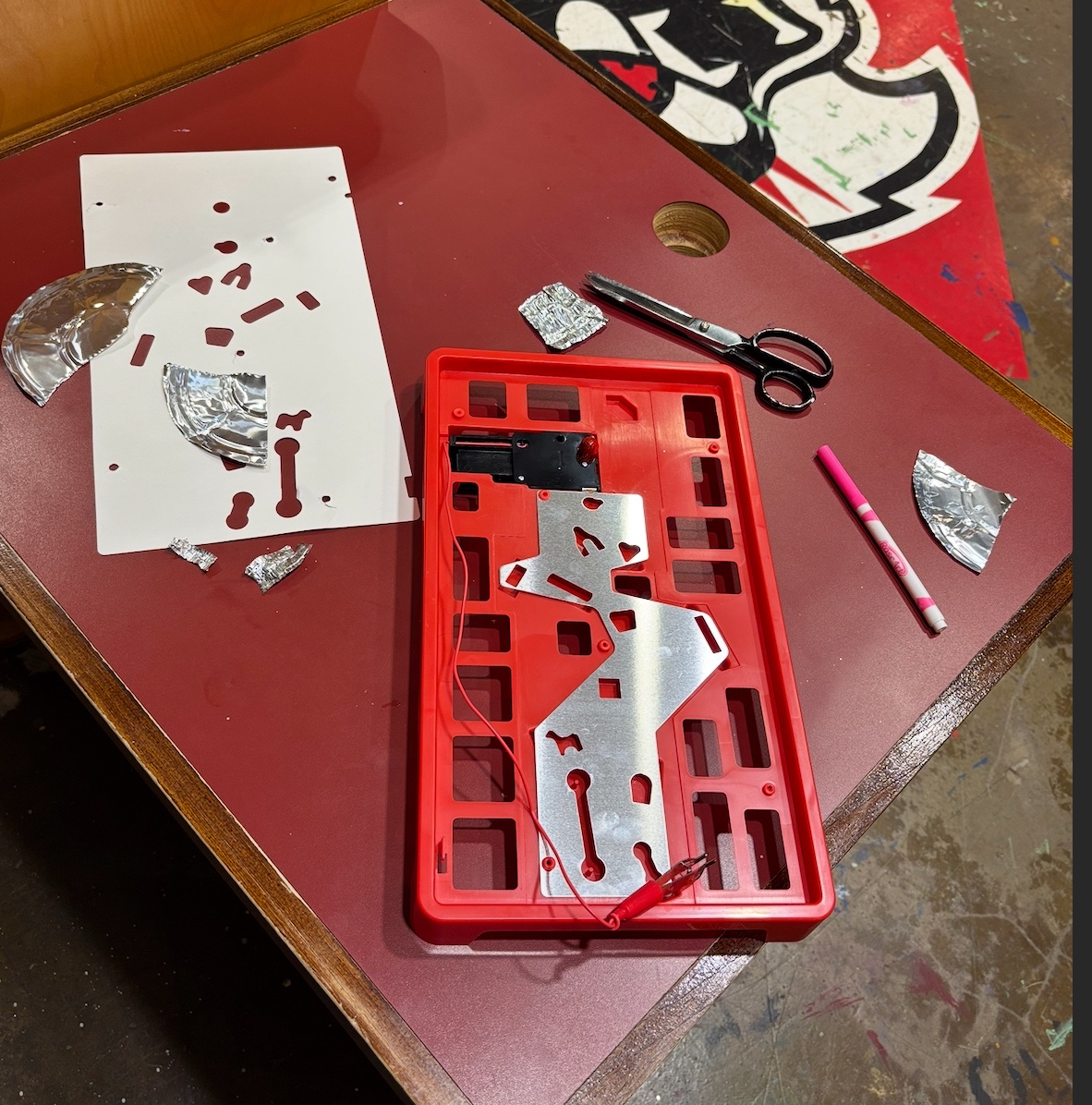
Today, we got together to start working on the actual game board, cutting apart the Operation box to extend the game board and begin our plans to reskin the game. I started out by methodically measuring out pieces of cardboard I’d have to cut to make the game board bigger, but we soon realized that we could just glue a bigger piece of cardboard on top of it. We happened to realize this after I had spent ten minutes measuring and cutting out the cardboard extension.

In addition, we had to make a trip to the union to find some sort of tin foil that would conduct electricity, and extend the circuit from the original game to work with our game redesign. We asked a Davis Cafe staffer for some of the tin bowls that are used for the pastas, and they gave us two. These successfully extended the circuit and would work for our project.

Overall, not many failures, but more successes. However the bulk of our project has yet to be completed, so only time will tell.

Flog #3

Unfortunately I am writing this Flog late. It is currently 12:27 AM on 2/8/25. My failure this week first consists of this Flog. I forgot to do it. I realized I had forgot to do it when my roommate walked in and I jokingly said: “I probably have some homework I forgot do.” Then I realized. The Flog!!!!

Regardless, this week, I set out to figure out what sort of Hack I wanted to do. My mind immediately set on a Minecraft texture pack, I could somehow come up with some textures that changed a vanilla Minecraft village to reflect some sort of social problem or something along those lines… But then I realized. I don’t have much artistic ability. The last time I created a Minecraft texture pack was in the 7th grade, and all I wanted to do was add another type of tree. I came to the conclusion that this task was not one achievable for me, so I sought other solutions.

In class, I heard Grace talk about a genius idea. A reskin of Operation to be Africa, and have the player take resource out of it (like what Elon Musk does). I thought this was a great idea, and wanted to help out.

And so it began… I thought we could make our own type of operation with a MakeyMakey, using Scratch or Python to make sound cues, but as I brought this idea to Grace, it turned out she already bought Operation off Amazon

I decided this was another failure of the week.

Flog #2

This week, I set out to complete Hack #1, using the MakeyMakey. At first, I had some grand ideas of remapping the input on the MakeyMakey, setting up some programming to prompt ChatGPT to generate some code, and have the code be displayed… however this all fell short when I was unable to remap the keys on my MakeyMakey! It turns out that the version was too old for remapping. I first spent some time getting accustomed to the MakeyMakey and how it actually worked. I quickly figured out what “completing the circuit” actually meant, and how you could attach smaller pins on the back to control the mouse, and a few button presses. Although I had figured out how it actually worked, I was still lacking an idea… so naturally I took out my phone and immediately went to TikTok to procrastinate!

And so that’s how the idea was born, to create something that could let you scroll.

The first iteration consisted of a cup and a straw, where I had a alligator clip attached to the bottom of the straw and filled the cup with water. One the water touched my mouth, the circuit was completed, and the keyboard arrow down was input, so the next video appeared. I fashioned some aluminum foil to the rim of the cup to allow for scrolling back up, but it looked a bit odd. I wanted to make the cup look relatively normal, and I managed to find a solution. I pierced the bottom of one cup, and stuck the alligator clip in. I then put that cup into another one, and let the other end of the alligator clip out of the cup. This way, water wouldn’t leak out of the cup, and the alligator clip would stick out to connect to the MakeyMakey.

I didn’t have many issues from here on, other than figuring out how to make grounding myself much more “complete.” I wanted to complete the circuit just by holding the cup, and I did so by wrapping a copper strip around the cup and connected it to the MakeyMakey with an alligator clip. Now, I could just hold the cup instead of holding onto the alligator clip and the cup.

During my presentation of the hack, I was asked on the spot to name my hack. I didn’t have anything in mind, but I decided on “Liquid Scroll” based on the water brand Liquid Death.

Hack #1

The era of short-form content has quite literally rewired the brain, according to Xie, Jin et al. in “The effect of short-form video addiction.” Platforms like TikTok, Instagram Reels, and YouTube Shorts have capitalized on the addictive nature of short-form content, which has had a major impact on viewers’ attention spans. The rapid scrolling featured in the platforms previously listed shares similar principles that make gambling addictive, something deemed “random reinforcement.”

I found this concept of random reinforcement to echo a classification of games found in Caillois’s Taxonomy of Games, namely Alea, a category that classifies games of chance. In the text, Caillois states: “Alea signifies and reveals the favor of destiny. The player is entirely passive; he does not deploy his resources, skill, muscles, or intelligence. All he need do is await, in hope and trembling, the cast of the die.” In a an article by Nathan Crispo, he discusses a study that extends this Alea to short-form content: “Brain scans of Chinese college students using a TikTok equivalent showed that areas of the brain involved in addiction were highly activated in those who watched personalized videos, and some people had trouble even controlling when to stop watching.” I considered this to be no different than gambling; it is addicting, and people have trouble stopping. The dopamine rush associated with gambling can be similar to that of short-form content. While this might not be scientifically accurate (as far as dopamine release), I found my idea to be further supported by Dr. Julia Albright in “Digital Crack Cocaine: The Science Behind TikTok’s Success,” in which she states:
“Sometimes you win, sometimes you lose. And that’s how these platforms are designed… they’re exactly like a slot machine. Well, the one thing we know is slot machines are addictive. We know there’s a gambling addiction, right? But we don’t often talk about how our devices and these platforms and these apps do have these same addictive qualities baked into them.”

Considering the power of short-form content, I wondered if it would be possible to turn infinite scrolling toward an avenue of health? In “The effect of short-form video addiction,” it is discussed how “short-form video addiction poses a new risk to people’s mental health and social life.” The paper reaches deeper, explaining how short-form content can cause emotion-regulation issues and reduced feelings of well-being.

To address this dampening of mental health, I sought to create a solution to an extension of poor mental health – self-care. When being caught up in endless videos, it can be easy to forget simple acts of self-care, such as staying hydrated. One could find themselves going hours without drinking water, too focused on “just one more video” while a water bottle sits untouched. Perhaps this same captivating format could instead remind us to take care of these basic needs, rather than distract from them.

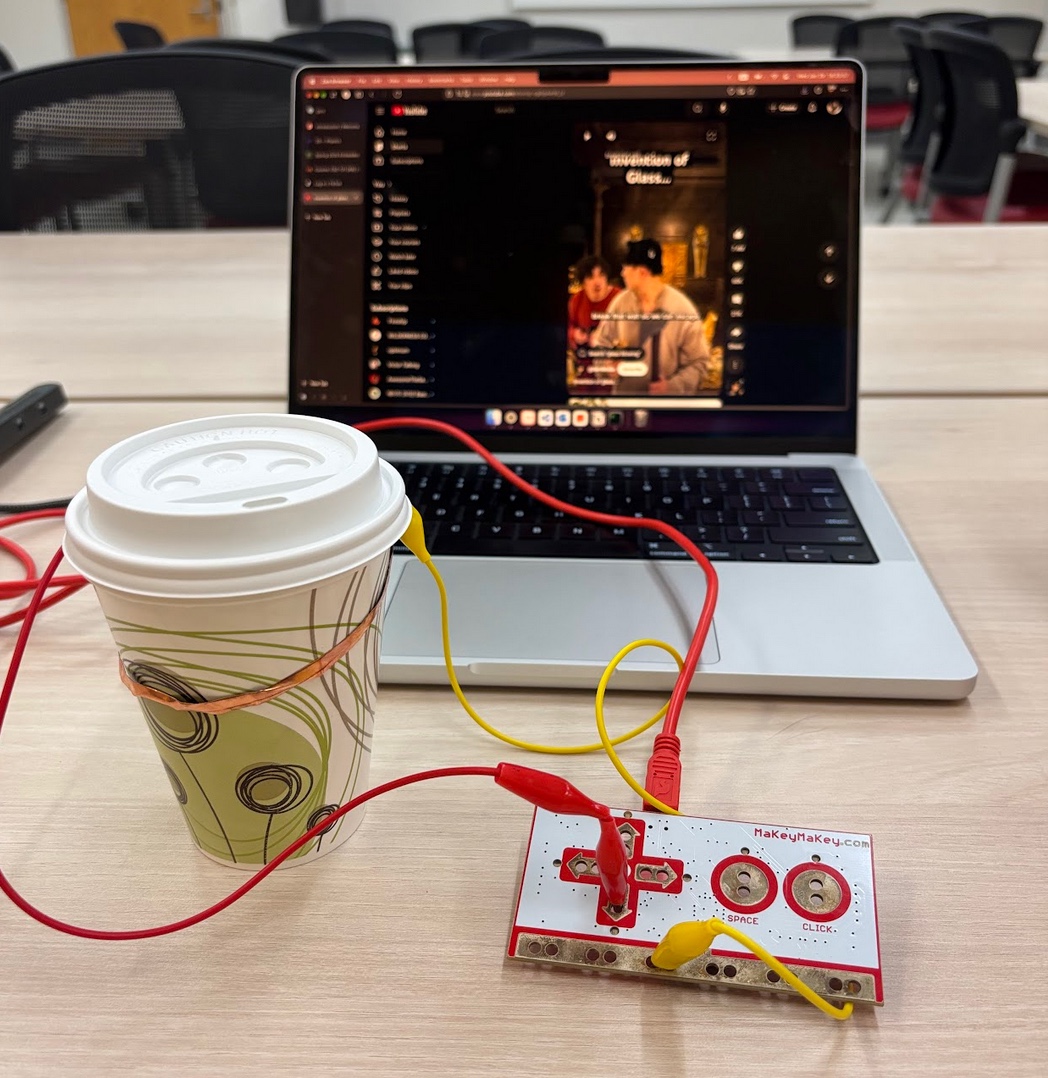
My first hack seeks to take a step in the right direction to offer care while scrolling. Taking a sip of water causes the next video to appear; a person touching the water completes the circuit and causes the MakeyMakey to input a down-arrow keystroke, scrolling to the next video. Albeit a very simple and amateur attempt at solving a much bigger problem, I hope it can serve as a reminder to not get too engrossed in play. Balance in all things is always a necessity, and play is no exception.

Screenshot

Koetsier, John. “‘Digital Crack Cocaine’: The Science Behind TikTok’s Success.” Forbes, 18 Jan. 2020, https://www.forbes.com/sites/johnkoetsier/2020/01/18/digital-crack-cocaine-the-science-behind-tiktoks-success/?sh=26c4916678be.

Richmond Journal of Law & Technology. “TikTok Brain: Can We Save Children’s Attention Spans?” Richmond Journal of Law & Technology, 6 Mar. 2024, https://jolt.richmond.edu/2024/03/06/tiktok-brain-can-we-save-childrens-attention-spans/#_ftn16.

Xie, Jin et al. “The effect of short-form video addiction on undergraduates’ academic procrastination: a moderated mediation model.” Frontiers in psychology vol. 14 1298361. 15 Dec. 2023, doi:10.3389/fpsyg.2023.1298361

Flog #1

Not many failures this week, however I did have some complications with this website. I initially used my Davidson domain for my Data Visualization class, where we used the domain to upload our class work. This meant my domain was meant specifically for that class, I hadn’t yet generalized it for any class (I wasn’t expecting to use my domain again). So I had to backtrack. I had to move components of my website around, and add a section for this class, DIG 401. Luckily, I could reuse some components (the folder icon) as well as change a few redirect links I had on the website. Afterwards, the next issue was actually adding the WordPress site…. I hadn’t used WordPress since *I think* middle school — if not high school. There was quite a learning curve to the process, but I think I have figured it out.

I enjoyed the readings from this week quite a bit. I’ve never reflected on the idea of play because I’ve always though play to be natural. It encourages growth, which is productive! When I hear someone think of play to be “unproductive,” it feels counterintuitive. For example, my mother would be upset at times when I would be tinkering with a Rubik’s cube… saying I should be studying/reviewing instead. However, the Rubik’s cube has taken me places I’d never thought of before, play proving to be productive in the space of growth.