The Collective Memory Box

Please watch this video, which outlines how to get started. Then, read the Instruction Manual & Testimonials.

Artist Statement:

To “The Collective Memory Box” user:

We are glad you are here. Finding ways to cope with the death of a loved one is incredibly difficult, but you have arrived at a special place. “The Collective Memory Box” will take you on a journey through the life of the deceased, letting her legacy live on through the words and stories of others. This box is specifically dedicated to the life of Daisy Louise Jones, who was a sophomore from Glen Ellyn, Illinois majoring in Gender and Sexuality Studies at Davidson College. Daisy touched the lives of many people and her loss was sudden and shocking to her family, friends, and the Davidson College community. Luckily, “The Collective Memory Box” provides the user with a window into some of Daisy’s favorite items and is linked to special memories and stories from the voices of others that can live on in her absence. The use of the term “collective memory” for the title of the product was inspired by the French sociologist Maurice Halbwachs, who “argued that all memory is collective memory because memory depends on social environment” (Rogge and Salmi 15). The voices that are embedded in the audio component of the box create a social environment that shapes individual memories into a coherent collective memory. On the outside of the box, you can find a variety of images and written work, which consist of Daisy’s favorite song lyrics, poems, and biblical verses. Many users consider the outside portion of the box to resemble something that one would find in a scrapbook because its construction is intricate and intentional. One of the most important facets of the outer portion is that it is unfinished — you as the user can add to it as you go through the grieving process. The tangible components of it serve as a point of criticism to the larger issue society faces regarding online accounts becoming extinct or indecipherable over time. In an article entitled, “Cyberspace When You’re Dead,” Rob Walker admits that “Web sites come and go — often vanishing in months, depending on the whims and intentions and attention span of their creators” (Walker 11). This shows that online spaces provide us with a false sense of security in that they could disappear within an instant. In her book entitled, When We are No More: How Digital Memory is Shaping our Future, Abby Smith Rumsey argues that the changes within our digital landscape serve as signs that we to reinvent how we preserve memory. She writes, “The new paradigm of memory is more like a growing garden: Everything we entrust to digital code needs regular tending, refreshing, and periodic migration to make sure it is still alive…” (Rumsey 148). The outside of “The Collective Memory Box” is not subject to the skepticisms Rumsey voices in her book, which allows all of its contents to avoid the risk of becoming unreadable or destroyed.
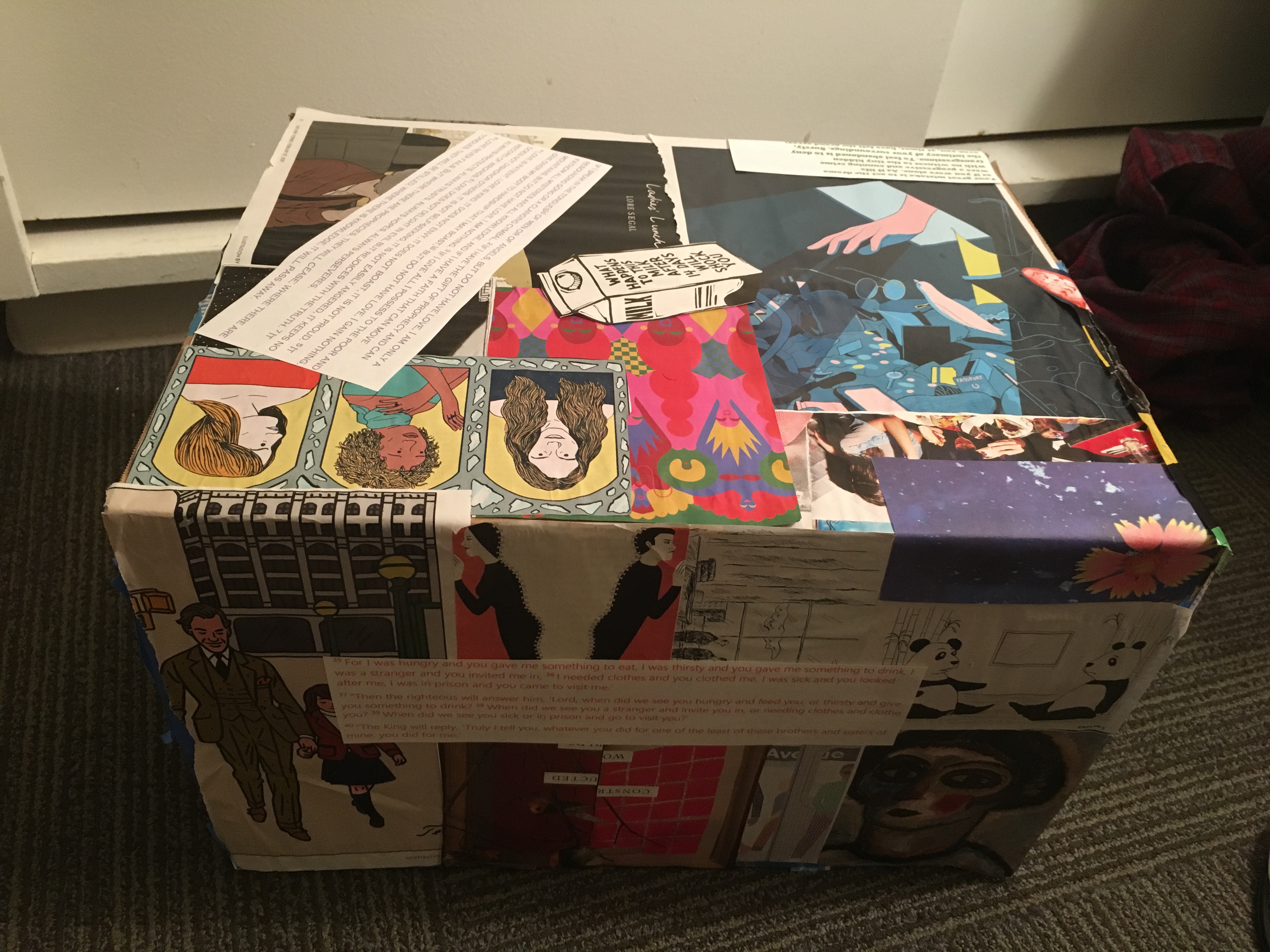
Outside of “The Collective Memory Box.”

An important facet of “The Collective Memory Box” is that in order to interact with the contents on the inside, the box must go over the user’s head. This construction was intentional because it forces the user to enter a new world that is separate from her own daily surroundings and experiences. It also blocks out any potential distractions or disruptions that may interfere with the user’s full immersion into the contents of the box. This concept also speaks to the importance of making grief individualized and private. We live in a society that extends postmortem identities into spaces that many people can see and interact with on a daily basis, which actually prevents people from establishing a definite termination to periods of grief and mourning. A book entitled, “Helping Those Experiencing Loss: A Guide to Grieving Resources” explores the definitions of “mourning” and “grief,” which can be applied to this idea: “Mourning is the external part of loss. It is the action we take, the rituals and customs. Grief is the internal part of loss, how we feel” (Grover, Fowler 9). However, our modern technologies blur the distinction between the two terms and bring both facets of bereavement into public spaces. Additionally, the article “Virtual Mourning and Memory Construction on Facebook: Here Are the Terms of Use,” argues that “Facebook’s features have defined the platform as a social space for the development of a collective online memory and digital archive for the individual, thus perpetuating a culture of interdependent connectivity” (McEwen and Sheaffer 65). “The Collective Memory Box” also embraces a collaborative approach (because memory is social), but does so in an effort to make the grieving process more individualized and separate from the external world. Facebook “automatically extends the experiences around death into additional everyday activities over extended periods of time within large social networks” (Brubaker, Hayes, Dourish 158). This shows that our modern technologies have enabled death to become a “social experience negotiated by family, loved ones, and now a large, technologically maintained network of digital peers” (Brubaker, Hayes, Dourish 162). “The Collective Memory Box” pushes back on bringing death into realms such as social media and instead makes a concerted effort to provide the user with a private experience. This enables the user to grieve for her own individual purposes that the outside world cannot see or comment on.

Inside of the “Collective Memory Box.”

Another distinct component of “The Collective Memory Box” is that the voice of the dead is completely stripped away from the audio immersive experience. Although there exists value and power in the human voice, it makes it more difficult to grieve because many technologies can give you the power to access the voice of the deceased at any time until they become obsolete or are automatically deleted. In an article entitled, “Preserving Voicemails helps Modern Grieving Process” Beth Teitell writes, “If grief has a modern form, mourning the lost voicemail is surely it. The very technology that allows bereaved friends and relatives to feel, if only temporarily, closer to the departed can just as easily sweep away that connection.” “The Collective Memory Box” does not integrate the voice of the deceased into its content in an effort to make death more about the living as opposed to the dead. A man who preserved the voicemails of his deceased mother said he “felt [like] for some reason she’d call me back” (Teitell). This indirectly establishes a level of dependence on the dead that can become unhealthy and addictive components of someone’s grieving process. The creators of “The Collective Memory Box” did not want to give the user any false sense that they were actually talking to the deceased and envisioned the removal of the dead’s voice as a way for the user to cope with death of a loved one through the words of the living.

It is important to recognize that using the human voice as a way to capitalize on grief is something that has infiltrated many parts of society today. Specifically, museums such as the 9/11 Memorial & Museum use the voices of the deceased to curate a memorable and poignant presentation. Towards the beginning of the 9/11 exhibit, the viewer encounters the following artifact: the final recorded words of Brian Sweeney, which the viewer has the option to listen to through a telephone mounted on the exhibit’s wall. He left this message on his wife Julie Sweeney’s phone at 8:59 a.m. on September 11, 2001:

Jules, this is Brian listen, I’m on an airplane that’s been hijacked. If things don’t go well, and it’s not looking good, I just want you to know I absolutely love you, I want you to do good, go have good times, same to my parents and everybody, and I just totally love you, and I’ll see you when you get there. Bye, babe. I hope I call you.”

In his article, “Jules, This is Brian” Aaron MacLean claims, “These words constitute the beginning of a sustained plateau of emotion, which the designers of the museum seem to have anticipated. There are doors through which one can escape the exhibit early — one is right next to the Sweeney recording” (MacLean). The fact that this museum consists of artifacts like Brian’s message and others of a similar power reinforces the idea that institutions like this take advantage of the voice of the deceased and the grief that comes as a byproduct for their own profit. The museum gift shop even sells mugs, t-shirts, scarves, and other souvenirs which have undoubtedly triggered controversies. One critic of the museum, Philip Kennicott, writes in his article, “The 9/11 Memorial Museum Doesn’t Just Display Artifacts, it Ritualizes Grief on a Loop,” “Striving for catharsis and epiphany, they have created an oversized pit of self-pity, patriotic self-glorification and voyeurism, where visitors are allowed to feel personally touched by the deaths of people they didn’t know; where they can revel for a few hours in righteous grievance; where they repeat the pieties of our unresolved, pop-psych ideas about death and remembrance and rebirth and renewal” (Kennicott). In light of these realities, “The Collective Memory Box” works to create content that promotes healthy coping strategies and does not capitalize on the grief of the user. Within the audio component, the user listens to many of Daisy’s close friends and family members respond to questions such as, “What is an object, song, poem, or biblical verse that reminds you of Daisy?”, “What do you admire most about Daisy?” and “What does Daisy give to the world around her?”. The genuine, thoughtful, and raw responses to these questions enable Daisy’s legacy to live on through those who knew her best. Tune into the audio portion below! 

The visual component of “The Collective Memory Box” is a slideshow of panorama images of spaces that Daisy interacted with on the Davidson College campus. The viewer has the option to view these spaces, zoom in, and follow the images as they spans 360 degrees, thereby making them seem real. Just as Daisy’s voice is not embedded in the audio component, she is also not in any of the images. This gives the user the opportunity to see what Daisy saw and experienced in the surroundings that were most dear to her without having an image of her as the focus of the photographs. Some of the images include: her dorm room, a close up of her decorated desk, Turner Eating House, the Oasis in the Chaplain’s Office, and her favorite place, the E.H. Little Library. These images paired with the audio content work to ground the user in the present, as opposed to Daisy’s past life. The speakers in the audio component even use the present tense when talking about Daisy, which gives the user the impression that Daisy still has the power to contribute to the present moment, even though she is gone.

The creators of “The Collective Memory Box” made it a priority to deviate from the newly popularized ways to grieve within social and digital spaces. Instead, we decided to incorporate the social aspect that is a key component of memory to create a product that was dependent on the collaboration of others to tell a narrative about Daisy’s life. The box places you in control of your own grieving process and lets the tangible objects and written work, images, and stories from others transport you to the beautiful life that Daisy lived. We hope that “The Collective Memory Box” can be a source of strength and inspiration for you now and throughout the years to come.

Works Cited

Brubaker, JedR., GillianR. Hayes, and Paul Dourish. “Beyond the Grave: Facebook As a Site for the Expansion of Death and Mourning.” The Information Society 29.3 (2013): 152–163. ACM Digital Library. Web.

Grover, Robert, and Susan G. Fowler. Helping Those Experiencing Loss: A Guide to Grieving Resources. Santa Barbara, Calif: ABC-CLIO, 2011. Print.

Kennicott, Philip. “The 9/11 Memorial Museum Doesn’t Just Display Artifacts, It Ritualizes Grief on a Loop.” The Washington Post. WP Company, 07 June 2014. Web. 05 Apr. 2017.

MacLean, Aaron. “’Jules, This Is Brian’.” Washington Free Beacon. N.p., n.d. Web. 05 Apr. 2017.

McEwen, Rhonda N., and Kathleen Scheaffer. “Virtual Mourning and Memory Construction on Facebook: Here Are the Terms of Use.” Bulletin of Science, Technology & Society 33.3-4 (2013): 64–75. SAGE Journals. Web.

Rogge, Jörg, and Hannu Salmi. Memory Boxes: An Experimental Approach to Cultural Transfer in History, 1500-2000. Bielefeld: Transcript, 2014. Print.

Rumsey, Abby Smith. When We Are No More: How Digital Memory Is Shaping Our Future. N.p.:n.d. Print.

Teitell, Beth. “If Grief Has a Modern Form, Mourning the Lost Voicemail from a Deceased Loved One Surely Is It – The Boston Globe.” BostonGlobe.com. N.p., 20 Nov. 2013. Web. 05 Apr.2017.

Walker, Rob. “Cyberspace When You’re Dead.” The New York Times. The New York Times, 08 Jan. 2011. Web. 05 Apr. 2017.

Painting Dead Celebrities as Saints

During our class activity on Tuesday about the re-enchantment of dead celebrities, people seemed to agree that Robin Williams stood out from the other names on the list because he was always perceived as a “real person” while the others had been idealized and iconicized. My group discussed how this reverence for celebrities was a phenomenon that almost always occurred after their deaths – this was a trend we saw especially in great artists and musicians throughout history.

After David Bowie’s death, I read a lot of articles pondering how we should reconcile his musical genius and legacy with the fact that he, and many other rock artists of the time period, unapologetically had sex with underage teenage girls.

www.thedailybeast.com/articles/2016/01/17/david-bowie-and-rock-n-roll-s-statutory-rape-problem.html

This specific article goes on and on for a while about other examples, but I want to focus on the first part in particular. The writer says, “Rock star escapades from that period have been glamorized for decades with no regard for how disturbing or illegal the behavior was. It became a part of the mythos – a disgusting testament to how little the writers documenting the happenings of the day cared about taking their heroes to task.” He goes on to add, “It’s convenient to go after Tyga and R. Kelly when we see hashtags or trending stories, and their behavior warrants every bit of scrutiny and criticism it’s gotten. But we cannot write off the alarming behavior of superstars past just because they’re older, greyer, or in the case of Bowie, newly-departed.”

Jimmy Page of Led Zeppelin and Lori Maddox, his 14-year old girlfriend

The idealized re-enchantment of celebrities after their deaths is interesting to think about in relation to the digital age because our relationships with celebrities have changed so much over the years. Think about Hollywood’s Golden Age. Celebrities like Marilyn Monroe were able to maintain a certain aura of mystery behind their image because of the distance between the famous and their fans. You pretty much only knew what you saw on television or read in the papers. Some people say that the rumored affair between President John F. Kennedy and Marilyn Monroe would certainly not be plausible in today’s world. Now with social media like Twitter and Instagram, people can keep up to date with their favorite celebrities by the minute. With the Internet and the modern speed of information, the lives of the famous are not so mysterious as they once were. (Hence, the article’s reference to the controversy surrounding Tyga’s relationship with Kylie when she was underage). This partly explains why the rock stars of the 1970s were able to get away with their behavior. Perhaps as technology continues to advance and our relationships with celebrities continue to evolve, celebrities will seem less like icons and more like “real people,” and the re-enchantment of dead celebrities as saint-like legends might be harder to come by.


Ghost In the Bear Guy – Ghostly Audio in Grizzly Man (sightings post)

This week I watched the documentary film Grizzly Man and I found some of the ideas intriguing and applicable to this class. The film is about a man named Timothy Treadwell who lived alone in the Alaskan wilderness and tried to make friends with grizzly bears. In order to help protect grizzly bears and spread awareness about them he films himself and makes documentary-style clips of him going through outdoor survival practices as well as explaining facts about the bears he spends time with. After about 15 years of living with and filming these bears as well as some other woodland friends (the movie feels a bit like Snow White with schizophrenia at some points) he ends up getting eaten by one of the bears he previously called a friend. Because he was making the film of his interactions with the bears he left the camera rolling during the entire time Treadwell and his girlfriend (who was accompanying him on the trip at the time) were struggling for their lives and eventually were eaten by the grizzly bear. In one clip of the movie Werner Herzog, the director of the film, listens to the audio from the bear attack (the video wasn’t recorded as the lens cap was left on the camera) and his reaction is what one would expect when seeing someone listening to the audio of another person dying a violent death.

[youtube www.youtube.com/watch?v=wUf0QFFi2Mk&w=560&h=315%5D

I find the existence of this recording to be a unique type of ghost-centric haunting and I can’t honestly imagine why anyone would want to keep the footage. I think the reasons are grief-centric, making me think back to our post-modern grief-based product design and wonder – if a business offered to sell people audio or recordings of their loved ones’ final moments would people buy them? Would they listen to them? As with a lot of these goods and services I can’t imagine investing myself because it’s very disturbing to me but I actually think people might like the idea.

Losing Your Self with the Quay Brothers & Ryan Trecartin

The screen flickers between close-up images of graphite stained fingernails, bands of light oscillating over windows that snap open and shut, and eerie Martian landscapes. All are punctuated by the peculiar audio drones and pitches, an avant-garde soundtrack composed by  Karlheinz Stockhausen. So constructs the twenty minute psycho-drama directed by the Quay Brothers in the year 2000, In Absentia.

The Quay Brothers in 2001 for OffScreen

The short film follows the story of a woman, albeit lacking specific details. She is shuttered up in an institutional-looking manor. She obsessively sharpens pencils and writes letters, filling the pages with sentences laid atop sentences so that the meaning is indiscernible. She ritualistically places broken pencil tips outside her window. She drops the letters down a grandfather clock, whose base is visually filled with similar letters. Because she chooses not to postmark them? Because she is not allowed to? Because she is imprisoned? Because the letter recipient is dead?

Excerpt from film

These gaps in detail are left to simmer. Instead, the Quay Brother present a demonic animation roaming a hallway. They sometimes switches to a barren, wind-swept landscape dotted with indiscernible, hulking technology that suggests space travel.

They layer multiple horror tropes into this quiet, uneventful, but definitely nightmarish world. The manor is a haunted house — or perhaps even more specifically, a haunted asylum. The woman walks that thin line between mentally ill and demonically terrifying — viewers are conflicted about whether to pity or fear her. The entire set is haunted by bands of light that only temporarily illuminate the viewer’s frame.

The Brothers give us plenty of room to wallow in the uncertainty of this postmodern piece. Demon or human, alien or human, phantom or human, sane or insane…the viewer is left without concrete answers. In 2000, people had yet to experience social media or the ability to watch YouTube on a touchscreen phone. But the Brothers still incorporated some of the core anxieties about technological communication — how do we communicate? Do the tools we use to communicate connect us or isolate us?

The audio is peppered with the sound of the woman laughing. Quickly, that laughter is distorted and begins to sound like chimpanzee screeching, then all together alien. She traces words so carefully with her pencil on paper, following each stroke of the pencil with her finger, but when the viewer witnesses a shot of the page the letters are completely muddled. In both speaking and writing, her message is corrupted — the mediums, these human technologies meant to enable communication, betray her. She is trying to communicate and she fails.

The alien/demonic presence can be tied to the technological obsessions of the time. Starting in 1998, NASA’s New Millennium Program was launching probes to Mars and satellites into Earth’s orbit. Our reality was expanding with new, imagined worlds outside of Earth. The barren Martian landscapes of In Absentia point to the obsession with the mysteries of space. There seems to be a desire to explore this final frontier and make meaning out of what we can’t understand.


While the woman is seated at her chair, there are moments when a third hand slides up her back or across her shoulder. She is shown several times swatting and gripping at her neck, as if she continues to feel a ghostly touch in the otherwise empty room. Her internal world is haunted (suggesting the ambiguity of her sanity) while her external world is also haunted by those space age mystery landscapes. It is a hybrid haunting which expresses itself in various canonical forms: ominous alien light flickering over mysterious landscapes, a literal clay demon roaming the hallways, and the horror of possessed insanity.

Ultimately, the film dedicates itself to a real woman: “E.H., who lived and wrote to her husband from an asylum.” The Brothers said in an interview that they only later learned that audio creator Stockhausen’s “mother was imprisoned by the Nazi’s in an asylum, where she later died.” This directly connects the film to an important core piece of postmodern horror: body horror. The physical body become the irrational site of insanity, possession, evil — all societal fears channeled into an unsocialized body.

The Quay Brothers made their film eerie and horrific with gothic lighting, uncanny close ups, minimalism, and the vague suggestion of insanity, imprisonment, demons, aliens — the ambiguity is quiet and assured. Emerging in the the video art scene more than ten years later, Ryan Trecartin’s work is distinctly a product of current culture. Both artists embroil the viewer amidst many of the same themes despite dramatic stylistic differences. Trecartin’s shots are shaky and often hand held, shedding any professional aires, while the Quay Brothers so obviously labored to get big, serious shots. Trecartin immediately makes use of  in media res — dumping the viewer into the middle of action, no explanation. In Center Jenny, the initial shot is explosive: a car is being destroyed by people wearing green screen outfits, chattering manically in a green lined room. Girls with heavy handed make up screech and chatter, their voices synthed up and pitched to other-worldly as they roam a decrepit warehouse.

Ryan Trecartin performing in “Any Ever.” Still from YouTube.

Center Jenny follows several groups of girls who are all named “Jenny.” Each group is a reality television type archetype taken to the extreme — the Taylor Swift good girl, the Bad Girls Club drama queen, the boy-obsessed pretty girl, the Queen Bee, the girls who basically just background fodder hoping to get a personality assigned to them. They exist on various levels and are trying to level up to become a more potent “Jenny.” Everyone wants to become closer to the “The Source” — the Center Jenny, the ultimate, perfected Jenny.

The film uses extremes and maximalism to strip down the process of social norming, social cohesion, groupthink, and the way we construct identities. There’s a long process in which one “left of center” Jenny (meaning, non-conforming) is hazed by higher level Jenny’s and eventually re-inducted into the higher level group once she is rendered docile. Her eyes glaze over completely white and she gapes at the screen as if lobotomized. Obviously, she gets a cute makeover, too.

Another girl, with dramatic purple contouring, straight black hair and 90s Vans lounges on what looks like a makeshift MTV music video set: lawn furniture under multi-color lights in a warehouse. She leans back on a hammock as the lights flicker and her friend undulates to uncanny music — it looks as if aliens had found a time capsule from the coolest teenager in the early 2000s and tried to reconstruct the aesthetic. And that wouldn’t be off base for Trecartin; at one point, the girl looks up into the camera and drones, “The only thing I’ll ever study is Human Era Hazing and how awesome it is.”

There are several points in the film when the Jenny’s refer to the “human era” and the “Earth version” of various things, suggesting the MTV teenage cool girl and the gaggles of Jenny’s aren’t just extreme versions of culture today. The Jenny’s are futuristic, their uncanniness — the way the viewer can recognize social norms and identity archetypes but still feel so overwhelmed by the unfamiliar vehicle — stems from their literal alienness. They are not human; they are something else, approximating all human culture through the lens of our most popular media.

This crystallizes towards the end of the film when a group of Jenny’s, waiting to level up or to be assigned a personality, meet a character who describes how they evolved from “animations,” which evolved from humans. This suggests that the Jenny’s are constructed from human archetypes and media, explaining why each Jenny acts like she’s in a reality TV fever dream while also being obviously aware that she is performing. The Jenny’s operate more as a collective hive than as individual, heterogenous humans — another indication of their archetypical identity. At one point, the MTV cool girl even screams at her friend — “Bitch, you’re not real! You’re just in my system!” Her friend fires back, “I am you, get out.”

Trecartin doesn’t use any traditional horror motifs — no gore, no jump scares, no supernatural activity. The the warehouse functions somewhat like a haunted house, with its sprawling, mysterious, inaccessible nature. The girls are alien animations, and the audio would surely meet Stockhausen’s standards for being avant-garde and creepy. But Trecarin’s real horror takes the form of a cultural mirror; the Jenny’s are the most derivative parts of our culture, norms, and socialization reflected back to us.

According to Jeffrey Cohen’s monster theory, horror villains represent the cultural anxieties of the particular era; the monster shows us how “our cultural assumptions about race, gender, sexuality” created it, and also demand to know why we “have created them” in the first place. (20).

In Absentia presents isolation, insanity, and being subject to an outside influence you can’t control — whether demons or alien — as being horrific. Center Jenny is the product when the landscape of In Absentia ferments for thirteen years. The world is controlled by non-human aliens, the Jenny’s are mentally unhinged by human standards, and rather than living in isolated, lonely existence, socialization is totally oversaturated.

The most horrific thing for the Quay Brothers was the inability to communicate — your ability to speak and correspond becoming totally corrupted. The Jenny’s learned how to correspond and coordinate to an extreme degree — they are 2D copies of each other, a society of beings that are at once mimics and solipsistics. The chief curator and associate director of the New Museum, Massimiliano Gioni, described the subject of Trecartin’s videos as “the act of communication…We’re all trying to communicate, and what we communicate about is less and less relevant. When I watch his videos, I feel a speeded-up version of what we’re all doing.”      

Patrick Langley wrote that Trecartin “enacts a literal illustration of the electric mania of modern life.” But since we rarely perceive it to be as wild and desecrating as it actually is, when presented with an extreme portrait we are shocked and horrified. We are confronted by the biggest postmodern boogeyman: that we are not special, unique, sacred, or different.  Langley goes on to describe “the instability of Trecartin’s vision of human identity” expressed in his films:

“Our engagement with culture is rendered as a form of enmeshing or interbreeding. Empathy is metamorphosis: when a character identifies with an idea or person, they adopt their vocabulary or physical characteristics. Trecartin’s films reject the binarism of real and virtual, male and female, self and other, gay or straight, rationality and madness, surface and subtext, style and content, time and space.”

Trecartin imagines and renders an extreme postmodern society. Identity is boundless, completely fluid and up for grabs. Whether through extreme isolation or extreme socialization, the Quay Brothers and Trecartin end up at the same point. They warn us about total loss of self, knowledge, and reality — we are swept away by alien possession or merged into a manic hive mind. In either case, both artists seem to suggest we are loosing something human. Confronted by the postmodern void, do we become isolated shells or oversaturated replicas? 


Works Cited
Aita, Roberto. “Brothers Quay: In Absentia.” Offscreen. N.p., Sept. 2001.
Center Jenny. Dir. Ryan Trecartin. Vimeo. N.p., 2014. Web.
Cohen, Jeffrey Jerome. “Monster Culture (Seven Theses)”
Speaking of Monsters (n.d.): 3-25. Web.
In Absentia. Dir. Timothy Quay and Stephan Quay. Perf. Marlene Kaminsky.
Vimeo. N.p., 2000. Web. 05 Apr. 2017.<vimeo.com/84313389&gt;.
Langley, Patrick. “Ryan Trecartin: The Real Internet Is Inside You.” The
White Review. N.p., Apr. 2012. Web. 05 Apr. 2017. <www.thewhitereview.org/art/ryan-trecartin-the-real-internet-is-inside-you/&gt;.

Tomkins, Calvin. “The Experimental Videographers.” The New Yorker. N.p.,

Photographic Paradox — Death, but Cybernetic

In “Digital Resurrection,” Alexandra Sherlock brings up a paradox first written about by Roland Barthes. A photograph is a paradox between life and death: “the moment is dead but the photograph is alive and present.” (170).

An embodied death can be overturned in our minds by the presences of images and media of that person. The absence of an animated body no longer means that person is out of reach. Indeed, we need only to turn to celebrity deaths — where estates and listening companies make millions — to see the self enduring past the physical body.

Does this change our understanding of finality? Death as an inevitable, totalizing concept is softened when we can stream living videos, images, and audio of the deceased. “It is a living image of the dead thing,” Barthes wrote: “the photograph surreptitiously induces belief that it is alive.” (Sherlock, 170).

Sherlock also addressed death as disruption. The dead body “reminds us of our own fate, resulting in the disruption of identity, system.” (169). A celebrity death is a highly publicized sort of disruption — if even this beautiful, wealthy, famous person can die, it shatters the illusion of escaping our own fate.

So it comes as no surprise that celebrity deaths are often “spun”: Tupac faked it to dip out of gang warfare and live anonymous in Cuba. The Illuminati killed Michael Jackson and Prince and Bowie. Combined with photographic paradox, it is as if celebrities are not really dead — they’ve simply reached a point where no new content is produced. It’s a tidy way to side-step the death disruption and avoid thinking about that one, inevitable fate.

This photo was circulated by conspiracists in 2011, showing that Tupac “alive” and in attendance at Occupy demonstrations.

Taken to the extreme, this type of thinking erases the concept of death from consciousness all together.

Putting too much stock in digital recreation

Many of the recent articles have addressed the idea of digital immortality. Old scrapbooks are often compared to social media profiles, but I feel that the whole “Life in the digital world is forever” concept requires a little more unpacking than these articles are willing to dive into. Specifically referring to Alexandria Sherlock’s article “Digital Resurrection and the re-Enchantment of Society”, the jump from a digital memento to symbolic immortality is made almost immediately. This opens up numerous avenues for interesting discussion, but I feel that it is not quite an accurate description of the phenomenon at hand. In last semester’s FMS 321 class, “Interactive Digital Narratives” we discussed the new layer of portrayal that modern technology allows. Along with visual, auditory, and more sensory-focused portrayal in art, we can now functionalize our art as well. Video games are an example of procedure-based art, and the digital reconstruction of humans is just another expression of that art form.

A digitally recreated Peter Cushings playing Tarik in Star Wars: Rogue One. The “aura” of this recreation has weight because it accesses the authentic Tarik.

Take the 2-Pac hologram, for example. It resembles the likeness of 2-Pac, but the art on display is a procedure-based musical performance which doesn’t embody 2-Pac’s personality, but only makes reference to it. For example, When Snoop Dogg asked 2-Pac, “What kind of party is this?” 2-Pac responded by singing “Ain’t nuthin but a gansta party” making reference to a previous song. This is an example of Benjamin’s assertion that the “aura” of something must be connected to the original. Procedure-based artistic design lends itself extremely well to this, as seen in the episode of Black Mirror where the reproduced Ashe essentially accesses the “aura” of the original Ashe (via his Facebook profile) in order to seem more authentic. It becomes a procedure-based art form to construct a recreation of a being that can interact and interface with the viewer in an authentic way. Due to these likenesses being only portrayed in their own art form (rapping, acting, ect.) they are permanently bound to that space and become the spectacle themselves.

Ultimately, it is important to be cognizant of what is actually happening with digital recreations, and not go too far off the edge with postulation.

Narcissism & Mourning Celebrity Deaths on Social Media

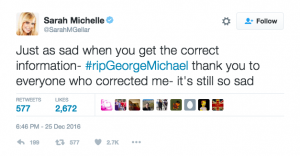
One of the modern phenomena Alexandra Sherlock discusses in her Larger than Life article is the widespread public mourning that often accompanies celebrity deaths. While many people do experience para-social relationships with celebrities and have been deeply touched or influenced by famous figures, I also believe that much of modern social media mourning, at least in 2016, has reached a new level of triviality. In the past, people seemed to take more time to process the death of a famous person, and generally did not feel as much pressure to publicly acknowledge or respond to the death. Even media coverage was not instantaneous the way it is today. Now, everything is at the touch of a button – whenever a celebrity dies, Twitter feeds become flooded within mere minutes. Sometimes, this sense of urgency can lead people into rushed grieving. For example, this happened with Sarah Michelle Gellar in response to George Michael’s death last year:


@SarahMGellar’s tweet
@SarahMGellar’s follow-up tweet

(Boy George is not George Michael and he’s alive and well.) I’m not suggesting that she was insincere in her grief, or wasn’t a true fan – she may very well have misheard the news. But incidents like this make me think about the pressure people sometimes feel to immediately acknowledge a celebrity death on social media. It also made me think about how often the most die-hard fans won’t post at all about their beloved musician, actor, etc. who just passed away because they don’t believe a 140-character text post could begin to do this person justice. Then I thought about the other side of the spectrum: narcissistic social media grievers. (The following tweet doesn’t necessarily relate to social media/technology, but it nevertheless somewhat expresses how I feel about this.)

@HasnaatMahmood’s original viral tweet

It’s difficult to refrain from being cynical and believing that many people use celebrity deaths as an excuse to post on social media, making it an opportunity to turn the spotlight towards them. I remember when David Bowie passed away last year, my Instagram explore feed was flooded with artsy photos commemorating the pop singer, which was to be expected. But what surprised me was the number of times I scrolled across an Instagram “model” posed with Bowie’s iconic lightning bolt painted across their face in a photograph shot in honor of Bowie’s memory. While I understand that some people embrace art as an outlet for grief, one of these models claimed to have never once listened to any of Bowie’s music, which makes me view these types of photos in a similar (although not as heinous) light to the social media narcissism we discussed in class last week pertaining to the Yolocaust article. I just question how much of the casual, click-of-a-button public mourning we see today is genuine mourning and how much of it is simply jumping on the bandwagon – and whether it is disrespectful to the memories of the dead.


Are parasocial relationships inherently inauthentic?


The part of our reading I found most interesting was the part addressing parasocial relationships with celebrities.  Of all the celebrity deaths of 2016, the one that provoked the greatest display of public mourning in my corner of the Internet was easily Carrie Fisher.  Just scrolling through her Tumblr tag for about five minutes, I came across these three posts.  Clearly, all three of these people feel a deep connection to her, whether as a motivating force or a parental figure (two posts refer to her as “space mom,” which is a common title of hers on the Internet).

Screenshot of a Tumblr post (shslsarcasticidiot.tumblr.com/post/159147131965/scrolls-through-the-carrie-fisher-tag-to-force)
Another Tumblr post (priceforrottenjudgement.tumblr.com/post/159091343154/im-still-not-over-the-death-of-carrie-fisher-and)
People really miss Carrie Fisher… (madeleinedevalois.tumblr.com/post/159055295573)


Sherlock describes these relationships as based on “false feelings of authenticity and intimacy” (168), and I want to push back on that assessment a little bit.   She quotes another scholar who claims that an online or public presence is “an artificial build-up of ‘personality'” (168).

Carrie Fisher’s online presence is hilarious and authentic.  Her tweets do not look like they have been approved by a publicist.  I’ve included one of my favorite’s below.

A particularly hilarious tweet from Carrie (twitter.com/carrieffisher)

Either Carrie has a crazy good publicist who manages to craft a perfectly unpolished, authentic presence on Twitter, or she’s just tweeting away of her own accord.

Additionally, she’s written two memoirs that honestly document her experiences with mental illness and addiction (I only read part of Wishful Drinking, and that was years ago, but I remember that it was extremely funny).

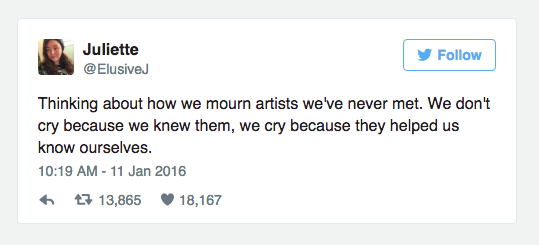
Do these Tumblr users have an actual, mutual relationship with Carrie Fisher?  Of course not.  But I think it’s unfairly dismissive to claim every celebrity’s social media presence is inauthentic.  I think Carrie sparked such an enormous display of grief not only because she portrayed such an iconic character, but because she was unapologetically herself.  She aged unapologetically.  She was mentally ill unapologetically.  Seeing someone own everything about themselves, even the messy parts, allows us to do the same.  I think about the following tweet a lot in reference to celebrity deaths.

This tweet sums it up pretty nicely (www.vox.com/2016/1/12/10755600/celebrity-death-grief)

In other words, I’m not trying to claim that parasocial relationships are the same thing as true, mutual relationships.  But I do disagree with this somewhat dismissive, cynical view of celebrities’ personas as inherently crafted and inauthentic.  Sherlock acknowledges that these feelings are not necessarily false “just because they are based on a falsity” (169), so she does acknowledge the significance of these relationships, but I don’t believe that they were were necessarily based on a falsity in the first place.  I think what makes Carrie Fisher, and others like her, stand out is the authenticity of their public personas.

The Digital Afterlife is Not for Everyone

After reading about the posthumous exploitation of a plethora of famous people, I was eager to find an example of someone who refused to let their digital image be manipulated and commodified by the media. This reaction was in part inspired by the article we read, “Selling the dead,” which mentions the “dead celebrities bill” that New York state Senator Martin Golden introduced in 2011. This bill outlined that it would be a criminal offense to “use the image of any deceased New York celebrity for advertising, merchandising or other commercial purposes without permission from their legal heirs. The ban would last 70 years after their death” (Kirsta). However, the bill was not passed and its rhetoric has been adamantly opposed by media industries. As I kept this in mind, I stumbled upon the story of the great Robin Williams, who actually put in place a restriction on his image being used for twenty-five years after his death. This was mainly in an effort to ensure that his public image was not tarnished, but I was particularly interested in the tone various news sources took when describing this decision. One article features a quote from Laura Zwicker, an attorney at Greenberg Glusker who counsels high net worth individuals on estate and tax planning. She claims, “I haven’t seen that before. I’ve seen restrictions on the types of uses — no Coke commercials for example — but not like this. It could be a privacy issue.” The article also highlights the idea that maybe Williams’ representatives were aware of the novel technologies we’ve been reading about and wanted to steer clear of anything that could tarnish his legacy. An examination of this has lead me to question a couple of ideas: First, how does one dictate what amount of time is acceptable to wait until the dead can be resurrected in the digital world? Second, why does society feel the need to criticize instances in which celebrities take their digital legacies into their own hands?

Robin Williams. View source here.

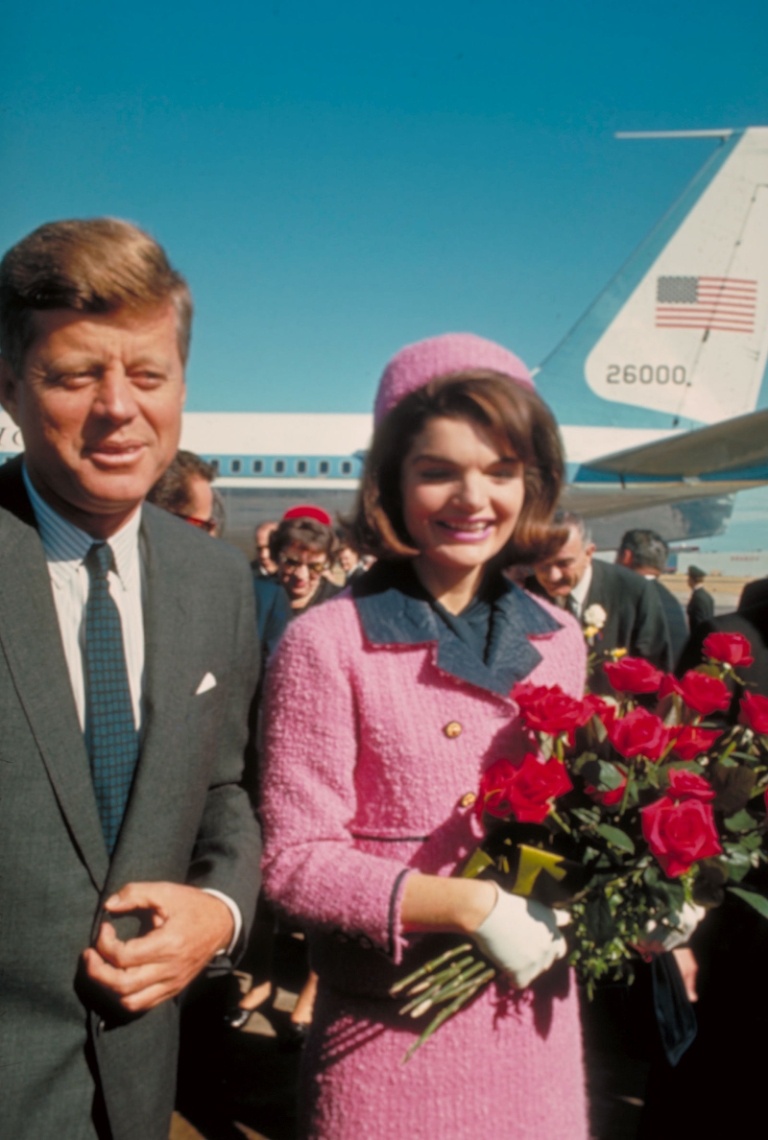
Robin Williams’ control over his legacy reminded me of the controversy behind Jacqueline Kennedy’s bloodstained pink Chanel suit, which is currently being preserved at the National Archives and won’t be seen by the public until 2103. The legal custody of the deed, which was established in July 29, 2003, and signed by Caroline Kennedy requires the National Archives to preserve the items and prevent the “undignified or sensational use of the materials (such as public display) or any other use which would tend in any way to dishonor the memory of the late President or cause unnecessary grief or suffering to members of his family” (Hallemann).  I think the decision to keep the suit locked away makes sense in that it blatantly avoids sensationalizing the tragic assassination of President John F. Kennedy.  But how does one justify that its release will be acceptable in 2103? Why can’t both Robin Williams’ image and Jacqueline Kennedy’s suit just be kept away forever? How does society believe it has a “right” to control the possession of these items?

Jackie Kennedy and her pink Chanel suit. View source here.

Public figures are well within their right to limit what is accessible after their deaths, but I believe there needs to be further conversation regarding where we as human beings should draw the line between the wishes of the deceased and our rights to gain the information we seek. 

Works Cited:

Hallemann, Caroline. “Why You Won’t See Jackie Kennedy’s Iconic Pink Suit On Display in a Museum.” Town & Country. Town & Country, 20 Mar. 2017. Web. 03 Apr. 2017.

Kirsta, Alix. “Selling the Dead.” The Telegraph. Telegraph Media Group, 03 Feb. 2012. Web. 03 Apr. 2017.

Who Owns the Story of Your Death?

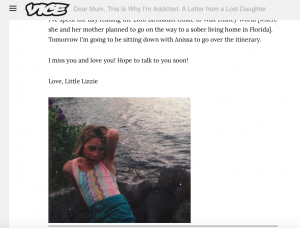
While reading, “Larger Than Life: Digital Resurrection and the Re-Enchantment of Society,” by Alexandra Sherlock, I was struck by the example that Sherlock used of Bob Monkhouse’s “resurrection” for use in a campaign for prostate cancer research. However, instead of celebrities that were famous for their work before death, I thought of when public awareness campaigns are formed around the deaths of ordinary people. Some of these stories go viral and the deceased become famous after death. An example of this I thought of was a letter that went viral this fall in which a woman shared a letter her drug addict daughter sent to her attempting to explain her addition to her mother. In reading the letter, I found it to be a compelling call for empathy and for the necessity of further access to care for those struggling with addiction. However, at the same time, I felt a little uncomfortable reading the letter. Sure, they had changed the woman’s last name, but otherwise this was an incredibly personal account of her life that she did not consent to being broadcast across the internet. There are many similar campaigns like this from parents, families, or friends where names are not changed and they become famous after their death for mistakes made during their lives. While undoubtedly these campaigns have the potential to make a positive difference in many lives, I can’t imagine I would particularly want details of my private struggles to be used without giving it the ok. Moreover, in contrast with the celebrities described in Sherlock’s piece, I can’t imagine laws being put in place that determine the fates of these people’s stories after their lives since money isn’t likely involved. I also can’t imagine that families already dealing with a crisis like alcoholism or addiction have much time for conversations about how private they wish their stories to remain if they are no longer around to lay claim to them.

A screenshot of the closing of a letter from a dead drug addict to her mother. www.vice.com/en_au/article/heroin-addiction-needles-exchange-lost-daughter-dear-mom

Works Cited

Elliot, Elizabeth. “Dear Mum, This Is Why I’m Addicted: A Letter from a Lost Daughter.” Vice, 3 Oct 2016. www.vice.com/en_au/article/heroin-addiction-needles-exchange-lost-daughter-dear-mom.

Sherlock, Alexandra. “Larger Than Life: Digital Resurrection and the Re-Enchantment of Society.” The Information Society, vol. 29, no. 3, pp164-176.