
Please watch this video, which outlines how to get started. Then, read the Instruction Manual & Testimonials.
Artist Statement:
To “The Collective Memory Box” user:
We are glad you are here. Finding ways to cope with the death of a loved one is incredibly difficult, but you have arrived at a special place. “The Collective Memory Box” will take you on a journey through the life of the deceased, letting her legacy live on through the words and stories of others. This box is specifically dedicated to the life of Daisy Louise Jones, who was a sophomore from Glen Ellyn, Illinois majoring in Gender and Sexuality Studies at Davidson College. Daisy touched the lives of many people and her loss was sudden and shocking to her family, friends, and the Davidson College community. Luckily, “The Collective Memory Box” provides the user with a window into some of Daisy’s favorite items and is linked to special memories and stories from the voices of others that can live on in her absence. The use of the term “collective memory” for the title of the product was inspired by the French sociologist Maurice Halbwachs, who “argued that all memory is collective memory because memory depends on social environment” (Rogge and Salmi 15). The voices that are embedded in the audio component of the box create a social environment that shapes individual memories into a coherent collective memory. On the outside of the box, you can find a variety of images and written work, which consist of Daisy’s favorite song lyrics, poems, and biblical verses. Many users consider the outside portion of the box to resemble something that one would find in a scrapbook because its construction is intricate and intentional. One of the most important facets of the outer portion is that it is unfinished — you as the user can add to it as you go through the grieving process. The tangible components of it serve as a point of criticism to the larger issue society faces regarding online accounts becoming extinct or indecipherable over time. In an article entitled, “Cyberspace When You’re Dead,” Rob Walker admits that “Web sites come and go — often vanishing in months, depending on the whims and intentions and attention span of their creators” (Walker 11). This shows that online spaces provide us with a false sense of security in that they could disappear within an instant. In her book entitled, When We are No More: How Digital Memory is Shaping our Future, Abby Smith Rumsey argues that the changes within our digital landscape serve as signs that we to reinvent how we preserve memory. She writes, “The new paradigm of memory is more like a growing garden: Everything we entrust to digital code needs regular tending, refreshing, and periodic migration to make sure it is still alive…” (Rumsey 148). The outside of “The Collective Memory Box” is not subject to the skepticisms Rumsey voices in her book, which allows all of its contents to avoid the risk of becoming unreadable or destroyed.
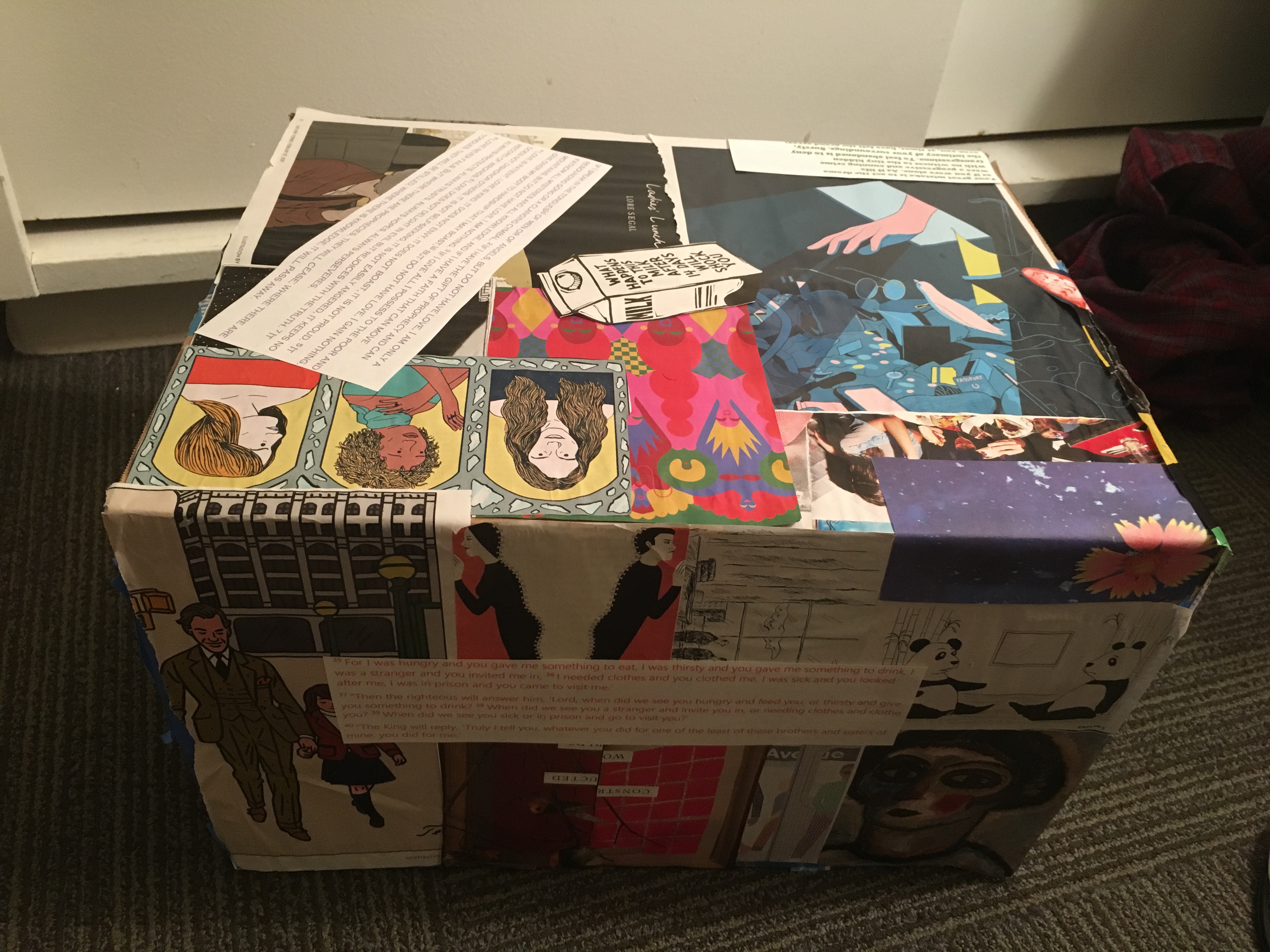
An important facet of “The Collective Memory Box” is that in order to interact with the contents on the inside, the box must go over the user’s head. This construction was intentional because it forces the user to enter a new world that is separate from her own daily surroundings and experiences. It also blocks out any potential distractions or disruptions that may interfere with the user’s full immersion into the contents of the box. This concept also speaks to the importance of making grief individualized and private. We live in a society that extends postmortem identities into spaces that many people can see and interact with on a daily basis, which actually prevents people from establishing a definite termination to periods of grief and mourning. A book entitled, “Helping Those Experiencing Loss: A Guide to Grieving Resources” explores the definitions of “mourning” and “grief,” which can be applied to this idea: “Mourning is the external part of loss. It is the action we take, the rituals and customs. Grief is the internal part of loss, how we feel” (Grover, Fowler 9). However, our modern technologies blur the distinction between the two terms and bring both facets of bereavement into public spaces. Additionally, the article “Virtual Mourning and Memory Construction on Facebook: Here Are the Terms of Use,” argues that “Facebook’s features have defined the platform as a social space for the development of a collective online memory and digital archive for the individual, thus perpetuating a culture of interdependent connectivity” (McEwen and Sheaffer 65). “The Collective Memory Box” also embraces a collaborative approach (because memory is social), but does so in an effort to make the grieving process more individualized and separate from the external world. Facebook “automatically extends the experiences around death into additional everyday activities over extended periods of time within large social networks” (Brubaker, Hayes, Dourish 158). This shows that our modern technologies have enabled death to become a “social experience negotiated by family, loved ones, and now a large, technologically maintained network of digital peers” (Brubaker, Hayes, Dourish 162). “The Collective Memory Box” pushes back on bringing death into realms such as social media and instead makes a concerted effort to provide the user with a private experience. This enables the user to grieve for her own individual purposes that the outside world cannot see or comment on.
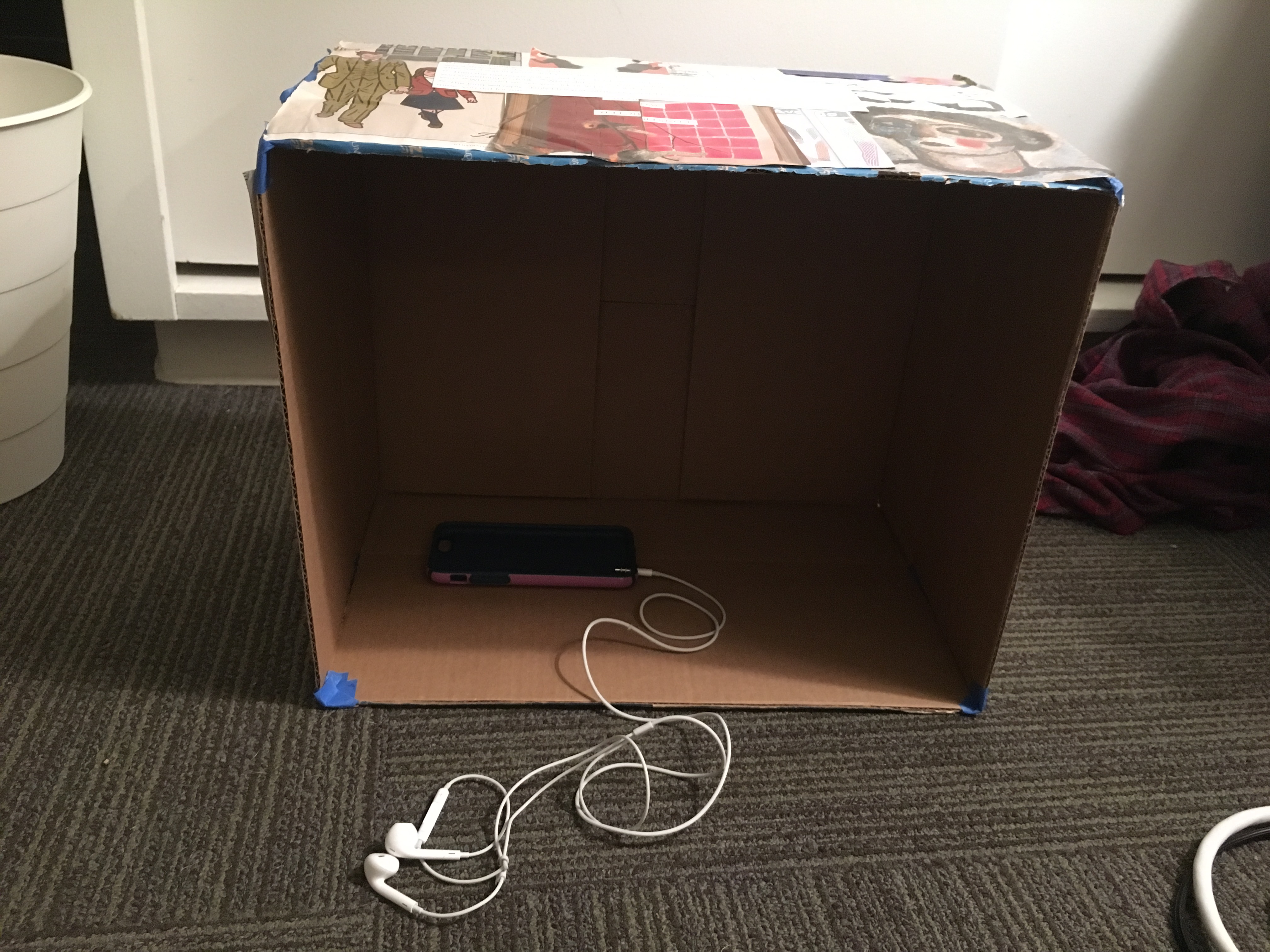
Another distinct component of “The Collective Memory Box” is that the voice of the dead is completely stripped away from the audio immersive experience. Although there exists value and power in the human voice, it makes it more difficult to grieve because many technologies can give you the power to access the voice of the deceased at any time until they become obsolete or are automatically deleted. In an article entitled, “Preserving Voicemails helps Modern Grieving Process” Beth Teitell writes, “If grief has a modern form, mourning the lost voicemail is surely it. The very technology that allows bereaved friends and relatives to feel, if only temporarily, closer to the departed can just as easily sweep away that connection.” “The Collective Memory Box” does not integrate the voice of the deceased into its content in an effort to make death more about the living as opposed to the dead. A man who preserved the voicemails of his deceased mother said he “felt [like] for some reason she’d call me back” (Teitell). This indirectly establishes a level of dependence on the dead that can become unhealthy and addictive components of someone’s grieving process. The creators of “The Collective Memory Box” did not want to give the user any false sense that they were actually talking to the deceased and envisioned the removal of the dead’s voice as a way for the user to cope with death of a loved one through the words of the living.
It is important to recognize that using the human voice as a way to capitalize on grief is something that has infiltrated many parts of society today. Specifically, museums such as the 9/11 Memorial & Museum use the voices of the deceased to curate a memorable and poignant presentation. Towards the beginning of the 9/11 exhibit, the viewer encounters the following artifact: the final recorded words of Brian Sweeney, which the viewer has the option to listen to through a telephone mounted on the exhibit’s wall. He left this message on his wife Julie Sweeney’s phone at 8:59 a.m. on September 11, 2001:
Jules, this is Brian listen, I’m on an airplane that’s been hijacked. If things don’t go well, and it’s not looking good, I just want you to know I absolutely love you, I want you to do good, go have good times, same to my parents and everybody, and I just totally love you, and I’ll see you when you get there. Bye, babe. I hope I call you.”
In his article, “Jules, This is Brian” Aaron MacLean claims, “These words constitute the beginning of a sustained plateau of emotion, which the designers of the museum seem to have anticipated. There are doors through which one can escape the exhibit early — one is right next to the Sweeney recording” (MacLean). The fact that this museum consists of artifacts like Brian’s message and others of a similar power reinforces the idea that institutions like this take advantage of the voice of the deceased and the grief that comes as a byproduct for their own profit. The museum gift shop even sells mugs, t-shirts, scarves, and other souvenirs which have undoubtedly triggered controversies. One critic of the museum, Philip Kennicott, writes in his article, “The 9/11 Memorial Museum Doesn’t Just Display Artifacts, it Ritualizes Grief on a Loop,” “Striving for catharsis and epiphany, they have created an oversized pit of self-pity, patriotic self-glorification and voyeurism, where visitors are allowed to feel personally touched by the deaths of people they didn’t know; where they can revel for a few hours in righteous grievance; where they repeat the pieties of our unresolved, pop-psych ideas about death and remembrance and rebirth and renewal” (Kennicott). In light of these realities, “The Collective Memory Box” works to create content that promotes healthy coping strategies and does not capitalize on the grief of the user. Within the audio component, the user listens to many of Daisy’s close friends and family members respond to questions such as, “What is an object, song, poem, or biblical verse that reminds you of Daisy?”, “What do you admire most about Daisy?” and “What does Daisy give to the world around her?”. The genuine, thoughtful, and raw responses to these questions enable Daisy’s legacy to live on through those who knew her best. Tune into the audio portion below!
The visual component of “The Collective Memory Box” is a slideshow of panorama images of spaces that Daisy interacted with on the Davidson College campus. The viewer has the option to view these spaces, zoom in, and follow the images as they spans 360 degrees, thereby making them seem real. Just as Daisy’s voice is not embedded in the audio component, she is also not in any of the images. This gives the user the opportunity to see what Daisy saw and experienced in the surroundings that were most dear to her without having an image of her as the focus of the photographs. Some of the images include: her dorm room, a close up of her decorated desk, Turner Eating House, the Oasis in the Chaplain’s Office, and her favorite place, the E.H. Little Library. These images paired with the audio content work to ground the user in the present, as opposed to Daisy’s past life. The speakers in the audio component even use the present tense when talking about Daisy, which gives the user the impression that Daisy still has the power to contribute to the present moment, even though she is gone.
The creators of “The Collective Memory Box” made it a priority to deviate from the newly popularized ways to grieve within social and digital spaces. Instead, we decided to incorporate the social aspect that is a key component of memory to create a product that was dependent on the collaboration of others to tell a narrative about Daisy’s life. The box places you in control of your own grieving process and lets the tangible objects and written work, images, and stories from others transport you to the beautiful life that Daisy lived. We hope that “The Collective Memory Box” can be a source of strength and inspiration for you now and throughout the years to come.
Works Cited
Brubaker, JedR., GillianR. Hayes, and Paul Dourish. “Beyond the Grave: Facebook As a Site for the Expansion of Death and Mourning.” The Information Society 29.3 (2013): 152–163. ACM Digital Library. Web.
Grover, Robert, and Susan G. Fowler. Helping Those Experiencing Loss: A Guide to Grieving Resources. Santa Barbara, Calif: ABC-CLIO, 2011. Print.
Kennicott, Philip. “The 9/11 Memorial Museum Doesn’t Just Display Artifacts, It Ritualizes Grief on a Loop.” The Washington Post. WP Company, 07 June 2014. Web. 05 Apr. 2017.
MacLean, Aaron. “’Jules, This Is Brian’.” Washington Free Beacon. N.p., n.d. Web. 05 Apr. 2017.
McEwen, Rhonda N., and Kathleen Scheaffer. “Virtual Mourning and Memory Construction on Facebook: Here Are the Terms of Use.” Bulletin of Science, Technology & Society 33.3-4 (2013): 64–75. SAGE Journals. Web.
Rogge, JoÌrg, and Hannu Salmi. Memory Boxes: An Experimental Approach to Cultural Transfer in History, 1500-2000. Bielefeld: Transcript, 2014. Print.
Rumsey, Abby Smith. When We Are No More: How Digital Memory Is Shaping Our Future. N.p.:n.d. Print.
Teitell, Beth. “If Grief Has a Modern Form, Mourning the Lost Voicemail from a Deceased Loved One Surely Is It – The Boston Globe.” BostonGlobe.com. N.p., 20 Nov. 2013. Web. 05 Apr.2017.
Walker, Rob. “Cyberspace When You’re Dead.” The New York Times. The New York Times, 08 Jan. 2011. Web. 05 Apr. 2017.