I have always considered myself to be a people person. As much as I love making other people smile, I also consistently seek out other people when I need to vent, cry, or verbally process. After re-reading my blog posts for our class, it is clear that I take this very “person-centered” approach to my writing style. In other words, I rely on specific outside examples (whether they be cultural, social, personal, etc.) to support my arguments. Instead of solely grounding myself in my own thoughts, I reach outwards; which at times makes a strong and well-researched claim, but at other times, may take away from my authority as a writer. However, before I reach outwards, I analyze the question I am exploring or the topic I am examining in complete detail. I have always liked analysis, whether it be in terms of analyzing people, academic reading, or writing. It is clear that my blog posts take advantage of this “people-centered” value and my passion for deep and thorough analysis.
Before I delve into a broad examination of my posts, I think it is important to compare and contrast my first and last blog posts. My first post, entitled, “Grieving 2.0: Can we ever move on?” begins with an analysis of the five stages of grief and brings into question whether Martha, from Black Mirror, ever arrived at the final stage of acceptance. I proceed to analyze various moments from the show that led me to arrive at the claim that it is not until Martha develops an unhealthy attachment to the technological replica of Ash that her grieving process truly goes astray. After this analysis, I take a close look at examples of how people can grieve publicly in our digital climate today. This when I look outwards and cite examples such as funeralOne and the growth of virtual candles to show how technology has infiltrated into realms of death in our modern world. My final blog post, entitled, “Afraid of Everyone Who Wasn’t Them: An Examination of Interconnected Stories,” takes a far more analytical approach to a section of the book, Station Eleven, as I specifically examine the significance of the alternating structure of various chapters. My piece is incredibly heavy in close-reading techniques, and instead of reaching outwards to cultural/societal examples to support my points, I reach out to the class for advice. I pose questions such as, “Why do you think Emily St. John Mandel chooses to alternate between the stories of Frank and Jeevan and Kristen and Francois in such a deliberate way?” or “What comment does this make about the importance or lack thereof of identity in terms of interconnected stories?” Even though my desire reach outwards is present in both blog posts, I think it is important to note how it shifted in terms of who I reach out to. It is telling that my final blog post takes into account the opinions of people in our class, which shows how connected and comfortable I became with the group.
More broadly, it is clear that I like to flaunt what I know about music, history, literature, etc., into my academic writing. From a comparison of A Head Full of Ghosts to the gothic elements in Edgar Allan Poe’s The Fall of the House of Usher, to an analysis of the gun violence in Dead Set through a comparison to the rhetoric used in the Cranberries song “Zombies,” to redefining the nature of preservation with parallels between the embalming technique and the controversy of Harper Lee’s Go Set a Watchman, to a close examination of theories from Abbey Smith Rumsey’s book, When We Are No More: How Digital Memory is Shaping Our Future, and to cultural references such as the deaths of JFK and Robin Williams, my posts explore a plethora of outside examples to enhance my points. An examination of this has led me to question what kind of balance I should establish between analysis and outside support in my writing. I like to show what I know, but does this make my argument too general and less authoritative?
I also decided to put each of my blog posts in the “Writer’s diet test,” an automated feedback tool that examines whether your writing is “too flabby or fit” by identifying how often you use verbs, nouns, prepositions, adjectives/adverbs, or passive voice. Although each of my blog posts resulted in different counts for each category, my use of adjectives and verbs were consistently very high. I do not necessarily think that this is a bad thing, but it does speak to the idea that I like to make my writing look and sound “pretty” as opposed to getting to the point. I enjoy dancing around the claim I am trying to make until the end of my paper, for then I know it will have the most impact on the reader.
Writing this post made me think about how my academic advisor, Dr. Suzanne Churchill, stands by the concept that the best and most advanced ideas form within the space between two or more people. To her, the space separate from one’s individual head is where the conversations that produce complex and well thought-out ideas occur. In a way, I engage in conversations like this as I use multiple sources to develop my arguments and avoid being caught up in my own thoughts. DIG 215: Death in the Digital Age has given me the outlet to explore conversations of substance both inside and outside the classroom and has made me feel capable of developing complex arguments. Composing this reflective piece made me realize how who I am and what I value does translate into my writing, and I am excited to see how my writing will morph and change just as I do during my next two years at Davidson.
As I continue to read Station Eleven, I grow increasingly more receptive of shifts in structure, content, and time. I was particularly struck by the structure of chapters 30-37, which established a clear and straight-forward alternation between Frank and Jeevan’s narrative with Kristen and Francois’s interview. After a closer examination of these chapters, I realized that a lot of the thematic elements that are present in the novel are similar to ones we explored after watching Dead Set, especially when Emily St. John Mandel writes, “They were afraid of everyone who wasn’t them” (176). Watching the world become slowly unpopulated by humans through the eyes of humans in danger was skillfully portrayed in both narratives, even though the circumstances in each were incredibly different. When the Internet blinked out for Jeevan and Frank in Station Eleven, my mind immediately raced to the scenes in Dead Set when Patrick and Pippa were stuck in the green room with no means of communication as well as the failure of technology when Riq tried to reach out to Kelly while stranded at a railway station. I then paired all of these images of abandonment and isolation with an incredibly poignant facet of Jeevan’s thought process as his world comes to an end: “how human the city is, how human everything is” (178). Humans hold society together and when society vanishes, (as it does in Station Eleven and Dead Set) survival becomes the priority, which translates into the competition between humans to outlive one another. This can be seen through the presence of guns in Station Eleven and Dead Set. Even though both narratives show the the painful reality of the brutal competition for survival, they more subtly highlight the importance of camaraderie during times of chaos and destruction. This can be seen in the comment, “Jeevan had never felt so close to his brother” and through Kristen’s recollection of how Jeevan was “so calm” during his attempt to save Leander’s life (179, 184). Putting these alternating chapters in conversation with each other as well as examining Station Eleven’s similarities to Dead Set makes it evident that this story, even as fantastical and unrealistic as it may seem, is a human story.
Why do you think Emily St. John Mandel chooses to alternate between the stories of Frank and Jeevan and Kristen and Francois in such a deliberate way? Although Jeevan’s identity is unknown to Kristen, it is evident that he impacted her in many ways. What comment does this make about the importance or lack thereof of identity in terms of interconnected stories? I think it is also important to acknowledge the importance Frank’s disability — his spinal-cord injury has paralyzed him from the waist down and he must use a wheelchair to maneuver. Aligning Frank with this disability was clearly an intentional choice made by the author, but does it have broader implications? I find it interesting how Jeevan’s first inclination was to be with his brother when Hua told him about the Georgia Flu, but he does not take it on himself to prevent his brother’s suicide when it becomes clear that Frank is giving up hope. I would love to hear your thoughts!
Reference:
Mandel, Emily St. John. Station Eleven. New York: Vintage , a Division of Penguin Random House LLC, 2014. Print.
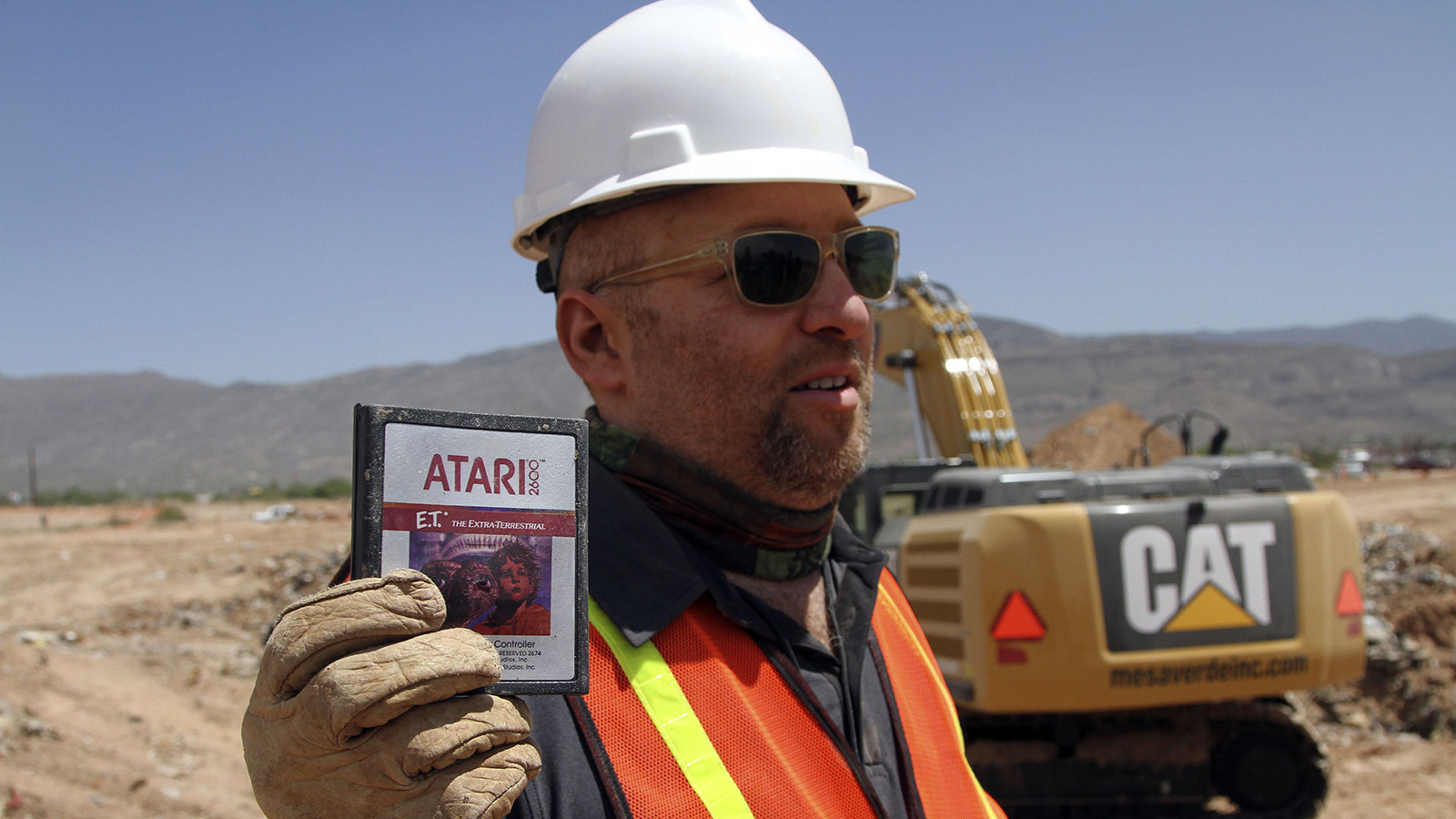
Reading about the landfill excavation that unearthed Atari video games made me think about other instances in history during which American companies “hid” potential setbacks, mistakes, or failures. My mind immediately raced to the “Syringe Tide,” an environmental disaster that occurred from 1987-1988 where significant amounts of medical waste, particularly hypodermic syringes were washed up onto the beaches in New Jersey, New York City, and Long Island. Hospitals decided to discard the medical waste in the ocean to avoid extra costs associated with the government regulations, figuring they could save money by burying their problem at sea. However, when the medical waste was found, hundreds of thousands of vacationers were driven away, causing places such as the Jersey Shore to lose much revenue in tourism as well widespread skepticism regarding public health in general. I also thought about the movie Erin Brockovich, a dramatization of the story of Erin Brockovich, played by Julia Roberts, who fought in a real estate case against the energy corporation Pacific Gas and Electric Company (PG&E) which polluted a city’s water supply with hexavalent chromium. It was not until Brockovich looked under the surface that she discovered how many residents in the area were poisoned by the toxic waste, leading her to succeed in one of the biggest class action lawsuits in American history. Although these examples differ in content and form, an examination of them led me to the conclusion that we bury our mistakes simply because we can, and yet, many of them are eventually uncovered.
Medicinal waste washed up on the Jersey Shore. View source here.
During Easter Break, I decided to watch the documentary entitled, Atari: Game Over which explores the burial and excavation site in Alamogordo, New Mexico more in depth. The film brought light to many of the success of Atari, considering it to be “the future of technology.” It also highlighted the idea that it has become “fashionable” to say that E.T. was the worst video game of all time, when in actuality, it was not, and was certainly not the sole reason for the company’s downfall. Many people in the documentary reiterated the point that the E.T. game was not buried because of it was the worst game ever, rather it has become known as the worst game ever because it was buried. While society has become quick to “trash” games and game designs both physically and verbally, hiding our mistakes from the public view has also become part of our history. After thinking about this more, was there a valid justification for the Atari burial site to be unearthed? If the site is looked at as being Atari’s funeral, was it ethical to dig it up? Why does society feel the need to reclaim “dead” technology?
An image from the movie, Atari: Game Over. View source here.
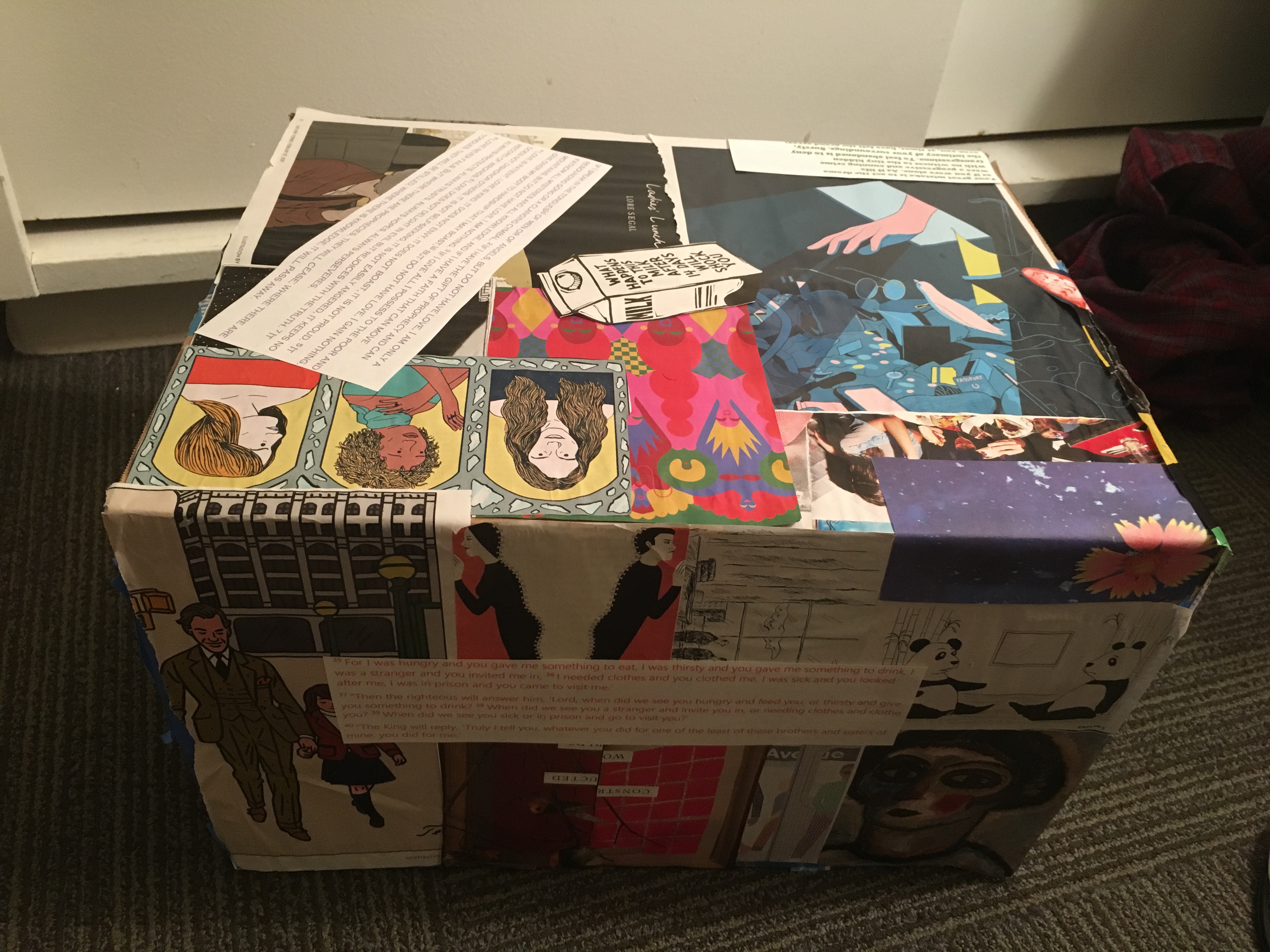
We are glad you are here. Finding ways to cope with the death of a loved one is incredibly difficult, but you have arrived at a special place. “The Collective Memory Box” will take you on a journey through the life of the deceased, letting her legacy live on through the words and stories of others. This box is specifically dedicated to the life of Daisy Louise Jones, who was a sophomore from Glen Ellyn, Illinois majoring in Gender and Sexuality Studies at Davidson College. Daisy touched the lives of many people and her loss was sudden and shocking to her family, friends, and the Davidson College community. Luckily, “The Collective Memory Box” provides the user with a window into some of Daisy’s favorite items and is linked to special memories and stories from the voices of others that can live on in her absence. The use of the term “collective memory” for the title of the product was inspired by the French sociologist Maurice Halbwachs, who “argued that all memory is collective memory because memory depends on social environment” (Rogge and Salmi 15). The voices that are embedded in the audio component of the box create a social environment that shapes individual memories into a coherent collective memory. On the outside of the box, you can find a variety of images and written work, which consist of Daisy’s favorite song lyrics, poems, and biblical verses. Many users consider the outside portion of the box to resemble something that one would find in a scrapbook because its construction is intricate and intentional. One of the most important facets of the outer portion is that it is unfinished — you as the user can add to it as you go through the grieving process. The tangible components of it serve as a point of criticism to the larger issue society faces regarding online accounts becoming extinct or indecipherable over time. In an article entitled, “Cyberspace When You’re Dead,” Rob Walker admits that “Web sites come and go — often vanishing in months, depending on the whims and intentions and attention span of their creators” (Walker 11). This shows that online spaces provide us with a false sense of security in that they could disappear within an instant. In her book entitled, When We are No More: How Digital Memory is Shaping our Future, Abby Smith Rumsey argues that the changes within our digital landscape serve as signs that we to reinvent how we preserve memory. She writes, “The new paradigm of memory is more like a growing garden: Everything we entrust to digital code needs regular tending, refreshing, and periodic migration to make sure it is still alive…” (Rumsey 148). The outside of “The Collective Memory Box” is not subject to the skepticisms Rumsey voices in her book, which allows all of its contents to avoid the risk of becoming unreadable or destroyed.
Outside of “The Collective Memory Box.”
An important facet of “The Collective Memory Box” is that in order to interact with the contents on the inside, the box must go over the user’s head. This construction was intentional because it forces the user to enter a new world that is separate from her own daily surroundings and experiences. It also blocks out any potential distractions or disruptions that may interfere with the user’s full immersion into the contents of the box. This concept also speaks to the importance of making grief individualized and private. We live in a society that extends postmortem identities into spaces that many people can see and interact with on a daily basis, which actually prevents people from establishing a definite termination to periods of grief and mourning. A book entitled, “Helping Those Experiencing Loss: A Guide to Grieving Resources” explores the definitions of “mourning” and “grief,” which can be applied to this idea: “Mourning is the external part of loss. It is the action we take, the rituals and customs. Grief is the internal part of loss, how we feel” (Grover, Fowler 9). However, our modern technologies blur the distinction between the two terms and bring both facets of bereavement into public spaces. Additionally, the article “Virtual Mourning and Memory Construction on Facebook: Here Are the Terms of Use,” argues that “Facebook’s features have defined the platform as a social space for the development of a collective online memory and digital archive for the individual, thus perpetuating a culture of interdependent connectivity” (McEwen and Sheaffer 65). “The Collective Memory Box” also embraces a collaborative approach (because memory is social), but does so in an effort to make the grieving process more individualized and separate from the external world. Facebook “automatically extends the experiences around death into additional everyday activities over extended periods of time within large social networks” (Brubaker, Hayes, Dourish 158). This shows that our modern technologies have enabled death to become a “social experience negotiated by family, loved ones, and now a large, technologically maintained network of digital peers” (Brubaker, Hayes, Dourish 162). “The Collective Memory Box” pushes back on bringing death into realms such as social media and instead makes a concerted effort to provide the user with a private experience. This enables the user to grieve for her own individual purposes that the outside world cannot see or comment on.
Inside of the “Collective Memory Box.”
Another distinct component of “The Collective Memory Box” is that the voice of the dead is completely stripped away from the audio immersive experience. Although there exists value and power in the human voice, it makes it more difficult to grieve because many technologies can give you the power to access the voice of the deceased at any time until they become obsolete or are automatically deleted. In an article entitled, “Preserving Voicemails helps Modern Grieving Process” Beth Teitell writes, “If grief has a modern form, mourning the lost voicemail is surely it. The very technology that allows bereaved friends and relatives to feel, if only temporarily, closer to the departed can just as easily sweep away that connection.” “The Collective Memory Box” does not integrate the voice of the deceased into its content in an effort to make death more about the living as opposed to the dead. A man who preserved the voicemails of his deceased mother said he “felt [like] for some reason she’d call me back” (Teitell). This indirectly establishes a level of dependence on the dead that can become unhealthy and addictive components of someone’s grieving process. The creators of “The Collective Memory Box” did not want to give the user any false sense that they were actually talking to the deceased and envisioned the removal of the dead’s voice as a way for the user to cope with death of a loved one through the words of the living.
It is important to recognize that using the human voice as a way to capitalize on grief is something that has infiltrated many parts of society today. Specifically, museums such as the 9/11 Memorial & Museum use the voices of the deceased to curate a memorable and poignant presentation. Towards the beginning of the 9/11 exhibit, the viewer encounters the following artifact: the final recorded words of Brian Sweeney, which the viewer has the option to listen to through a telephone mounted on the exhibit’s wall. He left this message on his wife Julie Sweeney’s phone at 8:59 a.m. on September 11, 2001:
Jules, this is Brian listen, I’m on an airplane that’s been hijacked. If things don’t go well, and it’s not looking good, I just want you to know I absolutely love you, I want you to do good, go have good times, same to my parents and everybody, and I just totally love you, and I’ll see you when you get there. Bye, babe. I hope I call you.”
In his article, “Jules, This is Brian” Aaron MacLean claims, “These words constitute the beginning of a sustained plateau of emotion, which the designers of the museum seem to have anticipated. There are doors through which one can escape the exhibit early — one is right next to the Sweeney recording” (MacLean). The fact that this museum consists of artifacts like Brian’s message and others of a similar power reinforces the idea that institutions like this take advantage of the voice of the deceased and the grief that comes as a byproduct for their own profit. The museum gift shop even sells mugs, t-shirts, scarves, and other souvenirs which have undoubtedly triggered controversies. One critic of the museum, Philip Kennicott, writes in his article, “The 9/11 Memorial Museum Doesn’t Just Display Artifacts, it Ritualizes Grief on a Loop,” “Striving for catharsis and epiphany, they have created an oversized pit of self-pity, patriotic self-glorification and voyeurism, where visitors are allowed to feel personally touched by the deaths of people they didn’t know; where they can revel for a few hours in righteous grievance; where they repeat the pieties of our unresolved, pop-psych ideas about death and remembrance and rebirth and renewal” (Kennicott). In light of these realities, “The Collective Memory Box” works to create content that promotes healthy coping strategies and does not capitalize on the grief of the user. Within the audio component, the user listens to many of Daisy’s close friends and family members respond to questions such as, “What is an object, song, poem, or biblical verse that reminds you of Daisy?”, “What do you admire most about Daisy?” and “What does Daisy give to the world around her?”. The genuine, thoughtful, and raw responses to these questions enable Daisy’s legacy to live on through those who knew her best. Tune into the audio portion below!
The visual component of “The Collective Memory Box” is a slideshow of panorama images of spaces that Daisy interacted with on the Davidson College campus. The viewer has the option to view these spaces, zoom in, and follow the images as they spans 360 degrees, thereby making them seem real. Just as Daisy’s voice is not embedded in the audio component, she is also not in any of the images. This gives the user the opportunity to see what Daisy saw and experienced in the surroundings that were most dear to her without having an image of her as the focus of the photographs. Some of the images include: her dorm room, a close up of her decorated desk, Turner Eating House, the Oasis in the Chaplain’s Office, and her favorite place, the E.H. Little Library. These images paired with the audio content work to ground the user in the present, as opposed to Daisy’s past life. The speakers in the audio component even use the present tense when talking about Daisy, which gives the user the impression that Daisy still has the power to contribute to the present moment, even though she is gone.
The creators of “The Collective Memory Box” made it a priority to deviate from the newly popularized ways to grieve within social and digital spaces. Instead, we decided to incorporate the social aspect that is a key component of memory to create a product that was dependent on the collaboration of others to tell a narrative about Daisy’s life. The box places you in control of your own grieving process and lets the tangible objects and written work, images, and stories from others transport you to the beautiful life that Daisy lived. We hope that “The Collective Memory Box” can be a source of strength and inspiration for you now and throughout the years to come.
Works Cited
Brubaker, JedR., GillianR. Hayes, and Paul Dourish. “Beyond the Grave: Facebook As a Site for the Expansion of Death and Mourning.” The Information Society 29.3 (2013): 152–163. ACM Digital Library. Web.
Grover, Robert, and Susan G. Fowler. Helping Those Experiencing Loss: A Guide to Grieving Resources. Santa Barbara, Calif: ABC-CLIO, 2011. Print.
Kennicott, Philip. “The 9/11 Memorial Museum Doesn’t Just Display Artifacts, It Ritualizes Grief on a Loop.” The Washington Post. WP Company, 07 June 2014. Web. 05 Apr. 2017.
MacLean, Aaron. “’Jules, This Is Brian’.” Washington Free Beacon. N.p., n.d. Web. 05 Apr. 2017.
McEwen, Rhonda N., and Kathleen Scheaffer. “Virtual Mourning and Memory Construction on Facebook: Here Are the Terms of Use.” Bulletin of Science, Technology & Society 33.3-4 (2013): 64–75. SAGE Journals. Web.
Rogge, JoÌrg, and Hannu Salmi. Memory Boxes: An Experimental Approach to Cultural Transfer in History, 1500-2000. Bielefeld: Transcript, 2014. Print.
Rumsey, Abby Smith. When We Are No More: How Digital Memory Is Shaping Our Future. N.p.:n.d. Print.
Teitell, Beth. “If Grief Has a Modern Form, Mourning the Lost Voicemail from a Deceased Loved One Surely Is It – The Boston Globe.” BostonGlobe.com. N.p., 20 Nov. 2013. Web. 05 Apr.2017.
Walker, Rob. “Cyberspace When You’re Dead.” The New York Times. The New York Times, 08 Jan. 2011. Web. 05 Apr. 2017.
After reading about the posthumous exploitation of a plethora of famous people, I was eager to find an example of someone who refused to let their digital image be manipulated and commodified by the media. This reaction was in part inspired by the article we read, “Selling the dead,” which mentions the “dead celebrities bill” that New York state Senator Martin Golden introduced in 2011. This bill outlined that it would be a criminal offense to “use the image of any deceased New York celebrity for advertising, merchandising or other commercial purposes without permission from their legal heirs. The ban would last 70 years after their death” (Kirsta). However, the bill was not passed and its rhetoric has been adamantly opposed by media industries. As I kept this in mind, I stumbled upon the story of the great Robin Williams, who actually put in place a restriction on his image being used for twenty-five years after his death. This was mainly in an effort to ensure that his public image was not tarnished, but I was particularly interested in the tone various news sources took when describing this decision. One article features a quote from Laura Zwicker, an attorney at Greenberg Glusker who counsels high net worth individuals on estate and tax planning. She claims, “I haven’t seen that before. I’ve seen restrictions on the types of uses — no Coke commercials for example — but not like this. It could be a privacy issue.” The article also highlights the idea that maybe Williams’ representatives were aware of the novel technologies we’ve been reading about and wanted to steer clear of anything that could tarnish his legacy. An examination of this has lead me to question a couple of ideas: First, how does one dictate what amount of time is acceptable to wait until the dead can be resurrected in the digital world? Second, why does society feel the need to criticize instances in which celebrities take their digital legacies into their own hands?
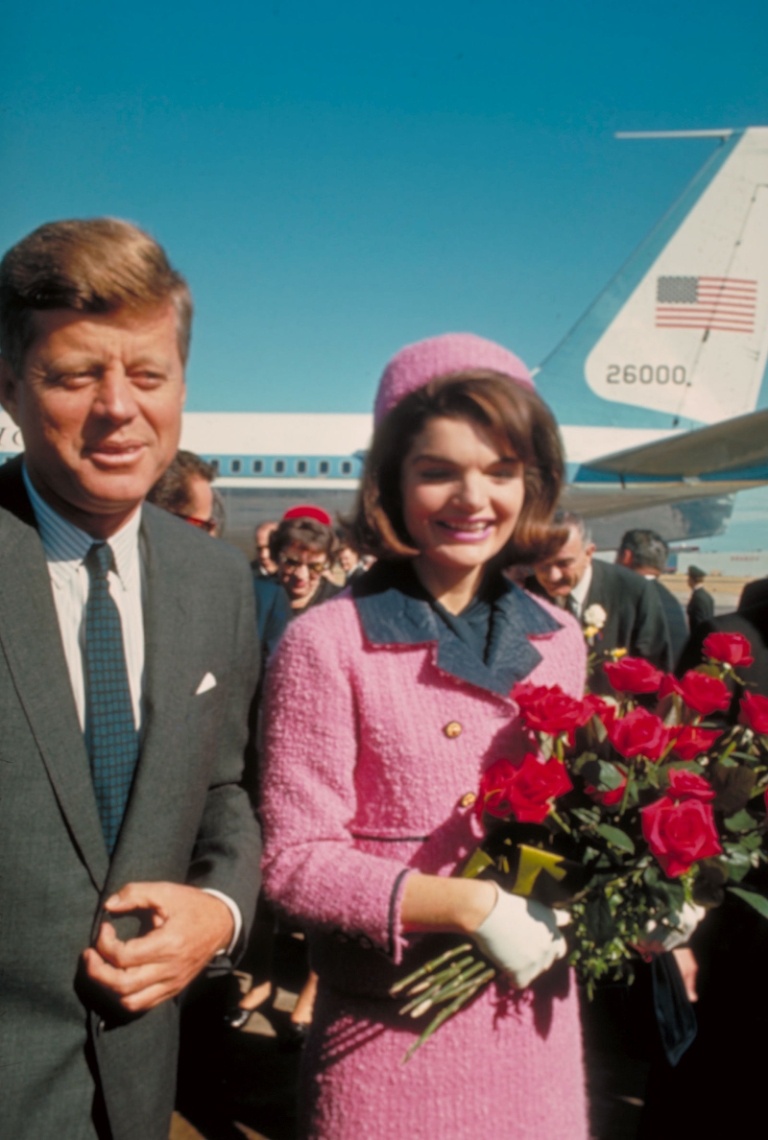
Robin Williams’ control over his legacy reminded me of the controversy behind Jacqueline Kennedy’s bloodstained pink Chanel suit, which is currently being preserved at the National Archives and won’t be seen by the public until 2103. The legal custody of the deed, which was established in July 29, 2003, and signed by Caroline Kennedy requires the National Archives to preserve the items and prevent the “undignified or sensational use of the materials (such as public display) or any other use which would tend in any way to dishonor the memory of the late President or cause unnecessary grief or suffering to members of his family” (Hallemann). I think the decision to keep the suit locked away makes sense in that it blatantly avoids sensationalizing the tragic assassination of President John F. Kennedy. But how does one justify that its release will be acceptable in 2103? Why can’t both Robin Williams’ image and Jacqueline Kennedy’s suit just be kept away forever? How does society believe it has a “right” to control the possession of these items?
Jackie Kennedy and her pink Chanel suit. View source here.
Public figures are well within their right to limit what is accessible after their deaths, but I believe there needs to be further conversation regarding where we as human beings should draw the line between the wishes of the deceased and our rights to gain the information we seek.
Works Cited:
Hallemann, Caroline. “Why You Won’t See Jackie Kennedy’s Iconic Pink Suit On Display in a Museum.” Town & Country. Town & Country, 20 Mar. 2017. Web. 03 Apr. 2017.
Kirsta, Alix. “Selling the Dead.” The Telegraph. Telegraph Media Group, 03 Feb. 2012. Web. 03 Apr. 2017.
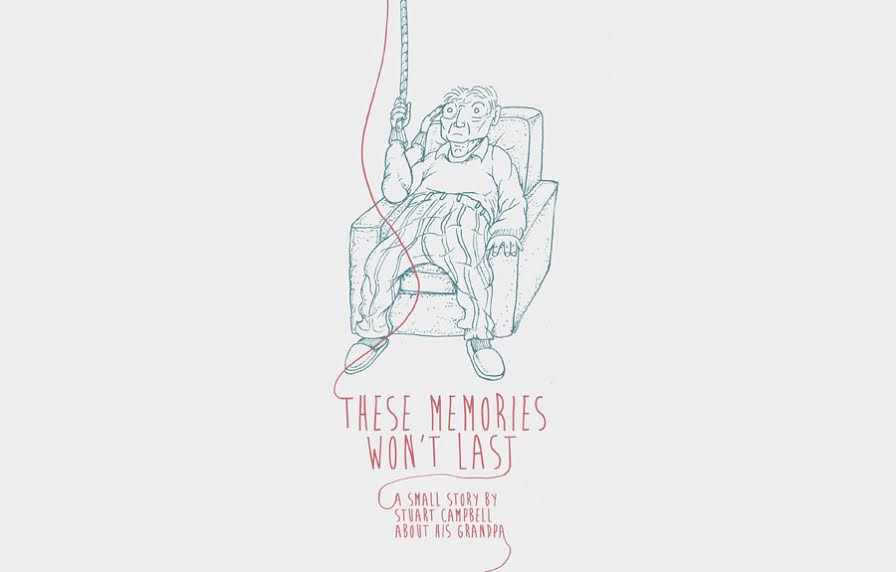
Over the past few years, I have become heavily interested in the concept of how to manage memories within our vast digital landscape. I am also particularly fascinated in the newly popularized desire for digital literature and how this medium redefines how we tell stories. In my English 220: Literary Analysis class last year, we read Stuart Campbell’s interactive comic, These Memories Won’t Last, which takes advantage of its digitized format to make an argument about the fragility of memories in digital spaces. Campbell’s piece takes the reader on a journey through the memories of his Grandfather during his time fighting in World War Two, fleeing to Australia as a refugee, and his current struggle with dementia. The central premise of the piece is the loss of memory but also the importance of sharing stories, which is shown by Campbell’s narration of his Grandfather’s memories. If you take a look at the online narrative, you can see that Campbell uses a fading effect to create a sense of urgency to read the story before the images and text disappear. You are also unable to scroll upwards, meaning that you cannot go back and re-read the text without refreshing the page to start from the beginning. Not only does the fading of images and the inability to scroll upwards correspond to the Grandfather’s inability to recount some of his memories, but it also represents how our memories can become less accessible when we project them into digital spaces.
An image of the grandpa from the story, These Memories Won’t Last. Note how the flimsy string holds the entire story together. View source here.
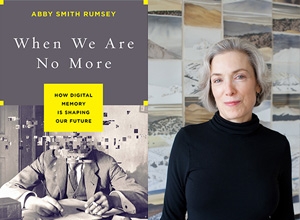
Through the form of his digital story, Campbell demonstrates the short lifespan of data in the digital world which connects to the rhetoric we are exploring in class concerning the curation of one’s “digital afterlife.” In part of Rob Walker’s article, Cyberspace When You’re Dead, he explores how online accounts that eventually become obsolete can influence the cultivation of one’s digital legacy. The fact that Campbell decides to use a flimsy string to hold his story together could comment on the issue Walker explores regarding the preservation of digital memories and enhances the argument about the fragility of memories within online spheres. As I continued to research digital memory for my English class last year, I came across an amazing book entitled, When We Are No More: How Digital Memory is Shaping our Future, written by Abby Smith Rumsey. In her book, she describes the need to reinvent how we preserve memory, questioning how historians will be able understand our own time if all of our memories exist in digital codes that may no longer be decipherable. To combat the problem regarding memory in the digital world, she writes, “The new paradigm of memory is more like growing a garden: Everything we entrust to digital code needs regular tending, refreshing, and periodic migration to make sure it is still alive…” (Rumsey 148). This claim leads me to question what spaces are best for the storage of our memories.
Abby Smith Rumsey and her book, When We Are No More: How Digital Memory is Shaping our Future. View source here.
Why do we feel compelled to store our memories on online spaces when we know that they will eventually expire? A large portion of Rumsey’s argument incorporates neuroscience into various discussions regarding how data storage differs from memory. Consolidation, for instance, is a facet of internal memory formation that is not enhanced by digital use. During this process, new perceptions are incorporated into the old and “connections between the new data coming into the brain find their home in existing mental contexts or webs of associations” (Rumsey 114). This is a process that can only be performed within someone’s brain. A computer is able to store certain memories, but it cannot make complex and far-reaching connections between specific scenarios like the brain. Relying on our devices as extensions of our brains corrupts the beautiful processes that are built within our own internal systems.
Reading These Memories Won’t Last is especially important as we discuss digital memory and what happens to your data when you die because it reflects the reality of telling a story about fading memories within a medium that is supposed to be timeless. As a result, this raises the questions: Does the human mind become the best place for human memories to be stored? Is it more effective to pass our memories on from person to person through shared stories? Think about it.
Works Cited:
Campbell, Stuart. “These Memories Won’t Last.” These Memories Won’t Last. N.p., n.d. Web. 20 March. 2017.
Rumsey, Abby Smith. When We Are No More: How Digital Memory Is Shaping Our Future. N.p.:n.d. Print.
Walker, Rob. “Cyberspace When You’re Dead.” The New York Times. The New York Times, 08 Jan. 2011. Web. 20 Mar. 2017.
One of the critical features within the post-modern horror genre its ability to enhance all five senses. The voice, for example, enables the audience to not only hear the fear but connect to the speaker on an emotional level. In a sense, the voice becomes a body, which then becomes a whole entity. For the following analysis, I observe two different mediums that rely on one or more than one of the five senses to generate their respective stories: a horror fiction podcast, “The NoSleep Podcast” and a horror film, Hush. Both forms of media use the senses (or lack thereof) to make distinct statements about disability, mental illness, and women in peril.
The NoSleep Podcast: “He Won’t Stop Tapping” (2017)
The “NoSleep Podcast” is a space for amateur horror writers to broadcast their work. Stories are told in the first person which enables the listener to experience the action firsthand. All of the podcasts begin with a specific introduction, combining dark and harsh music with phrases such as, “We’re here to frighten you and mess with your head,” “You’re here because that’s what you want,” and “Join us as the sleepless hours take a pass” to welcome the listener into uncharted territory. Within one of the podcast’s series devoted to survivors, searchers, and strangers is a narrative written by Collette Akile entitled, “He Won’t Stop Tapping.” This is a story about an unnamed young woman who lives alone in a room in an attic that has only one window. She claims she is wary of loud noises, prone to sudden bouts of fear, and has a history of mental illness. The story examines the woman’s struggle as she becomes aware of a mysterious tapping on her bedroom window, which she refuses to investigate because she is convinced that her mind is playing tricks on her. When she finally decides to peer out of her window, she discovers a man perched on her slanted roof. She realizes that the sound is not tapping, but instead, it is the clacking of the man’s teeth. The story then follows her as she begs her male friend to spend the night to assuage her fears and to listen for the tapping to confirm the sound’s existence. The two hear the tapping, but when her friend goes to take a photograph of its source, the man on the roof escapes. The next morning, the narrator’s friend goes missing, which might indicate that he was killed by the mysterious man. The podcast’s final line, “I left my window unlatched” leaves the listener uncertain about the narrator’s fate.
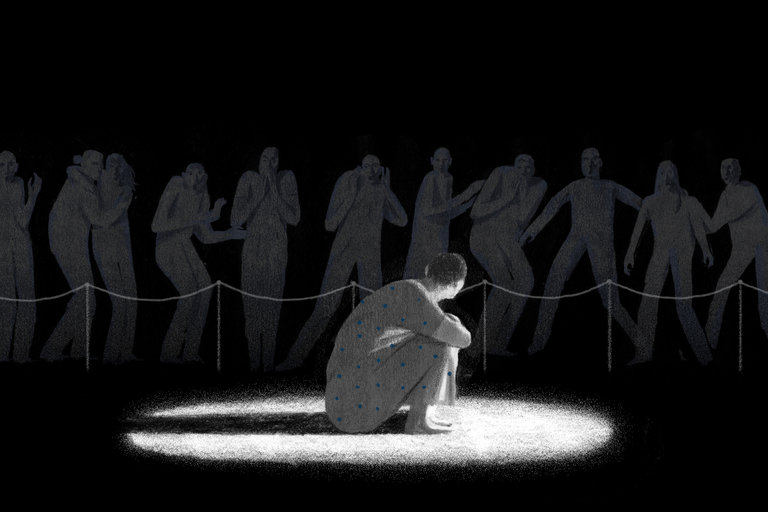
The feeling of isolation is largely associated with mental illness. Find source here.
One of the main areas of focus in the podcast is the concept of a mentally ill woman in peril. The narrator repeatedly admits that she feels like she is being “watched” or “hunted” and notes that she keeps a knife beside her bed just in case she needs to defend herself against an intruder. When she thinks about the threats that might lurk in the outside world, she repeats the mantra, “It’s not real it’s in your head” to herself. Instead of creating distance from the audience, the listener becomes trapped inside the head of the narrator. Even though the narrator is convinced that the tapping sound is just her mind playing tricks on her, we are aware that her mental illness plays a role in the severity of the problem. In his opinion piece in the New York Times entitled, “Mental Illness Is Not a Horror Show,” Andrew Solomon writes, “It’s the proximity of mental illness rather than its obscurity that makes it so scary” (Solomon). The NoSleep Podcast invites the listener to tackle mental illness head on, which contributes to a heightened level of fear as it is unclear whether what is being presented is imagined or real. The narrator also tries to normalize her mental illness, commenting that her mother has also displayed signs of paranoia and anxiety and that her therapist makes her write about what is going on in her life. This, paired with a surprising level of self-awareness, makes the events seem more realistic, thereby lulling the listener into a false sense of security. The narrator admits, “My paranoia saved me. I also know it killed someone.” This level of self-awareness enables the narrator to show the listener that she is aware of the action that transpires. However, the fact that she leaks information such as, “I also know it killed someone” before we actually see who is killed and why makes the content more frightening because we experience the scare more than once.
It is crucial to examine how womanhood plays a specific role in the construction and outcome of this story. The tale is told through the eyes of a female, thereby providing her with control over the story and a sense of power over any other character. In a section entitled, “And Then She Killed Him…Women and Violence in the Slasher Film” within her book, Recreational Terror: Women and the Pleasures of Horror Film Viewing, Isabel Pinedo writes, “The surviving female’s appropriation of the gaze enables her to use violence to defend herself effectively and to drive the narrative forward. We see him from her point of view.” (Pinedo 76). The only information we receive about the man on the roof is what the narrator chooses to tell us, which forces us to trust the speaker because we see the story through her eyes. Yet, she feels the need to question whether or not the tapping was in her head and begs her male friend to spend the night. This indirectly aligns masculinity with intelligence and control and takes away the feminine power that was given to the narrator from the beginning of the story. In the end, the man outside her window does not choose to attack her, but instead he decides to kill her male friend. This gives the power back to the female but strengthens the idea that the podcast focuses on an unbalanced sense of who is in control to confuse and frighten the listener.
The podcast also utilizes real life sounds such as the moving of bedcovers, the noise coming from a television show, and running water from a sink to create a sense of familiarity and security. The tapping also creates a metronomic sound, which is soothing to the ears of the audience. This contrasts with the lack of security the narrator feels when discussing the police. She claims that they would not be able to do much with little evidence about the man sitting on the roof and is convinced that because the sound is in her head, the police would not believe her. When the narrator’s friend goes missing, the police tell her that there is nothing they can do unless he has been gone for twenty-four hours, as he is not considered “missing” until then. As it turns out, according to Uslegal.com, if a person is missing and believed to be in danger, there “is no twenty-four hour waiting period. The law enforcement agency will immediately enter information about the missing person into the Missing Person’s database and the National Crime Information Center’s Missing Person File.” Although this is a horror fiction podcast, the distortion of real life facts is used to make the the listener feel vulnerable and unprotected. Therefore, our sense of security is violated because the police cannot make any immediate progress within the story.
Finally, the use of technology skillfully frames the narrative and makes the actions that occur more relatable. For instance, the narrator texts her friends in the middle of the night when she feels like someone is watching her and we hear her typing on her keyboard as she composes the text messages. Additionally, when the narrator’s male friend hears the tapping, he attempts to take a picture of the man outside on the roof, but before he is able to the sound cuts off and the man disappears. In a sense, the failure of technology adds to the terror because we are conditioned to believe that technology should always work. The uncertainty over technology also enhances what Pinedo writes in another piece within her book entitled, “Recreational Terror: Postmodern Elements of the Contemporary Horror Film” about the open ending. She claims, “in the end, the inefficacy of human action and the repudiation of narrative closure combine to produce various forms of the open ending” (Pinedo, 19). The open ending and our uncertainty about the fate of the narrator allows the listener to control how the story should end.
The trailer for Hush on Netflix.
Hush (2016):
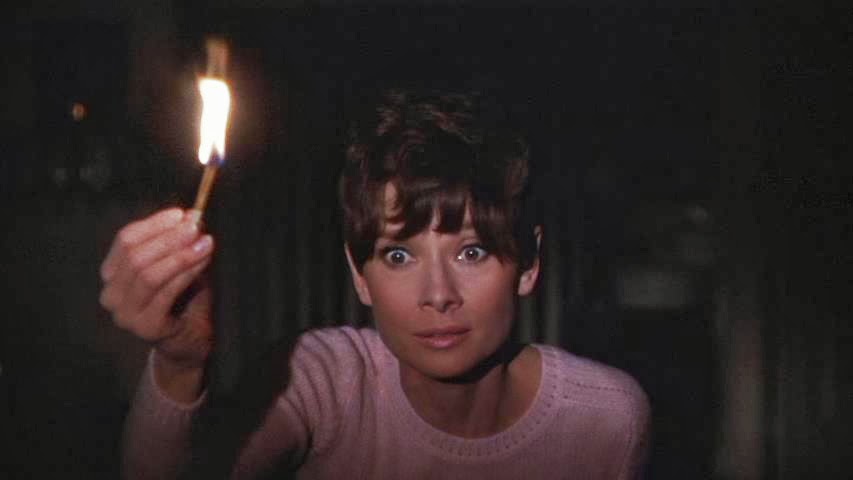
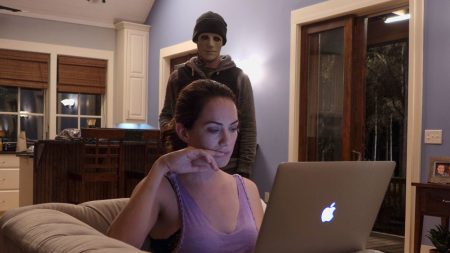
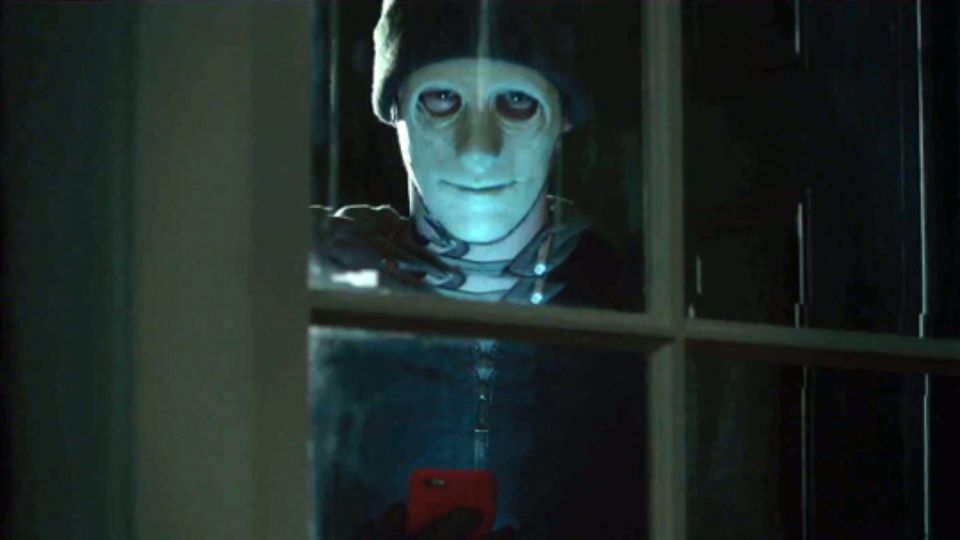
Hush, directed and edited by Mike Flanagan, is a horror film that was released in April 2016 on Netflix. It tells the story of Maddie Young, a deaf and mute author who lives alone in an isolated house in the woods. After a seemingly normal and relaxing evening, Maddie’s friend Sarah is murdered by a masked, psychotic killer, with ambiguous motives outside her kitchen window. Maddie cannot hear any of this and continues with her nightly routine. Once Sarah’s masked killer discovers Maddie’s disability, he’s not content to merely take advantage of the situation and slay her; instead he breaks into her house, takes her phone, and begins taking photographs of her and sends them to her laptop to make her aware of his presence. When Maddie realizes she is being stalked, she locks herself inside the house. The film uses sparse dialogue and muted volume to place the viewer in Maddie’s shoes, and uses piercing and dramatic sounds to reflect the danger of the situation. Maddie makes several failed attempts to escape her house and eventually ends up stabbing the man to death. This film is similar in form and content to “Wait Until Dark” (1967) starring Audrey Hepburn, who plays a blind woman who unwittingly comes into possession of a heroin-filled doll. As a result, she finds herself harassed by three men who enter her home and threaten to stab and burn her alive if she does not give up the goods. The disabled woman in peril is a common trope in horror, but the fact that Maddie is victorious at the end of the film illuminates the idea that able-bodies do not necessarily equate invincibility.
Audrey Hepburn in “Wait Until Dark” (1967). Find source here.
This film takes a close look at the power of disability and the testing of its limitations. Even though Maddie cannot hear or speak, she utilizes the power of her mind and pen to become a famous and successful young author. It is clear that she remains in close contact with her friends and family and lives happily alone. The film begins with loud sounds coming from Maddie’s kitchen as she makes dinner — the chopping of onions, the sizzling of asparagus cooking in oil, and the placing of marinated meat into the oven. This aligns her disabled body with normal tasks involved in the preparation of a meal. Her body is also put in conversation with the technology that she surrounds herself with. Technology provides her with a voice and serves as one of the ways she can communicate with the people around her. She texts her friend Sarah on her cell-phone, composes the end to her next novel on her laptop, and video-chats her sister. Even though Maddie is disabled, she appears able-bodied as she performs everyday life activities with ease. This, in turn, creates an aura of normalcy around her. However, when the masked man learns of her disability, he decides to test it. He taps on the window, scratches his knife across the glass, and stands behind Maddie without her knowing. This gives him the upper hand in the situation and brings powerlessness to Maddie’s disability. As Angela Smith writes in her book, “The Hideous Progeny: Disability, Eugenics, and Classic Horror Cinema,” “cultural narratives often use disability to generate a plot that ultimately reasserts and values normalcy” (Smith 5). Although we see instances where Maddie’s disability does not affect her ability to engage in “normal” tasks, the fact that the masked man can exert control over her because of her impairments provides him with more power at times. In the end, however, Maddie uses her disability to her advantage as she is forced to devise creative solutions regarding how to escape her house. Before she kills the masked man, she sprays insecticide in his eyes and blasts a fire alarm in his ears, thereby temporarily blinding and deafening him, which essentially evens the playing field. Because Maddie was afflicted with sense-crippling bronchial meningitis when she was thirteen she is caught between two worlds — unable to physically hear or talk, but still able to remember those features which enables her to conjure speech in her visions and dreams. Even though shifts between normalcy and disability are present, Maddie’s disability ultimately contributes to her victory.
The masked man tests Maddie’s disability by standing behind her. Find source here.
In her piece “…And Then She Killed Him: Women and Violence in the Slasher Film,” Pinedo argues that postmodern horror film develops a routine in which it stages the spectacle of the ruined body, particularly the female body, which calls for feminist analysis. She states that her discussion of the horror film is motivated by a “desire to disrupt the facile assumptions that the genre does not speak to women but only about them, and that it does this in a degrading manner” (Pinedo 70). I would argue, however, that Hush speaks to and about women in the opposite way as it aligns a disabled woman with power. Some could argue that the inability for Maddie to speak could represent the silencing of women in society, but it also reflects the ability for a woman to face and overcome hardships in spite of numerous setbacks. In her book, “Film, Horror, and the Body Fantastic,” Linda Bradley admits idea that, “the discourse of feminism has given a new language to the horror film” and that many overlook the trend of “the male body becoming the object of focalization or invasion” in horror films (Bradley 104, 105). This idea is illustrated in Hush, as Maddie relies on herself to fight all of the battles and to destroy the male body.
The masked man steals Maddie’s phone, but that does not stop her from fighting back. Find source here.
The horror movie also explores explicit threats to the body, which substantiates what Pinedo writes in her article about the postmodern elements of the contemporary horror film, that “terror is the threat to the body and the concomitant sense that harm could happen to you” (Pinedo 26). The fact that we are shown blood, guts, and gore makes everything seem more human. During one of Maddie’s failed attempts to escape the house, the masked killer fires a crossbow bolt into her leg, leading her to bleed profusely and making it impossible for her to run. Flanagan spends a great deal of time focusing on the after effects of this injury so the audience empathize with her situation. Maddie’s wound is so severe that she is at risk of bleeding out and as a result, experiences many hallucination and visions. Therefore, the threat to the body is equated with a limited amount of time to survive. Maddie recognizes that time is her enemy and decides that the only way to survive is to murder the intruder. If it were not for the pressing nature of the severity of her wound, Maddie may have not made this decision. The harm to her body provides her with the agency she needs to move forward with her plan.
The horror fiction podcast and the horror film focus on mentally ill and disabled women in peril. Although both end with the female protagonist in control of the story, they arrive at this point through the use of different and complementary techniques. First, the film and the podcast highlight the importance in the role of the audience as consumers of horror. In the podcast, we are unable to see what the setting, narrator, or killer look like, and as a result, must create a mental image of everything based on the descriptors we hear. Similarly, in the movie, we are unable to hear any of Maddie’s thoughts because we are placed within the confines of how she views the world because of her disability. In a sense, we have to think for her and devise strategies on our own, which directly incorporates the audience into the action. The two mediums also skillfully utilize silence and sound into the respective stories. The moments of silence in Hush contrast with the heightened audio when violence occurs, which makes the audience feel trapped between two different worlds. Likewise, melodious yet mysterious sound of the tapping in the podcast creates both a sense of security and dread for the listener. Additionally, the two mediums explore how technology can serve as an impediment to the progression of a story. In Hush, all Maddie needed was her phone to call the police, but the masked man stole it from her. In the podcast, the narrator’s friend goes to snap a photograph of the man on the roof, but the man escapes from the shot. Technology could have easily saved the day in both narratives, but it does not, which draws on the importance of the protagonist as the sole force in control of the action. Although these mediums differ in form, they illuminate the power of the woman in post-modern horror narratives despite the labels and weaknesses she may given at the outset. As a result, the woman in peril becomes the woman in power. These two sources of media compliment each other in the ways they ascribe power to the female figure and serve as models for contemporary representations of women in horror.
Works Cited:
Akile, Collette. “He Won’t Stop Tapping.” NoSleep Podcast, 15 January 2017. Web 4 March 2017.
Badley, Linda. Film,Horror, and the Body Fantastic. Westport, CT: Greenwood Press, 1995. Print.
Hush. Directed by Mike Flanagan. Intrepid Productions, 2016. Netflix.
Pinedo, Isabel. Recreational Terror: Women and the Pleasures of Horror Film Viewing. “Recreational Terror: Postmodern Elements of the Contemporary Horror Film.” Journal of Film and Video. 17-31. Print.
Pinedo, Isabel. Recreational Terror: Women and the Pleasures of Horror Film Viewing. “…And Then She Killed Him: Women and Violence in the Slasher Film.” New York: State University of New York Press, 1997. 69-97. Print.
Smith, Angela M. “Introduction.” Hideous Progeny: Disability, Eugenics, and Classic Horror Cinema. New York: Columbia UP, 2011. 1-33. Print.
In the portion of assigned reading from Jonathan Sterne’s The Audible Past, I was particularly fascinated by his analysis of the process of embalming and its influence on sound recording. Just as embalming alters the corpse to prevent physical decay that would render the body unpresentable for viewing, the process of sound recording protects present and future auditors from experiencing the decay of the voice. The phonograph altered recorded voices in ways that transformed the internal consciousness behind the speaker’s words to perform external and cultural functions. Similarly, various alterations and the removal of internal organs from the dead body during the embalming process was performed for solely external purposes. In his book Hearing History, Mark Michael Smith writes,“While competing methods were concerned with interiority, with preserving the body in its original form, chemical embalming was concerned only with exteriority, with the appearance of the body and its potential to perform its social function” (Smith 301). He also emphasizes the idea that the recording studio is analogous to the embalming process, since the voice is transformed in ways that beautify it, just as the body of a corpse is enhanced to make it appealing to the eye.
The connections between sound recording and the embalming process pose specific threats to the culture society that has established in terms of the nature of preservation. This led me to think about my favorite song, “Here, There and Everywhere” by the Beatles, and my favorite book, “Jane Eyre” by Charlotte Brontë. John Lennon of the Beatles certainly did not live long enough to witness the longevity of this beautiful love song and Charlotte Brontë was not able to see how, through the power of her pen, she revolutionized contemporary literature. Yet both of these magnificent works live on in their author’s absence. As a matter of fact, many of the most famous works of music and literature today gained their high level of regard after the death of the artist or writer. After thinking about this in more detail, I began to question: how much of the embalming process has infiltrated into the media we encounter today? I believe that the answer to this question is A LOT.
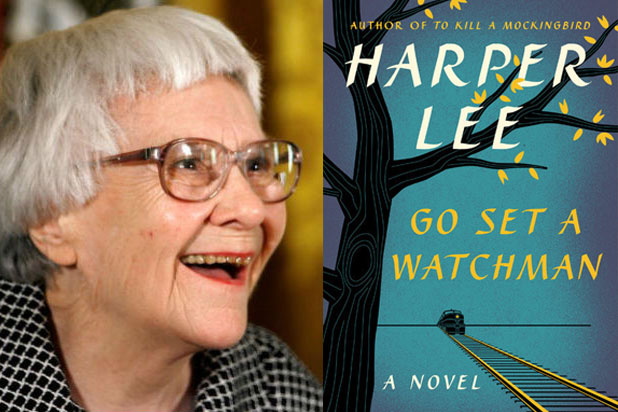
To illustrate this point, I’d like to examine the controversy associated with the publication of Harper Lee’s Go Set a Watchman, which occurred during the summer of 2015. After writing and publishing her beloved novel, To Kill a Mockingbird, in 1960, Lee insisted that she would never again publish another book. After Lee’s sister passed away, her new legal guardian, Tonja Carter, claimed she “discovered” a manuscript to what later became the published book, Go Set a Watchman, and brought it to the attention of various publishing companies. It was very clear that Lee never intended to publish this novel and had marginal input in the book that would bear her name. In one of her last public interviews that was conducted in 1964, Lee said, “I think the thing that I most deplore about American writing … is a lack of craftsmanship. It comes right down to this — the lack of absolute love for language, the lack of sitting down and working a good idea into a gem of an idea.” Instead of taking these words to heart, the publishing company completely ignored the legacy Lee wished to leave on the public and went ahead and published the novel. If Lee really wanted this piece of literature to have been published she would have advocated for it during her earlier years. Although the book sold rapidly once it was released, I decided to not purchase it as a protest to preserve my adoration and respect for Harper Lee’s voice, which had been so blatantly disregarded.
Harper Lee and her book, Go Set a Watchman. Find source here.
This issue relates to the process of embalming because Lee’s interior motives were warped and transformed into the publication of something that she never intended for the external world to see. The book became far less about what it contained on the inside and far more about its external implications regarding the prestige of being Lee’s second book. In this case, in an effort to protect certain pieces of Lee’s work from “decaying,” the publishing companies took advantage of her and published something that should have never been released. This connects to what Jonathan Sterne mentioned about “a disregard for the preservation of the voice in its original form” and how we alter the voice in forms that “perform a social function” (Sterne 297). If we step back and take a look at the media we are presented with, it is important to question if the content aligns with the initial intention behind it or if it was obstructed for a social or cultural purpose. As a result, I foresee changes in how we define “preservation,” especially within our rapidly evolving digital climate.
Works Cited:
Smith, Mark Michael. Hearing History: A Reader. United States of America: University of Georgia Press, 2004. Print.
Sterne, Jonathan. The Audible Past: Cultural Origins of Sound Reproduction. “The Resonant Tomb.” United States of America: Duke University Press, 2003. Pages 287- 311. Print.
While I was sitting with a friend this afternoon at on campus Summit, she received an email which read,“As you know, there is a nation-wide cloud outage, and Handshake is not working. In order to alleviate any concerns that you have, we are extending the Davidson Impact Fellowship application deadline to at least tomorrow evening at 11:59 pm. Please stay tuned to our social media accounts for any additional updates.” The rhetoric of the email immediately reminded me of this class, so I figured that this would make a pretty appropriate “Sightings” post!
After doing more research about this nation-wide cloud outage (which I had no idea existed until my friend showed me this email), I discovered that Amazon.com was the culprit that triggered this lengthy problem on its cloud storage service, which caused widespread frustration among other online services. Reactions to this occurrence spread like wildfire onto outlets such as Twitter, with the hashtag, #awsoutage becoming an instant trend. Below are some screenshots of some humorous tweets in response to this problem:
In an article written earlier today about the issue, Ángel González states, “In Amazon’s case the cloud service may have been so robust that it lulled users into an exaggerated sense of security, and yielded a bigger shock upon failure.” This comment reminded me of our conversation in class about the “technological imaginary” and the binaries we created about what we imagine technology to be versus what it really is. We imagine technology to be safe, secure, and ideally, unbreakable. However, situations like this nation-wide cloud outage obstruct the trust we normally attribute to our devices. I find it especially interesting how the people who were frustrated about this issue took their complaints to spaces like Twitter, which also exists within the larger cloud. It is almost as if it has become human to turn to technology to express emotions regarding the “death” of other aspects of technology.
Additionally, the wording of the email quoted earlier is also definitely worth some inspection. It begins with “As you know,” which indirectly blurs the division between the technological world and the world we are living in. It was assumed that my friend already knew about the issue because of the interchangeable qualities of real life and technology. We have gotten to the point where digital malfunctions limit what we can do and dictate how we live our lives. Although it appears as if the normal course of operations is back on track, it is important to use this occurrence as a reminder of how much “trust” we put into our devices and how we let the seemingly “secure” parts of technology control our everyday lives.
Works Cited:
González, Ángel. “Site of Amazon’s cloud glitch made it especially disruptive.” The Seattle Times. The Seattle Times Company, 28 Feb. 2017. Web. 28 Feb. 2017.
As I began to analyze the violence present in the episodes we watched of Dead Set, I realized that in addition to the killer zombies, we encounter many other destructive devices. Characters use scissors, knives, axes, and even lamp posts to protect themselves and to kill the flesh-hungry zombies that come their way. The most notable weapon that the characters use, however, is the gun. Guns are not only crucial to the survival of many of the characters, but they are also integral to the progression of action throughout the series. Without guns, many of the main characters in the show could have been killed at the outset. In a sense, the presence of the gun enhances their chances of survival which enables the viewer to create a deeper relationship with each character. In turn, when each character subsequently dies, the viewer experiences the loss in a more genuine way. Guns are significant because they provide the characters with control and agency over the situation — when paired with a gun in hand, the zombie becomes the victim. Guns also serve as a plot device as they fuel an overall warlike tone and frame much of the action in the story.
The show also succeeds in showing the implications of abusing the power of the gun. We see that when Alex encounters Riq she assumes that he is a zombie and shoots at him right away. Additionally, the police officers utilize the gun to shoot freely at innocent characters. Although Alex and the police officers use the weapon as a means of protection, they submit themselves to the power of the gun and in a sense, let it control them. Another important scene involving guns occurs towards the end of the series when Patrick and Joplin steal the weapons in order to execute their escape plan. This results in the shooting of Riq and the eventual downfall and destruction of the other characters. In this instance it is evident that the abuse of the gun serves as a device to advance the plot and make the action more dramatic. The presence of the gun in this scenario made Patrick and Joplin seem like the zombies, giving them full control as the other characters submit to their power. This leads me to question if Charlie Brooker (creator of Dead Set) intended to make a statement about gun violence and its role as a destructive force since its presence is so crucial to the storyline.
The possible hidden meaning involved in the presence of guns also leads me to question whether the show works to represent a “reaction to the greater cultural consciousness — primarily social and political injustices” which Kyle William Bishop claims zombies do (Bishop 15). As I was thinking about zombies and guns I found myself humming the tune to “Zombies” by the Cranberries, a famous Irish rock band. Fitting, right?! The song was written in 1994 in response to the IRA (Irish Republican Army) bombing of Warrington, England in 1993. The lyrics reflect the turbulent political situation in Northern Ireland at the time as well as a cry for peaceful protest. I find the intersection between bombs/ gun violence and zombies in this song interesting, as it can potentially relate to some similar ideas regarding destruction in Dead Set. As Bishop writes, the “popularity of the zombie has continued to flourish in other media,” which can be seen through the utilization of zombies and the metaphors they evoke in song form (Bishop 17). For instance, the extensive violence occurring between Britain and Ireland fueled an emotional void that made society become zombie-like. Additionally, the repetition of the words “in your head, in your head” represents how war has also become zombie-like through its inescapable and terrifying nature. By using zombies as a metaphor for the painful reality of war, it can be implied that war is not only inhuman, but it consumes human emotions.
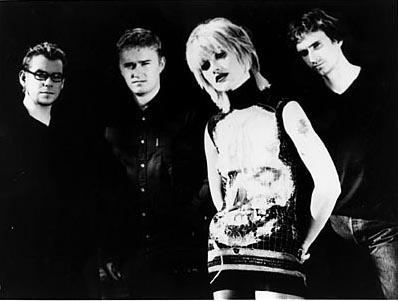
If we were to look at Dead Set through the same lens, there may be a deeper meaning associated with the presence of weapons as a destructive force and whether the series intends to tackle the social and political injustices associated with gun violence. Has the gun in a sense become a zombie? As you think about it, be sure to tune into the aggressive and haunting tone evoked by the Cranberries powerfully evocative song, “Zombies.”
Works Cited
Bishop, Kyle William. American Zombie Gothic: The Rise and Fall (and Rise) of the Walking Dead in Popular Culture. McFarland & Company, Inc., Publishers, 2010. Print.