
The Fall of the House of Barrett: An Inspection of Detail in “A Head Full of Ghosts”

In A Head Full of Ghosts, Paul Tremblay alludes to external elements to convey deeper meanings about the internal state of his characters. This is especially apparent towards the end of the book when he explicitly explores temperature, equating certain scenarios with cold temperatures and others with hot. We are exposed to cold in detail during the morning of the exorcism when Merry wants to play soccer outside but Ken warns her of the frigid temperature. She goes outside anyway and to her dismay observes, “He was right. It was freezing out. My ball instantly became a hard rock that wasn’t fun to kick” (Tremblay 204). It is almost as if the cold doesn’t escape the Barrett residence because during the exorcism, which occurs soon after, Marjorie claims, “Wait. Please, wait. It’s me. I thought I could take the cold, but I can’t. I’m freezing. Please, Father” (Tremblay 222). Although it is normally cold during exorcisms, it is interesting to note how Marjorie rejects the cold weather, heightening her self-awareness and rendering her more human. Her stated discomfort with the cold contrasts with Merry’s unwillingness to voice any of her complaints. Although the sisters react to the cold in different ways, Tremblay clearly wishes to associate it with the Barrett household.

Warm temperatures are later explored outside of the Barrett household when Merry and Rachel meet for the last time in a coffee shop. Merry observes that it is “steamy and warm” inside and mentions that she and Rachel chat about “how nasty it is outside but how warm it is in the coffee shop” (Tremblay 256). This comment indirectly hints at the inconsistencies between internal and external worlds, a theme that is explored in Tremblay’s story. The warm temperature inside the shop becomes sweltering, which prompts Merry to ask the barista to turn down the heat. Soon after, the coffee shop becomes incredibly cold, making it seem as if cold always triumphs over hot. Interestingly enough, the barista claims, “heat’s off, but it wasn’t me” (Tremblay 282). The coffee shop becomes consumed with cold air, thereby merging the external and internal worlds and blurring the distinction between the two. Ending with a cold atmosphere and the final words, “…it’s cold enough that my breath is a visible mist” signifies the mystery behind whether or not the breath is an extension of Merry of if it is a ghost (Tremblay 284). This brings into question how many selves we have and whether or not our heads are truly filled with ghosts — a perfect conclusion to the story.
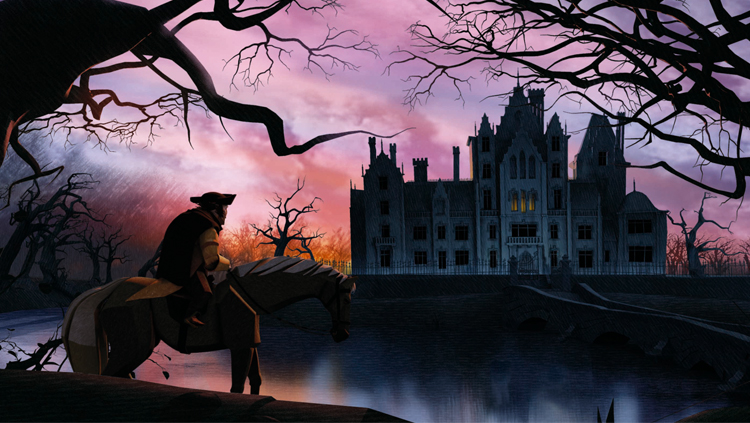
The House of Usher before it crumbles to the ground. Click on photo to view source material.

After close reading the dichotomy between hot and cold in Tremblay’s story, I was reminded of the function of weather in gothic texts. Similar to the way Tremblay uses temperature to mirror and magnify the feelings of his characters, gothic texts use weather or other external forces as elements to underscore the action of the story or hint at the inner conflicts within each character. For example, in the short story, “The Fall of the House of Usher,” Edgar Allan Poe describes external features of the house, including “bleak walls,” “vacant eye-like windows,” “rank sedges,” and “decayed trees” to convey the immediate pervasiveness of gloom and terror in the mind and body of the narrator (Poe 1). Aside from this, Poe’s story is also quite similar to Tremblay’s in its form. We are introduced to the idea that Roderick Usher is suffering from some sickness, or as Poe describes it, “an acuteness of senses” at the beginning of the story (Poe 4). Marjorie’s “sickness” is also the starting point of Tremblay’s story and drives the action in the text. Additionally, both stories occur in closed environments which place the “home” at risk. Roderick’s home is able to perceive certain things much like a human can and holds an inexplicable power over him. The Barrett home is not only corrupted by Marjorie’s mental illness but it more broadly represents the family unit that is at risk of being severed. Both texts culminate in the destruction of the home on some level — with the actual House of Usher crumbling to the ground after the death of Roderick and with the poisoning and eventual death of Merry’s family members. The similar forms of both texts as well as external descriptors such as temperature and weather make it evident that many of the important components of stories reside in the seemingly minute details or descriptors.

Works Cited

Poe, Edgar Allan. “The Fall of the House of Usher.” The Fall of the House of Usher – Poe’s Works | Edgar Allan Poe Museum. N.p., n.d. Web. 06 Feb. 2017.

Tremblay, Paul. A Head Full of Ghosts: A Novel. New York, NY: William Morrow, 2015. Print.
Grieving 2.0: Can we ever move on?

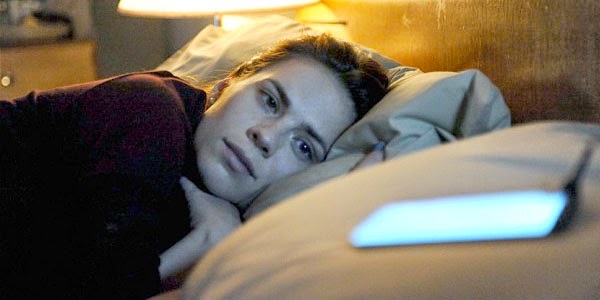
While Episode 1, Season 2 of Black Mirror explores the desire to fill the emotional void associated with the death of a loved one, it more deeply examines how the process of grieving has changed due to advances in technology. As someone who has witnessed a lot of death in her life, I tried to connect Martha’s grieving process to Elisabeth Kübler Ross’ five stages of grief model: shock, denial, anger and guilt, despair and depression, and acceptance. Although I could easily identify some signs of grief in Martha’s behavior, I had trouble determining whether she arrived at the final stage, acceptance. It appears as if Martha is unable to accept Ash’s death because she never really let him die. This raises the question: how does the process of “mourning,” or “lamenting for the dead” occur when the person who died isn’t actually gone (OED)? Technology’s ability to keep Ash “alive” obstructed the grieving process for Martha, thereby bringing her more suffering and pain in the end.

Black Mirror: Season 2 Episode 1. N.d. Billie Doux Reviews. Web. 25 Jan. 2017

When the police officers arrive to inform Martha of Ash’s passing, there is no dialogue; all we see is Martha open the door, look at the officers and the flashing lights outside, and close the door in their faces. These actions make it seem as if the audience is in Martha’s head. Just as she slams the door before the officers can inform her of Ash’s death, her mind simultaneously slams the door on the possibility that he is gone. This is a clear indication of denial, one of the stages of grief. Additionally, when Sarah informs Martha of a technology that would enable her to speak with Ash, Martha screams, “Shut up!” which brings her emotions to a public level. The anger present in this instance also represents yet another stage of grief. At first, Martha grieves in “normal” ways, but it is not until she develops an unhealthy attachment to the technological replica of Ash that her grieving process truly goes astray.

One especially poignant moment in the episode occurs after Martha’s ultrasound when she drops her phone containing Ash’s voice on the ground. We see that the phone shatters and his voice disappears, leading Martha to believe that she has lost him forever. Immediately after she hears from Ash on her newly purchased device, she apologizes profusely for “breaking him.” It is almost as if watching the phone crack and die was like experiencing Ash’s death all over again, which does not help Martha progress in terms of her grieving process. This moment exemplifies how technology can intervene and intrude in the grieving process in ways that make it even harder to let go. Ash’s statement, “Calm down. I’m not going anywhere,” also masks the possibility that he could very well be lost again due to the fragility of technology.  

Martha’s unwillingness to accept Ash’s passing becomes more apparent as she explores her relationship with his replica. She rejects many of his actions and identifies flaws in his behavior, claiming that the real Ash would not behave in ways the replica did. Although at times she wants to get rid of the replica, she is unable to because she is to some extent addicted to it. The addictive nature of this technology makes the acceptance stage of grief unattainable. Confining Ash to her attic confronts the idea that her grieving process will never be complete and more broadly hints at the implications technology has on grief in society today.

In today’s world it has almost become ritualistic to grieve publicly. For instance, funeralOne, a technology company, provides funeral homes with webcasting services and streams videos of funerals online for people to watch wherever and whenever. Watching a funeral on one’s cellular device has now become a common occurrence which poses a threat to the traditional funeral industry. You can now light virtual candles for loved ones on memorial websites, utilize online funeral home guest books, and address the dead in Facebook comments. With the amount of technology increasing within the realms of death and loss, we can put a hold on our grief and mourning processes because we are able to interact with the deceased in unprecedented ways. Will we ever be able to move on after a loved one passes? This episode of Black Mirror and advances in technology surrounding death reaffirm the need to reassess the stages of grief and the places we mourn as we enter a rapidly evolving digital climate.