The Studying State Fair

While attempting to define “play” in his book Play Matters, Miguel Sicart notes that it is often “carnivalesque.” This means that we can almost turn the world upside down to make sense of something. Upon camping out on the 2nd floor of the Davidson College Union for 30 minutes, I saw something similar; the Union, a place normally used for studying, can actually become a carnivalesque scene where play is created.

I noticed that students made studying like a carnival. Almost every student I saw had his or her headphones in; some were the plain white Apple earbuds, but others were the colorful Bose or Beats. Even if a student was reading a textbook, he or she always had a computer open to play a game, to listen to music, or to indulge in some other distraction.

The interior appearance of the Union added to this carnival. There were large purple posters hanging from railings. There were countless flyers with large letters, varied colors, and winding question marks posted sporadically on columns and bulletin boards. Empty tables had left-over napkins and spilled salt; chairs were left pulled out. It was disorderly; it was the opposite of a neat and structured study space.

There was also constant laughter and chatter. Scott Van Pelt of SportsCenter talked aloud on the T.V. in the corner of the room. Kids had loud and obnoxious conversations as they walked out of the Davis Cafe. Four kids with open homework sat down and had a normal conversation like they didn’t even have any work to do. I even saw a boy flirting with a girl; whenever he had something funny to say, he’d raise his voice and the girl would laugh at the same level. This was no silent library.

Finally, I noticed the little things that students did to make themselves more comfortable. One girl used a chair as a footrest. Another sat on the floor and used the base of a couch as a backrest. One kid put his backpack down on the table and used it as a pillow for a quick power nap. All of these little things create a twisted version of studying. Everyday objects were used in abnormal ways that are counter to what you’d expect.

This scene was a paradox; students “tried” to focus on schoolwork while also surrounding themselves with numerous forms of entertainment. The Union (when viewed as a study space) is like taking a library, shooting it with a paintball gun, infusing it with live rock music, and hitting it in the face with a whipped cream pie. It was anything but quiet and it was anything but focused.

Gamification

Educators and bosses everywhere are constantly looking for better ways to keep up morale in the school and workplace, as well as boost productivity. A new trend amongst these people is gamification.
Gamification does just what it sounds like, makes things like a game. The purpose of which is to motivate work and learning, as well as breaking down the stigma that goes along with these things. Schoolkids are often ridiculed for playing around too much, focused on games rather than their schoolwork; so making their schoolwork a game should make their game fixation also productive and help them learn. Schoolkids may not be the best example, though. This purports the stereotype that video games are for little kids and a waste of time, these are myths. The average age of a gamer is 35. 68% percent of gamers are over 18, 47% of gamers are women, which means that there are more adult women are gamers than male gamers under 18 (Entertainment Software Association, 2012). Videogames are everywhere, and just about everyone plays them, be it on their phone in the train during their morning commute or on a computer at home at 2 am. If everyone plays, why not make it more than just enjoyment?

Gamification has spread across business education, changing they way people see school and work. Kids play to learn, a big contributor being Leap Frog. Leap Frog has produced countless toys, tablets, and games for kids ranging from newborns to over 6 years old. On the business side, the workplace can turn into a leaderboard. Employees can compete, hopefully in a friendly manner, to do work. Also the tedious or boring work can suddenly become fun, either way the workers should produce more. On the flipside, business has been created by gamification. Just google gamify, and countless businesses come up offering their services to change the dynamic of the workplace. Notably, Bunchball, a gamification software provider, has raised nearly $20 million. Gamification is also seen in many TED and TEDx talks, which provides to some amazing presentations, in particular Jane McGonigal has produced some amazing work on the subject.

Other uses of gamification can be found all over, even in medecine. A very famous gamification example is Re-Mission, by Hope Labs. Re-Mission, and its sequel Re-Mission 2, are games designed to teach and empower cancer patients about their disease and treatment options. The impact is truly amazing and is something to see for yourself:


Play and Work

The difference between work and play is at first glance very easy. Work is high stress, monotonous, and boring. While play is relaxed, imaginative, and fun. Yet these two things are not as different as they seem.

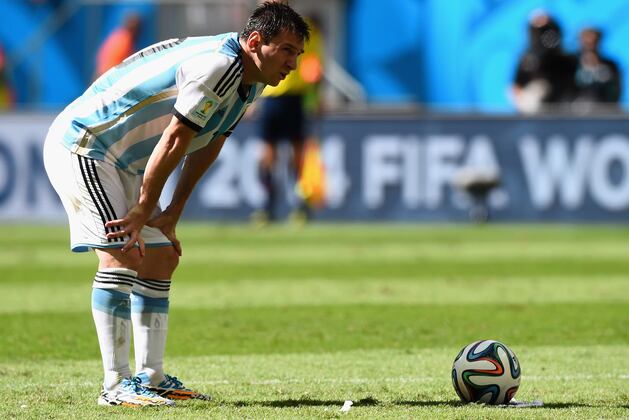
Let’s begin with play. While play can be relaxed and fun, sometimes it is the opposite. Take soccer for example. Having a pass with some friends is nice and relaxed. You find pleasure in just the act of simply kicking the ball to each other, maybe adding some flair and mixing things up, or having a conversation alongside passing. In contrast, playing in the 90th minute of the World Cup final, with the pressure of the whole world watching and your country’s pride resting on your back, is not the same experience. Where the pleasure is derived from success, both within moments inside the match and in the winning the tournament. Both of which take huge amounts of effort, skill, focus, and even pain and sacrifice. These two different different situations correlate to Roger Callois’s ideas of free lance paidia and structured ludus. With the paidiac form being a simple kicking of the ball between a few people, which is not organized, and in this case also lacking effort. The ludic design of a soccer match, made up of the 17 laws of the game (simplified here) and the countless unwritten rules known between players, taking a lot more attention to detail and energy to achieve the goal of the game, to win. Both the paidiac and ludic components of soccer are still play, no matter the amount of structure and effort. In the latter, enjoyment is achieved through success and multiplied by the effort put in, highlighting the fact that hard work and play are not mutually exclusive. In this way play can be closely related to work. Which is often categorized by the necessary effort.
Work also has its misconceptions that may build up the seemingly large, but in reality, small disparity. The main being the monotony. Work is thought of as repeating of the same act, over and over. But this is not the case, and is not always as tedious as it may seem. More and more often nowadays jobs are being gamified. By that I mean that efforts are put in for the work to seem more like games and made more fun. This movement is supported by the idea that more and better work is produced when the work force has higher morale. While work may not cross to play, it is made playful, as described by Miguel Sicart. When work can now bring some enjoyment and pleasure, it is easier to see the connection it has to play.

Play, especially the more challenging and ludic versions, can take a lot of effort and concentration; and work can be fun and create amusement. The realization of these two simple, but often overlooked parts of work and play accentuates the similarity of the once thought to be separate concepts. You can play at work, and work at playing, and if you’re really lucky your life will combine the two.

Play and Work

The difference between work and play is at first glance very easy. Work is high stress, monotonous, and boring. While play is relaxed, imaginative, and fun. Yet these two things are not as different as they seem.

Let’s begin with play. While play can be relaxed and fun, sometimes it is the opposite. Take soccer for example. Having a pass with some friends is nice and relaxed. You find pleasure in just the act of simply kicking the ball to each other, maybe adding some flair and mixing things up, or having a conversation alongside passing. In contrast, playing in the 90th minute of the World Cup final, with the pressure of the whole world watching and your country’s pride resting on your back, is not the same experience. Where the pleasure is derived from success, both within moments inside the match and in the winning the tournament. Both of which take huge amounts of effort, skill, focus, and even pain and sacrifice. These two different different situations correlate to Roger Callois’s ideas of free lance paidia and structured ludus. With the paidiac form being a simple kicking of the ball between a few people, which is not organized, and in this case also lacking effort. The ludic design of a soccer match, made up of the 17 laws of the game (simplified here) and the countless unwritten rules known between players, taking a lot more attention to detail and energy to achieve the goal of the game, to win. Both the paidiac and ludic components of soccer are still play, no matter the amount of structure and effort. In the latter, enjoyment is achieved through success and multiplied by the effort put in, highlighting the fact that hard work and play are not mutually exclusive. In this way play can be closely related to work. Which is often categorized by the necessary effort.

Work also has its misconceptions that may build up the seemingly large, but in reality, small disparity. The main being the monotony. Work is thought of as repeating of the same act, over and over. But this is not the case, and is not always as tedious as it may seem. More and more often nowadays jobs are being gamified. By that I mean that efforts are put in for the work to seem more like games and made more fun. This movement is supported by the idea that more and better work is produced when the work force has higher morale. While work may not cross to play, it is made playful, as described by Miguel Sicart. When work can now bring some enjoyment and pleasure, it is easier to see the connection it has to play.

Play, especially the more challenging and ludic versions, can take a lot of effort and concentration; and work can be fun and create amusement. The realization of these two simple, but often overlooked parts of work and play accentuates the similarity of the once thought to be separate concepts. You can play at work, and work at playing, and if you’re really lucky your life will combine the two.

Portal – Changing The Game

Portal in its simplest form is a puzzle game with one-sided dialog. At face value it does not seem like much, but once the player jumps through their first portal they are hooked. Portal pushed physics and gravity in games by offering a mechanic that functioned unlike anything the gaming world had done before. Allowing the player to interact and progress through the game by relying on the architecture of the game brought the user and the developers together. The point of each level is not to trick the player, but to make them think. In many ways Portal is a spacial story, it relies heavily on its level design and mechanics to make the game unique. Yet Portal is not just another puzzle game. Plenty of games force the player to interact with the space around them. Portal is unique because it makes the player think only allowing them a blue and an orange portal to solve complex puzzles. This simple design limits the player thus making the game more challenging. If the player was allowed more than one of each portal, then they could solve the puzzle much faster. The mechanic of using portals as a whole is what separates portal the most. The holes in the map allow the player to interact and reshape rooms to their needs and solve the level. Portal is famous for its portals because they allow the architects and the player to work as one.

Yet portal breaks from the classic puzzle game due to its antagonist GLaDOS. She provides the only dialog and therefor the bulk of the story. She is crucial to the game because she gives the player a guide and then an enemy. GLaDOS is a good example of how dialog can change the game. Her tone remains very level due to her robotic voice, yet what she says and her delivery gives away her current state of mind. Her dialog is complex and plan very unclear until the last level of the game, this only adds to the attraction of the game for many. You feel as though you not only solving the puzzles but the mystery of Aperture science as a whole.


Presidents and the Issues of Capitalism

Presidents, as the game was shown to me, is a shedding card game, meaning that the goal of the game is to get rid of all of ones cards. Without getting too detailed the rules go as follows: players go around the circle in a clockwise fashion playing cards of ascending value, with a few exceptions, including superior doubles, and triples, pile-clearing cards and transforming cards depending on the rules agreed by the players, and clearing the pile when no one else can play a card or one player exhausts their hand.

The political aspect of the game becomes apparent at the restart of the game. At the beginning of following rounds of Presidents, the first two winners of the previous round, deemed president, and vice president, get to take cards from the last two players, the scum and vice scum. After the cards are dealt to each player the president gets to take two cards from the scum, at request of the president, and give the scum any two cards in return, with the vice president getting one from the vice scum.

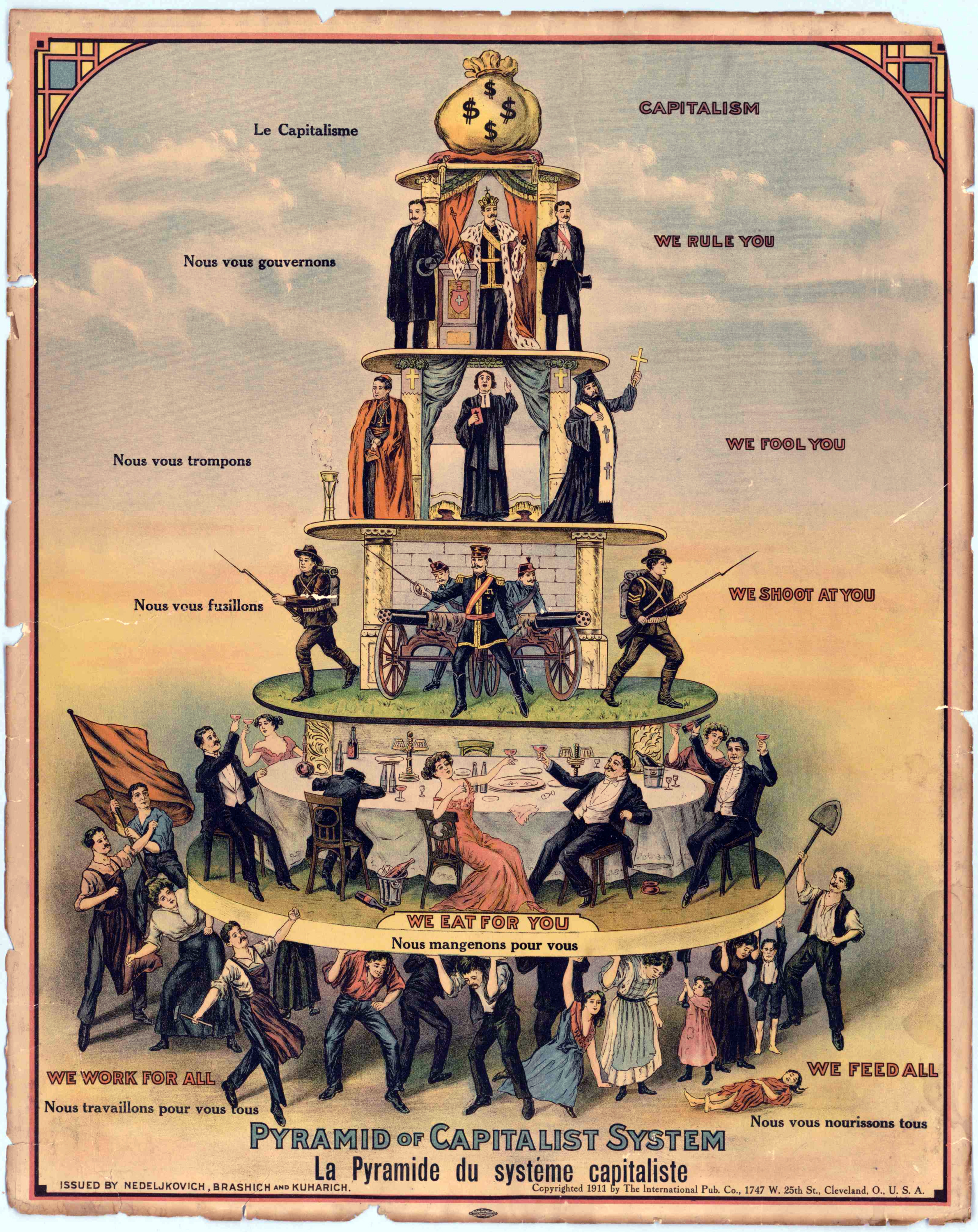
The politicalization of this game is pretty obvious with the titles of these players and the president and vice president exerting their power and taking what they want from the lowly scum of the earth. Yet more is revealed with the name of the original game, daifugō (Japanese for grand millionaire), and all of the other names for the game: including kings, capitalism, warlords and scumbags, landlord, rich man poor man, hierarchy, pimps and hoes, and more. The common theme being the implied superiority of the previous winners over the losers. This along with the unfair perks of being in this upper class reveal the political satire within the game. Therefore in playing the game, the players are shown the problems with capitalism, and how rising into upper classes allows people to perpetuate their wealth and power; as well as with many of the different names and terms in versions of the game, players are shown the negative social implications and lack of respect for the lower class. All of which are explicit enough of messages that I could not avoid having them pop into my head when I played my first few rounds. Is our society really like the game? Is their anything we can do to fix it?
Presidents and the Issues of Capitalism

Presidents, as the game was shown to me, is a shedding card game, meaning that the goal of the game is to get rid of all of ones cards. Without getting too detailed the rules go as follows: players go around the circle in a clockwise fashion playing cards of ascending value, with a few exceptions, including superior doubles, and triples, pile-clearing cards and transforming cards depending on the rules agreed by the players, and clearing the pile when no one else can play a card or one player exhausts their hand.

The political aspect of the game becomes apparent at the restart of the game. At the beginning of following rounds of Presidents, the first two winners of the previous round, deemed president, and vice president, get to take cards from the last two players, the scum and vice scum. After the cards are dealt to each player the president gets to take two cards from the scum, at request of the president, and give the scum any two cards in return, with the vice president getting one from the vice scum.

The politicalization of this game is pretty obvious with the titles of these players and the president and vice president exerting their power and taking what they want from the lowly scum of the earth. Yet more is revealed with the name of the original game, daifugō (Japanese for grand millionaire), and all of the other names for the game: including kings, capitalism, warlords and scumbags, landlord, rich man poor man, hierarchy, pimps and hoes, and more. The common theme being the implied superiority of the previous winners over the losers. This along with the unfair perks of being in this upper class reveal the political satire within the game. Therefore in playing the game, the players are shown the problems with capitalism, and how rising into upper classes allows people to perpetuate their wealth and power; as well as with many of the different names and terms in versions of the game, players are shown the negative social implications and lack of respect for the lower class. All of which are explicit enough of messages that I could not avoid having them pop into my head when I played my first few rounds. Is our society really like the game? Is their anything we can do to fix it?

Settlers of Catan – a Different Kind of Board Game Politics

Most people have heard of Risk or any of its derivatives, but a lesser known game that is similar is called “Settlers of Catan”. Both games are alike in that each player is its own team, each player attempts to control spaces on the board, informal truces and alliances are made and shattered; but the games are different as well. I have only played Catan twice, while I have played Risk numerous times. However having played Risk several times over many years I cannot recall one instance of myself claiming victory, or of a game officially ending for that matter. Meanwhile Catan I have played twice – and won twice. This is due to their differences in how they are structured, and therefore how their politics and political experience vary for the players.


Risk obviously has a strong political aspect that is vital to the game. Its rules, premise, and end goal all mirror our own world, not perfectly, but closely in terms of absolute war. The end goal is power, and everyone tries to achieve military power, albeit in different ways. Catan is more abstract, and therefore so is its politics. Rather than complete control of the board as the winning condition, as is the case in Risk, Catan uses a point system and a certain number of points is necessary to declare victory. Catan is much more flexible in how you can win, making its politics much less obvious and much more subtle – as it is harder to guess people’s true motives and goals. Points are dependent on several things, but when I won both times I won due to having the longest road. Roads are relatively cheap to build but still require resources, and have limited benefits compared to other things they could build. Therefore most of the people in my group didn’t like to build them more frequently than they had to. So in this way they unconsciously ignored my point grab as I built up a very long road. Catan’s politics is a much more complex one compared to Risk, and better parallels our increasingly intricate political world as people’s motives and true goals can be obscure and unpredictable.

Shann in Uncategorized | 369 Words

Don’t Toy around with Guns- Are Toy Guns a Threat?

Toys and games are typically not thought to be correlated with anything serious because of their general playful nature, but politics are very much involved with the two. For example, toy guns are popular in both children’s play and in our country’s news headlines. When you look at a toy gun you don’t see all the politics surrounding it. You just see an object used for play. But, if you really think about it, toy guns are the source of countless political debates, and have been for a while. Toys guns promote gun violence, which is a problem the United States continuously struggles to solve. From a young age, kids are taught that playing with guns is “fun”, inhibiting them from understanding the seriousness and realness of how dangerous guns really are. In the 1950s, after World War II, there were commercials all over for toy guns. The selling features were that they looked, sounded, and felt real. On the surface, the advertisements appeared harmless, but if you dig deeper, you see that toy guns were also selling gun violence and war, which are two huge political topics that never seem to be resolved. Now, even the toys themselves are causing a lot of political debate, and not just about gun violence, but also, police brutality. In Cleveland, Ohio, in 2012, and twelve-year-old boy named Tamir Rice was shot and killed by a police officer from playing with an unmarked toy gun. Similarly, April of 2016 in Baltimore, Maryland a thirteen-year-old boy was shot by a police officer for playing with a toy gun. I say all this not to say toy guns are bad, but to show how politics can be heavily tided toys and games and can promote negative messages without us realizing.

This is a toy gun. It looks fairly real, especially from far away. The red-orange tip signals that it is not real.

Alexis in Uncategorized | 318 Words