The main way I engaged with the blogging was to connect the reading to personal experience and sometimes other ideas relating to the subject matter in our class. I don’t often blog for other classes, so to me the exercise seemed more oriented towards personal experience or feeling, at least at first. My blog posts are often connect often connected to personal experience instead of abstract academic concepts—places I’d visited, things I’d read, etc. Though I maintain the first-person perspective an attitude throughout my posts, they have changed from more personal to professional, I’d say.
For example, in one of my first posts, I write: “The most disturbing element of Dead Set was certainly the gore, at least in my experience. I’m not a horror fan, and thus turn my head or close my eyes during the inevitably violent moments of my favorite TV shows or movies.” This is obviously a very firsthand and un-academic sentence, though I go on to talk about concepts and quotes having to do with the topic. However, by my last post, I did not mention personal reactions/feelings at all, but did relate the subject matter (Jackson’s “Broken World” thinking) to a book I had read.
In terms of concepts I revisit, the main two are haunting—haunted tourism, Edison’s spirit phone—despite that I haven’t considered this a topic in which I am particularly interested. The next topic is ethics of technology—Black Mirror, Slenderman, and dark/toxic tourism. I found myself circling around the topic of ethics with questions: Should we be doing this with technology? Should we be thinking about death this way? These questions, of course, apply to this class in general.
Looking back through my past blog posts there were two themes that I seemed to revisit time and time again. The first was privacy and the digital world. The second was what defines us as human.
I tended to look at the idea of privacy in relation to the digital world by inserting myself into situations we read about and attempting to see how I would feel. A Head Full of Ghosts first sparked my thoughts on this issue, and I tied those ideas to an article I had read about a TV show that broadcast a man’s death in the ER without his family’s consent or knowledge. That blog post can be found here. After I considered how I would feel in that situation, I came to the conclusion that this was a particularly cruel thing to do because of loved ones that might see it. I wrote that many of the materials we had looked at thus far in class, “provide examples of how technology has the potential to create digital ghosts, but also how these reminders of the dead can “haunt” living friends and relatives without their consent and in a far more vivid way than was possible prior to recording technology.” I revisited this idea most clearly when I created a digital will for myself and detailed the experience in another post, found here. Here, I came to the conclusion that I didn’t particularly care what happened to my digital possessions unless they would help friends and family grieve. In that case I thought they should have access to them. Finally, I revisited this theme with a blog post on the way the stories of people’s deaths are often used in campaigns without their consent. That post can be found here. Just like in my first post, I put myself into the shoes of the woman who I wrote about and found, “While undoubtedly these campaigns have the potential to make a positive difference in many lives, I can’t imagine I would particularly want details of my private struggles to be used without giving it the ok.”
Since I was little all over the place in these blog posts, I tried to sum up my final thoughts on privacy in the digital age. Personally, I wouldn’t want anything I hadn’t shared with the online world during my life to be shared after my death. Moreover, I was primarily concerned with how the sharing of these things would impact those I loved. While I didn’t realize I had focused on this issue so much in my blogs until after I finished writing it, I also looked at privacy in my final project in relation to how it is portrayed in Station Eleven. By the end of the semester I had settled more firmly on the idea that the extent to which the digital world invades our privacy is not great. I concluded, “Mandel’s treatment of remembering in Station Eleven at least forces us to question if the extent of information provided by the digital age can be just as much a burden as it is a gift in remembering the dead.”
The second issue that I addressed frequently in my blog posts was what makes us human. In my first blog post, found here, I commented that zombies seem to be particularly horrifying because superficially they maintain much of the appearance of their human counterparts. At that point, I had difficulty coming up with a concrete definition of when something stops being human (and in retrospect I never really came up with a detailed definition). I revisited this idea when I looked in depth at an episode Dead Set. That blog post can be found here. I wrote, “While I watched, I felt as though this set the characters up for a rather bleak outcome no matter what: either they died because of their humanity, or in fighting “the other,” they lost what made them better, or at least different, in the first place.” From this, it seems that in part, I define humanity by the ability to empathize. I reiterated this is my second project, where my podcast used an episode of Supernatural in parallel with a Dead Set episode to look further into this idea. In that project I extended my claims further to the idea that, “empathy for the monstrous is what makes us human, though…this is not the easiest path to follow.”
To provide a final conclusion or sorts to these thoughts, I attempted to synthesize what I have learned from the two themes that I addressed the most frequently in class. I’ll be the first to admit it was kind of a stretch. But anyway, here it is: if I choose to define humanity by our potential for empathy, then technology has the ability to increase our humanity via facilitating human connection and understanding (an example of this is in my third project, Pictorial Memorial) or it can threaten it in a number of ways such as the numbing flood of excess information or even the invasion of privacy as I detail in a number of my blogs.
My snapchat project is the only one that didn’t get any love in this post, so here’s a cool selfie from my title page to finish out my digital studies career.
To make this post more interesting than it is, I decided to put all of the text I wrote for this class (excluding projects) into an online word counting engine which excludes only common words, and otherwise returns the frequency of words used, and ranks them
very
29
people
28
think
24
self
23
person
19
game
18
just
17
world
16
many
15
story
15
foreign
15
gam
15
First, it’s obvious I talked about games a lot. Something went wrong with the code and it miscounted the amount of times I said game, but it’s in the thirties, and should probably be on the very top. It’s interesting, because I play games very selectively and I don’t really have a lot of time to play them, but the ones I do I enjoy analyzing and breaking down. I think they are very interesting because they are so new, but the craft of video games contains within it theories and understanding from all other fields: archit- (damn, I had to stop mid word to realize I’m writing about games again lol, anyways) -ecture, drawing, psychology, sculpture, music, communication, math, etc. You get it. They encompass everything and anything, and I think it’s beautiful, like a joined playground. Also, most of the games that I play are very related with death, and the way each one of them tackles it can be a post of its own.
I talk about the world and being foreign a lot as well. I remember that paper by Kocurek really stuck with me throughout this class. I felt it was so much deeper than just green blood in video games, and I could see a reflection of the paper’s point in so many other forms of media. I think it especially rang true with my experience here on earth, being that wherever I go, I’m considered foreign (I’m a third culture kid). And being foreign has its pros and cons which drastically shape the way you think about life, people, cultures, and conflicts, both global and local.
I also talk about stories a lot. I find narratives very intriguing, and especially how they tie into the world today, with social media, the internet, and level of globalization that never existed to this point. How our online digital narrative reflects who we are as a person (as explored by the episode of Black Mirror, Be Right Back), how well we truly know each other, and what our online secrets can tell us about ourselves. I remember watching a video by Slavoj Zizek, a modern day philosopher, who said that it’s exactly in the anonymous, fake profiles we might make as a joke on Facebook, that we reflect who we truly are. I would agree to some extent, but argue that we as people are much more multifaceted than what meets the eye, that our narratives can be both one thing and another. That our anonymous persona is just a thread in a larger narrative that encompasses what it means to be a person. That our digital self is just one dimension of our true selves.
I close then by saying, this statistic (word frequency) I drew on my own posts is also just one way of looking at the overarching narrative that I’ve told throughout this class. There are many ways to look at it, and I think personalities should treated as such, as multifaceted, with many perspectives, and no one ultimate perspective. I say this because it ties into the entire idea of who we are, how does technology change us, and if we uploaded all of this information about us, would we still be us. If we died in a time when technology allowed us to upload our brains into a computer, would we still be dead? My conclusion is that we would. Death in the digital age is no different than death in any time before. Death never changes, only life can do that.
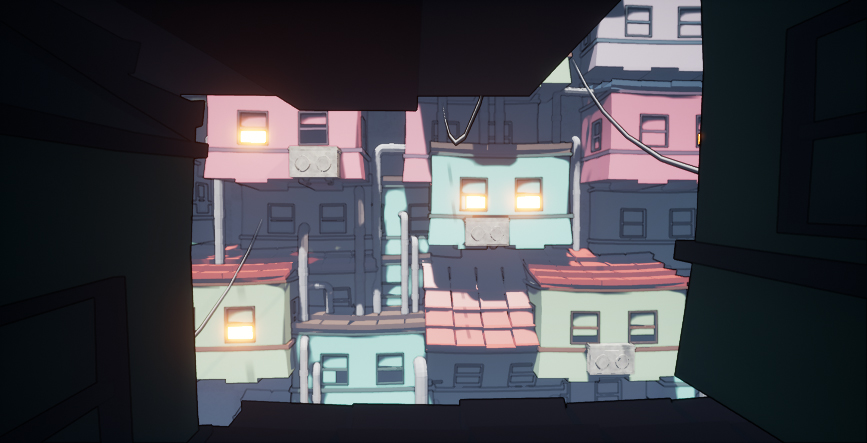
A screenshot from the video game I’m working on, which is heavily influenced by all of the digital studies classes I’ve taken, and I believe it deserves a place in what could be my final post in the digital studies field.
P.S. I used the word frequency as an interesting way of quoting myself, just to keep things interesting. The final sentence of the post is my grand takeaway from this class.
A part of my writing that I usually struggle with are my conclusions, especially my final sentence. While not always the clearest part of my written work, I find that these last sentences tend to convey the way I truly feel about the subject, even if I don’t realize it at the time. So for this reflective blog post, I thought I’d take a look at the concluding sentence for each of my eight previous blog posts to see how my views towards these different subjects have changed (or not) over time.
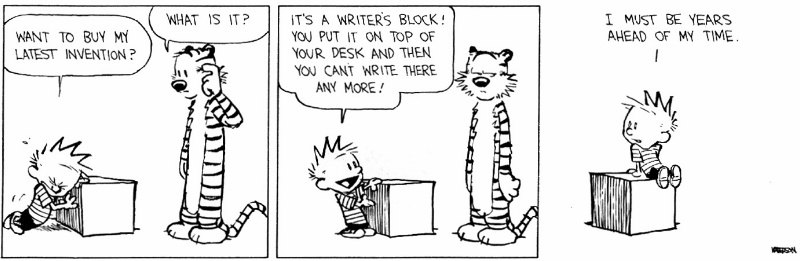
Accurate depiction of me using one of these when I have to write a conclusion. Photo courtesy of GoComics
Starting with my first blog, I wrote about the Exorcist Steps in DC, and seeing those steps in a different way now that I know the history behind them. This ending, of taking away and more learning and instructive message with me, was unique to this blog post only. My other concluding sentences, excluding #7, tended to be both pretty negative and pretty anti-technology.
What is clear to me, upon re-reading my posts, is that new technology, especially technology that differs from some classic forms, is something I’m usually initially hesitant about. In #3, I express how new interactive video games that are simulating death in their games seem a problematic way to portray death. In #4, I talk about how gravesites are “immersed in place and time” and should carry more weight than an online memorial site, which I don’t think has the same effect. And in #6 I mention how far the Tesla is away from being a true driving car, and the nervousness I have when using a Tesla.
I also tend to take a pretty grim view of the future of some technologies, as based on some of my other concluding sentences. In #2, I call poison “almost laughable”, compared to demonic posession, a sarcastic view of the final death in A Head Full of Ghosts. Through my #5 post, I reflect on how technology is changing us, expressing a negative view towards on technology’s impact on our society and moral standards, referring to the pictures at the Berlin Holocaust Memorial. And finally, in my recent #8 post, I end with the pessimistic view of quarantine, not that it is protecting the disease from spreading, but that “it’s a death sentence.”
My only bright spot is with blog #7, when I discuss how the Travelling Symphony is a rebellion against the death that they face all around them. Why this is my only bright spot throughout my 8 blogs, I’m not sure. But I can see that these blog posts have shown me that while I am an active and constant user of all sorts of technology, I’m hesitant to incorporate them into my everyday life until I know they work or until they become ingrained into our society. And with that, I’m concluding this conlusion of my conclusions.
Final Blog Sentences:
#8 = It’s a death sentence.
#7 = Even the Georgia Flu couldn’t take this away from them, and this way they are rebelling against the death and despair to be part of a production bigger than themselves.
#6 = As of now, while the car can do some driving of itself, it is still a long way from the true self-driving cars that would take you from point A to point B without you ever touching the steering wheel.
#5 = Regardless, it is unclear if technology simply the vehicle for sharing our actions with the wide world of the internet or if technology is truly changing the way we interact with the sacred and somber places in the world.
#4 = Immersed in place and time, the gravesite, I would argue, has a stronger emotional pull and generates a more powerful connection than a site lost in the endless pages of the internet.
#3 = I think that in these interactive video games where the point is to kill your way to the end, the gaming industry is making it pretty easy for gamers to pull the trigger.
#2 = Compared to a demon possessing you, poison seems almost laughable.
#1 = These places are firmly linked, a blending of physical and fake, and now a set of stairs that will always have two layers of memories for me, all because of my deep connection to Washington, DC.
This blog over the course of the past semester has, in a way, served as a personal journal in which I’ve been able to detail my learning, how I began to make connections between relevant academic concepts, and how I integrated my learning into my real-world understanding of life around me. While I didn’t notice any trends in terms of how the nature of my blog posts changed throughout the semester, I did find a number of themes that ran throughout my writing.
One thing I touched on a few times was how we use technology to mediate our interactions with the world around us. “How else have we intentionally designed technology to mediate or fuel our fear?” I ask in my post regarding Merry’s use of her video camera to mitigate her fear in Head Full of Ghosts . This question was rather prescient, as it turns out I later address how we might use technology to fuel our fear of things in my post on virtual reality military technology in the Black Mirror episode: “Men Against Fire.”
My blog posts are peppered with my own personal reactions to various assignments, books, articles, and other media. I discussed how the Black Mirror episode “Be Right Back” “prompted me with a number of questions regarding how I myself might approach a situation in which I could interact with a reconstructed version of a dearly departed loved one.” I examined and questioned my personal reaction to the concept of the “Grief Police” when I asked “So why is grief something we (maybe just read: I) are (am) so judgmental about — especially when we have all experienced it?” In reflecting upon the reading and writing this response, I was able to critically examine my own judgements and biases that affect my non-academic life.
I also spend some time addressing the social ramifications of the technology with which we engage, referring to how things might go horribly wrong in the future if we aren’t careful about how we utilize technology. In “a world that in some ways is becoming more and more like a video game — things get scary.”
“As we continue to study the “death of technology,” I’m inclined to argue that technology never really dies, as it is simply a product of humankind.” I think it is absolutely key that we keep this in mind moving forward into unknown technological territory. Technology is only as dangerous or helpful as we, humans, make it, and it isn’t going away any time soon.
Main character in Men Against Fire confronts a “roach”; Funny enough, this is also a selfie of me — staring down the remainder of finals after completing this reflective blog post. Source: The MancUnion