
Introduction:
One of the critical features within the post-modern horror genre its ability to enhance all five senses. The voice, for example, enables the audience to not only hear the fear but connect to the speaker on an emotional level. In a sense, the voice becomes a body, which then becomes a whole entity. For the following analysis, I observe two different mediums that rely on one or more than one of the five senses to generate their respective stories: a horror fiction podcast, “The NoSleep Podcast” and a horror film, Hush. Both forms of media use the senses (or lack thereof) to make distinct statements about disability, mental illness, and women in peril.
The NoSleep Podcast: “He Won’t Stop Tapping” (2017)
The “NoSleep Podcast” is a space for amateur horror writers to broadcast their work. Stories are told in the first person which enables the listener to experience the action firsthand. All of the podcasts begin with a specific introduction, combining dark and harsh music with phrases such as, “We’re here to frighten you and mess with your head,” “You’re here because that’s what you want,” and “Join us as the sleepless hours take a pass” to welcome the listener into uncharted territory. Within one of the podcast’s series devoted to survivors, searchers, and strangers is a narrative written by Collette Akile entitled, “He Won’t Stop Tapping.” This is a story about an unnamed young woman who lives alone in a room in an attic that has only one window. She claims she is wary of loud noises, prone to sudden bouts of fear, and has a history of mental illness. The story examines the woman’s struggle as she becomes aware of a mysterious tapping on her bedroom window, which she refuses to investigate because she is convinced that her mind is playing tricks on her. When she finally decides to peer out of her window, she discovers a man perched on her slanted roof. She realizes that the sound is not tapping, but instead, it is the clacking of the man’s teeth. The story then follows her as she begs her male friend to spend the night to assuage her fears and to listen for the tapping to confirm the sound’s existence. The two hear the tapping, but when her friend goes to take a photograph of its source, the man on the roof escapes. The next morning, the narrator’s friend goes missing, which might indicate that he was killed by the mysterious man. The podcast’s final line, “I left my window unlatched” leaves the listener uncertain about the narrator’s fate.
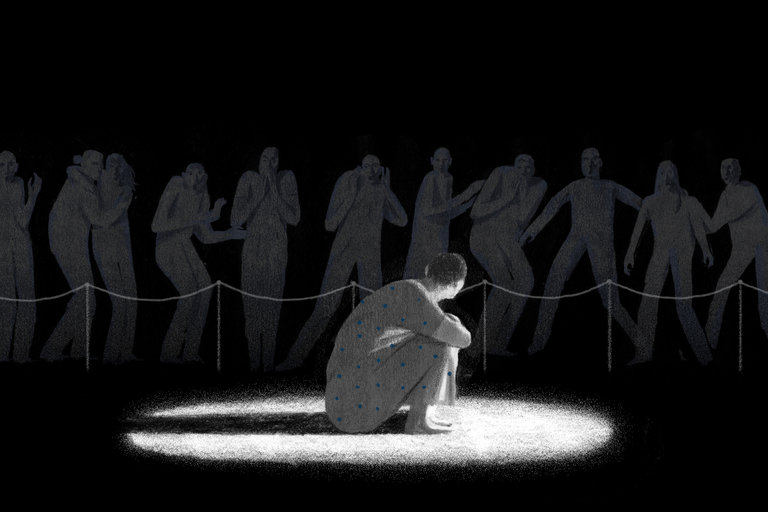
One of the main areas of focus in the podcast is the concept of a mentally ill woman in peril. The narrator repeatedly admits that she feels like she is being “watched” or “hunted” and notes that she keeps a knife beside her bed just in case she needs to defend herself against an intruder. When she thinks about the threats that might lurk in the outside world, she repeats the mantra, “It’s not real it’s in your head” to herself. Instead of creating distance from the audience, the listener becomes trapped inside the head of the narrator. Even though the narrator is convinced that the tapping sound is just her mind playing tricks on her, we are aware that her mental illness plays a role in the severity of the problem. In his opinion piece in the New York Times entitled, “Mental Illness Is Not a Horror Show,” Andrew Solomon writes, “It’s the proximity of mental illness rather than its obscurity that makes it so scary” (Solomon). The NoSleep Podcast invites the listener to tackle mental illness head on, which contributes to a heightened level of fear as it is unclear whether what is being presented is imagined or real. The narrator also tries to normalize her mental illness, commenting that her mother has also displayed signs of paranoia and anxiety and that her therapist makes her write about what is going on in her life. This, paired with a surprising level of self-awareness, makes the events seem more realistic, thereby lulling the listener into a false sense of security. The narrator admits, “My paranoia saved me. I also know it killed someone.” This level of self-awareness enables the narrator to show the listener that she is aware of the action that transpires. However, the fact that she leaks information such as, “I also know it killed someone” before we actually see who is killed and why makes the content more frightening because we experience the scare more than once.
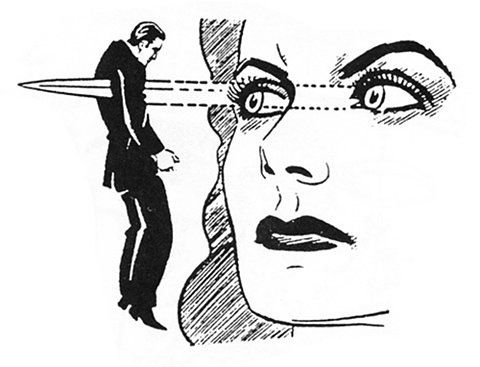
It is crucial to examine how womanhood plays a specific role in the construction and outcome of this story. The tale is told through the eyes of a female, thereby providing her with control over the story and a sense of power over any other character. In a section entitled, “And Then She Killed Him…Women and Violence in the Slasher Film” within her book, Recreational Terror: Women and the Pleasures of Horror Film Viewing, Isabel Pinedo writes, “The surviving female’s appropriation of the gaze enables her to use violence to defend herself effectively and to drive the narrative forward. We see him from her point of view.” (Pinedo 76). The only information we receive about the man on the roof is what the narrator chooses to tell us, which forces us to trust the speaker because we see the story through her eyes. Yet, she feels the need to question whether or not the tapping was in her head and begs her male friend to spend the night. This indirectly aligns masculinity with intelligence and control and takes away the feminine power that was given to the narrator from the beginning of the story. In the end, the man outside her window does not choose to attack her, but instead he decides to kill her male friend. This gives the power back to the female but strengthens the idea that the podcast focuses on an unbalanced sense of who is in control to confuse and frighten the listener.
The podcast also utilizes real life sounds such as the moving of bedcovers, the noise coming from a television show, and running water from a sink to create a sense of familiarity and security. The tapping also creates a metronomic sound, which is soothing to the ears of the audience. This contrasts with the lack of security the narrator feels when discussing the police. She claims that they would not be able to do much with little evidence about the man sitting on the roof and is convinced that because the sound is in her head, the police would not believe her. When the narrator’s friend goes missing, the police tell her that there is nothing they can do unless he has been gone for twenty-four hours, as he is not considered “missing” until then. As it turns out, according to Uslegal.com, if a person is missing and believed to be in danger, there “is no twenty-four hour waiting period. The law enforcement agency will immediately enter information about the missing person into the Missing Person’s database and the National Crime Information Center’s Missing Person File.” Although this is a horror fiction podcast, the distortion of real life facts is used to make the the listener feel vulnerable and unprotected. Therefore, our sense of security is violated because the police cannot make any immediate progress within the story.
Finally, the use of technology skillfully frames the narrative and makes the actions that occur more relatable. For instance, the narrator texts her friends in the middle of the night when she feels like someone is watching her and we hear her typing on her keyboard as she composes the text messages. Additionally, when the narrator’s male friend hears the tapping, he attempts to take a picture of the man outside on the roof, but before he is able to the sound cuts off and the man disappears. In a sense, the failure of technology adds to the terror because we are conditioned to believe that technology should always work. The uncertainty over technology also enhances what Pinedo writes in another piece within her book entitled, “Recreational Terror: Postmodern Elements of the Contemporary Horror Film” about the open ending. She claims, “in the end, the inefficacy of human action and the repudiation of narrative closure combine to produce various forms of the open ending” (Pinedo, 19). The open ending and our uncertainty about the fate of the narrator allows the listener to control how the story should end.
The trailer for Hush on Netflix.
Hush (2016):
Hush, directed and edited by Mike Flanagan, is a horror film that was released in April 2016 on Netflix. It tells the story of Maddie Young, a deaf and mute author who lives alone in an isolated house in the woods. After a seemingly normal and relaxing evening, Maddie’s friend Sarah is murdered by a masked, psychotic killer, with ambiguous motives outside her kitchen window. Maddie cannot hear any of this and continues with her nightly routine. Once Sarah’s masked killer discovers Maddie’s disability, he’s not content to merely take advantage of the situation and slay her; instead he breaks into her house, takes her phone, and begins taking photographs of her and sends them to her laptop to make her aware of his presence. When Maddie realizes she is being stalked, she locks herself inside the house. The film uses sparse dialogue and muted volume to place the viewer in Maddie’s shoes, and uses piercing and dramatic sounds to reflect the danger of the situation. Maddie makes several failed attempts to escape her house and eventually ends up stabbing the man to death. This film is similar in form and content to “Wait Until Dark” (1967) starring Audrey Hepburn, who plays a blind woman who unwittingly comes into possession of a heroin-filled doll. As a result, she finds herself harassed by three men who enter her home and threaten to stab and burn her alive if she does not give up the goods. The disabled woman in peril is a common trope in horror, but the fact that Maddie is victorious at the end of the film illuminates the idea that able-bodies do not necessarily equate invincibility.
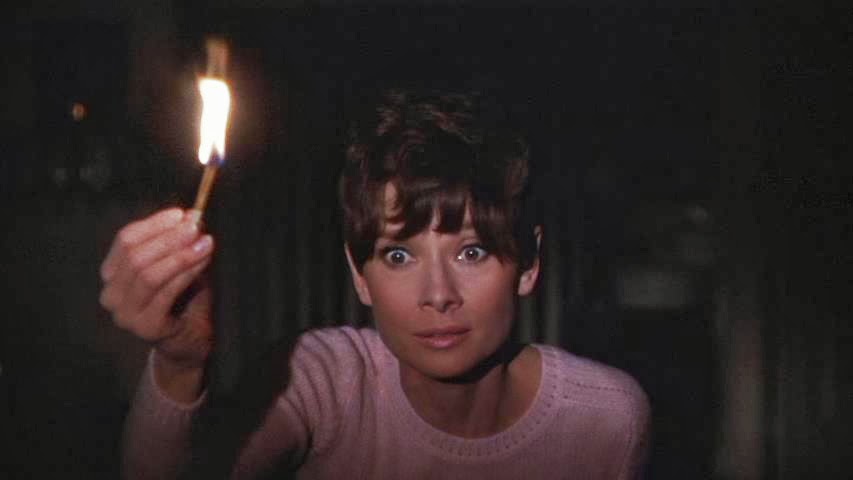
This film takes a close look at the power of disability and the testing of its limitations. Even though Maddie cannot hear or speak, she utilizes the power of her mind and pen to become a famous and successful young author. It is clear that she remains in close contact with her friends and family and lives happily alone. The film begins with loud sounds coming from Maddie’s kitchen as she makes dinner — the chopping of onions, the sizzling of asparagus cooking in oil, and the placing of marinated meat into the oven. This aligns her disabled body with normal tasks involved in the preparation of a meal. Her body is also put in conversation with the technology that she surrounds herself with. Technology provides her with a voice and serves as one of the ways she can communicate with the people around her. She texts her friend Sarah on her cell-phone, composes the end to her next novel on her laptop, and video-chats her sister. Even though Maddie is disabled, she appears able-bodied as she performs everyday life activities with ease. This, in turn, creates an aura of normalcy around her. However, when the masked man learns of her disability, he decides to test it. He taps on the window, scratches his knife across the glass, and stands behind Maddie without her knowing. This gives him the upper hand in the situation and brings powerlessness to Maddie’s disability. As Angela Smith writes in her book, “The Hideous Progeny: Disability, Eugenics, and Classic Horror Cinema,” “cultural narratives often use disability to generate a plot that ultimately reasserts and values normalcy” (Smith 5). Although we see instances where Maddie’s disability does not affect her ability to engage in “normal” tasks, the fact that the masked man can exert control over her because of her impairments provides him with more power at times. In the end, however, Maddie uses her disability to her advantage as she is forced to devise creative solutions regarding how to escape her house. Before she kills the masked man, she sprays insecticide in his eyes and blasts a fire alarm in his ears, thereby temporarily blinding and deafening him, which essentially evens the playing field. Because Maddie was afflicted with sense-crippling bronchial meningitis when she was thirteen she is caught between two worlds — unable to physically hear or talk, but still able to remember those features which enables her to conjure speech in her visions and dreams. Even though shifts between normalcy and disability are present, Maddie’s disability ultimately contributes to her victory.
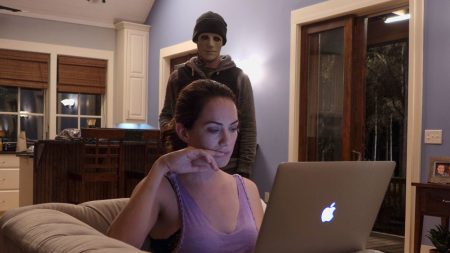
In her piece “…And Then She Killed Him: Women and Violence in the Slasher Film,” Pinedo argues that postmodern horror film develops a routine in which it stages the spectacle of the ruined body, particularly the female body, which calls for feminist analysis. She states that her discussion of the horror film is motivated by a “desire to disrupt the facile assumptions that the genre does not speak to women but only about them, and that it does this in a degrading manner” (Pinedo 70). I would argue, however, that Hush speaks to and about women in the opposite way as it aligns a disabled woman with power. Some could argue that the inability for Maddie to speak could represent the silencing of women in society, but it also reflects the ability for a woman to face and overcome hardships in spite of numerous setbacks. In her book, “Film, Horror, and the Body Fantastic,” Linda Bradley admits idea that, “the discourse of feminism has given a new language to the horror film” and that many overlook the trend of “the male body becoming the object of focalization or invasion” in horror films (Bradley 104, 105). This idea is illustrated in Hush, as Maddie relies on herself to fight all of the battles and to destroy the male body.
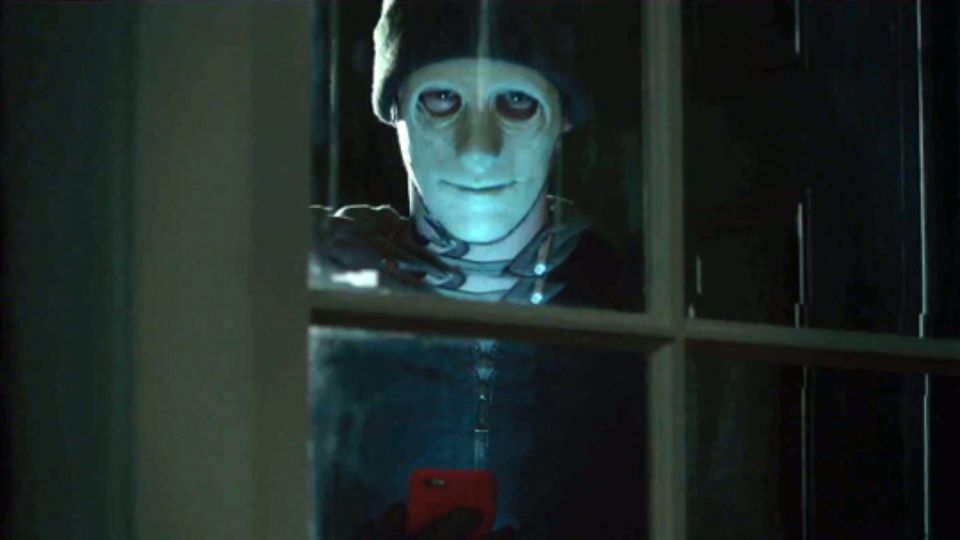
The horror movie also explores explicit threats to the body, which substantiates what Pinedo writes in her article about the postmodern elements of the contemporary horror film, that “terror is the threat to the body and the concomitant sense that harm could happen to you” (Pinedo 26). The fact that we are shown blood, guts, and gore makes everything seem more human. During one of Maddie’s failed attempts to escape the house, the masked killer fires a crossbow bolt into her leg, leading her to bleed profusely and making it impossible for her to run. Flanagan spends a great deal of time focusing on the after effects of this injury so the audience empathize with her situation. Maddie’s wound is so severe that she is at risk of bleeding out and as a result, experiences many hallucination and visions. Therefore, the threat to the body is equated with a limited amount of time to survive. Maddie recognizes that time is her enemy and decides that the only way to survive is to murder the intruder. If it were not for the pressing nature of the severity of her wound, Maddie may have not made this decision. The harm to her body provides her with the agency she needs to move forward with her plan.
Synthesis:
The horror fiction podcast and the horror film focus on mentally ill and disabled women in peril. Although both end with the female protagonist in control of the story, they arrive at this point through the use of different and complementary techniques. First, the film and the podcast highlight the importance in the role of the audience as consumers of horror. In the podcast, we are unable to see what the setting, narrator, or killer look like, and as a result, must create a mental image of everything based on the descriptors we hear. Similarly, in the movie, we are unable to hear any of Maddie’s thoughts because we are placed within the confines of how she views the world because of her disability. In a sense, we have to think for her and devise strategies on our own, which directly incorporates the audience into the action. The two mediums also skillfully utilize silence and sound into the respective stories. The moments of silence in Hush contrast with the heightened audio when violence occurs, which makes the audience feel trapped between two different worlds. Likewise, melodious yet mysterious sound of the tapping in the podcast creates both a sense of security and dread for the listener. Additionally, the two mediums explore how technology can serve as an impediment to the progression of a story. In Hush, all Maddie needed was her phone to call the police, but the masked man stole it from her. In the podcast, the narrator’s friend goes to snap a photograph of the man on the roof, but the man escapes from the shot. Technology could have easily saved the day in both narratives, but it does not, which draws on the importance of the protagonist as the sole force in control of the action. Although these mediums differ in form, they illuminate the power of the woman in post-modern horror narratives despite the labels and weaknesses she may given at the outset. As a result, the woman in peril becomes the woman in power. These two sources of media compliment each other in the ways they ascribe power to the female figure and serve as models for contemporary representations of women in horror.
Works Cited:
Akile, Collette. “He Won’t Stop Tapping.” NoSleep Podcast, 15 January 2017. Web 4 March 2017.
Badley, Linda. Film, Horror, and the Body Fantastic. Westport, CT: Greenwood Press, 1995. Print.
Hush. Directed by Mike Flanagan. Intrepid Productions, 2016. Netflix.
Pinedo, Isabel. Recreational Terror: Women and the Pleasures of Horror Film Viewing. “Recreational Terror: Postmodern Elements of the Contemporary Horror Film.” Journal of Film and Video. 17-31. Print.
Pinedo, Isabel. Recreational Terror: Women and the Pleasures of Horror Film Viewing. “…And Then She Killed Him: Women and Violence in the Slasher Film.” New York: State University of New York Press, 1997. 69-97. Print.
Smith, Angela M. “Introduction.” Hideous Progeny: Disability, Eugenics, and Classic Horror Cinema. New York: Columbia UP, 2011. 1-33. Print.
Solomon, Andrew. “Mental Illness Is Not a Horror Show.” The New York Times, 26 October 2016. www.nytimes.com/2016/10/26/opinion/mental-illness-is-not-a-horror-show.html?_r=0.