
Over the past few years, I have become heavily interested in the concept of how to manage memories within our vast digital landscape. I am also particularly fascinated in the newly popularized desire for digital literature and how this medium redefines how we tell stories. In my English 220: Literary Analysis class last year, we read Stuart Campbell’s interactive comic, These Memories Won’t Last, which takes advantage of its digitized format to make an argument about the fragility of memories in digital spaces. Campbell’s piece takes the reader on a journey through the memories of his Grandfather during his time fighting in World War Two, fleeing to Australia as a refugee, and his current struggle with dementia. The central premise of the piece is the loss of memory but also the importance of sharing stories, which is shown by Campbell’s narration of his Grandfather’s memories. If you take a look at the online narrative, you can see that Campbell uses a fading effect to create a sense of urgency to read the story before the images and text disappear. You are also unable to scroll upwards, meaning that you cannot go back and re-read the text without refreshing the page to start from the beginning. Not only does the fading of images and the inability to scroll upwards correspond to the Grandfather’s inability to recount some of his memories, but it also represents how our memories can become less accessible when we project them into digital spaces.
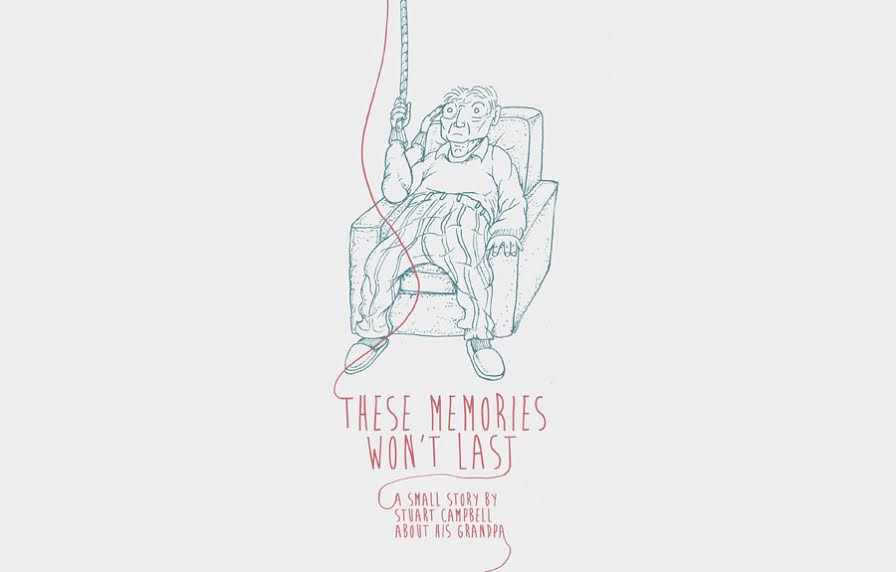
Through the form of his digital story, Campbell demonstrates the short lifespan of data in the digital world which connects to the rhetoric we are exploring in class concerning the curation of one’s “digital afterlife.” In part of Rob Walker’s article, Cyberspace When You’re Dead, he explores how online accounts that eventually become obsolete can influence the cultivation of one’s digital legacy. The fact that Campbell decides to use a flimsy string to hold his story together could comment on the issue Walker explores regarding the preservation of digital memories and enhances the argument about the fragility of memories within online spheres. As I continued to research digital memory for my English class last year, I came across an amazing book entitled, When We Are No More: How Digital Memory is Shaping our Future, written by Abby Smith Rumsey. In her book, she describes the need to reinvent how we preserve memory, questioning how historians will be able understand our own time if all of our memories exist in digital codes that may no longer be decipherable. To combat the problem regarding memory in the digital world, she writes, “The new paradigm of memory is more like growing a garden: Everything we entrust to digital code needs regular tending, refreshing, and periodic migration to make sure it is still alive…” (Rumsey 148). This claim leads me to question what spaces are best for the storage of our memories.
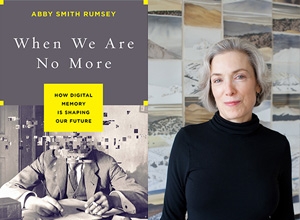
Why do we feel compelled to store our memories on online spaces when we know that they will eventually expire? A large portion of Rumsey’s argument incorporates neuroscience into various discussions regarding how data storage differs from memory. Consolidation, for instance, is a facet of internal memory formation that is not enhanced by digital use. During this process, new perceptions are incorporated into the old and “connections between the new data coming into the brain find their home in existing mental contexts or webs of associations” (Rumsey 114). This is a process that can only be performed within someone’s brain. A computer is able to store certain memories, but it cannot make complex and far-reaching connections between specific scenarios like the brain. Relying on our devices as extensions of our brains corrupts the beautiful processes that are built within our own internal systems.
Reading These Memories Won’t Last is especially important as we discuss digital memory and what happens to your data when you die because it reflects the reality of telling a story about fading memories within a medium that is supposed to be timeless. As a result, this raises the questions: Does the human mind become the best place for human memories to be stored? Is it more effective to pass our memories on from person to person through shared stories? Think about it.
Works Cited:
Campbell, Stuart. “These Memories Won’t Last.” These Memories Won’t Last. N.p., n.d. Web. 20 March. 2017.
Rumsey, Abby Smith. When We Are No More: How Digital Memory Is Shaping Our Future. N.p.:n.d. Print.
Walker, Rob. “Cyberspace When You’re Dead.” The New York Times. The New York Times, 08 Jan. 2011. Web. 20 Mar. 2017.
Good questions! For thousands of years our cultural memory was stored and transmitted as you hint here: as stories shared orally. (Think back to the Walter Benjamin article from the first week of class!) Once societies had writing—and then later photographs, and video—our memories became increasingly externalized. One wonders if the circle will be completed, and those externalized memories eventually come to be internal again, through augmentation, implants, and digital chips stored right inside our heads. That seems to be where people like Gordon Bell and Ray Kurzweil want us to be heading.