
Upon reading about the US government Department of Energy’s preparations for burying nuclear waste, I became fascinated with the idea of creating a message that outlives entire languages, cultures, and civilizations. Although we currently live in the digital age, there is the looming possibility that what the world may look like 100, 1000, or 10,000 years may not be entirely progress, but regression. When one attempts to create a coherent message designed to survive as long as cave paintings are old now, it is interesting to think about how perspectives might be different due to the long-lasting presence that digital media has had. In a world where the internet is not really novel, is grief examined differently? Are tragic events viewed differently?
I decided to examine what a future civilization’s discovery of a nuclear waste disposal site might resemble. Because there are so many details that can go wrong, I thought it would be apt to assume the worst and have this future civilization undergo a catastrophic event in which thousands are accidentally exposed to dangerous radiation. How did these people cope with the loss of hundreds? Our brief examination of how people express grief online in social media was highly relevant. As digital media becomes more and more prevalent, it becomes the norm in everyday life. While some, myself included, might consider tweeting at a funeral distasteful, there’s no reason to think that this will not be the norm 100 years from now. I thought that my example created a great thought experiment in which a futuristic, globally connected world with technology that far surpasses humankind’s current capacities, handles a highly publicized catastrophic event.
In order to capture and depict the digital grieving in this future world, I decided to take in indirect approach. While I considered creating a mock memorial page dedicated to the victims of the incident, or creating a model replica of a physical memorial erected in memory of the incident, I created an ‘objective’ depiction of this hypothetical tragedy through a particular medium: a Wikipedia article. Of course, while Wikipedia’s existence (and really the existence of culture as we know it today) into the next millennia or two is up for debate, I used simply because it is a familiar way in which the everyday digital consumer searches for and receives information about their world. I also decided on this medium specifically because of its unique, collective method of recording and recounting history, which has historically been a very individualistic craft (Rosenzweig 117). Rosenzweig argues that the supposed objectivity of Wikipedia articles is misunderstood—the true meaning of a ‘neutral point of view’ as described by Wikipedia denotes the description of both sides of an argument rather than a presentation of an argument itself (122, 123). While this sounds sound in theory, I’ve personally found that it is much harder in practice, and some Wikipedia articles in my anecdotal experience seem to reflect this as well. Nevertheless, I thought that the potential for this dread bias to enter into what is a supposedly objective medium provided an interesting way to describe a tragic event in the digital age.
In actually creating these mock Wikipedia pages, I was heavily inspired by similar, real Wikipedia articles which describe events of mass death, such as the article detailing the events of the 2001 September 11th attacks in New York City, as well as the article describing the resulting memorial. While Wikipedia, as well as other informative sources, use objectivity and fact checking as a critical feature of their articles (Rosenzweig 123), one can’t help but gain a feeling of dread, loss, and tragedy when reading about these catastrophic events. The way they callously detail the number of victims, the perpetrators, the date, and afternoon is chillingly terse. Even more unsettling is if other related articles (or the article itself) contains a section detailing how this loss of life was memorialized. This is particularly fascinating because it is an ‘objective’ description of something that is inherently emotion (grief, sadness, and memorialization). I thought this was an incredibly fascinating way of examining how the grief surrounding this event is expressed.
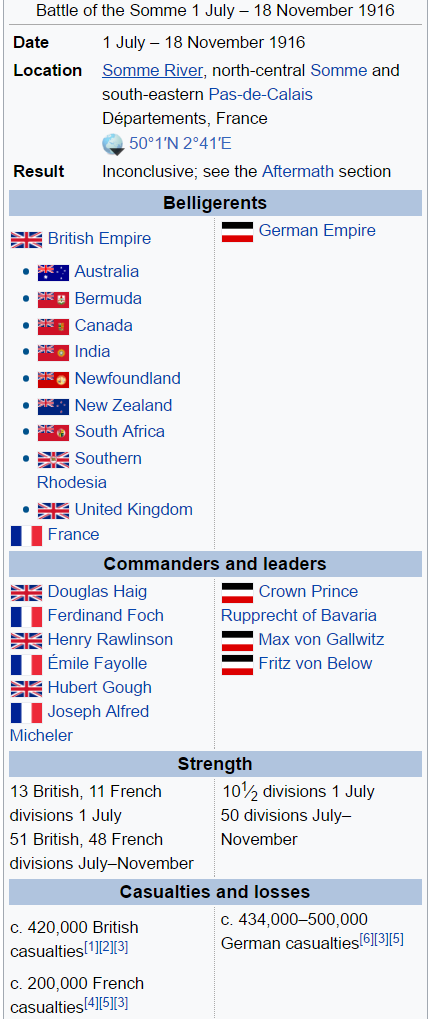
The final product consists of two brief mock Wikipedia articles, one detailing the events that lead to the catastrophic opening of the vault containing radioactive material and its aftermath, and another detailing the construction of a memorial dedicated to the incident and its digital features. In particular a key feature that I gave to this monument was a blurring of the line separating the digital and the analog. While the memorial itself has physical form (it is a replica of the warning message that went unheeded on the waste disposal site), it also has digital capability. Today, when some tweets or posts to Facebook or Reddit, the most compelling thoughts are the ones that tend to be most visible: the system rewards the submissions that garners the most attention from other users (retweets, likes, and upvotes). This memorial takes the public’s digital submissions and displays in on the statue itself, so that the submissions incurring the most positive response are shown on the outskirts of the memorial (more accessible to those looking within from outside), those incurring the most negative response would be displayed in the center (requires someone to actively seek out these submissions), while those that don’t raise any sort of response are not displayed at all. How would an ‘objective’, journalistic record of history such as Wikipedia describe this monument in an age when digital media is the norm? This is the essence of my haunted media project.
Current records of online grief are controversial, to say the least. Garber suggests that internet grieving is something that will grow on society to one day become a hardened social ritual, and that ‘grief policing’ assumes the worst of people rather than the best (Garber, accessed 2016). In the case of the 3/30 Memorial, would there be angry backlashers ‘policing’ what they perceive to be rather crude or immature inappropriate submissions that make it to the forefront on the monument’s display? I think so. One of the primary arguments that internet grieving is a natural thing is that it is merely a digital representation of what happens locally—the only difference is that these thoughts and actions are now visible to anyone with a smart phone (Garber). Phillips examines the phenomena of RIP trolling, and concludes that the activity may be attributed partly to an ‘amplification process’ in which each tragic event recorded online contributes to an ever escalating ‘troll’ response. Those emotionally unaffected by the event (the overwhelming majority of people online in a global network on any given moment) contribute crass remarks because they have the emotional distance to do so (Phillips, accessed 2015).
While Garber suggests that the internet provides a large, digitally connected forum in which ‘community grieving’ is possible. I must disagree and bring up the crucial point (also a primary point made by Phillips) that it provides just as large of a forum for grief policing. In considering Phillips’s thoughts, it seems then that internet RIP trolling is something that is unique to globalized, digital media. It is an inherent characteristic of a global communication network. In this sense, I do think that the 3/30 Memorial would display quite the amount of ‘trollish’ submissions—as any public, digital media forum would, whether in our time, or the future.
The emergence of digital media and globalized information networks truly are the agent of permanent social change. While I argue that basic human nature remains the same (hence the apparent immortality of RIP trolling and the derision of tragic events), there are aspects that are changed due to digital media, and the mock Wikipedia articles serve to demonstrate this change. Biddle demonstrates that suicide rates, methods, and success rates have undergone significant changes since the dawn of the internet (800-801). Biddle shows that while many people whose suicide have been attributed to internet exposure (such as online forums discussing suicide methods), there is indeed a subset of those who commit suicide who had a significant chance of avoiding suicide had the digital media available to them had not existed. Those who might have only considered suicide temporarily are exposed to chat room in which ‘peers’ pressure, and even drive, others to commit suicide (801-802).
I thought that this phenomena, and doubtlessly countless others which have risen as a result of the dawn of the digital age, could partially be attributed to Phillips’s amplification process. However, Biddle’s research also holds strong weight in Garber’s argument that online communication provides an outlet for permanent social change in which previously unquestioned social norms are often challenged relatively quickly and aggressively. I thought that this would be reflected in the 3/30 Memorial as well. There must be some messages and thoughts uploaded to the memorial that would have never have been even conceived of had it not been for the possibility that these thoughts and inklings could be displayed publicly. In this way, the mock Wikipedia page describing the 3/30 Memorial also demonstrates how digital media permanently warps social spheres and changes the very meaning of what one might consider ‘inappropriate’ in the digital age. While trolls have always existed, whether digital or not, it seems that the 3/30 Memorial in this project also serves to represent a shift in thinking regarding death and grief.
References
Rosenzweig, Roy. “Can History Be Open Source? Wikipedia and the Future of the Past.” The Journal of American History, vol. 93, no. 1, 2006, pp. 117–146., www.jstor.org/stable/4486062.