
Alex Senemar in his article for Medium, “What Happens to you Data when you Die?” brings up a critical point which often gets lost in discussions regarding Facebook privacy. We have to be very honest with ourselves, and admit that social media came to prominence for two reasons.
- Economic/capitalist motivation.
- Easy data collection of populations.
Senemar points out the Facebook is and always has been a social experiment, which specifically collects data regarding the movement of ideas within a culture. Facebook has integrated itself into our lives to an intimate degree, and essentially translates thoughts, feelings, and habits into data which can be modeled. Every like, sad, love, “wow”, “haha”, and “angry” react is logged to show how you as a member of society connected with something or someone else. As a video is a series of continuous pictures, Facebook is creating a comprehensive series of sociological snapshots, compiled into a data set tracking large trends along with information regarding individual data points.
When participating in sites like Facebook, it should ideally be completely apparent that the data you input will be logged, or at least much more apparent than it is right now. Increasing awareness about the fate of one’s digital footprint is much more useful than debating the semantics behind privacy rights, because the data gathered from social media is a powerful tool not just to track modern trends, but for future historians to revisit and analyze.
Ethan Shiel writes on the subject of “Bots”, examining the fear of what an unchecked bot can post after the death of its care-taker. Having the bot turn off, or censored in some other way, is robbing the future historians mentioned in the New York Times article, “Cyberspace when you are Dead” of a cultural artifact that provides insight into early 21st century life. Just as it would be foolish to scratch out a line of an old poem, censoring the processes of a bot would injure it’s attempt to convey meaning and provoke thought.
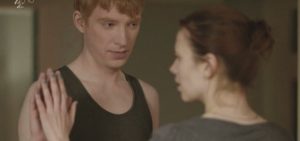
The pictured painted by the collection of data from a deceased generation is not perfect. Be Right Back from Black Mirror season 2 shows that data gathered from our social media profiles are only rough estimations of our lives. However, for the first time the habits society shares during a given time period can be both quantified and studied using primary source material, and when talking about the fate of our online profiles I believe it is incredibly important to remember the historical contributions that data of this scale could make.