Old Information Systems and New

saint chapelle gold

KONICA MINOLTA DIGITAL CAMERA

Built in the mid 13th century, Saint-Chapelle, the windows of the of the church were probably the first “clock” that the Parisians had ever seen. Though lacking in precise accuracy, the displays were able to change the color of the chapelbetween night and day, and the shifting seasons. This is a great example to see just how far our information systems have gone. As we saw them boast in class, Apples’ new Apple Watch claims to be accurate to within 50 milliseconds of the actual time. Not only is it accurate, but it can sync with your phone to receive texts, calls, app notifications and much more. The advancement from old information systems too new is highlighted by speed, precision, and size. The old information systems were public, accessible to anyone anytime. As information systems have grown more complex, they have held more personal data. Data people may not be comfortable being public. It is in this struggle that people debate the privacy rights of information system users. What rights does Apple have to the information that is loaded up on their devices? Are they allowed to store that information? Can they sell that information?
eniac

ENIAC, completed in the early 1940’s by the U.S. army is credited for being the first computer in the world. This was just a general-purpose computational machine. It wasn’t until 1969 that information could actually be sent and received by different computers. The first nodes were UCLA and Stanford, only a few blocks apart from each other at the time. Now today, we have the ability to instantaneously send more information than ENIAC could process in a day any where across the globe. Health monitors implanted in peoples chests, camera’s that monitor eye movement for advertisers, and cookies downloaded onto my computer by websites track every moment of my life and are analyzed almost immediately. It is for these reasons that I agree with John Foreman that the mysterious humanity is destroyed. With enough many spent anybody can learn more about a person than the person probably knows about themselves.


Background of ARPANET: http://www.webopedia.com/TERM/A/ARPANET.html
Manufactured Happiness

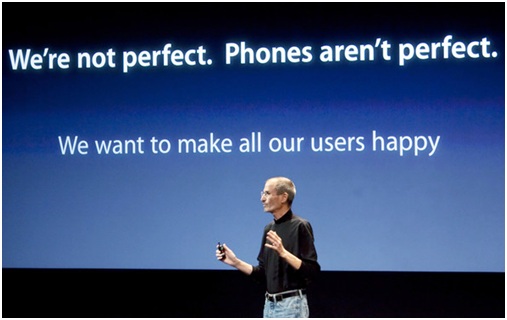
Amidst all of the doom and gloom that Foreman generates in his discussion of data modeling, collection, and privacy, he repeatedly falls back on ‘happiness’ as the only benign product of invasive technologies and marketing strategies. He claims that at the same time that companies like Google and Facebook “increase our happiness”, they are also “destroying humanity as we know it.”

At the risk of making Foreman’s piece read even more negatively than it already does, I would argue that even the so-called “happiness” that we feel from walking about with Macbooks in our messenger bags or Disney MagicBands on our wrists is just as manufactured as the machines themselves.

Foreman talks quite a bit about how modern advertisements capitalize on our emotional vulnerabilities to make us associate, say, a cheap hamburger with sex. But he then seems to take at face value the ability of products to genuinely heighten the quality of our lives. Would he and his kids really have enjoyed his trip to Disneyland any less if Mickey hadn’t known which rides they’d been on? Alternately phrased, are the MagicBands actually a useful device, or are we just led to believe this because of Disney’s use of buzzwords like “effortless”, “magic”, and “enjoying the fun”? (These were all taken from the MagicBand FAQ page: https://disneyworld.disney.go.com/faq/bands-cards/understanding-magic-band/)

Coca Cola may be the most egregious offender here. In two words, they manage to create a causal relationship between opening a bottle and feeling better. If what they’re saying is true, I don’t know why more doctors don’t just prescribe Coke to treat depression.

If a company can convince us that their product will make us a happier human being, then the battle is already over. Trading personal data for happiness is suddenly an appealing enough swap – assuming we give thought to the transaction at all.

It’s certainly not an easy trade to conceptualize – “happiness” and “data” are two of the most nebulous and ambiguous commodities out there. I remember hearing in the news a few years ago when Google launched a service called Screenwise a few years ago that literally pays users to forfeit all of their Chrome browsing data. It got some buzz when it was first announced, but then promptly fell off the radar. Screenwise is still around, though it certainly isn’t one of Google’s top products or priorities.

I have a feeling that this is because Google recognizes that consumers are more willing to make sacrifices when the compensation is of a similar nature. In other words, people are OK with trading some tangible thing for another tangible thing (e.g. selling an old Nexus device for credit toward a new one) or something intangible for something else intangible (e.g., data for happiness). But people are less interested in swapping something vague (browsing history) for something concrete (Amazon gift cards). As soon as consumers are told that their data has real, monetary value, they become less willing to give it up.

Disney MagicBand

$12.95
$12.95

Screen Shot 2015-03-23 at 1.19.04 AM Screen Shot 2015-03-23 at 1.19.12 AM


Searching through Disney’s site, I found more details about the MagicBand that John Foreman talks about in his article “Data Privacy, Machine Learning and the Destruction of Mysterious Humanity.” Although in the article Foreman talks about the technology as if Disney is going to hand these out to all those who visit,  this is certainly not the case. Only those who who stay at a Disney Resort Hotel (or if you’re a Walt Disney World Passholder) will receive this MagicBand; if you are neither, you will simply receive a card when you purchase park admission. Yet, these MagicBand can be purchased online or at select retail locations at Walt Disney World Resort and beyond for a ‘low’ price of $12.95.

Even though, with the MagicBand, Disney is able to track their customers’ actions inside their parks, where you walk, what you eat, when you “stop to borderline-abusively yell at your kids,”  Foreman does support this technology by stating that “even a little tracking of their children is a fine-trade off for a more enjoyable and convenient experience.” Yet, he fails to mention the other subsidiary benefits of the MagicBand. It can be used to unlock the door of your Disney Resort Hotel room, enter theme and water parks (with valid admission), check in at FastPass+ (ability to reserve attractions in advance) entrances,  connect Disney PhotoPass images to your account, and charge food and merchandise purchases to your Disney Resort Hotel room.  So my question is whether if you guys think this is worth an investment ($12.95 and privacy during your trip at Disney) for a ‘more customized’ experience.

I believe so.

New Wave of Technology

​The next wave of technology to hit the market and takeover the materialist minds of America has a slightly terrifying side. As the Apple Watch hits the market in the next month or so, there will be an influx of data on every person wearing an Apple Watch that Apple has access to. Apple will be able to monitor all of the wearers and have a personal look into all of their lives. This simple fact begs the question, “Is this an invasion of privacy?”
​Other devices that are in their infant stages of release and popularity include the Whistle, a dog tracker, and the “Smart Nursery” from Mimo Baby that monitors an infant’s room in order to determine if its healthy, hungry, and happy. As awesome and useful that all of these new devices are, they still make me wonder whether or not they will remove part of the human element from living life. When you don’t have to ever check on your baby, because there’s a computer to do it, will you lose part of the child-parent relationship that so many people cherish today? Will we lose part of our humanity because of the advancement of these technologies?
​So as awed and blown away as I am by these astounding technologies, which truly are amazing and seemingly out of the movies, I am utterly terrified of the power which they give to the companies selling them and the government, who could take advantage of them. Also I do not want to slowly lose our grip on what we have left of our humanity due to dependence on computers and gadgets.

Taking Control of Big Brother’s Eye

Consumers control the market and ultimately have the power to limit the sight of “Big Brother’s eye”

I found Peterson’s title and reference to George Orwell’s 1984 both comical and clichéd. The reference to “Big Brother” is so commonly used when referring to big data because it is easily assumed that any corporation or government organization with hands on the data would automatically and instantly abuse the privilege and spy on the population. It is rarely realized that such a freedom is in fact a privilege and not a right. If us, as consumers, were so interested in privacy, we wouldn’t demand such tools.

Why is it that our Jawbone, Fitbit, Misfit, or whatever other device we use to track exercise and sleep HAS to link up with our iPhone? Obviously, the answer is shear convenience. How appealing would it be to download all of your daily data to a laptop or some other form of offline tracker? That would seem monotonous and excessive. Developers have found a way to incorporate something useful, a fitness and sleep tracker, and pair that with the thing that Americans interact with more than anything else on a daily basis, a smartphone.

All inventions come to improve or initiate efficiency in a particular activity. That is simply the nature of technology. Pederson’s idea of augmented memory also sounds extremely convenient (and dangerous, but that’s another conversation). Having the ability to remember everything I ever read, studied, or discussed would come with so many advantages. However, the fact that that information could be digitized and distribute would also frighten me. Again, such an invention would still only be optional in society, which is the beauty of a market economy. Unlike in Orwell’s dystopian society, we can control Big Brother’s market if we really desire. Unfortunately for those fearful of Big Brother’s eye, millions of fitness tracking users would agree that convenience is extremely important, thus fueling the spread of these big data mechanisms.

The Choice We All Must Make

Should we give up our private data in order to progress our understanding of human health?

Ann Helen Petersen, in “Big Mother Is Watching You”, her article from BuzzFeed.com, highlights the rising wave of wearable tracking devices. She describes in detail, many of the new types of wearables, ranging from a simple pedometer that can track an individual’s steps throughout a day, to a type of wearable that records information while attached to a person’s dog. She also writes about some of the conversations that she had with many individuals.

By the end of her article, Petersen narrows in on the point that “the future will be quantified.” Already, many (including some individuals who have already posted on this blog) have wondered if this quantification of the future is a good idea. Should we allow our lives to controlled by machines on our wrists and in our pockets? At what point should we stop? What parts of our health, and in general, our daily lives, should we control?

“That promise of ultimate, seamless simplicity — and the happiness that supposedly accompanies it — will be too much, even for the most suspicious and privacy-conscious among us, to resist.”

At what point do we trade the loss in privacy for the seamless simplicity, and more importantly, the happiness? Presented with these facts, would we not trade a small bit of privacy for a cure to diseases like diabetes and cancer? Do we relinquish our individual information if it can help the greater good? It is possible then, that we could even be trading our idea of reality, a reality run by our own minds, for a reality run by machines, while significantly progressing our understanding of human health in the process. Is this a fair trade? That is the choice we all are going to have to make.


The Self in the Quantified Self Movement

fitbit_flex_activity_monitor_3a


Anne Helen Peterson in her piece titled Big Mother is Watching You discusses the current and future implications of self-tracking wearables on our daily lives. By 2018 with over 60 million fitness trackers in use worldwide we will see the explosion of self-tracking devices. With the release of the Apple Watch we can see how self-tracking devices are transitioning into our mainstream day to day culture.. But, how will self-tracking change the way we live our lives? While self-tracking will empower individuals to improve their health and to discover things such as eczema inducers, self-tracking will also peel back the mystery of the human body. We will be able to quantify information that before was merely qualitative. For instance, instead of having the qualitative feeling that you had a good nights sleep we will be reliant on data from an app which will quantify the quality of our sleep based on our movements and breathing patterns. In a way this is excites me, but more often than not when I ponder these implications I feel as if this will undermine the importance of human emotion and feeling. Instead of deciding what feels best to us as individuals we will be reliant on what an app says is ideal for us. This reminds me of a current trend in medicine, which is the transition towards personalized medicine. In my opinion only when Quantified data is matched with our qualitative human emotions will I feel satisfied by the conclusions of self-tracking devices. If we allow it, self-tracking could easily strip us of our individuality and will undermine and doubt our own feelings about our bodies.


Transforming Experience Into Statistics


data-privacy-2

Ann Helen Petersen , in her article “Big Mother Is Watching You”, describes the prominence that wearable tracking devices has gained, and the reasons behind this sudden change. She discusses the fact that companies are attempting to gather data about people in order to “improve” their lives. This improvement will be bought on by the fact that users wearing the devices will be able to analyze themselves in ways that they could not before. These people now have the power to dissect their own lives, and in a certain way have more control over their experiences. While I agree that the new wave of wearable technology does empower the user to a certain extent, I would like to propose the viewpoint that this technology is a two-sided sword.

The good comes from the empowerment. It is a great thing to be able to self test your urine to make sure that you are healthy, or to check up on your hear rate to make sure that you are not in danger of a heart attack. These are benefits that wearable technology provide. Our lives are made easier through the MimoBaby that allows the parents to maximize their child caring methods, while allowing the more tired parent to sleep more. It is beneficial to measure bodily food intakes and monitor weight among things, if one wishes to keep a healthy lifestyle. The purpose of wearable technology is good. The negative aspects come into play when one talks about the specific numbers themselves rather than their purposes.

Running

While people are able to monitor their lives and check all the statistics of their day, they begin to pay more attention to these numbers, than the actions that they are doing. In our high-tech society , many people are constantly on their phones, and data-tracking gives them more of a reason to check their screens. I believe that we as a society will get to a certain point where we no longer perform activity simply for the pleasure of it/because we want to, rather because we feel the need to live up to the numbers that we are being shown. It is a possibility that parents will feed their child simply because a machine is telling them to, not because the parent has developed a bond that allows them to predict baby needs. Some may run and have a great time running, but will not get the full experience if they are solely worried about the numbers of the run. These statistics have the power to put the user in a certain mindset where numbers are the only important thing. I do not wish to sound apocalyptic in any way, but it is imperative that we consider how full disclosure of our life experience will affect our overall life experience . We need uncertainty in our lives; that is how we learn best. If one knew exactly what was going to happen in one’s life, would it be as much fun? This question can be applied here. Petersen agrees that the ability to rely on ourselves for better life improvement makes us feel more alive than relying on an app. Wearable technology does have benefits, but we must not let statistics distract us from living.

Beware of the Wearable Devices

In her article “Big Mother Is Watching You,” Anne Helen Petersen discusses the recent rise in popularity of wearable data tracking devices. Petersen highlights devices that run the gamut in terms of functionality, ranging form the mundane fitness tracker to devices made for children to track their elderly parents’ household routines. Within the article, Petersen also hints at how her own fitness tracker use has affected, and potentially influenced her behavior. She notes that she has become obsessed with her sleeping data, and that she even purposefully excludes certain nights from her data collection, so as not to ruin her nightly averages.

Later in the article, Petersen discusses the potential effects that fitness trackers and other wearable devices may have on the insurance and medical fields. Specifically, she speculates that if wearable devices become more sophisticated, they may be able to help identify certain medical conditions, thereby reducing the number of trips to a physician’s office. Wearable health trackers, pending some technological innovations, have the potential to eliminate the knowledge divide between the general public and highly-educated doctors. While it may be years before these innovations are in place, they would certainly impact the insurance industry as an individual’s riskiness could be more accurately calculated using their accumulated data.

While purposefully altering one’s own sleep data and the potential health industry changes associated with fitness trackers may not seem related at first, there do exist some important interactions between the two. The first effect that comes to mind is the placebo effect that could exist simply from wearing a fitness tracker. It is likely that someone who is constantly reminded of their physical activity will workout more and generally be more health-conscious. While this encourages healthy behavior, it may occur even when the their fitness tracker is not working properly. For example, even when the R65 application was down, I found myself feeling guilty for everyday that I didn’t work out, despite the fact that any exercise I got wouldn’t be recording anyway. Additionally, health trackers pose a potentially adverse effect on the insurance industry. If customer’s data is being mined for insurance purposes, then someone who artificially alters their data has the ability make themselves appear as a less risky investment than they truly are. With the rise of fitness trackers and the overall quantified self movement gaining traction, the consequences of our daily data become increasingly more interesting and controversial. While “forgetting” to wear our bands when we go to sleep may seem harmless now, this could become a real problem if fitness trackers continue their rise in prevalence in our daily lives.

Harness the Power of the #Hashtag

In the third chapter of his book Off the Network: Disrupting the Digital World, Ulises Ali Mejias describes how computers function together to form a network, defined as “a system of linked elements or nodes” (37). Digital networks, Mejias writes, use a combination of human and machine to assume social agency through social tagging systems. The concept may seem abstract, but for anyone who uses social media such as Twitter in their daily lives, tagging works as a beautifully simple way to sort through and classify information on a particular topic.

Perhaps what makes Twitter hashtags so appealing to its users is the fact that it operates as a “folksonomy” with few, if any, rules for what can and can’t be a hashtag. The relatively lawless nature of hashtags comes from the fact that “the negotiation of meaning during the process of classification is delegated from humans to code” (50). Mejias portrays this feature as “perhaps [the] greatest weakness” of social tagging systems, but I argue that any inefficiencies caused by the computer regulating the system are far outweighed by their benefits.

Yes, it is somewhat annoying that the same topic could take on multiple hashtags based on a misspelling or the choice to omit “the,” as in the example below.

twitter capture 3.9

Two people tweeting about the same thing won’t have their tweets sorted into the same “pile” because of their slightly different hashtag choice, but the inefficiency is minor and ultimately insignificant. What makes Twitter hashtags so fascinating is how they can provide a seamless link between celebrities and regular folks. When NASCAR driver Brad Keselowski—who has over 500,000 followers—wants to do an impromptu Q&A session with his fans, all he needs to do is harness the power of the hashtag, and computers handle the dirty work of aggregating all the submissions for him. In my view, it’s well worth a few small sacrifices in order to gain the “individual freedom and scale of access that only the internet can provide” (52).