Counter GIFs


Warning: Undefined array key 0 in /home/digitald/public_html/courses/wp-content/plugins/radgeek-FWP---Add-Attribution-70acf52/add-attribution-feedwordpress.php on line 363

Sports GIF

Counter GIF

Analysis: 

When sports GIFs are used, they are often show epic plays, whether they are successful  or failures. Regardless, they usually display the extreme of either side of the scale. That is why they are entertaining and often used in context of describing something amazing, or an “epic fail.” For my counter GIF, I decided to display an NFL team in action, but in a really unimpressive way: warming up before the game. This has no “wow factor,” as a sports GIF (portraying success or failure), usually has in order to captivate the viewer with either awe or humor.


Reaction GIF

Counter GIF

Analysis:

In the reaction GIF, Andy Dwyer from Parks and Recreations reacts to something (in the context of the show) with a very animated, emotional face. This, and other reaction GIFs, are meant to depict an emotional response to something. Andy Dwyer is showing extreme excitement to something with his eyes and mouth wide, opening into a smile. The counter GIF shows the Andy Dwyer, the same character from the Reaction GIF, doing something insignificant, and unemotional. This clip could hardly be described as emotional, let alone called an emotional GIF. His lack of emotion on face and action in his body language suggest an unresponsive and non-reaction act.


Fandom GIF 

Counter GIF 

Analysis:

The fandom GIF above is an iconic scene from the movie Dirty Dancing. “The Jump” is a really big task for Baby (Jennifer Grey) to accomplish with Johnny, and she works on it throughout the entire movie, and finally succeeds in it in this scene. It is arguably the best-known scene in the movie and is referenced in other movies (Crazy, Stupid Love) and other forms of media. “The Jump” is a famous icon from Dirty Dancing. The counter GIF above is from the  same movie, however it is a scene that does not hold much popularity, and actually shows Jennifer Grey failing at dancing. In other words, it is not iconic, and therefore would not catch on in other platforms of social media.

All GIFs not created by me were found on GIPHY. I used GIPHY creator to create my counter GIFS. 

Posted from Digital Studies 101 Blog by Lindsay

Animated Gifs (Lab #3)


Warning: Undefined array key 0 in /home/digitald/public_html/courses/wp-content/plugins/radgeek-FWP---Add-Attribution-70acf52/add-attribution-feedwordpress.php on line 363

Sports Gif

Example:

Counter-example:

Analysis:
The sports gif typically celebrates athletic achievements similar to a highlight reel of one play. The first gif is a classic example of that, a game-winning shot in a basketball game. We see the tension build as the players drive down the court. We’re briefly held in suspense until the shot swishes in and we see the players celebrate. There’s a whole narrative inside this tiny clip. The counter-example is the utter refutation of these norms. There’s no suspense. The score of this game is 56 – 0. With nothing at stake, this moment feels like a whole lot of nothing. The moment is also less significant because it’s an insignificant kick. You could potentially have a meaningless pass or run play that is still really cool. Not the case with a field goal. We don’t even get the satisfaction of seeing whether the kicker made the kick because the clip ends early. This gif ultimately stands totally counter to sports gifs because they are an attempt to immortalize a moment of particular importance or memorability. This counter-gif is immortalizing a moment utterly lacking in significance or importance.

Reaction Gif

Example:

Counter-example:

Analysis:
Reaction gifs are almost always meant to be used in conversation as a response, whether this is via social media, text, or another platform. Due to this context, reactions gifs are often brief and consumable without a need for further explanation. The example embodies this as the classic Joey from Friends reaction Gif. It’s meant to convey shock. It’s under half a second and you instantly get what the other person is trying to communicate. The counter-example is nothing like this. First of all, it’s over 12 seconds long and it can be hard to tell at times whether it’s a still image or a gif. Reaction gifs like the Joey gif are also typically very expressive with lots of emotion to get the point across. The counter-example gif is entirely devoid of reaction with just a guy staring. This also makes the message of the gif very hard to comprehend, working against the reaction gif narrative. Is the person sending you this gif expressing that they are judging you? That they are bored? Who’s to say

Fandom Gif

Example:

Counter-example:

Analysis:
Fandom gifs are a staple of the internet. Certain series seem to lend themselves to fandom gifs. The Office for instance, with its iconic moment and cutaway scenes, is perfectly gif-able. The same can be said for the popular HBO series Silicon Valley with its endless list of memorable scenes and running gags. In the example we see a hilarious scene all Silicon Valley fans remember fondly; when Jin-Yang smoked a cigarette inside his VC’s office. This gif is super short and only contains a single line of text, but it’s still very effective at reminding fans of this hilarious scene. It’s almost like this gif is an inside joke between the gif and fans of the show that others wouldn’t be able to comprehend just by looking at the gif. The counter-example is the exact opposite. I don’t think any fan would recognize this shot. It’s from the beginning of season 2 and is totally unremarkable. It’s a shot of Silicon Valley in Bay area California, but there’s nothing about this gif that communicates that. I find the idea of a gif depicting the namesake of a TV show taken from that very TV show that you do not know is actually from that TV show to be a hilarious way of turning fandom gifs on their head.

Posted from My blog by Will H.

Digital Blackface in Emojis


Warning: Undefined array key 0 in /home/digitald/public_html/courses/wp-content/plugins/radgeek-FWP---Add-Attribution-70acf52/add-attribution-feedwordpress.php on line 363

In class on Monday we talked about the concept of digital blackface, particularly via animated reaction Gifs. Recently, I read a similar article discussing white people using dark-skinned emojis. She merely poses the question and tries to get a specturm of answers which I thought was pretty cool. For example, Leslie Miley, a pretty outspoken and well-known advocate for diversity and inclusion in tech said absolutely not, adding “my blackness is not for your entertainment.” Others clarified they will only use emojis of a race other than their own when speaking the third person.

The author’s own mother had a different interpretation, saying that as a black woman she feels okay with it because it shows solidarity. A similar take was that it feels weird to use symbols like a white fist when texting specifically about civil rights topics because of that symbol’s association with white supremacy. The author also took a poll which I thought was pretty neat.

Overall I thought the article was a little bias towards once side, but ultimately offered up the idea of discussion, which was great. So naturally I was pretty disgusted when I saw the replies to the articles on Twitter, some thoughtful engagement, but the large majority misogynists with responses like “Oh another SJW finding something to complain about” and “This is a stupid article” and people talking about how this was just another attempt to create divisiveness in America blah blah blah.

Here’s a tip for you, if your response to a call for discussion about to topic is to resort to attacks and unconstructive criticism, YOU are the actual engine of divisiveness. I think it’s unfortunate so many people refuse to engage in the discussions because I think they are incredibly important discussions to have at the intersections of race and technology. We cannot just ignore these things.

Posted from My blog by Will H.

Fast Cash, Exploitation, and Racism


Warning: Undefined array key 0 in /home/digitald/public_html/courses/wp-content/plugins/radgeek-FWP---Add-Attribution-70acf52/add-attribution-feedwordpress.php on line 363
Youtube star Pewdiepie reacts to his Fiverr request

Lisa Nakamura’s article,”‘I WILL DO EVERYthing That Am Asked’: Scambaiting, Digital Show-Space, and the Racial Violence of Social Media”, reminds us that the exploitation of third-world countries persists to this day for the sake of amusement and personal vigilantism.

The article reminds me of a controversy surrounding Felix Kjellberg, widely known as Pewdiepie, not too long ago. Kjellberg is a Youtube star, currently holding the top spot on Youtube with over 57 million subscribers. In January of 2017, he came under fire after using Fiverr, an online marketplace where people offer their services for five dollars, to get a pair of Indian performers to hold up an anti-Semitic sign reading “DEATH TO ALL JEWS.” 

Unlike the examples in Nakamura’s article, Kjellberg does not fit under the category of “scambaiter.” He did not use the service in any sense of vigilantism or for personal vendettas against scammers. Instead, he used unsuspecting people in a third world country in order to spread a racist message. Although Kjellberg immediately made an apology video and claimed that he only did it because it was just “a funny meme” and that he “didn’t think they would actually do it.”

But whether or not Pewdiepie’s actions were anti-Semitic or just a poorly executed joke is besides the point. A quick look into the the Indian performers, Funny Guys, that Pewdiepie had used shows a picture similar to that of the Nigerian scammers within the articles. Their Youtube page is filled with short clips of them half-naked and fake-laughing along to messages such as “Happy B-Day” and “Berry Christmas”. This cements Nakamura’s point that racism is a pervasive force in the online world as people continue to exploit and emasculate other cultures by forcing them to become a primitive, uncultured stereotype.

Posted from our fascination by Tony N.

Offensive Content on Social Media


Warning: Undefined array key 0 in /home/digitald/public_html/courses/wp-content/plugins/radgeek-FWP---Add-Attribution-70acf52/add-attribution-feedwordpress.php on line 363

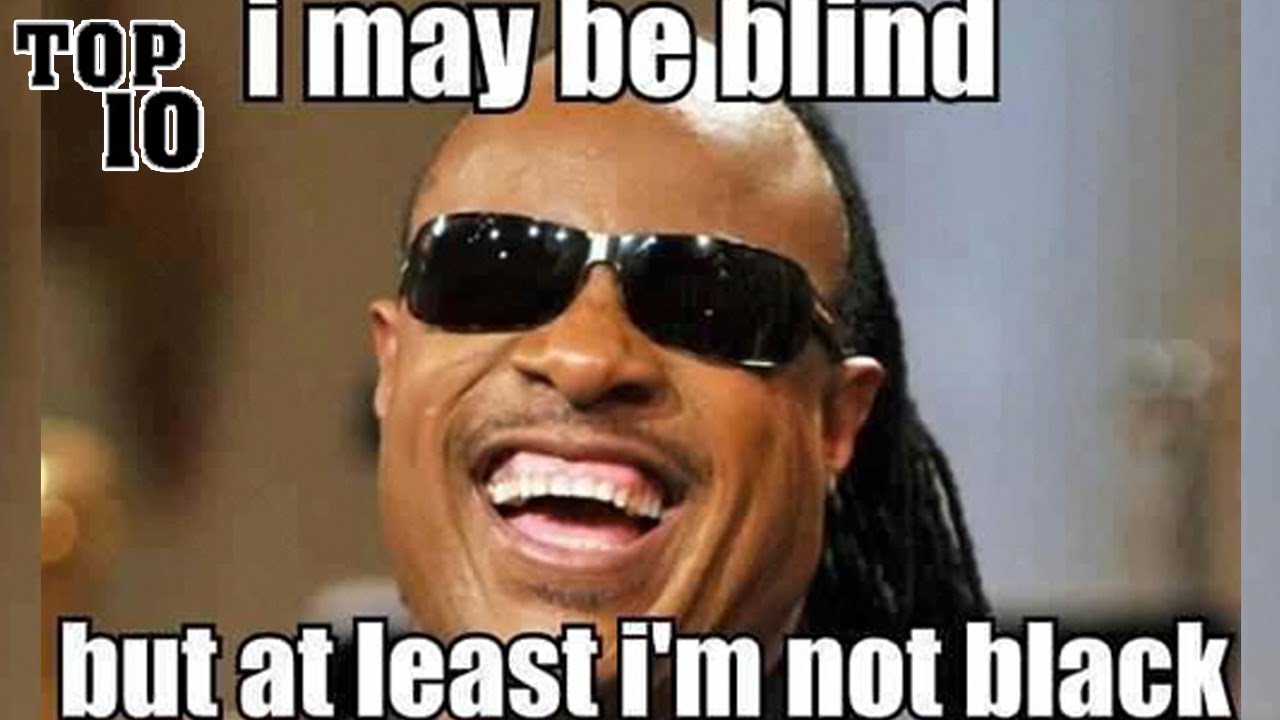
In Lisa Nakamura’s article “I WILL DO EVERYthing Am Asked,” she emphasizes the prevalence of exploitative content focusing on African Americans. Racist content has almost become completely common place all over social media and people barely even notice that they are perpetuating a hateful culture by sharing this content. Now more than ever, there seems to be no boundary on what people are comfortable with posting on the internet for the world to see. Also, with the anonymity of the internet, people feel completely invincible when they post something offensive because they can hide behind a screen. With a quick Google search of the word “meme,” two images popped up immediately that struck me:

Link to image source here.
Source of image is a screenshot from a video but the link to the image is here.

I have seen both of these images used before on social media with different captions but I will emphasize the fact that with one search for memes on google, these are two that come up immediately. The first image shows the image of an apparent drug addict with a seemingly humorous caption to gain likes and appreciation by online users. This is incredibly offensive because it turns an image of a person struggling with addiction into a joke for people on the internet to laugh at. The second image is of Stevie Wonder, who is a popular target for memes for being blind, and this meme is blatantly racist. Essentially joking that he should be thankful to be blind because he can’t see that he is a black man. After reading the article and looking around the internet, it is obvious to me that racism has become pervasive throughout social media.

Sources:

http://journals.sagepub.com/doi/pdf/10.1177/1470412914546845

http://knowyourmeme.com/photos/1144795-spicy-memes


Posted from My blog by Charlie

Caption this!


Warning: Undefined array key 0 in /home/digitald/public_html/courses/wp-content/plugins/radgeek-FWP---Add-Attribution-70acf52/add-attribution-feedwordpress.php on line 363

The reading brings up a topic that I, certainly, don’t have any expertise on. Thus, these are all my semi-knowledgeable opinions that derive from emotion, experiences, and anecdotes. Though I cannot speak like I know the world, I do agree that this reading is right in claiming Africans are targeted and meme-ified in American society where much of the racial tensions surround Africans. I don’t know why that is the case and why other minorities are not as frequently targeted as Africans. It may be due to their racial and social prevalence vs other minorities.

I have not found pictures that are to the extent of the ones shown in the reading, but I do recognize that there are website that entertain themselves with captioning or creating memes of racial, sexist, or offensive “jokes”. There are jokes in which can be in the middle such as this:

Meme of an African child

Though the meme serves no explicit racial joke, the use of a picture from a video meant to advocate for charities in Africa turns it into a racial joke. Did the person choose this picture for a reason? Did the person have that joke but was looking for that child’s expression? Was his intent malicious? I don’t answer for any of these as I don’t know the person’s true intent but what I see and perceive through this meme comes off as a racial joke.

I do disagree with some of those jokes, they come from ignorance and are meant to hurt people. However, there is a line in which these racial, sexist, or offensive jokes have no intent to “hurt” people but are for laughs — how do you separate those apart? Do we censor everything that seems offensive or that could be offensive to a group, person, or thing? I can’t honestly tell you what a good answer is. There will always exist a group of people whose humor basks in offensive and dark humor.

Posted from Digital 101 by Christy

Parallels in Motivation, the Freak Show and Scambaiting


Warning: Undefined array key 0 in /home/digitald/public_html/courses/wp-content/plugins/radgeek-FWP---Add-Attribution-70acf52/add-attribution-feedwordpress.php on line 363

Lisa Nakamura’s journal article ‘I WILL DO EVERYthing that Am Asked’: Scambaiting, Digital Show-Space, and the Racial Violence of Social Media explores the conditions present in society that allows these memetic images to circulate the web. On page 270 of the article, Nakamura argues that this phenomenon is the viral version of the postcards and posters associated with the Barnum Museum and traveling shows. I believe the parallels between freak shows and scambaiting extend to the motivation behind each phenomenon.

Through her work, Extraordinary Bodies, Rosemarie Garland Thomson explores the success of the 19th century American freak show. Much like Nakamura’s argument about memetic images, Thomson argues that these shows were designed for entertainment and monetary purposes. However, Thomson takes her article a step further by concluding that these shows were also meant to ease the anxieties of the “average” American. The author attributes a large proportion of the American freak show’s success to its ability to assure the masses that they were normal in comparison to those on display. The American freak show illustrates despite the country’s vocal emphasis on being a melting pot and valuing individual differences, individuals work to create a social hierarchy in which they feel powerful.

                                American Freak Show

The parallels between these two arguments lead me to wonder more about the motivation behind scambaiting. While individuals “operate under the sign of fun and amusement” (p. 261), what are the true motivations behind their actions? Does it resemble those who created and frequented freak shows or reflect some other implicit or explicit bias?


Thomson, Rosemarie Garland. “The Cultural Work of the American Freak Show, 1835-1940.” Extraordinary Bodies: Figuring Physical Disability in American Culture and Literature. 1st edition. New York: Columbia University Press, 1996. 55–80. Print.


Posted from Intro to Digital Studies by Kat

4Chan and Anonymity


Warning: Undefined array key 0 in /home/digitald/public_html/courses/wp-content/plugins/radgeek-FWP---Add-Attribution-70acf52/add-attribution-feedwordpress.php on line 363

In ‘I WILL DO EVERYthing That Am Asked’: Scambaiting, Digital Show-Space and the Racial Violence of Social Media, Lisa Nakamura discusses the concept of anonymity and online platforms that facilitate this anonymity, which is alive and well, striving in the online world.

Anonymity might actually be the only remaining mean that “foster[s] creativity” according to Christopher Poole (4Chan’s creator). Even though it is hated by many, I don’t think that people will disagree with the fact that most times humans will show, say and do the most when they are protected under their anonymity masks, unafraid of their social identity, reputation and place in this world.
Poole founded 4Chan in 2003 when he was only 15 years old as a platform to discuss Japanese pop-culture, a great interest of his. However, one of the website’s boards, /b/ also called “random” board, unexpectedly started gaining more and more visitors and now solemnly constitutes a third of the site’s attraction.
What attracts people to leave their ‘personal’ anonymous touch, is the fact that /b/ does not require the user to register, has no archive and of course, everything is anonymous. So even though this is a place of hatred, weirdness, and blowing off steam, the millions of posts per day, can have such a huge impact that some of the effects can and do leave the 4Chan platform and emerge into the broader everyday internet culture. This ability and chance to discuss and possibly see what really strikes people about the world, might not be possible if anonymous platforms didn’t exist for people to express how they really feel, even if that means hiding behind a mask.

Bibliography 

Walker, Rob. “When Funny Goes Viral.” The New York Times, The New York Times, 17 July 2010, www.nytimes.com/2010/07/18/magazine/18ROFL-t.html.

Posted from DIG101 by Danae

The Hidden Truths of “Scambaiting”


Warning: Undefined array key 0 in /home/digitald/public_html/courses/wp-content/plugins/radgeek-FWP---Add-Attribution-70acf52/add-attribution-feedwordpress.php on line 363

Even after reading Nakamura’s article , I really could not grasp the concept of “scambaiting,” which I felt was really important to understand before I could formulate an opinion on whether or not it has digital racial implications. I looked on the Wikipedia site that Nakamura mentioned, as well as 419eater.com, which was mentioned several times in the article and was also one of the first websites to come up when I typed in “scambaiting” in Google. I decided that I had a general concept after reading the article and these two sites: scambaiting is basically the act of scamming a scammer by pretending to be a victim to their scam, and then gathering up all their resources and information, scamming them into coming to foreign countries (often Nigeria) for money, and then exposing them.

Now having a basic understanding of “scambaiting,” I tried to figure out how the result of these scams were the “Trophy Room” pictures, in which men (almost always African American) are portrayed in sexual and often racially-charged poises for the scambaiter’s own amusement. My best understanding is that the scambaiters tell these scammers that they must pose in these ridiculous pictures before they get their money. An example is pictured below.

Image source 

When I was on 419eater.com, I looked for an explanation as to why these pictures are the way they like to exploit and expose scammers. There was no mention of this act on the site, just information on how the scammers are baited into traveling to foreign countries. I find this very contradictory to the fact that the members say they are “race-blind” when they are practicing this (Nakamura 263). If they were race-blind, I feel like they would mention their practices explicitly, instead of saying “even if you are a newcomer, much fun can be had and at the same time you will be doing a public service (261, or 419eater.com). I am in agreement with the opinion of Nakamura, that this kind of media is racially-charged, especially when considering it in a historical context (i.e. lynching photos, and the images from Abu Ghraib prison). I find that, with these kind of photos, as well as GIFs, Memes, and other “blackface” media, historical context is very important when analyzing whether or not there is intended racial prejudice in the particular media.


Posted from Digital Studies 101 Blog by Lindsay

GIF Lab Report


Warning: Undefined array key 0 in /home/digitald/public_html/courses/wp-content/plugins/radgeek-FWP---Add-Attribution-70acf52/add-attribution-feedwordpress.php on line 363

Category: Fandom GIF

Example: Doctor Who Fandom GIF

: 

Counter Example: Parody of Doctor Who Fandom GIF

Analysis:

We took the parody of Doctor Who with the same “Police Box” prop that is used in the original Doctor Who show. I think it’s counter the Fandom GIF as it is a parody of the actual show. Most Fandom GIF from Doctor Who emphasize the main character and don’t really show much action between any other characters. This one shows a girl and a whole ton of people dancing around.


Category: Reaction GIF

Example:

Counter Example:

Analysis: I decided to do a reaction to the famous reaction GIF using the same original video. There are two ways to look at this. One, it seems like there’s no reaction, it’s just zooming in to the person: therefore, not even a reaction GIF because there is no reaction… therefore, a counter-reaction GIF. Or two, his face can be interpreted to show a reaction where it seems like the original content (prime example of reaction GIF) is not even original and bores him. That is exactly how I feel when I see the same reaction GIFs every time.

Category: Sports GIF

Example:

Counter Example:

Analysis:

The prime example of the tennis sport GIF is Roger Federer, one of the greatest tennis players of all time, hitting with perfect form. I chose a counter example of a music video where tennis is a part of the music video; however, none of them can actually play. It is so  popular for music videos to include tennis outfits, gears, and plays but never used in the right way and I just thought that would be the prime example of a counter-sport GIF.

Posted from Digital 101 by Christy