Thinking with Daytripper
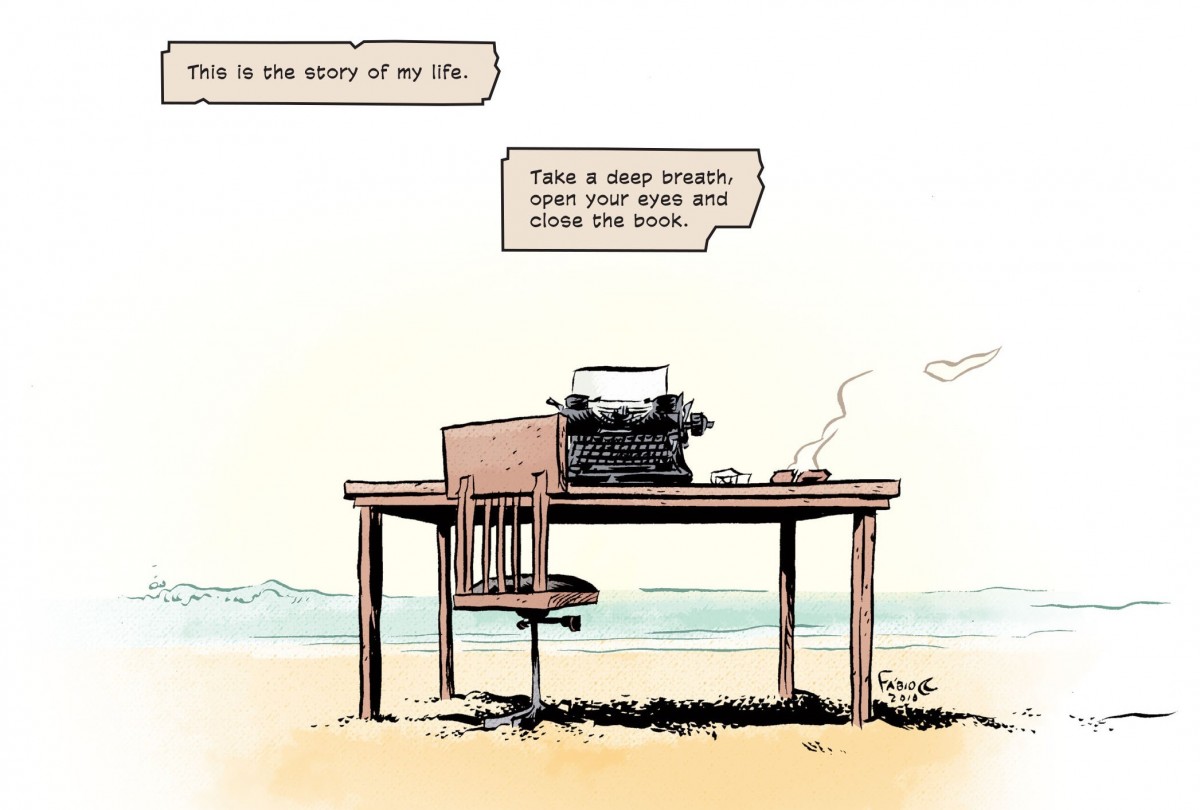
The first two writing projects asked for evidence-based argumentative essays, in which you sought to make a not-quite-obvious claim about Nat Turner or Maus. This writing project asks for something entirely different: for you to put yourself in conversation with Daytripper in a way that reveals your own voice and experience. This is a personal essay. Your goal is to use Daytripper as an entryway to think about your own history, and to use your own life as a way to think about Daytripper. In the process—ideally—you’ll expand your understanding of both the graphic novel and the story of your own life.
There are many ways to approach this project. For example, you might select an enduring theme in Daytripper—family, ambition, loss, friendship, unpredictability, and so on—and meditate on it, using your experience to think through the graphic novel and the graphic novel to reframe your own experience. Or you might liken yourself to Brás or another character in Daytripper, and image how multiple endings in the “book” of your life could have played out so far—and how they might play out in the future. Whatever approach you choose, make sure that you have a hook, a narrative snag that draws your reader in.
There’s one important wrinkle with this essay: you must adapt an unconventional narrative format. Just as Daytripper plays with chronology, so too you must present this personal reflection through Daytripper in a distinctive way.
The final version of this essay will be approximately 1,250 words. The criteria for the final essay include these categories:
- Conversation with Daytripper: the extent to which your essay is a dialog with the graphic novel
- Use of material: the way you use images and conceits from Daytripper to accompany your essay, and the way you bring in images from your own life
- Narrative innovation: the degree to which you attempt and succeed at using a distinctive narrative technique
- Style and mechanics
Deadlines
- Draft of 750 words due via email by 10pm Monday, March 21
- Half of the class will meet on Tuesday, March 22 to discuss 6 papers
- The other half of class will meet on Thursday, March to discuss the other papers
- Final version due Sunday, April 3 by 5pm.