Impakt

My daydreams about this project were grounded in reality: I wanted to discover what information I could glean from the tweets by using skills from my computer science courses. Eager to flex my coding muscles, I jumped into the project. But I started running into roadblocks: I couldn’t get as many tweets as I wanted, I struggled with remembering the syntax of JavaScript, the data wasn’t as easy to work with as I had hoped. With the clock ticking, I mentally reset and reminded myself that this project is intentionally not grounded in reality. We’re supposed to take an almost-plausible idea, one that nearly fits into our reality, but add an element of the uncanny to it, something that makes us examine the object and shudder with relief that the world isn’t that screwed up. Keeping this in mind, I adjusted my mindset and developed Impakt, a macro-social media site that distills down a celebrity’s death to handful of figures to deliver one final reading of the social climate surrounding him or her.

The Impakt of Social Media Grief Competition 

Impakt analyzes the millions of para-social relationships that Twitter users have with a given celebrity. This data analysis gives a large-scale representation of the impact a celebrity had on society around their demise. The obvious goals of Impakt as a “brand” are to make the user aware of the impact of a death of a celebrity, to highlight the para-social relationship between the fans and the public figure, and to trivialize death by making it another social media gimmick. As an art piece, its “goal” is to push social-media grief into the realm of the uncanny by further distancing users from the actual death of the celebrity and turning generating attention into a competition, valuing the quantity of social media attention over the quality. The cultural attention shifts even farther from death to trivial “here-and-now” things, like the Internet and the media. Sherlock suggests that these media “facilitate a new type of ritualized, collective mourning that potentially serves to distract mourners from the physical reality of death” (169). The deluge of images and messages in mourning and memorializing tweets provides a distraction for the Twitter user from being reminded of his or her own impending end. As Sherlock states, “to control the corpse is to control death, disorder, and chaos”, and so “a culture that promotes the notion of a symbolic immortality” would aid in distracting us from our own mortality (169). If we create a culture that minimize the finality of death by continuing to celebrate a celebrity after their demise, we cultivate the belief that we will also be celebrated and respected after our death, capturing a sort of immortality. Impakt attempts to enhance this mindset and take it to an extreme. By making popularity and impact a social competition, people are even more concerned about their image after death, and may choose to include in their will the hiring of tweeters or bots to preserve their social relevancy after death.

Postmortem Digital Identity

Yet, what role should be assigned one’s digital identity after death? What are the moral and cultural guidelines that the bereaved should be expected to follow? Brubaker, Hayes, and Dourish touch on these questions in their examination of online memorials and the digital identity postmortem on Facebook. Facebook’s protocol when handling the passing of a user consists of “memorializing” a user’s page, which partially freezes the page so no new friends can be added and no personal information can be modified. Brubaker et al. argue this protocol “prioritizes the needs of a now-dead individual over the grieving community that remains” (161). The grieving community can post memories and content on the deceased’s wall, adding detail to the postmortem identity and creating a divergence between the pre- and postmortem identities of the deceased. Since the owner of the page no longer can filter the content allowed on their wall, survivors may take offense to posts or images added to the page by commentators (Brubaker et al. 161). Even the deceased might not have approved of some of the content.

The Do’s and Don’ts

How much control should you have over your postmortem social identity? What should the moral standards be for grievers and commenters? Odom et al. suggest paying attention to the “delicate social arrangements” surrounding managing these digital representations and not simply allowing a profile to exist with restrictions. Impakt places no such restrictions on the information displayed on the site: any publicity is good publicity. The philosophy of Impakt encourages tweets of any kind about the celebrity, with a weighting system that centers more on the sincerity of a tweet rather than the sentiment. Negative tweets (“Insults”) impact the algorithm just as much as positive tweets (“Compliments”) (see section “The Tunes of Tweets”). This reflects Walter’s idea of postmodern death, by which private feelings of the dying and bereaved are publicly proclaimed as a form of individual expression. Regardless of the motivation or sentiment behind a tweet, any form of grief in a public place does not ensure the same level respect that one receives by grieving in private. An individual has the right to express themselves as they wish in public, accounting for the repercussions of posting anything on a public platform.

 The Tunes of Tweets

The tweets posted in relation to a public figure’s death run the gamut from insults to tweets of concern to impartial headlines. The categories used for Impakt’s Popularity Breakdown were inspired by Cutrona and Suhr’s (1992) five types of social support as described by in an analysis by Lee and Goh on Twitter’s response to Michael Jackson’s death. This scheme has been applied to studies involving online social support and so Lee and Goh adapted this scheme for the death of a public figure. I expanded Cutrona and Suhr’s five types of social support to seven tweet categories (names of the original types are denoted in brackets):

  1. Info [informational support]
  2. Emotions [emotional support]
  3. Compliments [esteem support]
  4. Connects [network support]
  5. Rumors
  6. Insults
  7. Other

The categories are explained on the Impakt FAQ page. The tweets regarding Michael Jackson were primarily info (46%), with emotions being the second greatest proportion of the tweets (23%). Through during their study of Michael Jackson’s death, Lee and Goh discovered “categories not normally associated with grieving, such as spreading of rumors, expressions of hatred, and spam, also occupied a large proportion of tweets” – nearly 30% (rumors, insults, and other). The authors suggested that these contributors took advantage of the high Twitter traffic “for a variety of purposes such as spreading rumors, spamming, marketing, and advertising” (473). I emulated these results in the Popularity Breakdown section of Impakt. For most the tweets, they “seemed more like personal and social expressions of emotions and thoughts” with no response necessary from other users, like a condolence book (Lee and Goh 473).

The Nature of the Bird

Twitter’s public, event-driven nature, and 140-character restriction requires tweets to be deliberate, timely, and pithy. These characteristics make it a perfect metric for examining the effects of major events, providing “insight into traumatic events and experiences and elucidate how youth view the world, self, and others from the perspective of youth tweeting about social events and experiences they deem significant and important in their lives. (Patton et al. 229) Even more ideal when dealing with public figures is how commonplace tweeting has become for them to use to interact with their fans. While a celebrity is alive, their Twitter page is a critical part of maintaining para-social relationships and thus is an intuitive medium to turn to when expressing sentiment toward the celebrity. Although Twitter, Facebook, and other social media sites are typically centers for lighter content, people engaging with content on these sites “often alter and modify the original intent of software to fulfill a need or desire” (Patton et al. 229). Patton explains that the Internet can ease that need to commune with other mourners and “strengthen group bonds by allowing users to share experiences of mourning… and memorialize the deceased with the use of text, photographs, music…” (Patton et al. 228). The online community also has the side effect of popularizing someone’s death, drawing more publicity than a news story or obituary would have generated. Patton et al. examined a case study of a young woman in a gang who was killed and noted “the public may never have known about Gakirah’s story without the communication capabilities of social media. In the pre-Twitter era, she might have been a name in a back-page newspaper story” (238). This attention may have positive repercussions (e.g. another source of outlet and support for mourners) or attract negative commenters (e.g. RIP trolls or advertisers). For better or worse, Twitter is public. If you wish to keep your mourning private, don’t post on Twitter. Alternatively, online memorializing can provide support and community for geographically-restricted groups so sharing online may help you find a connection and ease the grieving process.

The takeaway

Currently, grieving on social media is still weird, but so is mourning someone you never met. As we’ve seen, the peculiarities of Twitter lend itself oddly well to mourning celebrities and other para-social relationships. Yet the idea and culture surrounding mourning on social media haven’t quite settled into acceptable norms. I challenged the idea of what could be deemed appropriate via Impakt, essentially making celebrity deaths into a quantifiable popularity contest. Since social media is more of a superficial grief setting, mourners generally do not post deep, emotional posts, especially on character-restricted Twitter. With that mindset, it’s perfectly eerie to consider what happens when valuing trivial social media stats takes priority over grieving the loss of someone.

Note: While the finished product didn’t include access to live data, I hope I communicated the general idea of the site. The rankings were an amalgam taken from various tabloid articles. As mentioned, the percentages used were based on Lee and Goh’s results. The most favorited/retweeted tweet, the top 5 words and hashtags, and the frequency graph were generated from actual tweets surrounding Chuck Berry’s death (specifically the last 10,000 tweets returned from the query “chuck berry” taken during the 18 March – 19 March 2017 window).


Works Cited

Brubaker, Jed R., et al. “Beyond the Grave: Facebook as a Site for the Expansion of Death and Mourning.” Information Society, vol. 29, no. 3, May/June 2013, pp.152-163. EBSCOhost, doi:10.1080/01972243.2013.777300.

Lee, Chei Sian and Dion Hoe-Lian Goh. “Gone Too Soon: Did Twitter Grieve for Michael Jackson?.” Online Information Review, vol. 37, no. 3, May 2013, pp. 462-478. EBSCOhost, doi:10.1108/OIR-05-2012-0082.

Patton, Desmond U., et al. “I Know God’s Got a Day 4 Me.” Social Science Computer Review, vol. 35, no. 2, Apr. 2017, pp. 226-243. EBSCOhost, doi:10.1177/0894439315613319.

Sherlock, Alexandra. “Larger Than LIfe: Digital Resurrection and the Re-Enchantment of Society.” The Information Society, vol 29, no. 3, May/June 2013, pp. 164-176. EBSCOhost, doi:10.1080/01972243.2013.777302.
Reconnected or Reborn?

*In my project, Reconnect, there includes a website (listed below), a complete text message thread (attached), and pictures of “the little black book” of information on victims and clients. Links are all listed below*

Reconnect site

Text Convo

Exploited Information

Client Log

Artist’s Statement

Reconnect

Annabelle and Abigail Morgan were identical twins born on September 3rd, 2000. They lived with their parents in Denton, Texas. To each other, they were Annie-bee and Abbie-bug; nicknames that had stuck from when they were little girls. Both girls were avid social media posters and texted each other non-stop, they were the other’s best friend. When they turned 13, Abbie started to feel slightly off but wasn’t really sure what was wrong. It took her sister finally dragging her in front of their parents almost a month later for Abbie to realize how sick she was actually feeling. At the doctor the next morning, their pediatrician couldn’t figure out what was wrong and sent her on to a specialist to get blood work done. He figured that since she was showing symptoms like fatigue, easy bruising, and shortness of breath, she could possibly have low iron levels. The results of that test were devastating. The doctors sat Abigail and her parents down and explained to them about how in healthy 13 year olds, white blood cell counts should be somewhere between 5,000 to 10,000. Abbie’s white blood cell count was off the chart high. The doctors told her anemic symptoms were what caused her to feel faint and show symptoms of anemia, but the main problem lay in her inability to fight off infections because of the rapid overproduction of her white blood cells. Abbie had acute leukemia.

Annie was next to Abbie’s side for the next three years monitoring blood cell counts, trying to ward off infections, and keeping her spirits high in the tough moments. Abbie started with a few rounds of chemotherapy, but at 15, her leukemia took a turn for the worse and she began radiation therapy and was even put on a stem-cell transplant list. On November 12th, 2016, Abigail lost her fight against leukemia.

Annie was devastated, she had lost her sister and best friend and didn’t know how she’d be able to go through a day, a week, let alone a year without speaking to Abbie at least one more time. Annie was constantly on her phone looking at old pictures and scrolling through their old text conversations. Although they knew her sister was sick and getting worse, accepting that she was gone now was hard for Annie. Her parents’ full attention was now on Annie 100% and she found it suffocating to try and heal while under such scrutiny. Her escape was online. While surfing on the internet day, another user in a random online forum about grief sent her a link to a very interesting site called Reconnect. It prompted her to enter her full name, cell phone number, and email, along with the person she was grieving’s full name and death day. Annie was hesitant about it but the site promised she would be able to text her lost loved one again and reconnect. When she went through with it, she shakily texted the number that the site emailed her, hoping beyond hope that her beloved sister would indeed be the spirit behind the texts.

For the next two weeks, Annie was slowly more and more convinced that Abbie was the one she was texting. As the site said it would, those texts did indeed help Annie come to terms with her sister’s death, but it also disguised a terrible scheme of identity theft. Unbeknownst to Annie, the “Abbie” she was texting a culmination of a bot that had taken all of her online social media activity and turned it into a book of information, including phrases she was prone to say and pictures, and a real human on the other end of the line that was slowly gathering the childhood best friend names, first pet names, and other such security type questions. The Reconnect site was a rouse to get grieving people that were desperate enough to believe they were talking to their loved ones again and manipulate them into handing over countless sensitive facts about themselves and their loved one, allowing the makers of the site to steal the identity of the passed loved one. The turnaround was amazing on how fast there was always a buyer on the dark web ready and in need of a legit ID that could be used for social security number purposes, voter ID purposes, and a number of other things that The Makers didn’t really care to concern themselves with as long as the money was wired to them. In the end, this reconnection of a lost sister turned into her rebirth as a new identity.

Behind the Piece

The idea behind this Haunted Media project is a combination of four themes presented in Cohen’s Monster Thesis, Zarelli’s Dial-a-Ghost, Walker’s Cyberspace When You’re Dead, and Bonazzo’s Do You Need to Control Your Online Identity After Your Death. Everyone grieves in different ways, however it is more and more common in this digital age for grief to be shared online. Since telephones were invented, this idea that technology could reach beyond that of our physical realm, has been present. In October 1933, the first such idea was born that the human personality doesn’t totally die and that there are small pieces living around, just waiting to be found and spoken to (Zarelli). While this might have been an idea for the telephone in the early days of technological advances, in our day and age we are so much further advanced that it is not a stretch to think that we may now have found a way to bride that link between the living and dead through technology. According to Statista, 98% of millennials own a cell phone, 96% text, and 93% use social networking and the internet in 2014. Taking this information, it is obvious that two young millennials such as Annie and Abbie are deeply entrenched in this age where technology is a main aspect of their lives and time. It’s not too far-fetched to believe that in her young grief, Annie fell for a rouse to reconnect with her sister one last time through the use of something as normal as her cell phone.

In Bonazzo’s piece about your online identity, he outlines how an online account is a digital asset in terms of information that can be stored from your usage of that account. In most states it is illegal to access someone else’s personal accounts, but what about those who do not care about it being legal? Differing accounts have ways of knowing when a loved one as passed on, such as Facebook moving the page to an inactive account and gives your ‘legacy’ managing duties of your page. This doesn’t delete any content online, merely holds captive for anyone to find. This got me thinking how this information could be used maliciously in Reconnect.

According to Cohen, a monster in the horror genre encapsulates seven basic thesis. Of these seven, about five are used to outline the ideals behind my ‘monster’ in the piece Reconnect. (To be clear, the monster is the person on the other end of the text conversation and the one selling the dead identities to buyers on the dark net). The five that are used to form this monster from Cohen’s monster theory are: The Monster’s Body is a Cultural Body, The Monster Always Escapes, The Monster Dwells at the Gates of Difference, The Monster Polices the Borders of the Possible, and Fear of the Monster is really a Kind of Desire. Reconnect’s monster form is one of an online participant in chat rooms and a speaker for the dead using their social media history. By using such a culturally relevant method of communicating is the first step to the digital age’s monster. Having an online platform as the means to communicate in the first place means that the monster can leave no trace if their technology usage is savvy enough and con therefore get away with no trace. Next, our online monster persona allows the victim to believe there is a connection to the outside world, seeing the monster as an Other being. This encapsulates the last three thesis in that our monster is a sign of the impossible happening (a loved one speaking from the dead), but yet it is just probable enough to warrant longing and desire for the phenomena to be real. Thus, the Reconnect monster was born to lure unsuspecting grieving family members or friends to talk to him in order to remake the dead person’s identity. In essence, this reconnection of loved ones leads to the rebirth of an identity for numerous purposes such as identity theft, illegal immigration, voting fraud, or organized crime.

This monster is only even possible because of what Abbie left behind; her sister and her online profile. Rob Walker cites your online profile and what you post as reflections of who you are and who you wish to be. This idea led to Reconnect’s monster to have its own bot that boiled down Abbie’s (and other previous victim’s) online profile into enough phrases and nicknames and such that the grieving victim was tricked into thinking there was still a bit of their passed loved one’s personality still texting them.

Ultimately, this haunted media project runs full circle when a death in real life can be remade through the internet and texting, enough so that a newly formed identity using Abigail Morgan and other passed names are still floating around and being used after her death. This use is a form of haunting in the digital age.


Word Count: 1595

References

Bonazzo, John. “Do You Need to Control Your Online Identity After Your Death?” Observer. N.p., 23 Feb. 2016. Web.

Cohen, Jeffrey Jerome. “Monster Culture (Seven Thesis).” page. Web. Found at: courses.digitaldavidson.net/dig215/documents/monster-theory-seven-theses.pdf

“Dial-a-Ghost on Thomas Edison’s Least Successful Invention: the Spirit Phone.” Atlas Obscura. N.p., 20 Oct. 2016. Web.

“Media use among Millennials 2014 | Statistic.” Statista. N.p., n.d. Web.

Pictorial Memorial: Time and Grief in the Digital World


Pictorial Memorial: Time and Grief in the Digital World

pictorialmemorial.wordpress.com

For many people, especially millennials, a large part of our lives is documented only on social media sites. Digital photographs serve as the core of many social media sites like Instagram and Facebook, where images document every aspect of our day-to-day life from college parties and vacations to graduation and family birthdays. While some sites are working on ways to address what happens to these accounts and images when we die, such as the ability to memorialize accounts on Facebook, many questions remains about exactly what role these photographs might play in the grieving process when a person passes away. My project, Pictorial Memorial, explores the issue of how the digital world has changed the grieving process and its relationship to time. Time and grief are addressed in two distinct ways within my project. First, the website Pictorial Memorial offers products created from social media photographs of the deceased and offers an example of how our desire to preserve our memories of the deceased might be commercialized in the future. Second, the way in which the timeline of the grieving process might be altered by the digital world is explored through the made up narrative of one of the deceased registered to the Pictorial Memorial website.

Both of these aspects of the project center around photography because of the important role that images of deceased loved ones play in the grieving process. Photographs serve to keep loved ones who have passed away alive in a certain sense by capturing something of that person, if only in a particular moment in time. By preserving memories, photography, “enables the past to be recalled and reinterpreted” (Riches and Dawson 122). When families grieve, photography helps, “transform obsession with the single event of the death into a broader acknowledgement of the meaning of his or her life” (Riches and Dawson 124). Moreover, the ease and affordability of taking digital photographs with phones means that we visually document our lives to an extent that we never have before. Thus, when people die, many now leave behind a collection of images that may allow grievers to feel as though they have a more complete representation of a dead loved one than ever before.

The website I created, Pictorial Memorial, capitalizes on our desire to hold on to memories of deceased loved ones. Pictorial Memorial is a mock-up of a website where after a loved one dies you can set up an account and friends and family can import photographs from various social media sites. While the website masquerades as a memorial website to collect photos of a loved one in a single place and to create a community of mourning, it also attempts to exploit grieving loved ones. This is done through offering the services of a team of artists to create a variety of what I intended to be relatively cringe worthy memorabilia of their loved ones. While the idea of exploiting grief for profit in such a way was meant to be slightly uncomfortable, such a campaign did not feel unrealistic to me. For many, the digital world feels impermanent and intangible in contrast with physical photographs or other physical keepsakes. In the article, “Family memories in the home: contrasting physical and digital mementos,” Daniela Petrelli and Steve Whittaker asked 16 individuals to give interviewers a tour of their home and discuss family mementos. The authors found that interviewees placed low perceived importance on digital artifacts (Petrelli and Whittaker 160). Moreover, the authors suggest that this is in part due to, “perceived fragility of the digital,” in contrast with, “a generic sense of physical objects as destined to last and in no real need of maintenance” (Petrelli and Whittaker 164). When a loved one passes away, we cling to whatever is left that reminds us of them. Pictorial Memorial is perhaps a little bit conniving in the extent to which it commercializes this desire but nonetheless offers those with grief a reminder of their loved one that feels more permanent than digital archives.

The other aspect of Pictorial Memorial that explores how the digital age has impacted the grieving process is through the saga of an invented person, Fred December. There were several important background details to Mr. December’s story that play a role in setting up the transgression of temporal grieving norms. Mr. December died relatively young and left behind a young son, James, with a wife, LouAnne, who he had met in New Zealand and had moved to the United States with him. After his death, Mr. December’s wife moved back to her home in New Zealand and took her son with her, thus separating the kid from those who knew his father well. Of the grievers who post on the memorial site, the one who appears to be most haunted by Fred’s death is the man who was with him when he died, Drew. This is demonstrated by Drew posting long after the other posters had stopped. Notably, Mr. December’s now grown son responds to Drew’s last post, offering an opportunity for the boy to learn about his dad and grieve for him with someone who still feels a similar sense of loss.

Here, Pictorial Memorial demonstrates how the digital world allows us to transverse geographical and temporal boundaries in ways not previously possible. In describing the temporal expansion of death in “Beyond the Grave: Facebook as a Site for the Expansion of Death and Mourning,” Brubaker et al. write that users of social media, “continue to engage with postmortem profiles, sharing memories, and speaking to the dead (160),” far more commonly than before grief entered the digital sphere. In my example, Drew and many other mourners continue to speak to Fred for years after his untimely death. Brubaker et al. also mention how grief has been expanded in the digital world through removing geographical barriers (160) and how online grieving has expanded the social circles of grieving. Brubaker et al. write, “friends from multiple social contexts-work, home, past, and present-are collapsed together.” I demonstrated this in part by having friends from many aspects of Fred’s life share photos and even in small details such as some friends referring to the deceased as Freddy instead of Fred showing how people from different times in our lives know different versions of us. Moreover, the connection between Drew and James in the last post demonstrates an intergenerational and international connection between two mourners that likely would not be possible without the digital world.

I also intended to use the posts about Drew to demonstrate how grief in the digital world has allowed for the period of grief to be extended past when it might in more traditional memorials. Graham et al. compared the roles of digital memorials and gravesites in Australia and found that online memorials allow for grief to be stretched out (50). Graham et al. write, “posts were often very personal and written years after the deceased’s death. There is little sense that the emotions associated with these posts run through stages or reach some kind of conclusion” (51). Through the character of Drew, and even James, I attempted to convey the extent to which the grieving process may be drawn out.

This temporal expansion of grief makes some uncomfortable. Brubaker et al. found that several interviewees though that the manner in which death and grief had the potential to pop up in their lives every day was at times distressing (157). I attempted to incorporate some of this confusion about the appropriate timeline of grief into the memorial of Mr. December primarily through posts by Mr. December’s wife LouAnne. Her posts slow over time, and end as she remarries. In her final post she expresses some discomfort at continuing to share romantic photos as she moves on to a new marriage. While no doubt there will always be a place for private grief of lost loved ones, the former Mrs. December recognizes that Pictorial Memorial is a space where displays of grief our captured and shared with others and thus may not be as acceptable after a certain extent of time. Additionally, I used automated posts from the Pictorial Memorial team alerting Drew that the account was no longer open and products no longer available to purchase to point to the way in which personal grieving processes may extend past what others find to be acceptable.

I also found the idea of Pictorial Memorial to be an excellent platform to illustrate how the digital sphere has impacted grief over time because of the way in which it provides a visual of someone essentially being forgotten. This is demonstrated through the influx of posts immediately after Mr. December’s death, and how this slows over time with eventually just one or two folks posting. While obviously the lessening of public grief occurs outside of the digital sphere as well, the manner in which the place for grief is publically visible and confined to one spot makes it more evident online. In “Grieving in the Internet Age,” Falconer et al. consider how online developments have changed the grieving process from a psychological perspective. They go as far as to suggest that, “those in mourning could become upset if they feel friends are no longer visiting a loved one’s site” (84). This leads to what is described as mourners close to the deceased having to live through a perceived second death, as they watch activity and interactions with a dead loved one online fade out (84). I attempted to portray this to some extent with Drew’s commentary on being the last one left posting, and visually through the variety of names on the early posts, slowing to just ones by Drew at the end of the project.

While Fred December is merely a made up character, the death of people whose lives have been documented extensively through social media is commonplace. The intangibility of the digital world then makes grieving those deaths particularly difficult as it feels as though we lose both their physical persona and their digital one. I addressed the desire for more permanent mementos of loved ones through the creation of Pictorial Memorial. While I am skeptical of how much these mementos may really aid the grieving process, the opportunities that Pictorial Memorial provides in allowing loved ones to share in the grieving process in ways they otherwise wouldn’t is something I believe to be a very real benefit of online memorials. While perhaps a little cheesy, ending my project with the start of communication between Drew and James represents what I feel to be one of the best ways in which the digital world has changed not just the grieving process but our lives in general: it allows us to make connections with people that we share some part of ourselves with across barriers that are far harder to breach in the physical world than online.

All images used in this project are public domain photos.

Works Cited

Brubaker, Jed R., Gillian R. Hayes, and Paul Dourish. “Beyond the Grave: Facebook as a Site for the Expansion of Death and Mourning.” The Information Society, vol. 29, 2013, pp. 152-163.

Falconer, Kimberly, Mieke Sachsenweger, Kerry Gibson, and Helen Norman. “Grieving in the Internet Age.” New Zealand Journal of Psychology, vol. 40, no. 3, 2011, pp. 79-88.

Graham, Connor, Michael Arnold, Tamara Kohn, and Martin R. Gibbs. (2015) “Gravesites and Websites: A Comparison of Memorialization.” Visual Studies, vol. 30, no. 1, 2015, pp. 37-53.

Petrelli, Daniela, and Steve Whittaker. “Family Memories in the Home: Contrasting Physical and Digital Mementos.” Personal and Ubiquitous Computing, vol. 14, no. 2, 2010), pp. 153-169.

Riches, Gordon, and Pamela Dawson. “Lost Children, Living Memories: The Role of Photographs in Processes of Grief and Adjustment Among Bereaved Parents.” Death Studies, vol. 22, no. 2, 1998, pp. 121-140.

Undead celebrities: Para-social celebrity relationships and the inauthenticity of digital images

sarahfunderburg.com/undeadcelebs

password: bobross

Artist Statement

“When the original ceases to exist, yet can be seen to live on in the media, the possibility of an extended immortality can be implicitly evoked. The fact that all this happens within the realm of entertainment and popular culture, where, for many, the exercise of a willing suspension of disbelief has become almost second nature, makes the entire proposal even more persuasive.” Alexandra Sherlock, 173

“Always the photograph astonishes me, with an astonishment which endures and renews itself, inexhaustibly. Perhaps this astonishment, this persistence reaches down into the religious substance out of which I am moulded; nothing for it: Photography has something to do with resurrection. (Barthes 2000 [1980], 82). [sic]” Roland Barthes, quoted in Sherlock, 174.

——–

I wanted to consider the idea of the celebrity in a captured image and its meaning in our digital era. The photograph was long considered an object of truth, far removed from art and reinterpretation, but with the advent of digital photography, the manipulation of photos has become ubiquitous, and practically synonymous with photos of celebrities. Whenever we, as a culture, see a photograph of a famous person, whether it be in a magazine or on the red carpet, we often assume that it has been “doctored”; that is to say, altered in a manner favorable to the celebrity.

Photographs have an aura of permanence—of a temporary moment permanently transcribed with the camera’s technology. When considering this, I found that the concept of the image reminded me of the way Sterne described early audio-recording technology in Resonant Tomb. Of course, the first rudimentary audio recordings and these high-definition photographs appear to have little in common—certainly not in terms of medium or quality. These altered photos are intended to strike the middle ground between ephemerality and permanence, just as the first audio recordings did (Sterne). Sherlock writes, “Photography marked a new era in the reproduction of self: Each time we are photographed we reproduce (Giles 2000, 51), and each reproduction lives on into the future as a record of our existence” (166). These reproductions are what I consider.

Consider this quote: “Barthes believed that all photographs (and potentially all forms of visual representation) contain a paradox between life and death—the moment is dead but the photograph is alive and present, and this paradox is the punctum that pricks our attention” (Sherlock 170). As Sherlock defines it, Barthes’ punctum “Is what punctuates a photograph: something that jumps out and grabs your attention, for whatever reason. It is usually something that the viewer does not fully understand and sparks the viewer’s curiosity” (170). Barthes names five possible punctums: the two I want to engage with in this project are “contortions of technique or trickery,” and “the ‘lucky find’” (Sherlock 170).

The trickery is my post-production digital manipulation of photos of award ceremonies and music festivals, altered to include dead celebrities, and on two occasions, celebrities who were killed on Twitter (more on that later). This is not quite necromancy as Sherlock has it (the celebrities aren’t talking back), but more of a reanimation or reinvigoration of the dead celebrity. The “lucky find” is also at work, being that hopefully the “Photoshopping” is effective enough to incur some searching on the part of the viewer for the uncanny subject: What haunts this image?

As Sherlock phrases it, “To suggest that we are fooled by these living images of the dead would be misleading—rationally we know that the subject is deceased. However, the cultural avoidance of death can provoke an ever-greater fascination and curiosity, a curiosity quenched by the further consumption of death-related popular culture (Durkin 2003). Images of those that have since died have a special effect and can evoke spine tingling feelings of creepiness.” (169-170) In this case, you all are hyperaware of these celebrities’ deaths given the nature of this context, which is why I included the Twitter deaths of still-living celebrities.

This project is also about the para-social relationships “the public” has with fame. As Sherlock explains, “Horton and Wohl coined the term para-social to explain the bond—facilitated by the media—that many viewers felt with particular television personalities and presenters” (168). Meyrowitz complicates this phenomena further, stating: “Even an awareness of the para-social mechanism is not enough to permit escape from its ‘magic’” (128). These photographs blur the boundaries between reality and fiction, honor and disrespect, and preservation versus peace. When do we let a celebrity rest? Think of Marilyn Monroe’s twitter—she is long gone, yet we still insist on conversation. To borrow a phrase from Sterne, these photos deal with “Death as a receding limit” (199). Imagine them as being captured at a fictional award ceremony that happened yesterday.

As mentioned earlier, Britney Spears and David Guetta had “Twitter deaths.” This is to say, these people are still among the living, but Twitter, at one point or another, insisted otherwise. Both Guetta and Spears’ names became trending topics alongside the hashtags #RIPDavidGuetta and #RIPBritney, in 2011 and 2016, respectively.

Britney Spears’ Twitter death included headlines the likes of “Everyone Thought Britney Spears Was Dead Because Of A Savage Twitter Hack” (Elite Daily), “PSA: Britney Spears Is Still Very Much Alive: The Sony Music account’s tweets reporting her death are false” (Elle), and “Sony Music apologizes for Britney Spears RIP tweets” (Fox News). Fox News explains Spears’ Twitter death with a strange tone: “Sony is well aware of the damage a hacked account can cause, especially when it impacts an entire service such as the PlayStation Network. The latest Sony hack is on a much smaller scale, though, with the only real consequence being lots of upset Britney Spears fans.” Indeed, Spears’ Twitter murder is of little consequence to them.

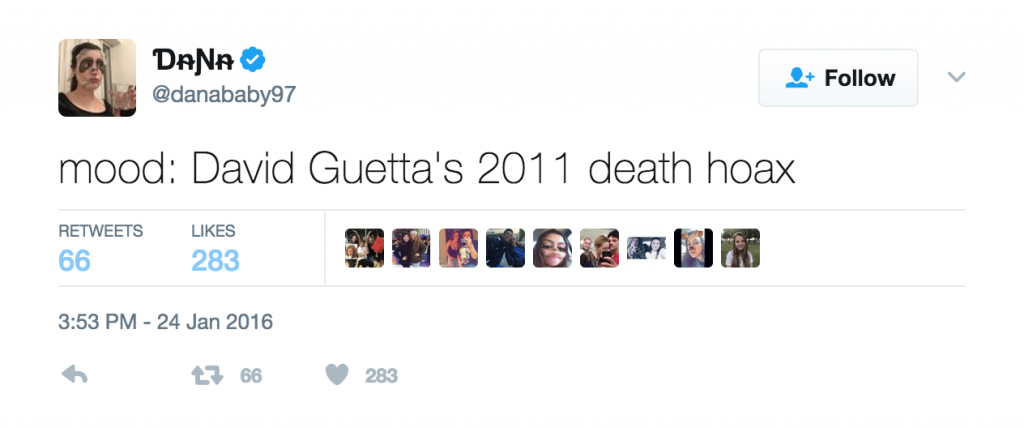
David Guetta’s Twitter death is treated with more levity and much less general coverage on the internet. His Twitter death is a kind of internet in-joke, more useable in memes than headlines, perhaps due to the fact that it occurred five years earlier than Spears’. As Twitter user @danababy97 has it:

@danababy97’s tweet: “mood: David Guetta’s 2011 death hoax”

Meyrowitz discusses this strange kind of murder even though it’s unlikely he anticipated something like Twitter culture, having written No Sense of Place in 1985. He wrote:

The para-social relationship has also led to a new form of murder and a new type of murder motive […] The para-social murder. In both love and hate, normal and bizarre, the para-social relationship is a new form of interaction. It has some of the traditional characteristics of both live encounters and communication through books, but it is, in fact, neither” (121)

I would argue that these Twitter murders rely on para-social interactions, further complicated by the user reciprocity (retweets, etc.) that Twitter encourages. These celebrities, digitally murdered on Twitter, live on in the way that “matters.” However, as Sherlock phrases it, “To what extent can digital representations substitute for those they refer to, and how could the death of the “original” affect public perceptions of the representations that continue to be perpetuated in popular culture? Ultimately, what effects might these digital ghosts or even reincarnations have on popular perceptions of death and mortality?” (165)

Meyrowitz sums up what I hoped this project would access pretty well:

Ironically, but appropriately, the media provide the most ritualized channels of mourning. Radio and television present specials and retrospectives. And many people use the telephone to contact real friends who shared the intimacy with the para-social friend. But the final irony is that, in some ways, the para-social performer does not die. For the only means through which most people came to know him or her—records, films, and videotape—are still available. The relationship is frozen, rather than destroyed. In part, it is the potential and hope for increased intimacy that dies, and the never to be face-to-face consummation of the relationship that is mourned. (120)

With these manipulated images, I wanted to “unfreeze” and refigure the relationships, casting doubt in some cases on the living status of these celebrities. Imagine what Meyrowtiz would do with the knowledge of the expanse of internet-mourning today—the Twitter funerals, Oscar and Grammy in memoriam slideshows, the endless barrage of grief-stricken updates on Facebook and Instagram. Sherlock follows this thought: “Paradoxically, while death has become less visible, mourning, particularly in response to the death of a public figure, has become more visible. The Internet and the media facilitate a new type of ritualized, collective mourning that potentially serves to distract mourners from the physical reality of death” (169).

The nature of the “reality” I have created here depends on this idea about the reproduction of images given in Sherlock: “The representation is even more real if you have never met the original—it is the original” (168). Without further evidence, how do we know for certain that what we’re seeing isn’t true? The people who engineered the Tupac hologram knew this was a powerful question to ask of celebrity.

CONCLUSION:

I found several aspects of completing this project thought-provoking beyond the comparison/analysis of the photos I manipulated and the sources I included. One of those thoughts has to do with the format of this project, being an accessible/public page on my website. What does it mean for someone to look at this page not knowing the context? Would they imagine these celebrities/people as living again? Sherlock also accesses this thought: “To what extent can digital representations substitute for those they refer to, and how could the death of the ‘original’ affect public perceptions of the representations that continue to be perpetuated in popular culture? Ultimately, what effects might these digital ghosts or even reincarnations have on popular perceptions of death and mortality?” (165) The lack of clarity was unsettling enough for me to install a password. Furthermore, Is this illegal? Sure, the images are licensed for public use, but who owns the rights to these celebrities’ “personality rights”? (In reference to the article we read, “These are the most influential dead people on Twitter”). Would they have been O.K. with being visually included at these events?

The next thing I found myself concerned with was that I was performing a sort of celebrity audit; In making the images, I would ask: Would this famous dead person have been famous enough to be in this situation? This idea was particularly central to Alan Rickman sitting behind Ryan Gosling, the Smith family, and more (Image 8), and Paul Walker in the Ellen selfie instead of Bradley Cooper (Image 4). Furthermore, this audit reaches another level in terms of the celebrities I chose to include in the project at all; the ones I have included already passed some sort of fame test. I found myself wanting to continue in the vein of these arbitrary inter/intra-celebrity classifications. As uncomfortable as this made me, it occurred to me that this kind of categorization is someone’s job. Think of the “rest in peace” segment at the Oscars and Grammy’s every year: What is the criteria for making the cut?

Sherlock mentions this idea: “In his article on fame, Halberstam describes it as a measure of having lived a ‘worthwhile, or at least noteworthy, life’ (1984, 96), making a mark on the world and gaining assurance that one’s existence has been noticed” (167). That seems like a vague set of criteria to me.

The last element of the project I found unsettling was the effect the formatting of my webpage had of creating a sort of dead celebrity “Where’s Waldo,” a virtual necromancy game. Ultimately, what does it mean to visually bring these people back to life in this way? As one of our questions in class asked, what does a social life look like for the dead? Hopefully, these images do something to answer that question in the context of celebrity—though I may have more questions than answers.

Word count: 1,990

Works Cited document

PDF of Artist Statement

An indirect look at grief: using Wikipedia articles as a medium for describing reactions to catastrophic events.

Upon reading about the US government Department of Energy’s preparations for burying nuclear waste, I became fascinated with the idea of creating a message that outlives entire languages, cultures, and civilizations. Although we currently live in the digital age, there is the looming possibility that what the world may look like 100, 1000, or 10,000 years may not be entirely progress, but regression. When one attempts to create a coherent message designed to survive as long as cave paintings are old now, it is interesting to think about how perspectives might be different due to the long-lasting presence that digital media has had. In a world where the internet is not really novel, is grief examined differently? Are tragic events viewed differently?

I decided to examine what a future civilization’s discovery of a nuclear waste disposal site might resemble. Because there are so many details that can go wrong, I thought it would be apt to assume the worst and have this future civilization undergo a catastrophic event in which thousands are accidentally exposed to dangerous radiation. How did these people cope with the loss of hundreds? Our brief examination of how people express grief online in social media was highly relevant. As digital media becomes more and more prevalent, it becomes the norm in everyday life. While some, myself included, might consider tweeting at a funeral distasteful, there’s no reason to think that this will not be the norm 100 years from now. I thought that my example created a great thought experiment in which a futuristic, globally connected world with technology that far surpasses humankind’s current capacities, handles a highly publicized catastrophic event.

In order to capture and depict the digital grieving in this future world, I decided to take in indirect approach. While I considered creating a mock memorial page dedicated to the victims of the incident, or creating a model replica of a physical memorial erected in memory of the incident, I created an ‘objective’ depiction of this hypothetical tragedy through a particular medium: a Wikipedia article. Of course, while Wikipedia’s existence (and really the existence of culture as we know it today) into the next millennia or two is up for debate, I used simply because it is a familiar way in which the everyday digital consumer searches for and receives information about their world. I also decided on this medium specifically because of its unique, collective method of recording and recounting history, which has historically been a very individualistic craft (Rosenzweig 117). Rosenzweig argues that the supposed objectivity of Wikipedia articles is misunderstood—the true meaning of a ‘neutral point of view’ as described by Wikipedia denotes the description of both sides of an argument rather than a presentation of an argument itself (122, 123). While this sounds sound in theory, I’ve personally found that it is much harder in practice, and some Wikipedia articles in my anecdotal experience seem to reflect this as well. Nevertheless, I thought that the potential for this dread bias to enter into what is a supposedly objective medium provided an interesting way to describe a tragic event in the digital age.

In actually creating these mock Wikipedia pages, I was heavily inspired by similar, real Wikipedia articles which describe events of mass death, such as the article detailing the events of the 2001 September 11th attacks in New York City, as well as the article describing the resulting memorial. While Wikipedia, as well as other informative sources, use objectivity and fact checking as a critical feature of their articles (Rosenzweig 123), one can’t help but gain a feeling of dread, loss, and tragedy when reading about these catastrophic events. The way they callously detail the number of victims, the perpetrators, the date, and afternoon is chillingly terse. Even more unsettling is if other related articles (or the article itself) contains a section detailing how this loss of life was memorialized. This is particularly fascinating because it is an ‘objective’ description of something that is inherently emotion (grief, sadness, and memorialization). I thought this was an incredibly fascinating way of examining how the grief surrounding this event is expressed.

Wikipedia articles can be strangely poignant when addressing mass casualty events, paradoxically because of their objective tone–the journalistic report of human death sounds as if it attempts to lessen its emotional impact, which of course seems to often produce the opposite effect on concerned readers.

The final product consists of two brief mock Wikipedia articles, one detailing the events that lead to the catastrophic opening of the vault containing radioactive material and its aftermath, and another detailing the construction of a memorial dedicated to the incident and its digital features. In particular a key feature that I gave to this monument was a blurring of the line separating the digital and the analog. While the memorial itself has physical form (it is a replica of the warning message that went unheeded on the waste disposal site), it also has digital capability. Today, when some tweets or posts to Facebook or Reddit, the most compelling thoughts are the ones that tend to be most visible: the system rewards the submissions that garners the most attention from other users (retweets, likes, and upvotes). This memorial takes the public’s digital submissions and displays in on the statue itself, so that the submissions incurring the most positive response are shown on the outskirts of the memorial (more accessible to those looking within from outside), those incurring the most negative response would be displayed in the center (requires someone to actively seek out these submissions), while those that don’t raise any sort of response are not displayed at all. How would an ‘objective’, journalistic record of history such as Wikipedia describe this monument in an age when digital media is the norm? This is the essence of my haunted media project.

Current records of online grief are controversial, to say the least. Garber  suggests that internet grieving is something that will grow on society to one day become a hardened social ritual, and that ‘grief policing’ assumes the worst of people rather than the best (Garber, accessed 2016). In the case of the 3/30 Memorial, would there be angry backlashers ‘policing’ what they perceive to be rather crude or immature inappropriate submissions that make it to the forefront on the monument’s display? I think so. One of the primary arguments that internet grieving is a natural thing is that it is merely a digital representation of what happens locally—the only difference is that these thoughts and actions are now visible to anyone with a smart phone (Garber). Phillips examines the phenomena of RIP trolling, and concludes that the activity may be attributed partly to an ‘amplification process’ in which each tragic event recorded online contributes to an ever escalating ‘troll’ response. Those emotionally unaffected by the event (the overwhelming majority of people online in a global network on any given moment) contribute crass remarks because they have the emotional distance to do so (Phillips, accessed 2015).

While Garber suggests that the internet provides a large, digitally connected forum in which ‘community grieving’ is possible. I must disagree and bring up the crucial point (also a primary point made by Phillips) that it provides just as large of a forum for grief policing. In considering Phillips’s thoughts, it seems then that internet RIP trolling is something that is unique to globalized, digital media. It is an inherent characteristic of a global communication network. In this sense, I do think that the 3/30 Memorial would display quite the amount of ‘trollish’ submissions—as any public, digital media forum would, whether in our time, or the future.

The emergence of digital media and globalized information networks truly are the agent of permanent social change. While I argue that basic human nature remains the same (hence the apparent immortality of RIP trolling and the derision of tragic events), there are aspects that are changed due to digital media, and the mock Wikipedia articles serve to demonstrate this change. Biddle demonstrates that suicide rates, methods, and success rates have undergone significant changes since the dawn of the internet (800-801). Biddle shows that while many people whose suicide have been attributed to internet exposure (such as online forums discussing suicide methods), there is indeed a subset of those who commit suicide who had a significant chance of avoiding suicide had the digital media available to them had not existed. Those who might have only considered suicide temporarily are exposed to chat room in which ‘peers’ pressure, and even drive, others to commit suicide (801-802).

I thought that this phenomena, and doubtlessly countless others which have risen as a result of the dawn of the digital age, could partially be attributed to Phillips’s amplification process. However, Biddle’s research also holds strong weight in Garber’s argument that online communication provides an outlet for permanent social change in which previously unquestioned social norms are often challenged relatively quickly and aggressively. I thought that this would be reflected in the 3/30 Memorial as well. There must be some messages and thoughts uploaded to the memorial that would have never have been even conceived of had it not been for the possibility that these thoughts and inklings could be displayed publicly. In this way, the mock Wikipedia page describing the 3/30 Memorial also demonstrates how digital media permanently warps social spheres and changes the very meaning of what one might consider ‘inappropriate’ in the digital age. While trolls have always existed, whether digital or not, it seems that the 3/30 Memorial in this project also serves to represent a shift in thinking regarding death and grief.


References

Garber, Megan. “David Bowie and the Rise of the Grief Police – The Atlantic.” N.p., n.d. Web. 6 Apr. 2017.
Phillips, Whitney. “LOLing at Tragedy: Facebook Trolls, Memorial Pages and Resistance to Grief Online.” First Monday 16.12 (2011): n. pag. firstmonday.org. Web. 6 Apr. 2017.

Rosenzweig, Roy. “Can History Be Open Source? Wikipedia and the Future of the Past.” The Journal of American History, vol. 93, no. 1, 2006, pp. 117–146., www.jstor.org/stable/4486062.

“WIPP Exhibit: Message to 12,000 A.D.” N.p., n.d. Web. 6 Apr. 2017.
Biddle, Lucy, et al. “Suicide and the Internet.” BMJ: British Medical Journal, vol. 336, no. 7648, 2008, pp. 800–802., www.jstor.org/stable/20509459.

Memorialization Through Twitter Bots

For my project I created a Twitter bot that tweets as Albus Dumbledore from beyond the grave. You can find the twitter profile here. Below is my artist’s statement, detailing the goals I had for this project, as well as the process I went through in creating the finished product.

Artist’s Statement

When I first read the description for the Haunted Media Project, I immediately knew which of the course readings I would use to inspire my work. In our exploration of the expressions and consequences of death on the Internet and social media, there were two articles that stuck with me: Natalie Zarrelli’s “Dial-a-Ghost on Thomas Edison’s Least Successful Invention: The Spirit Phone,” and Ethan Chiel’s “What Happens to a Twitter Bot After Its Maker Dies?”

Between these two articles, I noticed a commonality: the idea of communication with either a person or idea that has passed on. Thinking back to what we witnessed in the Black Mirror episode “Be Right Back,” I was particularly drawn to Thomas Edison’s idea of there being a possibility of, “personalities which have left this earth communicat[ing] with us” (Zarrelli). I believe that many people would want to communicate with their loved ones who have passed on, so I drew on that idea and decided that I wanted to create something that could, using scientific methods, as Edison intended, allow this possibility to become a reality (Zarrelli). Looking at the different possibilities for how I could achieve this communication, however, I was not sure that a phone would be the proper method. Theoretically, it would be wonderful for us to give a phone call to our loved ones who have passed away, but I wanted to come up with something more unique.

With an increasing percentage of the world taking part in social media, the world is now more connected than ever. In relation to death and the death experience, this connectivity is seen as something that can be a good thing. According to an article published in The Journal of Continuing Education in Nursing, social media offers seriously ill and dying individuals the ability to communicate with distant friends and family, and offers a place of support for loved ones, by connecting them to people who have gone through similar experiences (Billingsley & Currie 435-436). In fact, more and more people are turning to social media and the Internet when there is something that they do not know and when they are seeking advice on situations (Billingsley & Currie 435). Knowing this, I became interested in exploring my idea of communicating with the dead through the use of social media.

Though we had read articles exploring Facebook’s effects on the grieving process, and how Facebook has changed memorialization, we did not delve too deeply into Twitter. As Twitter is one of the most used forms of social media in the world, this surprised me. Twitter is considered quite similar to blogging—though it can only be done in 160 characters—and has such, has been shown to have emotionally cathartic effects (Keim-Malpass & Steeves 378). Tweeting and following the tweets of others undergoing similar painful situations, such as a death or serious illness, can help alleviate some of the pain and encourages acceptance and progression through the necessary steps in the grieving process (Keim-Malpass & Steeves 378). Thus, I believed I should embark into uncharted territory and form some form of memorialization service using Twitter.

Not really knowing where to begin with Twitter, I drew inspiration from the Chiel article about Twitter bots. According to Chiel, “bots…are programs that use an application program interface (API) to post to or pull information from various services.” In simpler terms, a Twitter bot is able to run a program that sorts information to generate tweets. The types of bots that exist are as varied as their creators: “programmers, artists, journalists, and anyone else who feels like making bots” can create bots that, “sort pixels, suggest Marxist startup ideas, or behave more like teens than teens” (Chiel). What attracted me to the idea of using a Twitter bot for this project was the low maintenance of the bot. For example, some bots can run uninterrupted for three years without any effort from their creator (Chiel). I also knew that I needed to create something that could function on its own, without my having to constantly draft a tweet and then send it. As this is a Haunted Media Project, I found a sort of poetic justice in creating something that could outlive me. The Twitter Bot could be doubly haunted—outliving its creator, and the person it was created to memorialize.

The only problem with generating a Twitter bot, is that I am not a programmer. I do not know how to code, and I am blissfully unaware of the inner workings of user interfaces and, honestly, computers in general. Thankfully, there are quite a few services available that provide step-by-step instructions on how to create your very own Twitter bot. I used one of these instruction guides, created by Zach Walen. The guide was extremely helpful in walking me through the process to create an autonomous, self-tweeting Twitter Bot. Another aspect of Walen’s guide that made it even more accessible to my programming-illiterate mind, was the fact that the majority of the program is run in a Google Sheet. Those interested, can view the Google Sheet containing my “code” here.

For my Twitter bot, I chose to memorialize one of the most beloved, but deceased character’s in the Harry Potter franchise: Albus Dumbledore. Beginning this project, I knew that I did not want my Twitter Bot to simply tweet out famous quotes of Dumbledore. While this would memorialize the character, it did not evoke my original goal of providing a form of communication with the deceased. I thought it would be fine for the Twitter bot to tweet out Dumbledore’s quotes occasionally, but I also was inspired to have the bot generate tweets that were original, yet still seemed as though they could have been said by Dumbledore. Walen’s guide provided a few options for how the Twitter bot could generate tweets, but keeping my goals in mind, I chose to use Walen’s guide for creating a Markov Twitter Bot. This means that my Twitter Bot runs on a Markov-chain algorithm to generate new tweets.

That sounds immensely intimidating and complex, but in reality is quite simple. A Markov chain is defined as, “a sequence of events the probability for each of which is dependent only on the event immediately preceding it” (dictionary.com). The “events” for my Markov chain are the words being tweeted out. On my google sheet I have a page where I entered everything that Dumbledore ever said in the books of the Harry Potter series (an exhaustive process—he speaks often and can be long-winded). To my understanding, the algorithm randomly selects a word to begin the tweet. It then scans through all of Dumbledore’s quotes until it finds a word that is highly probable of following the word selected before. This process continues until the tweet is generated.

Therefore, the final tweet is something that may never have been said by Dumbledore, no matter how likely it may seem. For example, the first tweet generated by the bot was, “It is no immediate danger.” I checked through my spreadsheet, and I have no record of Dumbledore ever uttering that specific sentence. Sometimes, however, the bot can create a nonsensical tweet. Immediately following “it is no immediate danger,” Dumbledore tweeted, “head of our words.” While not possessing a true meaning, I think that these nonsensical tweets still capture the eccentricity of Dumbledore, and still evoke his character as the reader tries to decode what the wise Dumbledore could mean with his strange musings.

All in all, I am extremely pleased with the final result of my Twitter Bot. I think that it accurately captures Dumbledore’s character, and provides a new outlet for continued communication with the character, though he is deceased and the book series has ended. Lastly, and I am most proud of this, I believe that my project demonstrates the efficacy of using Twitter as a way of continuing on a person’s presence after their death. While the bot cannot respond to messages, and therefore cannot carry on a conversation like the online reincarnated presence of Ash in “Be Right Back,” it still can provide new material that retains the essence of those that it seeks to emulate. Thus it serves as a way for people to still communicate with the dead, though it is not as two-sided as I wish it were.

I do believe that my project could be extrapolated and used to memorialize other, non-fictional persons as well. All that must be done to memorialize someone else would be to change the input of the Markov algorithm. With the Library of Congress attempting to archive all tweets, it would be incredibly simple to memorialize someone’s twitter persona. We would simply need to input all of their tweets to allow the Markov algorithm to generate new tweets. Thinking of the different services we have seen for memorialization—as well as Be Right Back—I could even see the creation of these Twitter bots being something that people eventually generate a profit of off, though I hope that it would always stick to my original plan of simply being a means for someone to still feel as though they are communicating with a deceased loved one.

Works Cited

Billingsley, Luanne, and Paula S. Currie. “Using Social Media to Share the Death Experience: Discussion Points.” The Journal of Continuing Education in Nursing 44.10 (2013): 435-36. ProQuest. Web. 5 Apr. 2017.
Chiel, Ethan. “What Happens to a Twitter Bot after Its Maker Dies?” Fusion. Gizmodo Media Group, 01 Mar. 2016. Web. 06 Apr. 2017.
Keim-Malpass, Jessica, and Richard H. Steeves. “Talking With Death at a Diner: Young Women’s Online Narratives of Cancer.” Oncology Nursing Forum 39.4 (2012): 373-78. ProQuest. Web. 5 Apr. 2017.
“markov chain”. Dictionary.com Unabridged. Random House, Inc. 5 Apr. 2017.
Zarrelli, Natalie. “Dial-a-Ghost on Thomas Edison’s Least Successful Invention: The Spirit Phone.” Atlas Obscura. Atlas Obscura, 18 Oct. 2016. Web. 05 Apr. 2017.

David Foster Wallace and the Unfinished Novel

On September 12th, 2008, David Foster Wallace ended his own life by hanging himself on the patio of his home in Claremont, California, shortly after writing a two and a half page note to his wife and neatly arranging the manuscript and pages of edits for The Pale King under the light of the desk he worked from in his air-conditioned garage. In an interview for the guardian, his wife, Karen Green, said, “It all turns him into a celebrity writer dude, which I think would have made him wince, the good part of him,” but nonetheless she followed through on what seemed to be one of her husband’s last wishes and saw through the publication of The Pale King. As Taylor Marshall remarks in an analysis of the unfinished novel, “David Wallace’s 2008 suicide ignited intense public devotion to the man, both within and without the academy” (113).

David Foster Wallace’s suicide was the result of a long battle with depression that he ultimately lost after trying to switch, and then wean himself off the antidepressants he had been living on. He had earned a national audience and celebrity-author status with the publication and success of Infinite Jest a decade earlier, but his death brought him an even larger cult following and attention, even if he did not want or anticipate that. I was initially introduced to DFW’s writing through a friend who directed me to the graduation speech he wrote for Kenyon College in 2005 called “This is Water.” With it, I was introduced to DFW’s tendency to dole out advice for getting through life, specifically finding beauty in boredom (granted, it was a graduation speech). Within the mammoth of a novel that is The Pale King, DFW offers similar anecdotes, harping again and again on tedium, boredom, and little snippets of life advice.

The reason I was drawn to DFW for the Haunted Media project was exactly for his ability to offer a way through the monotony and bleak aspects of life while he himself was unable to overcome them. He wrote a story called “The Depressed Person” and even wrote a short blurb sympathizing with those who commit suicide. In retrospect, his suicide seems obvious and expected. The Pale King itself provides a particularly interesting case to work with. The mock memoir structure that DFW creates further casts the novel as a haunting piece of literature. At two different points he addresses the reader, saying, “Author here,” and going out to clarify in a footnote that “I won’t keep saying this each time that I, the living author, am actively narrating” (258). There are moments like this throughout the novel, moments where we’re abruptly reminded of the fact that DFW is not, in fact, a living author anymore, yet this book still seems to breathe. In his analysis of the novel, Robert Hamilton says, “In short, this is hardly the first of Wallace’s works to stop short in an abrupt and at least superficially unsatisfying manner,” and notes how the novel has been read as “(merely) a last will and testament” (169). In In the editor’s note prefacing the novel, Michael Pietsch refers to book as “an unfinished novel,” and said, “Although not by any measure a finished work, The Pale King seemed to me as deep and brave as anything David had written. Working on it was the best act of loving remembrance I was capable of” (xi).

Inspired by Megan Garber’s “Enter the Grief Police,” and Alexandra Sherlock’s piece on re-enchantment, I was interested in conflating the immense project of assembling the novel that Pietsch took on as an act of grief and the “google-able” quotes that DFW’s legacy has largely become. So who is right? Is Pietsch hiding an economic incentive behind what Garber’s Grief Police would call crocodile tears? There may not be a digital recreation of DFW, but how is his legacy complicated by the fame that his death and posthumous publication brought him to?  Should an unfinished novel be thought of as the author’s last word? Sherlock makes the case that fame is a gateway to immortality, so despite DFW’s widow saying he would have hated to become so famous after his death, his suicide seems to have had the opposite effect, allowing him to transcend death rather than embrace it.

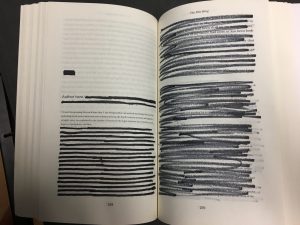
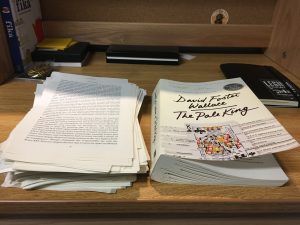
Plug in “The Pale King Quotes” – or anything followed by the word “quotes” for the matter – and you will almost always be greeted with a link to goodreads.com at the top of the page. For this project, I’ve taken every quote listed on Good Reads and a few from other websites (sifting through a lot of overlap) and have “highlighted” them in the text by blacking out every other word on the page. Pages without any quotes? Ripped out. Within the 549 pages of the novel, there are (not surprisingly) an incredibly small number of sentences left. Some of the pages are nearly covered in black, a single line or two buried within other pages not deemed worthy by Good Reads users. I chose to blackout certain elements of the paratext, underscoring his suicide while also getting rid of any plot description (there wasn’t much plot left after I roped out hundreds of pages). I chose to leave all of the opening pages that included blurbs, forewords, and legal information in order to highlight both the commercial nature of the project and the impact it had across the world of writing. I blacked out sections in two distinct ways. Some of the sections’ black lines run crisply in line with the sentences to evoke classified documents and parallel the tedium represented in the novel’s I.R.S. paperwork-content. Furthermore, blacking out sentences in such a way provides tedious work in itself, and as DFW says, “If you are immune to boredom, there is literally nothing you cannot accomplish” (440). Other sections are furiously scribbled out in swathes of black sharpie ink, speaking to the frustration of DFW’s decade-long editing process and his inability to finish the work, as well as provide an image symbolic of depression.

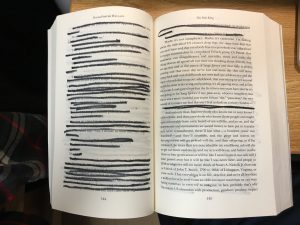
There were a few things that happened during the process of creating this artifact, this carcass of a book, that I did not expect going into it. First, I did not anticipate just how creepy some of the quotes would be in light of his death, and at points I had to step away from the project. Page 145 has only three lines blacked out, the rest consisting of a long anecdote all about our inevitable deaths and our attempt to distract ourselves from the fact that “we’re all less than a million breaths away from an oblivion more total than we can even bring ourselves to even try to imagine” (145). There were times that I so closely identified with a quote that my I had that beautiful moment of recognition of seeing my own feelings I didn’t know others felt written so eloquently put into words, and then throwing the book away from me after realizing its writer was unable to overcome these feelings. (Now is a good a place as any to note that while DFW wrote often about depression in a fictional sense, he never openly wrote about his own struggles).

Pgs 144-145, a rather bleak outlook on life. Or death, rather.

Secondly, and maybe it’s just my liberal arts English major speaking, but I couldn’t help but feel I was vandalizing the book. Of course DFW doesn’t care, he’s dead! But it felt a little bit like burning a photograph at a funeral. Sure, there are millions of copies out there and I even have the digital Kindle version, but the novel’s unfinished state and posthumous publication gave it a sense of delicacy that gave me unease more so than if I had taken a sharpie to any standard high school summer reading assignment (ripping pages out felt like straight blasphemy).

Thirdly, Good Reads may have a monopoly when it comes to Google-searching for quotes, but scrolling beyond the most “famous” quotes revealed a hidden intimacy between DFW and his readers. Good Read sorts the quotes based on likes from user profiles. The most-liked quote, “How odd can it be that I have all this inside me and to you it’s just words?” is ranked with 633 likes, but the numbers quickly drop. Scroll to the bottom of the page and you’re down to just 15 likes, and the last two pages of results are quotes uploaded and liked by a single user. Given DFW’s harping on loneliness and the sadness surrounding his death, there was something comforting in these singularly-liked quotes.

What I was ultimately left with was a haunted artifact that conflated the physical and digital legacies of an author published posthumously. In the digital age of clickbait and short attention spans, DFW’s The Pale King makes for both a good headline (suicidal author’s posthumous publication) and offers plenty of easily digestible quotes (because who has time to read that long of a book?). In an article for The New Yorker, D.T. Max argues that The Pale King “would show people a way to insulate themselves from the toxic freneticism of American life. It had to be emotionally engaged and morally sound, and to narrate boredom while obeying the physics of reading,” yet ironically most the of famous quotes on good reads are not the optimistic pieces of advice but rather the anecdotes that highlight the toxicity Max references. This haunted artifact serves as a conflation of literary and digital grief for the author, and while I was left with a skeleton of a quote book, I was also left with hundreds of torn, untouched pages that a man had poured his soul into.


Works Cited

Garber, Megan. “Enter the Grief Police.” The Atlantic. 20 Jan, 2016.

Hamilton, R. C. ““Constant Bliss in Every Atom”: Tedium and Transcendence in David Foster Wallace’s The Pale King.” Arizona Quarterly: A Journal of American Literature, Culture, and Theory, vol. 70 no. 4, 2014, pp. 167-190. Project MUSE, doi:10.1353/arq.2014.0029

Marsh, S. T. “Self-Sacrifice in the Autobiographical Narration of David Foster Wallace’s The Pale King.” Biography, vol. 39 no. 2, 2016, pp. 111-128. Project MUSE, doi:10.1353/bio.2016.0025

Sherlock, Alexandra. “Larger Than Life: Digital Resurrection and the Re-Enchantment of Society.” The Information Society, 29: 164-176, 2013.

SHRINEFILE

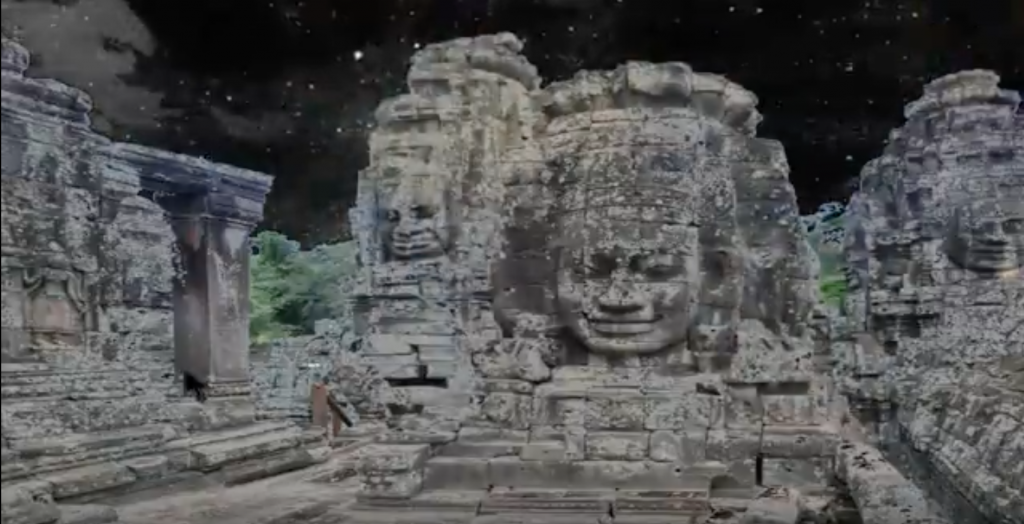
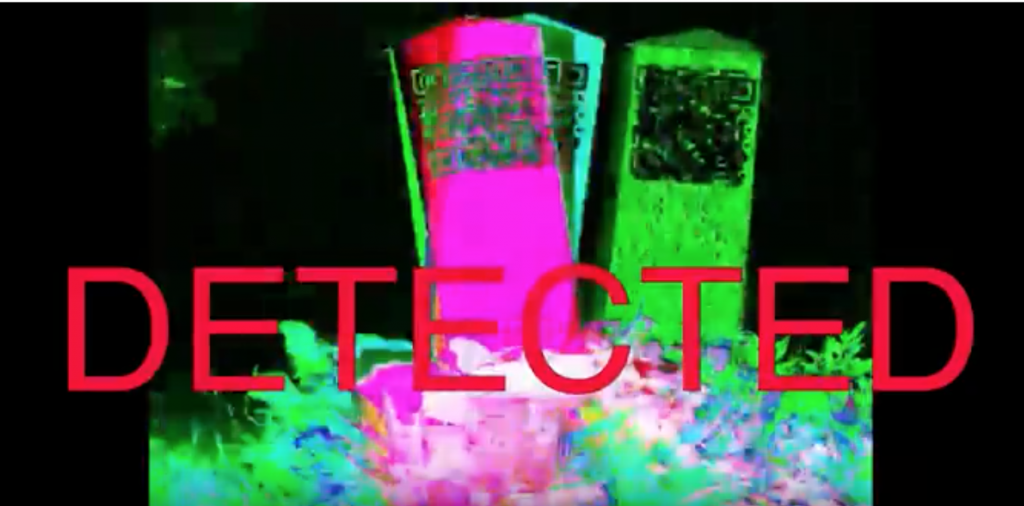
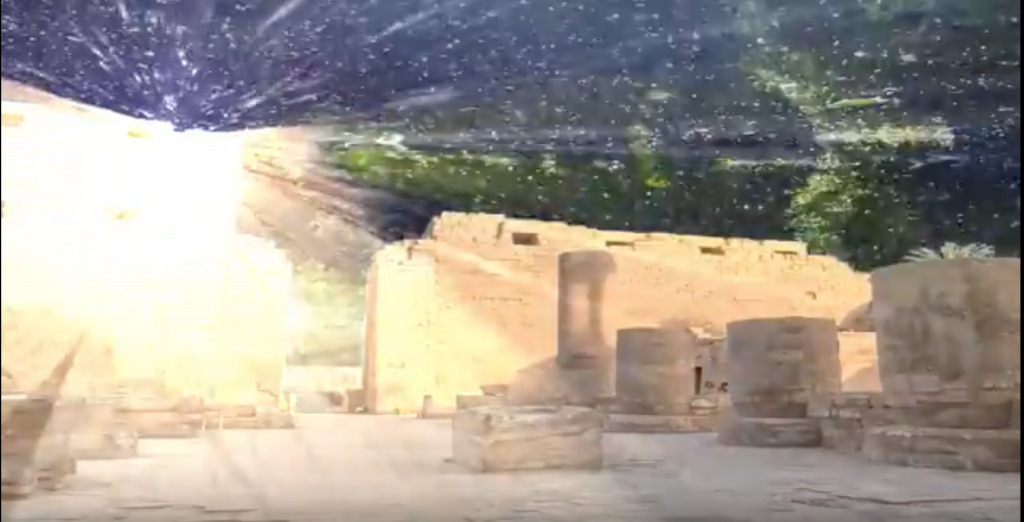
Shrine File is a corrupted collection of data that dictates passage of the self. When your physical form fails, where is the self enshrined?

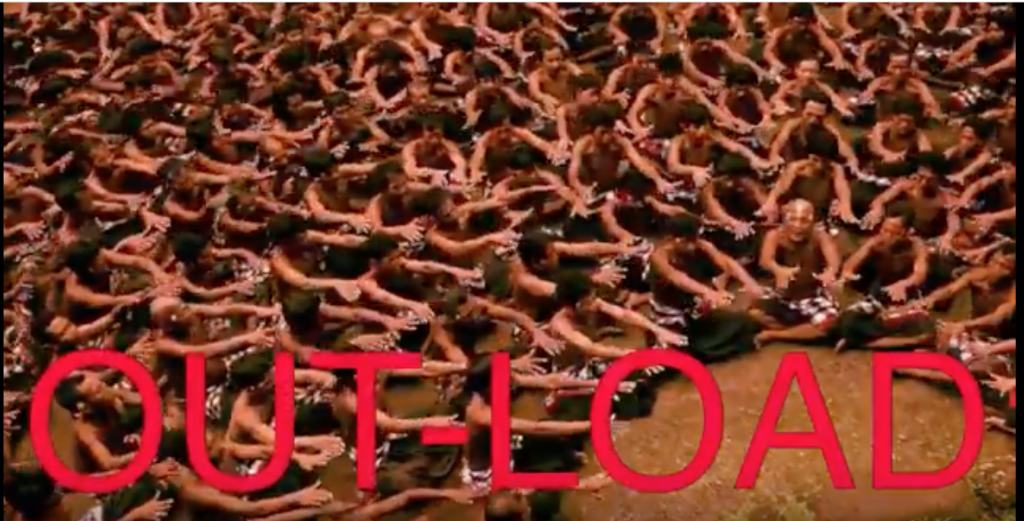
The file visually imagines the digital intersection of sacred and profane: 360 videos of ancient tombs and chapels are layered with everyday masses of human flesh alongside suggestions of an infinitely folding universe. Tombstones branded with digital codes melt into a physical human hive. The file exists between the moment of life and death. The moment the self can be digitally enshrined before dissipating. It exists between the individual self and the collective human cloud.

Emile Durkheim wrote that “religious and profane life cannot coexist in the same space…religious and profane life cannot coexist in the same time.” (The Elementary Forms of Religious Life). Man is not sacred: he creates this through ritual and belief. The ritual sets the sacred apart from everyday life. The afterlife wisps beyond our everyday grasp, but with the digital shrine we draw it closer. Our afterlife becomes a “tangible” set of digital artifacts — how do we populate them, position them, secure them, maintain them?

The digital shrine becomes the totem laden sarcophagus. We spend the lifetime preparing the Shrine File so that we can die immortal.

“A coded human existence is one without the singularity of the liberal subject. Instead of a multiplicity of singular wills or a cacophony of different spirits and personalities, subjects are transcribed into codes operating via variations of ones and zeroes.” (Anna Piepmeyer). Choose ENCODED: the file imagines such a human code. Individuality is transformed at the moment of physical death: from the gravestone emerges a collective force, a glitched soul enmasse. “We are now on the threshold of a new mutation.” (Slavoj Zizek).

Is the coded mutation/the hive/the noosphere simply a colossal collective of the everyday profane? Or does it elevate into the realm of gods? For Durkheim, sacred cannot exist unless differentiated against profane. The binary is necessary to construct separate sacredness. The glitched, grubby digital is a profane shell, unreliable and easily broken. The collective hive, jacking the code as a ground, remains sacred.

Choose TEMPLE: “Join us,” screams the chorus as they whirl through ancient sacred grounds. Can you know a sacred god or the devil through these secular, digital bits? Instead of a physical site, we embed the mementos of self here, in these holy reconstructions. Navigate your keystrokes to mourn, to memorialize, to pray.

Enshrine yourself. 


This project arose out of the integration of digital death into everyday life. For centuries, death was aesthetically understood as a “natural part of life,” where physical grave sites “connected [living communities] with the death and [gave] a sense of unity with nature even in the face of the chaos of death.” (Graham, 38).

The “back to nature” — through land or water burial or burning — death process was ritualistically separated from the fabric of everyday life.

Spending time in online space is an everyday part of life; so can something like Facebook Memorial walls ever cultivate a sense of sacredness amongst the profane streams of daily chatter? When presented with so much content, whether kids taking selfies at a funeral or heartfelt condolences posted online, can any of it be sacred if none of it can be separated from the profane?

Brubaker, Hayes, and Dourish examined Facebook as a site for death and mourning. They note how “features like the Newsfeed often continue to inject death into otherwise typical Facebook use.” (157). Interview subjects varied between feeling like Facebook was cold and impersonal and feeling like it was a productive way to “make readers feel a little more at ease about the death.” (156).

Graham et al. addressed a digital memorialization page called HeavenAddress in their exploration of physical and digital grave sites. Unlike Facebook, HeavenAddress is specifically made for remembering the dead. But it still reeks of normative social media qualities — people can  like and share the obituary pages, tap “love u/miss u/thank u” buttons, and leave digital candles and flowers. In the most contrived move, users can also vote on words to create a word cloud inspired by the deceased.

Brubaker et al. would characterize something like HeavenAddress as a feature of postmodern death: the boundary between public and private mourning is eroded, and many of the publicly expressed feelings are expressions of individualism, not collectivism. The social sharing and writing is oriented around digitally performing for the living.

Online bereavement provides immediate connection across physical boundaries and social groups, which Brubaker et al. call temporal, spatial, and social expansion. Because of this convenience of connection, death will never go offline. But how we choose to approach death online should be a matter of concern.

For Durkheim, the distinctions a society chooses to make between sacred and profane is the basis for truth and collective memory of the society. Sacred rituals produce “continuity over generations,” and in this way, “societies become conscious of themselves and their history.” (Coleman, 67).

If digital forms of death content are to provide a sacred space and collective memory, then they must become ritualized and separate from typical forms of online content. Already, online users can access 360 view videos of temples, chapels, and ancient religious ruins; I can imagine a world where accessing simulations of sacred sites become part of the digital death ritual.

On the flip side of imagining this sort of ritualized online visit to the TEMPLE is the process of being ENCODED; to ritualistically shed the cult of individuality and tap into the collective. Perhaps this is the point where instead of using the remnants of a digital self to remember and memorialize an individual (and to leverage mourning as a way to express the individual self), the content is passed into the collective memory. “Detected/in-loading/load” text on the ENCODED video generally suggests a sort of information gathering, akin to Facebook, but the uploading process is without individual imagery.

The two videos are halves of an imaginary file, corrupted by age and outdated technology. It is a capsule of futuristic digital death rituals discovered even further in the future. The audio tracks are suggestive of myth, mystery, and secrecy — one, a rock song that when played backwards allegedly contains Satantic messages (this, out of 80/90ies heydey of deliberate backmasking that became so dramatic that California passed a bill banning backmasking that “can manipulate our behavior without our knowledge or consent and turn us into disciples of the Antichrist”). The second is a non-verbal synthed chant layered and repeated to provoke a feeling of otherworldly, unbounded encounters.

For the digital world to become a more significant meaning container for death, we have to be deliberate about separating our death rituals from the everyday flow. Postmodernism dictates that these boundaries between sacred and profane will erode and collapse; but when that happens, our collective consciousness becomes flimsy and our collective memory myopic. Ritualizing death as sacred, even in online space, reminds us of our mortality while simultaneously creating a collective consciousness that transcends the individual.

Works Cited:

Brubaker, Jed R., Gillian R. Hayes, and Paul Dourish. “Beyond the Grave: Facebook as a Site for the Expansion of Death and Mourning.” The Information Society 29.3 (2013): 152-63. Web.

Coleman, Elizabeth Burns, and Kevin White. “Stretching the Sacred.” Negotiating the Sacred: Blasphemy and Sacrilege in a Multicultural Society. Canberra, A.C.T.: ANU E, 2006. 65-78. Print.

Graham, Connor, Michael Arnold, Tamara Kohn, and Martin Gibbs. “Gravesites and Websites: A Comparison of Memorialisation.” Visual Studies 30.1 (2015): 37-53. Taylor and Francis Online. Visual Studies. Web.


Haunted Media Project: The Cuckoo Clock

THE CREATIVE NARRATIVE BEHIND THE CRAIGSLIST AD, THE CUCKOO CLOCK, AND THE JOURNAL ENTRY

Backstory

Mort Lindheimer loves the author Ray Bradbury. So much so, in fact, that he carried Fahrenheit 451 in his backpack during college wherever he went, the pages tabbed down and thumbed soft. It was Bradbury’s short story, There Will Comes Soft Rains, that kept Mort up late at night, fascinated by the concept of a mechanical house that, in the absence of human touch, breaks down against the backdrop of a “radioactive glow” (Bradbury 1). Mort doesn’t trust technology and he gets goose bumps thinking about the charcoal silhouettes of a man, woman, and their two children inscribed onto the walls of Bradbury’s fictional house after an atomic bomb.

Part 1: The craigslist ad

For his fiftieth birthday Mort’s wife, Calliope, purchased a miniature model of the Bradbury house on craigslist: a collector’s cuckoo clock that promises to recite the poem played in the children’s nursery each time the hour strikes.

Part 2: The clock 

Mort is thrilled with Calliope’s gift and the two excitedly wait for the hour to strike to hear the poem recited. However, to their great disappointment, the clock makes no noise and what’s worse, the hands tick counter-clockwise.  Disheartened, the couple finally go to sleep, leaving the clock on the dresser.

When they turn out the light, Mort hears a small buzzing noise, almost imperceptible and yet impossible to ignore. Exasperated, he realizes it’s issuing from the clock. He inches closer, pressing his ear against the clock to amplify the soft noise. What he hears is not a poem at all but rather a monotone voice repeating a short phrase with no inflection. It takes him multiple tries to decipher the fragmented words:

Intruder next to you

Do you see me here

Danger obscured

A chill runs through him and he looks instinctively around the room. Intruder? Thoroughly unsettled, Mort feels a sudden urge to get rid of the clock, sensing some inexplicable presence in the room. He grabs the clock and dumps it in the trash outside.

Part 3: Mort attempts to reconcile the events of the night by writing in his journal

In the morning, Calliope is outraged by Mort’s rash decision. He himself is unable to explain the strange happenings of the night, as reflected in his journal entry.

Mort attempts to make sense of the night’s events in his journal entry

Unbeknownst to the couple, the clock is haunted by the spirit of a real family of four from the Cold War era who met a similar fate to that of the fictional family outlined in charcoal on the walls of the house. When the artist created the clock he accidentally set the clock backwards, literally going back in time and summoning the dead of the historical past. The family became trapped within this miniature model, warning of danger and crying for help. This faulty clock is a home for the undead, a shrine for restless spirits. The “intruder” referenced in its warning isn’t a physical trespasser but rather the ubiquity of technology as an unrealized threat—danger obscured.

ARTIST’S EXPLANATION

The cuckoo clock is comprised of three main elements:

1.         The charcoal images of the family on the wall that symbolize the danger of technology,

2.         the light sensored-voice that speaks of imminent danger and symbolizes the intersection between advanced sound technology and death,

3.         and the counter-clockwise clock, a nod to the postmodern blurring of boundaries between death and life and the construct of time.

When I first began this project I was inspired by Ray Bradbury’s concept of a mechanical house capable of self-regulating and functioning (almost) entirely independently. However, despite its human-like self-regulatory qualities, the house is ultimately unable to sustain itself without human presence. I tried to reflect this hyper-digitized space in my clock design. You’ll notice that the circuit playground is featured prominently. I chose this placement because I wanted to situate technology as central to the house’s identity. The decorations are also technologically produced; the bird is 3D printed, the engraved banner and wood birds are laser-cut, and even the grass is a synthetic silver color rather than green. Additionally, the warning message emitted by the circuit playground when the lights dim or go out is coded as a repetitive loop to highlight the limitation of the technology (it can only repeat, not respond or explain).

1. The charcoal images of the family on the wall symbolize the threat and danger of technology.

Bradbury’s reference to an atomic bomb is an important reminder that the ubiquitous presence of technology within society is dangerous as much as it is convenient. The black spots left by the family on the wall of the house are historically grounded. As Alan Taylor points out in “Hiroshima: Before and After the Atomic Bombing,” victims of the atomic bombings of Hiroshima left shadow-like imprints on buildings and roads. History is never far away in these discussions, and as Isabel Pinedo points out in her article “Recreational Terror: Postmodern Elements of the Contemporary Horror Film,” postmodernism itself can be understood as “the cumulative outcome of repetitive historical stresses, including the Holocaust, the bombing of Hiroshima, the Cold War, the war in Vietnam…” (Pinedo 18). References to Hiroshima can thus be seen as part of a larger cultural narrative that continues to haunt contemporary society through its unresolved memory in an increasingly technologically-driven world. Maria del Pilar Blanco and Esther Peeren note in their book Popular ghosts: the haunted spaces of everyday culture, “…ghosts therefore often operate as erratic monuments or hieroglyphs that signify a disturbing incident that happened in the past, a secret that has to be deciphered in order to understand the repercussions of the past” (Pilar 187).

With this in mind, I imagined the haunting in my project on multiple levels, both literally through the mechanized voice, and figuratively in the shadows that remind us of a larger technological death. When I was designing the audio element of the clock, I chose the circuit playground as my sound source, rather than a pre-recorded audio chip. The reason for this is because the circuit playground muffles sound and limits the contents of its message to Arduino’s basic speech dictionaries. The barely audible volume and incomplete message must thus be decrypted as cultural “hieroglyphs” —my attempt at exploring this concept of deciphering the past.

2. The light sensored-voice that speaks of imminent danger and symbolizes the intersection between advanced sound technology and death.

When designing and coding the sound component of the project, I was inspired by class readings regarding sound preservation and its connection to death. In his book The Audible Past: Cultural Origins of Sound Reproduction, Jonathan Sterne uses the example of the revolutionary introduction of the phonograph during the 19th century to explore the symbiotic relationship between popular conceptions of death and the power of the disembodied voice. Sterne describes popular beliefs of the time which justified a potential connection to the spirit world using the argument that “…media are forever setting free little parts of the human body, mind, and soul. If the voices of the dead were, indeed, free agents, perhaps they could then be enticed back into the world of the living” (Sterne 289). There’s a certain logic here; the fragmented, pixelated nature of technology offers the possibility of preserving human life in an equally fragmented (yet nonetheless present) continued existence. Given this logic, it’s not so hard to believe in ghosts: voices of the dead, fragmented as isolated parts, get trapped in human objects (such as a cuckoo clock). The clock serves as a metaphorical coffin for these spirits, “embalming” their voices (Sterne 293).

Blanco and Peeren speak of a similar relationship between sound and death, noting, “The utter non-referentiality of this medial space endorses a transgression of the dichotomy of ghostly and human realms, so that the dialectical questions evoked…(Is it ghostly? Is it real?) are swept off the table by the annihilating gesture of mediation” (Pilar 289). In other words, Mort can no longer distinguish what is real and what is merely a creation of his mind because he is a subjective mediator. His ears filter and interpret the sound of the clock in a meaning-making process subject to embellishment, mishearing, and forgetfulness. In his journal entry, Mort struggles to trust himself as a mediator and interpreter of what he heard. The transgressive nature of the auditory thus lies in the fact that it blurs the boundaries between the real and the unreal, placing the onus of this distinction on the human listener (Pilar 291).

This dissolving and blurring of boundaries through the hybridity of previously distinct categories and identities is characteristic of postmodernism and “…the erosion of universal categories, the collapse of faith in the inevitability of progress, and the breakdown of moral clarities” (Pinedo 17). Indeterminacy, the result of this erosion, leads to the conviction that we cannot know anything with certainty (from class discussion). This is reflected in Mort’s spiral of confusion and self-doubt in his journal entry. Equally important to the postmodern space is the triumph of intuition over rationality, and even the failure of rationality all together. Mort is unable to reason through this instinct to destroy the clock and he struggles to explain his actions to his wife for which there is no rational explanation.

3. The counter-clockwise clock is a nod to the postmodern blurring of boundaries between death and life and the construct of time.

Notice how the clock hands move counter-clockwise, the clock face is missing certain numbers, and the remaining numbers are off-center and miss-aligned. As we discussed in class, in postmodernism we witness a sort of “decanonization,” which is to say that those things that used to the be at the center of culture and society such as universal truth or linear time are questioned through a general skepticism of authority. In the case of the cuckoo clock, “decanonization” occurs through the destabilization of time as a construct. Traditional understandings of both death and life are informed by the perception of time as a finite, linear construct with a definite start and end. And yet, the ghosts that haunt the clock are summoned through the non-linear manipulation of time when the clock inverses its movement.

Elana Gomel explores the construct of time in great detail, emphasizing early on in her book Postmodern Science Fiction and Temporal Imagination that “…time is an illusion. The past, the present and the future coexist. This is not in flux, a flow, a rushing river, as it is so often envisioned in other texts…” (Gomel x). Linearity is an imagined ideal constructed in order to appeal to human rational and social organizational tendencies. But while postmodernism fractures and fragments “…both public and private time”, this does not mean that time ceases to exist (Gomel xi). Rather, as Gomel argues, “Time out of joint is still time, albeit crippled” (Gomel 4). In this postmodern reality, we must redefine time within new parameters of imagining; the counter-clockwise clock asks us to consider time outside traditional boundaries.

4. Additional thoughts

It’s important to note, too, the element of “participatory culture” at play in the design of the cuckoo clock. This term, discussed during class, refers to the fact that in modern society, anybody can make a fan video, a supercut, memes, fan fiction—etc. The cuckoo clock is the perfect example of this, itself a product of a fan base that seeks to replicate and reconstruct the reality of Bradbury’s narrative. This collector’s item must be situated within a larger concept of consumerist commercial culture. Historical trauma intersects with pop culture in an unsettling marriage between the real and the constructed.

5. Concluding remarks

Examining haunting from a technical perspective during production design allowed me to explore digital haunting on a hands-on level. It’s cool how a simple coding formula and a few basic words strung together can transform a product of logic into an object of the uncanny. Technology rides this line between the rational and the inexplicable in a way that makes its relationship to death all the more interesting.

Word Count: 2000

Special thanks to the Studio M Staff, particularly Brian Little and Tien Le, for their patience and support.  

References

Bradbury, Ray. “There Will Come Soft Rains by Bradbury.” Google Docs. N.p., n.d. Web. 06 Apr. 2017. <docs.google.com/file/d/0BzbtlcAsIeTnTlNmSnhOV010bHM/edit?pli=1&gt;.

Gomel, Elana. Postmodern Science Fiction and Temporal Imagination. New York: Continuum, 2010. Web. Continuum literary studies; Continuum literary studies.

Pilar Blanco, María del., and Esther. Peeren. Popular Ghosts : The Haunted Spaces of Everyday Culture. New York: Continuum, 2010. Web.

Pinedo, Isabel. “Recreational Terror: Postmodern Elements of the Contemporary Horror Film.” Journal of Film and Video 48.1/2 (1996): 17-31. Print.

Sterne, Jonathan. The Audible Past : Cultural Origins of Sound Reproduction. Durham: Duke University Press, 2003. Web. e-Duke books scholarly collection.

Taylor, Alan. “Hiroshima: Before and After the Atomic Bombing.” The Atlantic. Atlantic Media Company, 12 May 2016. Web. 06 Apr. 2017.


An Experiment in Digital Grief

An Experiment in Digital Grief: the Death of Hubert Cunningham

Matt St. Lawrence

Davidson College Spring 2017

ABSTRACT

The advent of digital technology has redefined the ways in which mourning and grief is expressed. As the digital personality of Facebook users becomes more fleshed out, the question of grieving artificial bodies becomes increasingly relevant. What makes an automated Facebook “bot” more real than an online friend? As an experiment to explore digital grief, a Facebook automated “bot” with a small but devoted fan base was terminated. Its page was memorialized, and fans of its content were given permission to leave their respects. A variety of active commenters left memories and jokes, which exemplified the genuine connection Facebook users could have with an artificial being. 


INTRODUCTION

I’d like to start with a brief history of Hubert Cunningham. About three years ago I was involved in a local Dungeons and Dragons group. For one of the sessions I created a character named, “Hubert Cunningham”. The character became so beloved that even after the end of the game, the players wanted to keep hearing about what Hubert was up to. I decided to help everyone stay in touch with Hubert by making him a Facebook account. The first posts chronicled his adventures post-game, but eventually I ran out of creative steam and decided to make him a “bot”. His script was to draw from a dictionary of nouns at random, and post to Facebook once a week using the model, “Hubert knows a lot about (variable noun), ask Hubert anything!” From there I would just answer the questions posed by friends. The stiffness of the algorithmic speech gave rise to a unique sense of humor that was appealing to those who did not know the “Hubert” of the table-top RPG. By way of this experiment in digital death I sought to understand how people grieve for an entirely digital body, when compared to the digital footprint of a physical body.


EXPERIMENTAL PROCEDURES

Hubert’s page of four years was requested to be memorialized. While Facebook was processing the request, separate fan “Page” on Facebook was established named “Remembering Hubert Cunningham” and an invitation to ‘like’ the page went out to all of Hubert’s 79 active friends. The profile picture of the page was a picture of Hubert with crudely edited flowers beside him and text which read, “Remembering Hubert Cunningham”. A post was made that read:

“Friends, it is with a heavy heart that I inform you that our friend Hubert Cunningham passed away late last night .This page is a place for us to heal and honor his memory. Feel free to keep the conversation non-civil, we all know Hubert did.”

After that, the page was left to circulate for 7 days. This was a blind study, as nobody outside of the classroom knew the intent behind Hubert’s passing. Hubert’s profile was eventually memorialized, but experienced no traffic.


RESULTS AND DISCUSSION

From the experiment I sought to gain a greater understand of how individuals respond to the death of an artificial body. The reaction on Facebook over Hubert’s death is shocking, to say the least. Over the course of one week, this page was visited by 21 different accounts, gained 15 followers, and had 6 different accounts post on it. The most insightful part of this is the demography of the visitors. Asheville, Charlotte, Cary, Greenville, almost every large city in NC trafficked Hubert’s account. Much of the traffic was from Davidson students, but traffic from students at other UNC-system schools also made up a significant amount of visits. Several of the people who ‘liked’ “Remembering Hubert Cunningham” were people who I do not personally know, illustrating that Hubert in a certain sense had a social life of his own. Mourners paid homage to Hubert’s memory is by mimicking the flowery, semi-disjointed language that resulted from the bot’s imperfect code. For instance, one commenter references the bot’s tendency to flip certain phrases (‘Sea captain’ to ‘Captain sea’)


“The most Hubert sea captain to ever captain the sea. What a remarkable and most nautical life he lived.”


While quirks like this would often give away an account’s identity as a bot, many of Hubert’s followers found these glitches endearing and funny, making him seem far more human than if his language maintained any sort of stiffness. These comments show an innate desire of Hubert’s fans to leave their respects, just as they would want to if he was physical. However, instead of the sadness we associate with mourning, the comments left on his page hold a humorous tone. This speaks to the authenticity of the bot, and shows that although Hubert’s connection with his fans may have been one-dimensional, it was genuine. For those in mourning for Hubert, it seems fitting to connect with him one last time over humor, as humor was the bot’s primary function. For example, a fan-favorite of Hubert’s antics was the construction of intentionally low quality Photoshop edits of images. One commenter paid homage to this with a crude edit in memory of Hubert.

Overall, I found my bot’s memorial page to be effective at probing the kind of reaction, if any reaction at all, to the death of a program. The behaviors displayed by commenters do not stray too far from traditional grief. According to Jed Brubaker’s article “Beyond the Grave: Facebook as a Site for the Expansion of Death and Mourning.” Brubaker outlines four “Identity preservation strategies” which are used by those who are in mourning both in the physical and digital realm. The strategies are (1) Reinterpreting thoughts, memories, or objects. (2) Idealizing the deceased by redefining negative qualities. (3) Continued pre-death bonding activities. (4) Sanctifying meaningful symbols. Of these strategies, the most prominent on the bot’s memorial page is the reinterpretation of thoughts and memories. In many cases, commenters not only reinterpreted but also fabricated positive memories with the bot. One commenter posted:

 …I never saw him in person, no, but this was all apparent from his many Facebook posts and the long conversations we held on messenger into the night. 

The bot was only to post publicly, and was never functionalized to privately message anyone. Nonetheless, this commenter interpreted Hubert’s public algorithmic speech as a private conversation on messenger. This is not evidence that its fans are actually in mourning about the shutting down of a bot, but it is evidence that when faced with death, individuals tend to default to practices outlined by Brubaker that we are socialized to believe is the correct response to death.

A major factor disconnecting the death of a bot from the death of a human is the one-dimensional nature of the bot. Everything the bot was programmed to do was done with humor in mind. Its job was to make people laugh, and its fans appreciated that. Humor was the only possible emotional commodity that the bot could provide, and because of this it is understandable that its fans would treat the termination of the bot as just the last in a four-year series of jokes. However, the activity on the page shows that fans still desire to leave their sentiments, which gives rise to a sort of mourning without deep sadness. Let’s call this ‘Positive Grief’.

This positive grief allows the bot’s fans to toast his departure with humor, ironic eulogies, and fond memories of the jokes which sprung from the sentence structures the bot was programmed to output. Although far-removed from actual death, this experiment provided a public space where participants could explore interacting with the concept of death within the new and increasingly prominent digital setting. Megan Garber’s The Atlantic article “Enter the Grief Police” described how many people online try to reconcile how they portray their feelings online with how they have grieved traditionally. Garber cites the example of David Bowie’s passing, and how a “Grief Police”, made up of individuals who found some online expressions of grief offensive, pushed back against the commenting mourners. However, with no prototypical method of grieving for artificial bodies set in place, commenters on the bot’s page could post what they like without having to adhere to any pretense.

Given all of the humor surrounding the death of my Facebook-bot, is it fair to say that its death ultimately has anything to do with real death whatsoever? In Kendall Walton’s article “How Remote are Fictional Worlds from Real Worlds?” Walton explains that grieving for fictional characters springs from being able to understand a fictional character in their totality, as they are made up of what it written about them. The simplicity of fictional characters makes them sympathetic. Kendall also touches on the power of theatre to bring these sympathetic characters into the physical world, and how the blurring of fictional and physical worlds make death in plays so powerful. Programming and automation can similarly blend fiction and reality, as evidenced by Hubert making the leap from existing inside a role-playing game to having Facebook friends. A Facebook user that attends Davidson College but was unaware of Hubert’s identity privately messaged the page set up for Hubert, giving their condolences and asking if he had gone to Davidson.

The Huffington Post article, “Why We Grieve Fictional Characters” sums up the connection we have to fictional characters by describing them as “escapes from some of the stresses of life”. Commenters were most active under my bot’s statuses during finals. Fans clearly enjoyed being able to take a five minute break from studying and interact with a wacky, cartoonish pirate. Losing that outlet is why I imagine there is a sadness surrounding the death of Hubert Cunningham.


Remembering Hubert Cunningham: https://www.facebook.com/Remembering-Hubert-Cunningham-1761093254220481/?fref=ts


REFERENCES

Holmes, Lindsay. “Why We Grieve Fictional Characters.” The Huffington Post. TheHuffingtonPost.com, 29 Apr. 2015. Web. 05 Apr. 2017.

Walton, Kendall L. “How Remote Are Fictional Worlds from the Real World?” The Journal of Aesthetics and Art Criticism 37.1 (1978): 11. Web.

Garber, Megan. “Enter the Grief Police.” The Atlantic. Atlantic Media Company, 20 Jan. 2016. Web. 05 Apr. 2017.

Brubaker, Jed R., Gillian R. Hayes, and Paul Dourish. “Beyond the Grave: Facebook as a Site for the Expansion of Death and Mourning.” The Information Society 29.3 (2013): 152-63. Web.