From Phonography to Black Boxes in Jonathan Sterne’s “The Audible Past”

Just a quick mention on embalming: check out Jessica Mitford’s short story, Embalming Mr. Jones.  I read it for an english class and still remember each excruciating detail…

It’s amazing the amount of detail we go to in order to make the dead look “decent,” even if that means that nothing inside (or out) is real.

Moving along!
The Mysterious Black Box

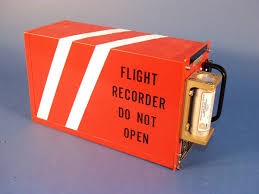
Sterne’s article focuses on the importance of phonography and how it influences everyday life. One example of this in modern times is the black box used in airplanes. The purpose of the black box is to record the conversation in the pit of an airplane, and they often used by authorities to get to the details of a situation whenever a disaster occurs (when a plane crashes, is hijacked, etc).

As you probably already noticed, the black box is not actually black, it’s orange. In fact, it’s not even a box! There are some theories as to why it got it’s name as the “black box,” but none have ever been proved. Some of these theories include:

  1. the original design was a black box
  2. a journalist coined the term and made it become known as a ‘black box” in the media
  3. the only semblance of the piece remaining after a crash is a charred, black box with the recordings inside.

Additionally, it’s not even a box! It’s actually comprised of two separate parts. Check out this post for more information.

Malcolm Gladwell’s Outliers: the Story of Success provides transcripts of actual conversations that took place in the cockpit moments before a disaster. The seventh chapter of Gladwell’s work, “The Ethnic Theory of Plane Crashes,” uses these transcripts to reveal the larger cultural factors at play.

For example, the crew on Korean Air flight 801 were so restricted to the Korean culture of being respectful to a superior (in this case, the captain) that it cost them their lives. This blog effectively summarises the chapter and provides some decent counterpoints to Gladwell’s theory.

These conversations are useful, because they help airplanes companies figure out how to train their crews effectively to prevent a given disaster.

Click here for a link to a site titled, “Last Words,” which has the recordings of black boxes from  infamous plane crashes.
Death of the Phone Call?

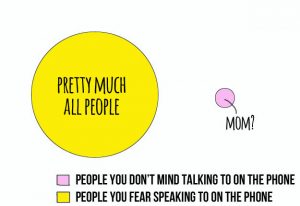
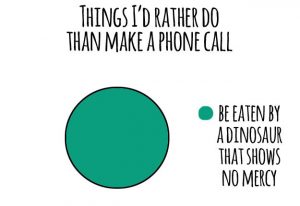
Although modern telephone calls differ from the type of audio reproduction we read about in Jonathan Sterne’s “A Resonant Tomb,” I couldn’t help but think about how the way we communicate in 2017 has evolved throughout the past hundred years or so and has come a long way since the invention of the telegraph. Some people believe that we have reached an age of the death of the phone call – at least, for millennials and younger generations. We tend to prefer text over voicemail to get a message across to someone, and often dread making phone calls. The following memes demonstrate this sentiment:


img.buzzfeed.com/buzzfeed-static/static/2016-01/13/16/enhanced/webdr12/enhanced-22724-1452722192-19.jpg 
img.buzzfeed.com/buzzfeed-static/static/2016-01/13/14/enhanced/webdr05/enhanced-17674-1452713785-7.jpg

Nowadays, phone calls are often thought of as an interruption or inconvenience. Moreover, they seem more intimate than a text message conversation, perhaps in large part because of the audio of a personal human voice. With the increase of phone apps and services, we can often even avoid making phone calls to set up appointments. Phone calls have typically become reserved for very close friends, family members, and romantic partners. It’s interesting to note that Skype and FaceTime, which more closely resemble face-to-face interaction, still seem to remain popular. So perhaps it’s not simply the intimacy, but something about the voice itself, or the voice only, that makes us uncomfortable? It’s also interesting to note that with the exception of voicemail, text communication is preserved in the sense that Sterne discusses, while audio communication is fleeting. In fact, while a voicemail or voice recording can only last for so many minutes or hours, a text thread can capture days, weeks, months, even years worth of back-and-forth conversation. It’s quite common for people to delete their text threads with their ex-significant others after they break up. Some people find rereading old text messages to be painful because they are reliving the experience in some ways. Can people be preserved through their texts messages after their death, despite text having no physical human characteristics such as image or voice?

Work Cited

Sterne, Jonathan. “A Resonant Tomb.” The Audible Past: Cultural Origins of Sound Reproduction. Durham: Duke University Press, 2003. Pages 287- 311. Print.

How Far Will We Go to Exist Beyond Death?

youtu.be/gx9eDoS76LM

Audrey Hepburn: Galaxy Chocolate Commercial, Adpressive, youtu.be/gx9eDoS76LM

Hearing the voices and seeing the images of the dead is so commonplace today that I struggled to understand how it was viewed in the Victorian times.  Listening to The Beatles or Buddy Holly or watching Robin Williams films isn’t the least bit eerie to modern media consumers.  In trying to relate to uncanny experience of hearing a dead person’s voice when recording was first introduced, I thought of two recent representations of dead celebrities.  The Audrey Hepburn chocolate ad and the Tupac hologram both created quite a stir for their representations of the dead.  Tupac appeared to perform live years after his death, and a young Audrey Hepburn once more graced our screens in footage that wasn’t recorded during her lifetime.

We don’t think twice about listening to the voices of long-dead musicians, but the technology that created Ash in “Be Right Back” strikes us as definitively wrong.  Tupac and Audrey exist somewhere in between.  The question I’d like to pose is this: Will we ever draw the line at reanimating the dead, or are we engaged in an unstoppable progression towards Ash-like technology?

I obviously can’t predict the future, but I think it’s likely that recreating dead celebrities on screen will only become more commonplace.  I don’t think Ash tech is that far off either.  Enormous technological advances that may seem to defy nature (such as hearing the voice of someone dead), eventually become normalized.  I think, therefore, that while Ash tech may initially seem startling, it could very likely become integrated into our lives the way recording technology has.  These two representations make it clear that existing beyond the grave is becoming more of a possibility each day.

Tupac Hologram Snoop Dogg and Dr. Dre Perform Coachella Live 2012, westfesttv, youtu.be/TGbrFmPBV0Y

The Social Impact of Audio Preservation: Then vs. Now

The fervent desire to preserve the voice presented in this article among those in the sound reproduction community remained strong. The article addresses sound recording as “an extension of the art of oratory” and this remains incredibly true today. Much like how the article describes the emotional desire to preserve messages in vocal form, the desire of today is to capture a phonetic alphabet of one’s voice, one that could modulate itself in order to speak words in the matter with which the voices original owner spoke them. What the article presents as “preservation” is preservation of a speech, a sentence, a song. It is not preservation of the voice, or “chemical embalming” of a voice, that gives it way too much credit. The pronunciation of one sentence is a fraction of what constitutes a voice. Much like how the article gives the example of Crampton, a man who recorded his life story onto a phonograph before having his tongue removed for medical reasons, preserved his voice with the intention of reusing it, we have the chance to do the same thing with digital technology, but on a much more custom scale. Imagine being able to record the voice of a man going in for throat surgery, compiling a phonetic alphabet based around his speech patterns, and handing his voice back to him after the surgery. Imagine having a relative’s voice read an audiobook to you. That is preservation of the voice. The article seems to speak on this issue as if its cultural impact is over, but in fact what the article presents are just the first cultural hurtles the practice of archiving sound had to clear in order to take off.

Here, for fun, are the noise profiles of the phonetic alphabet. This is the cutting edge of sound preservation. Picture from:s-media-cache-ak0.pinimg.com/736x/d1/fa/c8/d1fac8222ca88592bce8aa4e62df4a59.jpg%5B/caption%5D

Bowie, Lazarus, and Eulogies from the Dead

While reading, “A Resonant Tomb,” from The Audible Past, I was particularly intrigued by the stories of ministers recording their own eulogies. I imagine that Sterne would make the argument that this sort of thing would have little impact today, as he explains that neither the content nor the person being eulogized was what was mesmerizing about these particular sermons, but rather it was the spectacle of the dead preaching to the living (304). At first I thought that today this wouldn’t really be much of a spectacle at all. The dead speak to us constantly, and we hear them without second thought. To be honest, before reading this article, I had never even considered the fact that it’s odd that we listen to long dead musicians without really contemplating the fact that we’ve separated their voices from a body that no longer exists. Then I realized, that to some extent, this was because they are celebrities, and we don’t have a real connection to them. There is something a little eerie about hearing the voices of my grandparents who have passed away on old home videos or on a saved voicemail, but nothing of the sort when I listen to the music of those who have died. It is almost as though once a voice becomes a song in the form of a product to be sold, it is no longer tied to the singer themself. In this way, the fears expressed by early celebrities in “A Resonant Tomb,” regarding if they should allow their voices to be recorded and heard for future generations (Sterne 297) don’t seem unfounded.

Yet, when reading about the minister’s prerecorded eulogies, I also couldn’t help but draw a connection between them and the death of David Bowie earlier this year. Bowie had been diagnosed with cancer a little less than two years before his death, and many fans consider his last album, which was released only a few days prior to his death, to have been a sort of self-recorded eulogy. He addresses death pretty specifically, opening a song from the album, “Lazarus,” with “Look up here, I’m in heaven.” An ill or dying artist creating a work contemplating his or her own demise is certainly not unique to Bowie, to the music industry, or even to this year. As my dad has always been a Leonard Cohen fan, I learned that his final album You Want It Darker, released just a few weeks before his death this year, was of a similar vein: a contemplation on life and the end of life. Interestingly enough, these albums and others like them, are some of the few I listen to in which I find I am not capable of separating the voice from the singer. In the article, “The Year of the Goodbye Album,” Lindsay Zoladz writes that Bowie’s album wasn’t just a contemplation of his life, but, “his way of art-directing his own death.” Celebrities and famous singers may lose control of their voices and works after they die, but Bowie, Cohen, and others like them have taken advantage of an opportunity many of us won’t have: they created the story of their own death and shared it, and did so in a way that will likely last far longer than that of the ministers mentioned in a, “A Resonant Tomb.”

“Lazarus,” a single from David Bowie’s last album.

Works Cited

Bowie, David. “Lazarus.” Columbia. 17 Dec. 2017.

Sterne, Jonathan. The Audible Past: Cultural Origins of Sound Reproduction. “The Resonant Tomb.” United States of America: Duke University Press, 2003. Pages 287- 311. Print.

Zoladz, Lindsay. “The Year of the Goodbye Album.” The Ringer. 8 Dec. 2016. theringer.com/2016-goodbye-albums-david-bowie-leonard-cohen-phife-dawg-ecd56da12634#.lztntrbrs

Embalming is Everywhere: Redefining the Nature of Preservation

In the portion of assigned reading from Jonathan Sterne’s The Audible Past, I was particularly fascinated by his analysis of the process of embalming and its influence on sound recording. Just as embalming alters the corpse to prevent physical decay that would render the body unpresentable for viewing, the process of sound recording protects present and future auditors from experiencing the decay of the voice. The phonograph altered recorded voices in ways that transformed the internal consciousness behind the speaker’s words to perform external and cultural functions. Similarly, various alterations and the removal of internal organs from the dead body during the embalming process was performed for solely external purposes. In his book Hearing History, Mark Michael Smith writes, “While competing methods were concerned with interiority, with preserving the body in its original form, chemical embalming was concerned only with exteriority, with the appearance of the body and its potential to perform its social function” (Smith 301). He also emphasizes the idea that the recording studio is analogous to the embalming process, since the voice is transformed in ways that beautify it, just as the body of a corpse is enhanced to make it appealing to the eye.

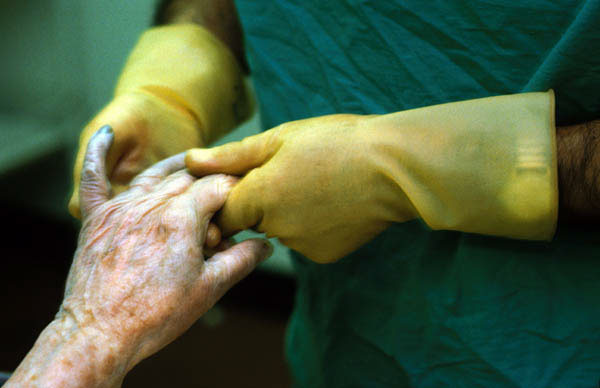
Part of the embalming process. Find source here.

The connections between sound recording and the embalming process pose specific threats to the culture society that has established in terms of the nature of preservation. This led me to think about my favorite song, “Here, There and Everywhere” by the Beatles, and my favorite book, “Jane Eyre” by Charlotte Brontë. John Lennon of the Beatles certainly did not live long enough to witness the longevity of this beautiful love song and Charlotte Brontë was not able to see how, through the power of her pen, she revolutionized contemporary literature. Yet both of these magnificent works live on in their author’s absence. As a matter of fact, many of the most famous works of music and literature today gained their high level of regard after the death of the artist or writer. After thinking about this in more detail, I began to question: how much of the embalming process has infiltrated into the media we encounter today? I believe that the answer to this question is A LOT.

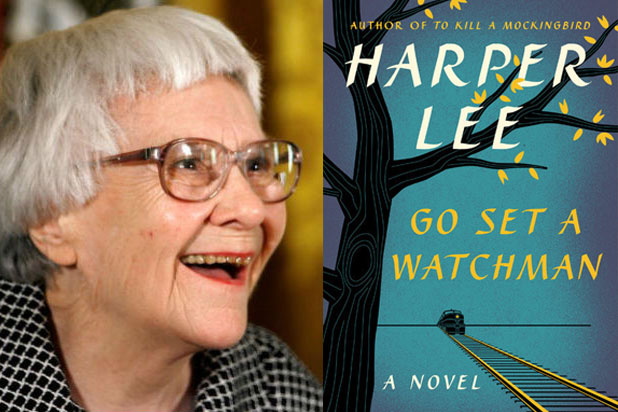
To illustrate this point, I’d like to examine the controversy associated with the publication of Harper Lee’s Go Set a Watchman, which occurred during the summer of 2015. After writing and publishing her beloved novel, To Kill a Mockingbird, in 1960, Lee insisted that she would never again publish another book. After Lee’s sister passed away, her new legal guardian, Tonja Carter, claimed she “discovered” a manuscript to what later became the published book, Go Set a Watchman, and brought it to the attention of various publishing companies. It was very clear that Lee never intended to publish this novel and had marginal input in the book that would bear her name. In one of her last public interviews that was conducted in 1964, Lee said, “I think the thing that I most deplore about American writing … is a lack of craftsmanship. It comes right down to this — the lack of absolute love for language, the lack of sitting down and working a good idea into a gem of an idea.” Instead of taking these words to heart, the publishing company completely ignored the legacy Lee wished to leave on the public and went ahead and published the novel. If Lee really wanted this piece of literature to have been published she would have advocated for it during her earlier years. Although the book sold rapidly once it was released, I decided to not purchase it as a protest to preserve my adoration and respect for Harper Lee’s voice, which had been so blatantly disregarded.

Harper Lee and her book, Go Set a Watchman. Find source here.

This issue relates to the process of embalming because Lee’s interior motives were warped and transformed into the publication of something that she never intended for the external world to see. The book became far less about what it contained on the inside and far more about its external implications regarding the prestige of being Lee’s second book. In this case, in an effort to protect certain pieces of Lee’s work from “decaying,” the publishing companies took advantage of her and published something that should have never been released. This connects to what Jonathan Sterne mentioned about “a disregard for the preservation of the voice in its original form” and how we alter the voice in forms that “perform a social function” (Sterne 297). If we step back and take a look at the media we are presented with, it is important to question if the content aligns with the initial intention behind it or if it was obstructed for a social or cultural purpose. As a result, I foresee changes in how we define “preservation,” especially within our rapidly evolving digital climate.

Works Cited:

Smith, Mark Michael. Hearing History: A Reader. United States of America: University of Georgia Press, 2004. Print.

Sterne, Jonathan. The Audible Past: Cultural Origins of Sound Reproduction. “The Resonant Tomb.” United States of America: Duke University Press, 2003. Pages 287- 311. Print.

Zombies, more than just horror?

Image result for zombies as dwarfs www.pinterest.com/pin/446982331737365000/%5B/caption%5D

I’ve always wondered what the appeal is in the zombie apocalypse. I think beyond the horror, action, thriller, and drama, we watch it as a kind of way to vicariously experience anarchy. I believe that somewhere within, every person enjoys the idea of breaking rules, no matter how small or meaningless. Think about it, going to Chipotle for the thousandth time, you must have been tempted to pour root beer in a water cup – maybe you did (you criminal). But regardless, in the rigid world of protocol we live in today, I feel that everyone experiences moments where they simply want to break away. I imagine these little (or sometimes larger) moments of temptation manifest themselves in the form of brief fantasies, where in the world of our imagination, we can break all rules. It’s one of those moments where you say to yourself “How funny/fun/entertaining/crazy would it be if I/someone –“(did something really inappropriate (don’t get any ideas).

I feel that the huge obscure appeal of the zombie apocalypse is the manifestation of these fantasies in one continuous narrative. It’s like putting together all these moments that tempt us, and releasing them into one coherent scenario. Basically, anarchy, without any guilt, because the fault is always that of the “other” (the zombies). Anarchy usually (and rightfully I guess) feels wrong, so when the blame is not on any one person, but a legion of monsters, then everything is justified, and one can go crazy breaking every rule that once used to exist.

I’m sure everyone loves those scenes when characters finally make it to a supermarket, or some kind of storage with food and supplies. It’s like every consumer’s dream come true, running (away) through isles and isles of free things. Consume as much as you want, with no repercussion, it’s finally okay to steal (lol). By virtue of still being alive in the zombie apocalypse, you have earned the right to everything you can get your hands on.

You can imagine how this extends beyond consumerism to every basic instinct we have as humans. Instincts for violence, romance, anything really. The zombie apocalypse is the perfect place for the real “you” to surface, without any negative feedback, everything is allowed. It’s like truly being naked, or something.


Peace,
Duka

Death in Dead Set

Death in Dead Set breaks some of the fundamental rules of film.  Actually, the entire series as a whole breaks some – if not all – of the rules in the 5 phases of disaster located in Susan Sontag’s “Against Interpretation.” Although this is fits into the horror genre, it contains certain sci-fi elements.

These include (Sontag 209-210):

  1. The arrival of the thing
  2. Confirmation of the hero’s report by a host of witnesses to a great act of destruction
  3. Conferences between scientists and the military take place, with the hero lecturing
  4. Further atrocities, the hero’s girlfriend is put in grave danger
  5. More conferences, whose motif is: “They must be vulnerable to something.”

Most importantly, “The films reflect world-wide anxieties, and they serve to allay them,” (225).

So why did Dead Set go with the ending it had? Why was there no explanation behind the disease? Why didn’t we get a close up of any scientists working in the background? Why was the ending so abysmal? All of these could be answered by the fact that this show is a giant metaphor, but still… the unexpected bleakness of the ending was totally shocking and somewhat unsatisfying.

Here’s a few things that riled me up, because I wasn’t expecting them:

NO ONE SURVIVES – not even the main heroine!

www.mediafactory.org.au/michael-liberale/2015/08/13/dead-set-and-zombie-audiences/%5B/caption%5D

“The rule, of course, is that his horrible and irremediable form of [disaster] can strike anyone in the film except the hero,” (222). Whelp. That’s thrown out of the window!

Those who commit heinous acts or sexually transgress make it to the FINAL episode, while the innocent die almost immediately (minus Riq).

In horror movies, who dies first? THE ONES WHO DO BAD THINGS! Even the ones who sexually transgress – i.e. commit adultery, lose virginity, etc – are typically thrown out of the window. Didn’t anybody watch Scream?

www.tes.com/lessons/Mt2fWMCEz9-7oA/scream%5B/caption%5D

Nevertheless, who dies before the scum of the show? Alex and Riq, the two most innocent characters.

The ONLY two likeable characters in the entire show are Alex and Riq. Alex dies somewhere halfway, while Riq is shot by Patrick in the end.  Matt points out that Riq is the only character that is not eaten or killed by a zombie. Even when all hell breaks loose and the gates open, the zombies jump over Riq to get to the other people. He was the only one who didn’t watch the show. He was the only uncorrupted protagonist.

On the other hand, who gets to live?

  1. The guy in the pink shirt who opened the door and got one of the members killed in the first place
  2. The piece of crap, Patrick, who stays on until the end. Admittedly, this made his death even more satisfying (though I couldn’t watch it!). Never has there been a character that I hated more than him.
  3. Gollum, the perverted old fool, lives long enough to kill everybody by opening the gate. Was this an act of revenge on the group for making fun of him? He was corrupted since the beginning, but he made it to the final episode. Yay.
  4. Kelly is a dear, but didn’t she cheat on her boyfriend? According to Jeffrey Cohen’s “Monster Culture (Seven Theses)”, those who commit sexual transgressions are doomed to die or become an outcast. Kelly turns this on it’s head, because not only does she survive the longest – she is one of the leaders in the group.

Something that was less surprising was this…

The bodies of the ONLY two minority characters are mutilated, plus they are the first two who die in the main group. Not sure if this is worth pointing out, but it did come to mind almost immediately. Another metaphor?

dawningcreates.com/tag/dead-set/%5B/caption%5D


Works Cited

Brooker, Charlie. Dead Set. E4. directed by Yann Demange. Netflix. 

Cohen, Jeffrey Jerome. Monster Culture (Seven Theses). 4-25. 

Sontag, Susan. Against Interpretation and Other Essays. New York: Delta-Dell, 1966. 209-225.


End to Screen Culture

If I were to choose one line that resonated with me the most, it would be where Joquin quotes the King James version of Revelation 20:13, saying

“And the sea gave up the dead which were in it; and death and hell delivered the dead which were in them: and they were judged every man according to their works.”

While I still dislike the way in which he presented this, I think he hit the nail on the head when it comes to summarizing the situation.  Dead Set shows us an apocalyptic zombie outbreak through the lens of a screen society, and I prefer to believe Joquin when he says that everything may be happening because a God “is judging our culture, and smiting us accordingly.”  Let’s face it, in the show and in today’s world, screens are everywhere, and society can seem to revolve around staring at a screen for long periods of time.  I’d venture to say that we’re all already somewhat zombie-like, and condemning society  to literal zombification for eternity might not be that big of a change(on a large scale of course, for you and I being a zombie might shake things up a bit).  The participants of society are simply changing form, and they’re continuing to do the same things that they were doing before, staring at screens.

For me, Dead Set creates an all appropriate, and terrifying, ending for the screen culture of today.

Kelly turns to the television in an attempt to find out what is happening. Captured from Dead Set episode 1 via Netflix

Sources:
Bishop, K. W. (2010). American Zombie Gothic: The Rise and Fall (and Rise) of the Walking Dead in Popular Culture. Jefferson, NC: McFarland & Company, Inc.

Brooker, C. (Producer). (2008). Dead Set. United Kingdom: Zeppotron.

~~~~~~~~~~~~~~~~~~~~~~~~~~~~~~~~~~~~~~~~~~~~~~~~~~~~~~~~~
Totally aside from the ideas above, isn’t the idea of a life-and-death battle with the dead pretty cool, less cool if the dead win I suppose

Captured from Kabaneri of the Iron Fortress Episode 2


The existential nightmare of “Dead Set”

Faced with the news of the complete collapse of society,  the characters are faced with dismal fates based on their transgressions relating to their participating in the reality show Big Brother.

Most in line with the blunt zombie symbolism is Riq. Riq sees love beyond his initial safe house. He sees a viable future, even if it means leaving the safety of the farm house. It is also established that Riq doesn’t watch Big Brother. The zombie infection is a poison which the show defines as coming from the Big Brother TV show, and Riq is by all measures immune to it. Riq doesn’t have that ugliness inside of him that enjoys watching shows like Big Brother, which essentially makes him immune to the zombie plague. I know that comes off as kind of a leap, but Riq is the only person who doesn’t die at the hands of a zombie. Furthermore, when Joplin opens the gates they all run past Riq, not stopping to feed on him.  Of all the characters, Riq is one of the few that never ends up turning.

Patrick Getting eaten in the final episode of Yann Demange’s 2008 series Dead Set.

I make a point to say that Riq is “one of the few” that doesn’t turn because Patrick also doesn’t turn. Perhaps it is because Patrick is just too dismembered (a lovely bit of narrative symmetry there) to be able to become a zombie, but more likely is that Patrick’s disdain for his own program kept him from turning. Patrick’s production created the outbreak (on a figurative level, of course) yet he shows nothing but disdain for the cast and crew. In one particularly disturbing scene, Patrick cheers on the zombies as he feeds them with his own flesh, possibly analogous to him feeding the violent, tribal instinct which keeps reality shows like Big Brother on the air?

Finally, I’d like to give a big shout-out to Joplin for realizing the existential meaningless of what he has helped create. It is up to the viewer as to what was going through Joplin’s head when he opened the gate, but I like to think it went a little something like:

“I’m going to escape these horrible people who don’t like me and called me Gollum.”

“The horrible crowd of zombies (Big Brother fans) are similarly awful. This is a factor that in my previous rage blinded me to.”

“Patrick just killed an innocent, non-infected man. Perhaps I have once again been manipulated.”

“Well, if you can’t beat ’em, eat ’em!” *opens gate*