
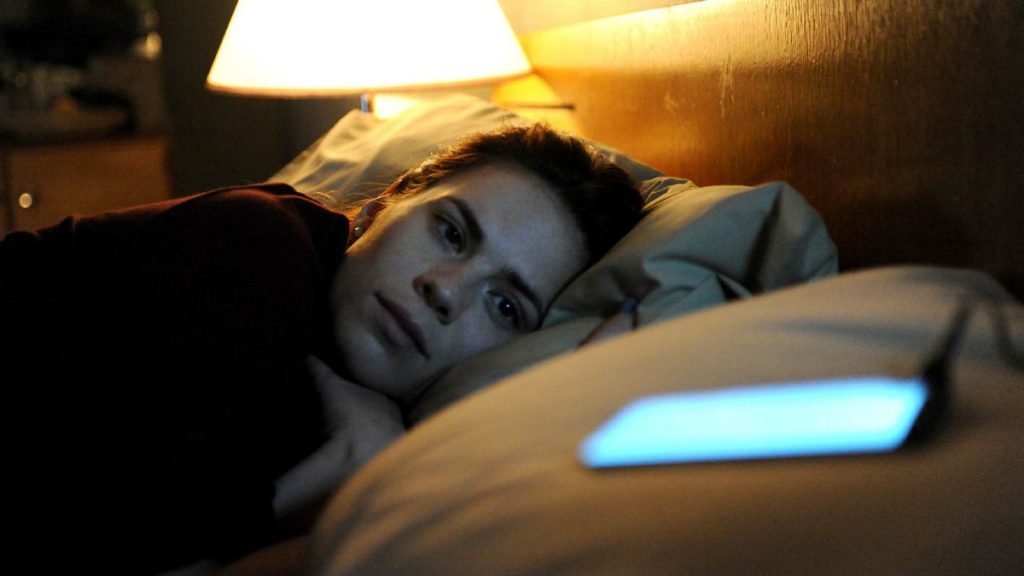
As is the case with many Black Mirror episodes, “Be Right Back” addresses reality, death, and the reality (or potential nonreality) of death in a spare, effective manner. After viewing the episode, undeniable ethical questions regarding the future of death and technology linger. It’s hard—at least for me—to place a finger on why Ash’s state of quasi-existence makes us uncomfortable.
My friend’s family refers to this episode as “Attic dad,” which is funny, but also plays into the discomfort brought about by Ash’s strange existence in this story. At the end of the day, “Ash” is just another object stashed away in the attic, but he is an object that gestures towards the undeniable reality of the child “he” and his former girlfriend have together.
The cycle of life and death is grotesquely suspended in “Be Right Back,” and the moment at which this is most emphasized—even more so than when Martha realizes she is pregnant—is when their daughter asks to see “him” on her birthday. This is special, as she normally only interacts with “him” on the weekend.
Perhaps Martha’s limitation of her daughter’s interactions with the eerie organic robot indicate her desire to undo what she’s done by keeping “Ash” around and presents a sort of guilt, as does her anguished pause before climbing the ladder after her daughter. We are left to wonder what sort of human contact Martha and her daughter have outside of one another—where is Martha’s sister’s family at this sparse birthday celebration? Or her daughter’s friends? I can’t help but wonder if “Ash” drove them away. I think this isolation would be even more effective if the episode only cast Martha and Ash (and their daughter at the end), and had no other humans involved at all. It certainly comes close.