
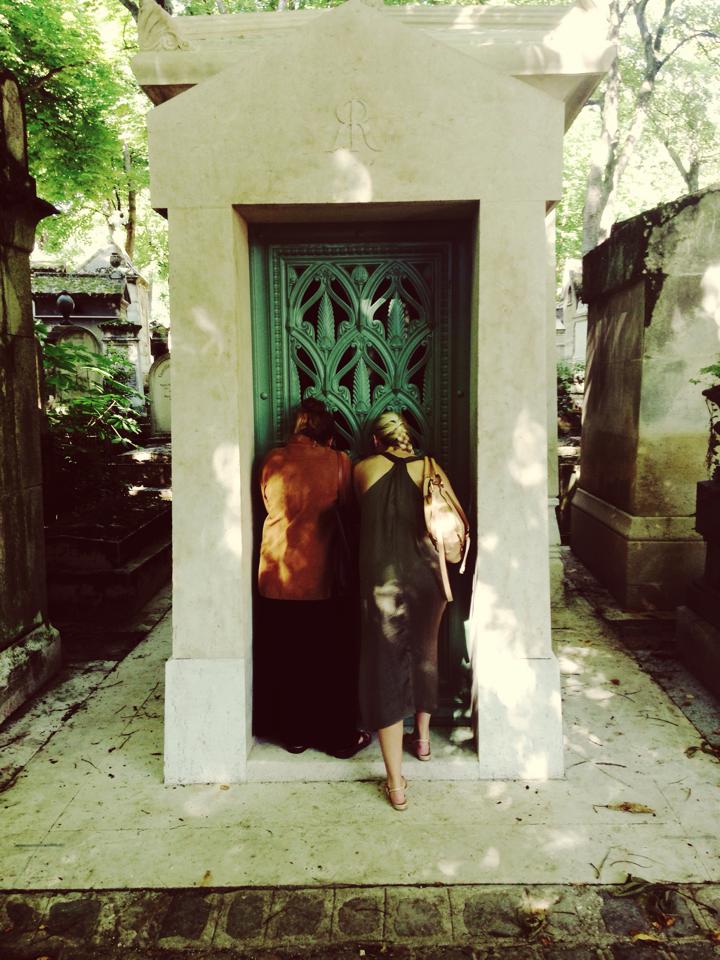
Before reading the Yankovska and Hannam article, I didn’t consider myself someone who had participated in dark or toxic tourism, but while reading, I realized I’ve been to several places that might constitute dark or toxic tourism. The ones that came to me off the top of my head were the Anne Frank house, D-Day site, and Père Lachaise cemetery. Père Lachaise is a massive cemetery in between the 11th and 20th arrondissements, and I visited it multiple times in the summer of 2014. This would be an example of dark tourism instead of toxic, since no environmental disaster occurred on the grounds.
The reason Père Lachaise is such a draw to tourists is not only because of its size (it’s by far the largest cemetery in Paris) but also because the high number of famous people buried there: Chopin, Géricault, Oscar Wilde, to name a few. But I’d say the biggest attraction, at least to my generation, is the grave of Jim Morrison.
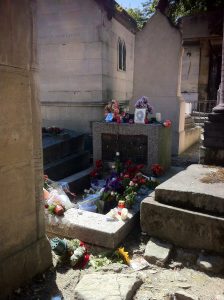
You can wander the cemetery for basically days without encountering a grave that you want to see–which is where the true dark tourism begins.
On our first trip there, my roommate and I picked up a scavenger hunt-like map with numbers and corresponding names to the most famous people at the cemetery. Though this map wasn’t particularly helpful, since the cemetery expanded in a completely arbitrary and confused manner, it still felt a bit strange to be hunting around in a solemn place like a cemetery, sometimes point and yelling when one of us found the “right” grave. The cemetery closes early–around 4–because it takes so long to clear the grounds and make sure no trespassers remain. This creates an eerie feeling as the afternoon winds down and you start to see fewer and fewer people around, until you realize it’s 4. Père Lachaise itself doesn’t do much to play up its spookiness for tourist purposes, but this probably has to do with the fact that entry is free. I’d still consider the general experience of wandering the cemetery actively looking for certain deceased people a kind of dark tourism.