
I imagine that my grandkids will laugh at the idea that I wasted an hour and a half of my day in the car actively driving myself back and forth to high school everyday. And with automakers aiming to release fully autonomous cars by 2018, maybe grandkids is even thinking too far in the future. Driving is the most dangerous thing we do on a daily basis – a fact we very often forget, but we are far away from cars doing all of the work for us.
Jack Stewart’s article detailing the legal conundrum following the death of Tesla-driver Joshua Brown led me to another Wired article, which outlined three different levels of autonomous driving. While level three is a completely autonomous system that removes the driver from the equation completely, Tesla’s Autopilot system falls into level 2, somewhere in between complete autonomy and the need for driver intervention. These levels reminded me of a different article I read a while back detailing the new system Mercedes is rolling out, one that The Verge claims will give Tesla a run for its money and that seems to be more self aware of its position in level two autonomy.
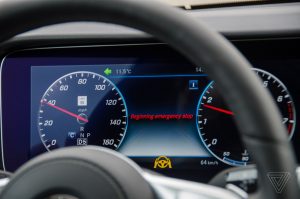
The name of Tesla’s system itself implies a higher level of autonomy, but Mercedes’s system is intentionally imperfect in order to demand more of the driver’s attention. Sure, the name Drive Pilot isn’t much better, but Mercedes seems to understand that we are not at a place of full autonomy yet. The car requests feedback via a touch of the steering wheel every ten seconds, slowing the vehicle to a stop if the warnings go ignored. Turning on the turn signal slows the vehicle to an appropriate turning speed. The car resists staying perfectly in the middle of the lane, partly avoiding bumps and partly in order not to put the driver too at ease. The system demands a relationship between the car and driver. Tesla’s system may be a bit more futuristic with an eye towards a driver-less highway system, but that’s a future a world full of shitty drivers is not ready for.