

My project was inspired by James Francis Barraud’s His Master’s Voice. The design of my box is meant to mimic his painting. I accomplished this by creating a spinning record player, which is reminiscent of the gramophone in the painting. The twist is that instead of the pet listening to his master’s voice, the master can hear a sound that is associated to his or her pet. For example, this can be the sound of a dog barking, a cat meowing, or a hamster wheel spinning. As Jonathan Sterne points out in The Audible Past, “The sound of the voice, and not necessarily what’s being said, is what matters” (Sterne 303). Likewise, the sound of the pet, whether it’s the actual voice of a pet or the sounds accompanied with the pet, is what triggers the nostalgic effect of the piece. Nostalgia is the most important factor of my product, because nostalgia can alleviate the grief one feels when losing a loved one. The nostalgia in the product will allow the owner to recreate a fond memory of his or her pet. Studies show that it is possible to help a person through the grieving process by encouraging him or her to reminisce (Tully). With this product, the owner can listen to and see a memory of his or her beloved pet at any time.
The most important factor of my project is the nostalgia factor. “It is not uncommon, especially after the death of a pet, for an owner to sense that he hears or sees his pet in familiar places,”(Tully). This contraption allows the owner to see and hear the pet in a familiar place; the home. This product provides the owner with a private way to grieve for his or her deceased pet. In order for the animation to work, one must manually turn on the contraption, turn off the overhead lights, and position a strobe light against the middle of the object. This setting makes the experience feel more intimate, private, and controlled.
The intention behind this contraption is to give a positive reminder of the vitality of life the pet once possessed, as well as allowing the owner to stay connected with the pet during the grieving process. I highly encourage those who purchase this product to send in a video of their beloved pet, because that video can be turned into a reel and become animated. Having an animated representation of a special moment with one’s beloved pet is endearing and allows the owner to reminisce in a positive way.
The idea of reminiscing a deceased loved one is a topic that we have thoroughly explored in class. We have seen it in the creation of Facebook memorials, on entire websites dedicated to deceased loved ones, and in the Victorian pictures of people with dead family members. Additionally, the commodification of grief has been a highly discussed topic in class. The commodification of grief can be seen in the perfumes made from loved ones, the option to turn the dead into compost, and even in our traditional funeral services. The price of a traditional funeral with flowers, a full service, embalmment, and a practical coffin can easily reach into the thousands. Overall these commodities are monetarily out of reach to middle and working class people. My project, on the other hand, is intended for people from all economic backgrounds. In fact, it’s pretty reasonably priced! It would only cost the buyer $10, which is reasonable considering how much time and effort goes into crafting each individual product. Buyers must complete this form when purchasing one of the boxes:
Please send in the following while purchasing “My Best Friend’s Voice”
- Please send in a video complete with sound depicting a special moment with your beloved pet.
- Enjoy!
As many animal lovers know, losing a pet is devastating. Sometimes, it’s just as difficult to lose a pet as it is to lose a family member. In fact, in North America some studies have found that between 85 and 99% percent of people, “define their dogs as being like a close friend of family member,” (Kogan 2). “While the length and intensity of the mourning period may differ, the grief process is essentially the same whether one mourns the loss of a person or a pet,” (Tully). The grieving process is not linear, and many people experience going back and forth between stages (Tully). Whether the death of the pet was sudden or anticipated, acknowledging the full reality of the loss may take weeks or months. One may come home still expecting his or her pet to run to the door. That person may reach down to stroke the pet only to find that the pet is no longer there. Getting used to the idea that one’s pet is gone takes time. It is normal to move back and forth between protesting and embracing the reality of the death (Wolfelt). My product will help a grieving person during this process, because that person can relive a happy memory when needed.
Let’s face it, we are mommies and daddies to our pets. We feed them, train them, and care for them. Parents are supposed to keep their children safe. We feel responsible for their well-being. It is natural to feel guilt and even a sense of failure when our pet dies, even if he was old. Animals’ life spans are so short in comparison to our own that in some way we feel short-changed. So, what emotion does Bobby feel most of all? “Lonely,” was her simple, poignant response. There’s that word again. Even with eleven other dogs, Bobby is lonely. No other dog or person can fill that spot in her heart where Bett belongs. This is true grief, (Heath).
The physical and audible presence of the pet can be extremely comforting for a grieving owner. Sadness, anger, guilt, relief, helplessness, loneliness and many more are all emotions that are associated with the grieving process, (Tuzeo). Loneliness seems to stand out the most. Ideally, loneliness can be relieved by this product. For example, the audible barking of a dog accompanied by the image of the dog sniffing flower and running through a green field can potentially be powerful for someone who misses that dog.
The Building Process!
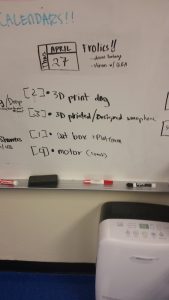
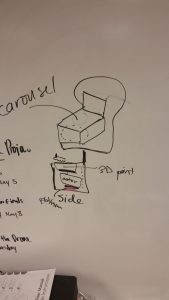
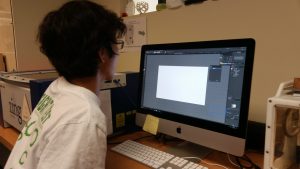
Step One: Designing the Box. This took way longer than I will ever be willing to admit.
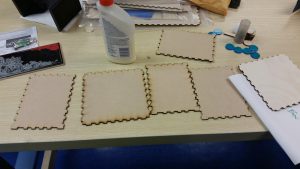
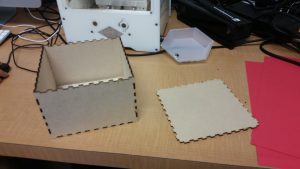
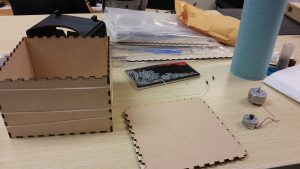
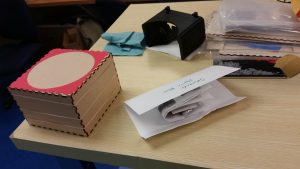
The next step was to figure out how to make the motor… Surprisingly, this was the easy part!
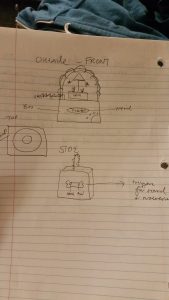
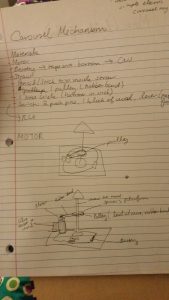
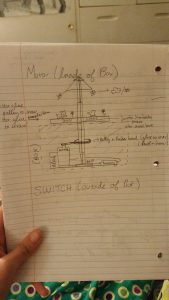
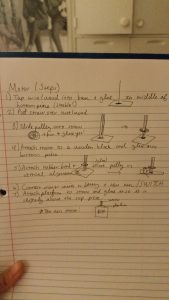
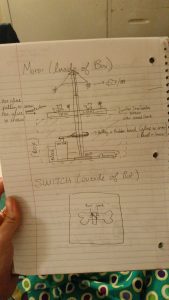
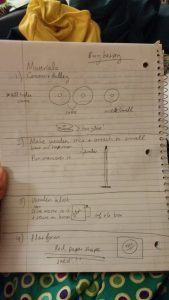
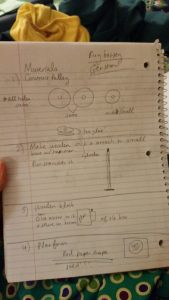
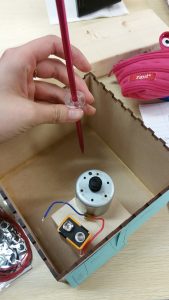
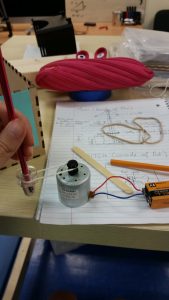
Now, how do I fit it all inside?
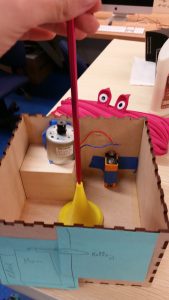
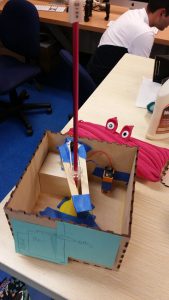
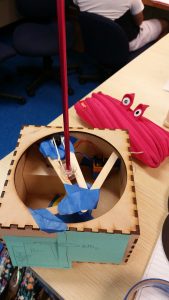
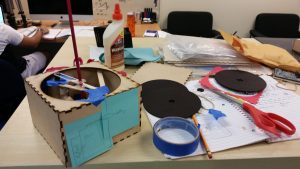
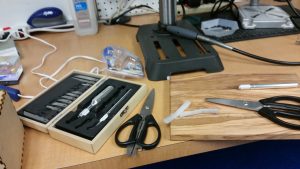

Finally, it all fits!! Eureka!
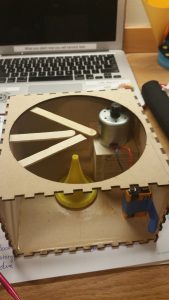
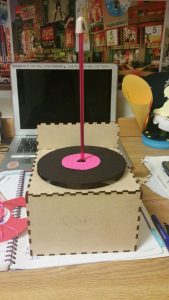
Annnnnnnnnnnd it breaks….
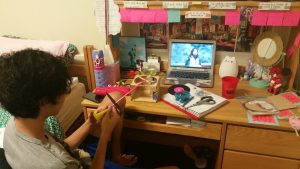
Time to find a new way to hook the motor to the spool inside of my box… I needed the perfect fit, so I improvised with the band inside of a rubber glove. These were semi-effective. Thankfully, I ended up finding the perfect sized rubber band in a random box underneath my bed.
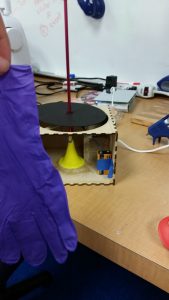
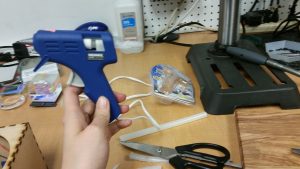
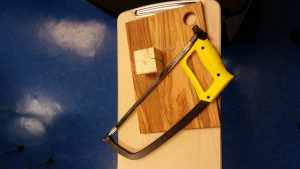
Also this happened, which didn’t really help. I wanted to glue the motor vertically against this block and glue it to the box, but it was too big to fit inside of the box. I needed to saw it down… and gave up after twenty minutes of mindless sawing. Ain’t nobody got time for that! I used the last of my hot glue to put the motor in place instead.
Not only did the string break, the actual contraption came apart and I had to re-glue it all together. I settled the base in place, but once it dried I realised that it was glued WAY off center… So I had to wash off the hot glue and reset the entire piece. It all worked out in the end, but I was not a happy camper at this moment in time haha.
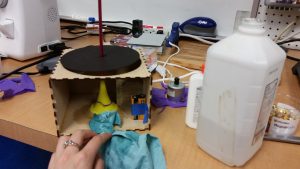
For the figurines, I worked on both 3D printing dogs and making my own dogs from clay, but the dogs kept flying off so I needed a new option…
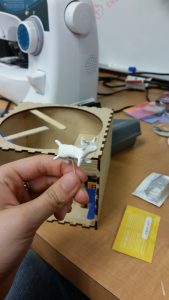
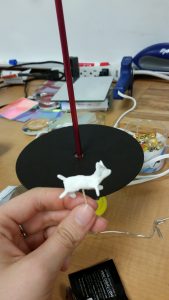
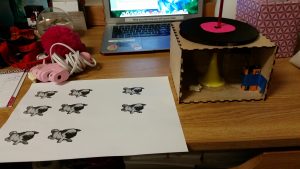
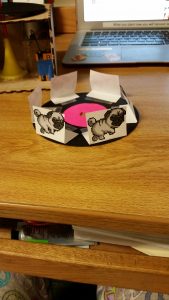
As a result, I made a paper zoetrope of my pet. I used pugs as a demo, because Tinky is so fat that people mistake her for a pug!
Below are a few videos of the design process:
Unfortunately, the sound did not transfer over. There is supposed to be barking associated with the music box! I will upload a new video!
EDIT: STAY TUNED FOR NEW PICTURES! I am going to add paint and a lever and demonstrate what the animation looks like with a strobe light.
Works Cited
Blazina, Chris, and Lori R. Kogan. Men and Their Dogs : A New Understanding of Man’s Best Friend.Cham: Springer, 2016.
Heath, Judy. No Time for Tears : Coping with Grief in a Busy World (2). Chicago, US: Chicago Review Press, 2015. Chicago Review Press.
Sterne, Jonathan. “The Audible Past.” Duke University Press. Durham and London, 2003.
Tully, Jane. “Dealing with Death: Good-Bye, Old Friend.” The American Journal of Nursing, vol. 99, no. 8, 1999, pp. 24DDDD–24FFFF., www.jstor.org/stable/3472180.
Tuzeo-Jarolmen, JoAnn. When a Family Pet Dies : A Guide to Dealing with Children’s Loss. London, GB: Jessica Kingsley Publishers, 2006. ProQuest ebrary. Copyright © 2006. Jessica Kingsley Publishers.
Wolfelt, Alan D.. When Your Pet Dies : A Guide to Mourning, Remembering and Healing. Fort Collins, US: Companion Press, 2004. ProQuest ebrary. Copyright © 2004.