
I thoroughly enjoyed Steven Jackson’s Rethinking Repair as it brought to light a non-conventional method of thinking that is not often discussed. As a millennial in our modern-day society I am constantly targeted with words such as “new”, “innovative”, “high-tech”, and “groundbreaking” at least a few times a day. These words bring to mind a Back To the Future 2 mindset, one that has flying skateboards and futuristic technology. They never make me think of innovations as something done to “fix” an issue or existing problem.

Taking Jackson’s mindset into account, I would like to pose the question: are humans broken? Jackson believes that constant changing world “is a world of pain and possibility, creativity and destruction, innovation, and the worst excess of leftover habit and power” (pg 222). Are humans a part of this besides being physically involved. One of the newest innovations that has hit the market is the self-driving Tesla that we covered in class recently. It has been marketed as a huge advancement into the robot-controlled universe where humans don’t have to do as much. There are already car manufacturers that have an assembly line of machines doing the work that humans could be doing.
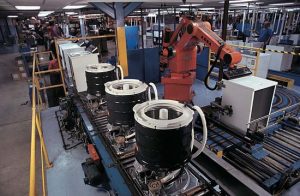
It is possible that we could see similar developments occur in other service fields(dining, mail, garbage collection) with the passing of time and the expansion of technology. These thoughts bring to light one question:
If we are making machines do the work for us, does that mean that the human species are broken?
Even then, what would the definition of broken mean when relating to a human. Furthermore, if we assume that humans are broken, then wouldn’t the machines made by them be broken as well? Or would we eventually get to a point in society where we build these machines and they begin to build themselves better? These are questions that we should keep in mind when discussing broken world thinking. It seems intuitive that humans would not want to think of themselves as ultimately obsolete, but it is a good way to begin pondering the direction that broken world thinking can us.
Aaron poses the question of are humans broken? He then asks “if we assume that humans are broken, then wouldn’t the machines made by them be broken as well?” I would like to push back on Aaron’s inquiries by pointing out that humans invent and innovate in order to mimic or advance that which is naturally human. Humans have not been invented, we simply are. We are able. An electronic calendar, for example, helps us remember all of the things that one may need to do in a day. The act of remembering is not in itself an invention; it is an ability naturally existing within human capability. An agenda or electronic calendar allows us to be able to attend many events and write down tasks that our memory may struggle to do, or alternatively it allows us to use that memory space in our heads for other things throughout the day. Another example: cars only advance the already existing ability of movement and transport that is already accessible via our legs/bodies.
Humans do not seem in need of repair to survive, where as technology does. Humans are driven by invention and innovation in order to thrive, but if advancement is not made we continue to live simply a less advanced life, we do not struggle to exist and become obsolete. This opposes the need of repair for technology; it needs repair simply to operate. Technology, though its hardware may still exist, becomes useless if repair is not constantly applied. This all goes to say yes, technology is broken, but humans are not. Humans are the source of innovation; humans simply are.