Video Game Code Confuses Me


Warning: Undefined array key 0 in /home/digitald/public_html/courses/wp-content/plugins/radgeek-FWP---Add-Attribution-70acf52/add-attribution-feedwordpress.php on line 363

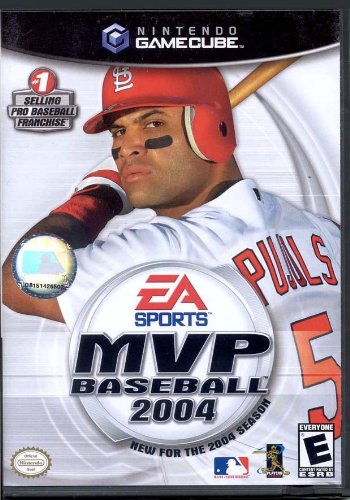
The way in which video games are coded has been a foreign concept to me since I started playing video games. While I started playing video games when I was about 8 or 9 (MVP Baseball 2004 was my first), I never really thought about how the discs somehow allowed me to play the games until I was in high school. The technology was astounding to me then and it still is now.

My First Video Game!

Upon first opening “The Naked Game”, I did not read the instructions, and immediately started to look at the game play as well as the lines of code below the game. The code that goes into video games is so foreign to me that it never crossed my mind that these lines could be altered. I immediately assumed that the code was just simply showing how the designers developed the game rather than offering a chance for the user to mess around with the game.

To me, the fact that I was completely oblivious to the fact that the code could be tampered with before reading the instructions demonstrates just how foreign the idea of video game code is. My interaction with the code in “The Naked Game” was entirely unique for me in my experience playing video games over the past decade plus. I came to the conclusion that while being able to mess what appears to be the code (Mark Sample’s “Code” in Debugging Game History shows that users playing “The Naked Game” are actually interacting with a proxy for the code that is updated depending on the users), I enjoy more not knowing what is going on underneath the hood. To me, it seems that playing video games and analyzing the code that goes into video games should be separate. I enjoy playing video games because of the gameplay itself, not because of the work the developers did to put it together.

Posted from Digital Studies 101 Blog by Patrick G.

Youtube to MP3


Warning: Undefined array key 0 in /home/digitald/public_html/courses/wp-content/plugins/radgeek-FWP---Add-Attribution-70acf52/add-attribution-feedwordpress.php on line 363

In his article “The MP3 as Cultural Artifact”, Jonathan Sterne mentions a few things that resonate with me regarding MP3 files. When I got my first MP3 player as a kid, I remember using Napster on my home computer to transfer music onto the media player. My dad had gotten an MP3 player before me, so he was familiar with Napster and taught me how to use it. At the time, I really understood nothing about what I was doing outside of downloading MP3 files onto my MP3 player.

Fast-forwarding to high school, I had upgraded from my MP3 player to a new iPod touch. As I built my Apple iTunes library, I started to realize how expensive it was to buy music song-by-song. I waited patiently for birthdays and Christmas to ask for iTunes gift cards. Finally, though, a friend of mine showed me a new way to download music into my iTunes library: YouTube to MP3 converters.

Sceenshot of a YouTube to  MP3 Converter


While I could not find the exact one that I used to use, there now exist a ton of different sites that convert YouTube videos to MP3 formatted files and place them in an iTunes library. This discovery was critical for me. The process was certainly more time consuming, but it was free, and I now had access to any sound files, not just ones on the iTunes store.  I could download as much music from YoutTube as I wanted. Before reading Sterne’s article, I had never realized that the nature of MP3 files themselves made this transfer process possible.

To this day, even though I now have Spotify premium, I will occasionally still use these converters to put songs into my Spotify account that do not exist on Spotify. I have the Motion Picture Experts Group to thank for this ability.

Posted from Digital Studies 101 Blog by Patrick G.

Lab 3: Animated GIFs


Warning: Undefined array key 0 in /home/digitald/public_html/courses/wp-content/plugins/radgeek-FWP---Add-Attribution-70acf52/add-attribution-feedwordpress.php on line 363

1. Sports GIF

Example:

Counter-example:

Analysis:

For the sports GIF category, I chose a GIF that could also be classified as a fail GIF for the example. This GIF shows what is usually a very routine action being completely messed up, as the field goal holder doesn’t recognize the ball has been snapped until it hits him in the face mask. Because of how easy this action usually is, the fact that the play was messed up so badly is humorous. The counter-example shows exactly the opposite; a very routine play is completed easily, as the punter catches the snap and smoothly kicks it away. Unlike the original example, this counter-example has next to no comedic value, as a punter punting a well-snapped football is a relatively boring event. The counter-GIF I chose would never be successful as a GIF because of its lack of excitement and humor, which most sports GIF have.

2. Reaction GIF

Example:

Counter-example:

Analysis:

My example and counter-example for the reaction GIF category show a clear distinction between a GIF with an intense reaction and a GIF with no reaction at all. The example GIF that I chose shows a girl flailing around on the ground clearly very upset about something. This GIF is popular because people can relate to the emotions displayed within it. The counter-example that I chose shows the exact opposite of a reaction. Newton’s cradle is a device that shows reactions perfectly, as it is a visualization of the conservation of momentum. In my GIF, I cut off the video just as the reaction from the balls striking one another is about to occur. This is a great counter-example because everyone knows what would happen if the video were to continue, but because of the editing, no reaction is visible.

3. Fandom GIF

Example:


Counter-example:

Analysis:

Most examples of fandom GIFs show iconic scenes from various television shows or movies that fans would recognize. They also often contain a quotation at the bottom of the GIF, which is similarly usually a memorable line from the show or movie. The GIF that I chose from Narcos shows a scene that many fans would recognize from Season 1 of the show with a line that Pablo Escobar and other characters use consistently throughout the show. My counter-example shows an example of a scene from a show that would never be used as a fandom GIF. While, in actuality, I did not get the GIF from a television show, the car driving down the road could have come from many scenes in many shows or videos. It has no ties to anything specific, so this clearly would be quite the opposite of a fandom GIF because no one would be able to see it and recognize from where it came.


Posted from Digital Studies 101 Blog by Patrick G.

CCM: Industry or Not?


Warning: Undefined array key 0 in /home/digitald/public_html/courses/wp-content/plugins/radgeek-FWP---Add-Attribution-70acf52/add-attribution-feedwordpress.php on line 363

Before reading “Commercial Content Moderation” by Sarah Roberts, I had never heard of CCM services before. While the article claims that “CCM is not an industry unto itself” (Roberts 147, find the article here), I wanted to do a little extra research on the firms that protect websites from harmful content.

One of the first websites I came across after looking for firms that moderate website content was for a company called Crisp. In its mission statement, Crisp claims they “protect global brands and social platforms from the risks posed by social media” (Full website here). Crisp also states that they deal with about 3 billion pieces of content every month. Onespace (Website here) is another example of a company with a very similar mission statement, and these are just a few of the many firms that provide similar services.

In fact, after doing this research and also finding an example of pricing (Onespace charges $1500/mo for a starter package), it appears that Commercial Content Moderation is indeed an industry. While it is obviously reliant upon demand generated by web content providers who need the protection, there are a number of firms competing to create the best product at the most advantageous price point. These, to me, seem to demonstrate the makings of an industry.

As Roberts hints at, and as this wired.com (Website here) article expands on, the industry is a complex one that relies heavily on overseas work. According to wired.com, there are over 100,000 people (twice the headcount of Google) who work every day to try to scrub the Internet clean from offensive or illegal content. While CCM may not be as well known and may be reliant on demand from other industries, I believe it is certainly an industry in and of itself.

Clever graphic of CCM workers “scrubbing the internet clean”, source here.

Posted from Digital Studies 101 Blog by Patrick G.

GIF or JIF? The Debate Rages On


Warning: Undefined array key 0 in /home/digitald/public_html/courses/wp-content/plugins/radgeek-FWP---Add-Attribution-70acf52/add-attribution-feedwordpress.php on line 363

After reading Jason Eppink’s “A Brief History of the GIF”, I was pretty shocked to read about the debate regarding how GIF should be pronounced. While I see GIFs almost every single day, I have never once stopped to think about how the acronym is supposed to be said because I always assumed the ‘G’ in GIF would be hard. I decided to look around on the Internet to read a little more about this apparently raging debate.

Funnily enough, the first web page Google found when I searched “GIF or JIF controversy” was called “How to Really Pronounce GIF” (Find the website at this fitting url ). One of the first things visible on the web page is the line, ‘It’s pronounced with a hard G, “GIF”, like “gift”’. The website even offers the option for those who agree to buy t-shirts that express this view.

Source

While there are a significant number of people who agree, as Eppink points out, the principal engineer of the GIF, Steve Wilhite, argues vehemently that the ‘G’ should be soft. In fact, upon being honored at the 2013 Webby Awards, he responded by announcing, “IT’S PRONOUNCED ‘JIF’ NOT ‘GIF’” (Eppink 301, link to full text here ).

While the debate rages on, it appears that the hard G pronunciation is more common, as a 2012 LA Times poll shows that people are close to twice as likely to pronounce the word with a hard ‘G’ (Link to LA Times poll here). And though the debate may seem a bit silly, it is something that has been widely debated amongst the Internet community for some time now. I think the following GIF sums up the debate pretty well.

Source

So, one questions remains: how do you pronounce “GIF”??

Posted from Digital Studies 101 Blog by Patrick G.

The Power of Google


Warning: Undefined array key 0 in /home/digitald/public_html/courses/wp-content/plugins/radgeek-FWP---Add-Attribution-70acf52/add-attribution-feedwordpress.php on line 363

In the chapter “Where the Internet Lives” from the book Signal Traffic, Jennifer Holt and Patrick Vonderau zero in on the availability and importance of transparency for cloud service providers. Referencing data center photos published by Google, Apple, and Bahnhof AB, Holt and Vonderau state that while these photos may look like a step towards transparency, they continue to conceal “mechanical, electrical, or technical infrastructure design, energy use or network infrastructure” (Holt and Vonderau 74, read full chapter here).

Image of one of Google’s data centers that Holt and Vonderau reference. Source.

This apparent transparency displayed by a few of the tech giants made me start to think about the huge power and responsibility these firms have. While I’m sure it’s a common sentiment, I know that I generally do not consider how the information that I provide to Google or Apple is being used. As a 2014 truthout.org article reports, however, “only the NSA rivals Google in terms of information gathering” (Read full Truth Out article here). Additionally, the article states that a recent study shows that Americans are significantly more worried about companies like Google and Apple than the NSA in terms of how they use information provided to them.

Google’s information gathering capabilities can feel restrictive and dangerous. Source.

Along with collecting significant amounts of data from its users, Google is also known for its political activism in recent years. No company has spent more on lobbying since 2012, and Google funds “about 140 trade associations and other nonprofits across the ideological spectrum” (Truth-Out, article found here). Clearly, Google has significant influence both in the marketplace and in the political sphere. The combination of massive amounts of information and money combined with political power makes a company like Google scary. Without responsible leadership and regulations, firms like Google can be very dangerous, and as Holt and Vonderau point out, simply seeing images of their data centers does not mean that we have any idea how the data we provide is being used.


Posted from Digital Studies 101 Blog by Patrick G.

Privacy Concerns in Online Shopping


Warning: Undefined array key 0 in /home/digitald/public_html/courses/wp-content/plugins/radgeek-FWP---Add-Attribution-70acf52/add-attribution-feedwordpress.php on line 363

In her chapter Community and Class Order, Carolyn Marvin discusses a number of sentiments that people in the late nineteenth century felt because of the rise of electricity. In particular, one shift that she touched on was the worry that many individuals, specifically families, felt regarding their loss of privacy with the rise of electricity and technology. She explains that this new technology “had less than amusing consequences for those who found themselves trapped by the great new machines of publicity” (Marvin 67 – full chapter here).

I was very interested by this part in Marvin’s chapter because this feeling of being trapped and watched by technology is a feeling that has only escalated since that time in the late 1800’s. Internet privacy is a hot topic in today’s world because of how intertwined we are with our technology. One specific area where we experience a significant loss of privacy is online shopping.

I’m sure that everyone has experienced something similar to the image below, where you can tell your online shopping habits are being tracked because of the related ads you continually see.

Online habits are seemingly always tracked today. From Cartoonstock.com, Source

But going beyond just advertisement, another interesting point that a recent Forbes article (read the full article here) makes is how online shopping can allow retailers to uncover each individual’s personal demand curve. Online retailers achieving this, the article argues, would mean that online shopping could essentially make us poorer. If all online retailers were able to discover exactly how much each individual was willing to pay for a given good or service, they could perform perfect price discrimination, mitigating any utility gains that consumers might experience if they were able to purchase a given good or service for less than what they were willing to pay. While we have not yet reached this point in the realm of online shopping, continual technological advancements and data storage make this a distinct possibility moving into the future.

Posted from Digital Studies 101 Blog by Patrick G.

Always Listening – The Future Of Digital Assistants


Warning: Undefined array key 0 in /home/digitald/public_html/courses/wp-content/plugins/radgeek-FWP---Add-Attribution-70acf52/add-attribution-feedwordpress.php on line 363

While the advancement of artificial intelligence (AI) and technology in general has been widely beneficial for humans, there are a number of safety and privacy concerns that have arisen as technology has become more and more advanced. In chapter two of Finn’s What Algorithms Want, this issue of privacy and safety for individuals using new technology is called into question. As an example, Siri’s main form or learning is through the aggregation and subsequent analysis of patterns of voice query records, and the storage of these queries is “unsurprisingly troubling to privacy advocates” (Finn 62).

Because privacy and safety are hot topics in technology today, I wanted to look more into privacy issues specifically as they relate to digital assistants. Currently, Apple stores Siri requests along with a device ID for 6 months, and then drops the device ID and stores just the request for an additional 18 months (Waddell). While it isn’t entirely surprising that Siri searches are being stored somewhere, as digital assistants “wouldn’t be able to provide … useful results” (Waddell) without communicating with their respective companies and storing past searches to analyze patterns, their storage does sacrifice a fair amount of user privacy.

Google has recently been attempting to develop a digital assistant that listens to all conversations, even ones not directed at the search assistant. This jump is quite large, as the assistants, and therefore the company, will not only store queries directed at the assistant, but all conversations the user has on a given device. Siri, and other tools like it, seem to be just the beginning of personal digital assistants and the power they might have. Privacy, however, needs to be a large factor in deciding how best to leverage this technology in order for it to grow responsibly.


Source

Bariya, Niraj. “Shhhh… Listen! Do You Hear The Sound Of New Messaging App Google Allo?” DigiFloor, DigiFloor, 22 Sept. 2016, www.digifloor.com/google-allo-messaging-app-22.

Finn, Ed. “Building the Star Trek Computer.” What Algorithms Want: Imagination in the Age of Computing, MIT Press, 2017, pp. 57–77.

Waddell, Kaveh. “The Privacy Problem with Digital Assistants.” The Atlantic, Atlantic Media Company, 24 May 2016, www.theatlantic.com/technology/archive/2016/05/the-privacy-problem-with-digital-assistants/483950/.

Posted from Digital Studies 101 Blog by Patrick G.