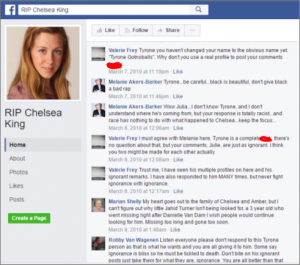
And standards. As cruel as internet trolls can be, there is such thing as “crossing the line”. There is a whole culture of trolling with various unspoken rules regarding who to target and “traditions” of content for situations, which fascinated me. Who knew there was a methodology what content was posted and who was okay to troll? Whitney Phillips delves into this subculture in her article “LOLing at tragedy: Facebook trolls, memorial pages and resistance to grief online”. She focuses on RIP trolls, which she defines as “online instigators [who] post abusive comments and images onto pages created for and dedicated to the deceased.” Recognizable by their profile pictures and names (like “Soveri Ruthless” or “Frank Bagadonuts”), RIP trolls friend each other and then lead organized attacks on a public Facebook memorial page. They specifically target “I didn’t know you but I’m very sorry you’re dead” posts, which they view as insincere and cheap. For RIP trolls, Facebook is never the appropriate place for grieving, especially for tragedies such as car crashes or kidnapping cases.

No one should have the power to judge others’ behavior, specifically reactions to death, and determine what is appropriate or not. But hearing the trolls’ perspective made me wonder if their view of online expressions of grief has some credibility. Wilson Mouzone, one of the trolls Phillips interviewed, said that family members don’t deserve the disrespectful treatment by some of the most vicious trolls. Generally, these pages (often private) and users are left alone. But the “grief-tourists” with no real-life connection to the victim are considered free game. Will trolling help curtail these “insincere” postings? If so, are we amid a culture shift in online grief culture? Since experiencing death on Facebook is a relatively new phenomenon (as opposed to newspaper obituaries and funerals), we haven’t determined what is culturally acceptable. An analysis of public memorial pages over the past few years regarding the ratio of genuine posts to troll posts would be insightful to examine. Perhaps the RIP trolls’ behavior is having their desired effect and reducing the number of inauthentic postings. More likely, their derogatory comments only incite internal debate/attacks/rage on the memorial page regarding the trolls, not about the insincere postings.