Despite his death as early as the first chapter, Arthur Leander remains a continual presence in Station Eleven, a common link between otherwise very different characters as both an abstracted celebrity icon and a flawed husband and friend. It’s significant that one of the most central characters in the novel is a celebrity, and Emily St. John Mandel emphasizes the role of his fame repeatedly. For example, even in Arthur’s personal off-camera relationships, the line between acting and real-life remains gray, and he wonders at one point: “Did he actually date those women because he liked them, or was his career in the back of his mind the whole time? The question is unexpectedly haunting” (79). Arthur’s inability to distinguish between the construction of himself as a character and his original self is haunting because truth and illusion are no longer differentiated. And in a world increasingly dominated by social media, self-interest, competition, and materiality, Arthur is merely the extreme of a reality we are already living—we perform in our daily lives and construct a better version of ourselves to the point that it’s hard to tell what’s real and what’s fabricated. We are not so different from Arthur after all.
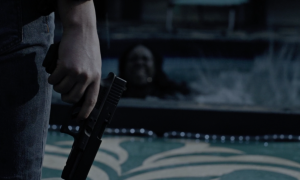
Arthur’s ex-wife, Miranda, observes this tension between illusion and reality while hiding from dinner guests in her backyard. She admires a lamp in the shape of a crescent moon, noting that “The fake moon, which has the advantage of being closer and not obscured by smog, is almost always brighter than the real one” (100). This observation highlights an important theme: a lie can often seem truer than truth itself. Truth is no more than a game of smoke (in this case smog) and mirrors (in this case the reflection on the water).

Both Arthur and Miranda demonstrate this loss of humanity through their depiction of reality as a performative construction. This made me think: where has the real death occurred in this novel? Obviously, the easiest response is that the death occurs during the flu outbreak and the loss of civilization as we know it. And yet, these earlier moments pre-destruction suggest something different.
Has mankind already died? Are the loneliness and emptiness felt by the characters prior to the end of civilization simply mourning by a different name?
Reframing the text in this manner allows us to better understand the fear foregrounding this book: if an apocalypse seems a fictive, impossible, or slightly less threatening reality, perhaps the horror lies instead in the metaphorical death of Miranda and Arthur that occurs long before—a far more relatable and imaginable demise.
The real tragedy here is that this death goes unnoticed. The thought that you could die without even realizing it is the scariest concept of all. So yes, this novel is technically about an apocalyptic event, but really, it’s about all the other ways in which we can die. Don’t get distracted by wild-west shootings and end-of-the-world survival; Arthur Leander died long before the first chapter.
References:
Mandel, Emily St. John. Station Eleven. New York: Vintage , a Division of Penguin Random House LLC, 2014. Print.
Ocilunam. Ex.Moon Outdoor Lamp. N.d. Lumens Light and Living. Web. 27 Apr. 2017.