SHRINEFILE

Shrine File is a corrupted collection of data that dictates passage of the self. When your physical form fails, where is the self enshrined?

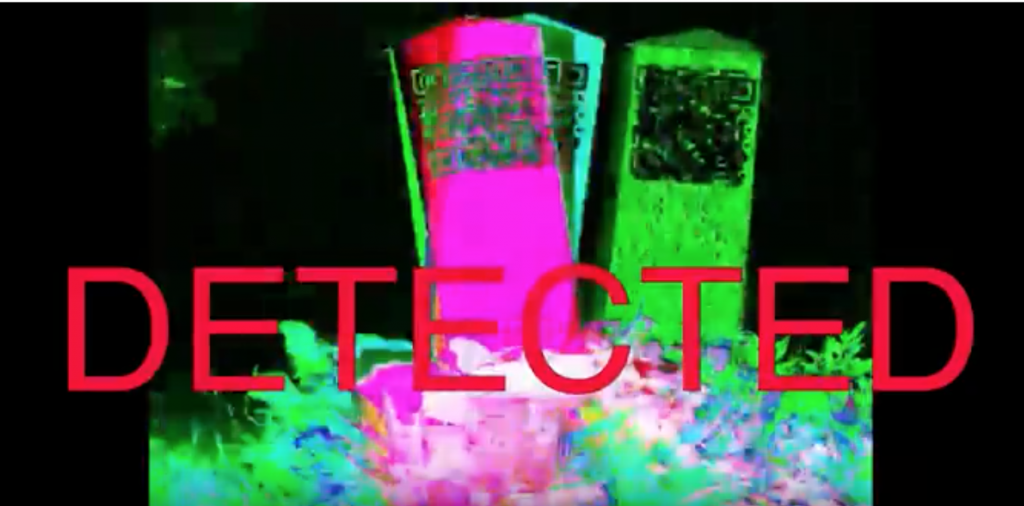
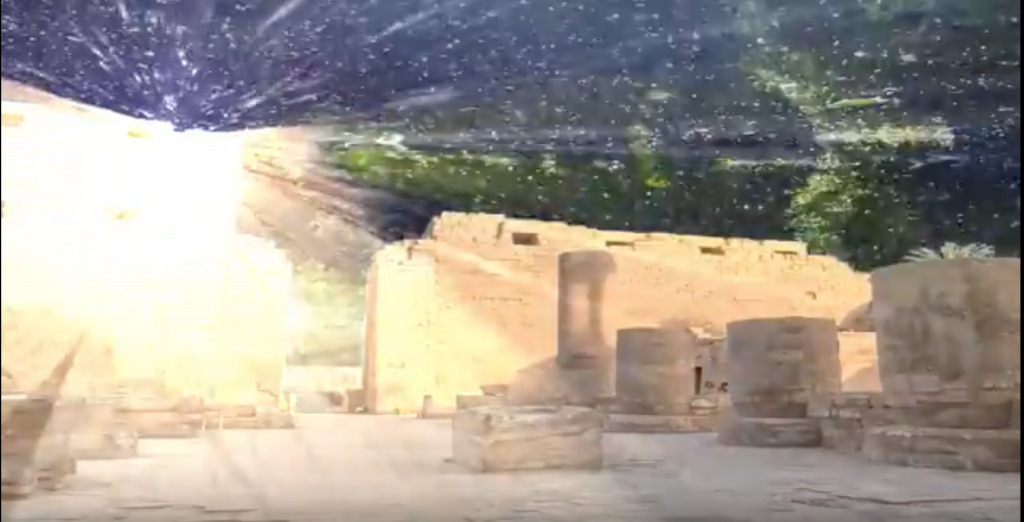
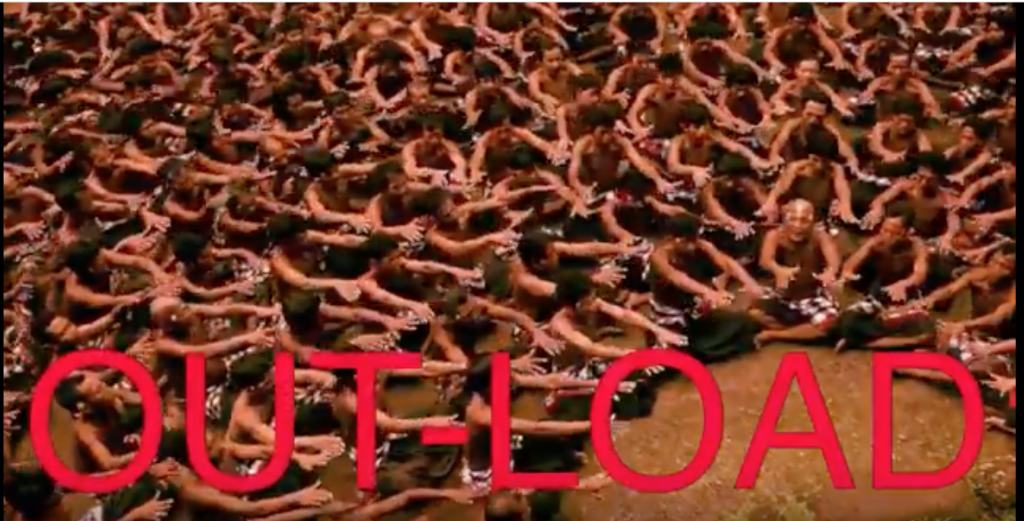
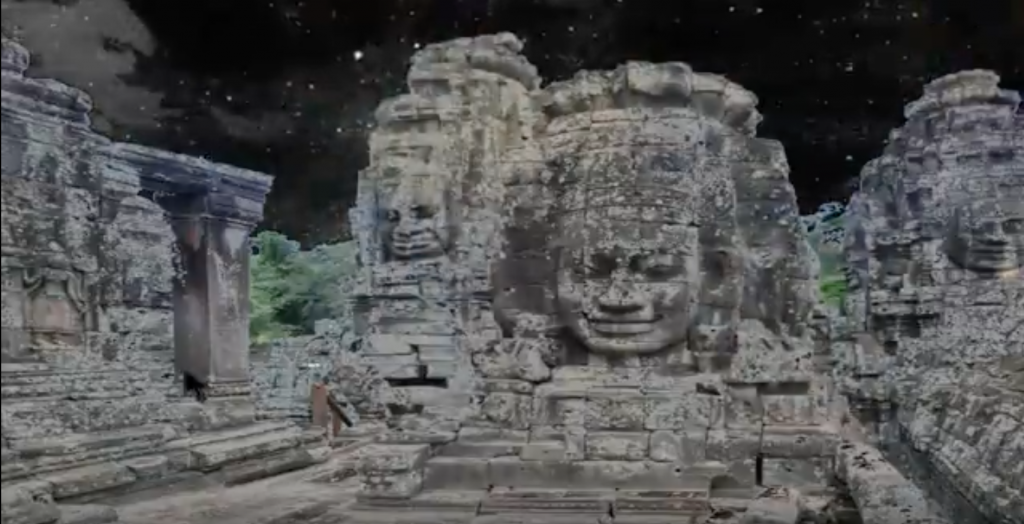
The file visually imagines the digital intersection of sacred and profane: 360 videos of ancient tombs and chapels are layered with everyday masses of human flesh alongside suggestions of an infinitely folding universe. Tombstones branded with digital codes melt into a physical human hive. The file exists between the moment of life and death. The moment the self can be digitally enshrined before dissipating. It exists between the individual self and the collective human cloud.

Emile Durkheim wrote that “religious and profane life cannot coexist in the same space…religious and profane life cannot coexist in the same time.” (The Elementary Forms of Religious Life). Man is not sacred: he creates this through ritual and belief. The ritual sets the sacred apart from everyday life. The afterlife wisps beyond our everyday grasp, but with the digital shrine we draw it closer. Our afterlife becomes a “tangible” set of digital artifacts — how do we populate them, position them, secure them, maintain them?

The digital shrine becomes the totem laden sarcophagus. We spend the lifetime preparing the Shrine File so that we can die immortal.

“A coded human existence is one without the singularity of the liberal subject. Instead of a multiplicity of singular wills or a cacophony of different spirits and personalities, subjects are transcribed into codes operating via variations of ones and zeroes.” (Anna Piepmeyer). Choose ENCODED: the file imagines such a human code. Individuality is transformed at the moment of physical death: from the gravestone emerges a collective force, a glitched soul enmasse. “We are now on the threshold of a new mutation.” (Slavoj Zizek).

Is the coded mutation/the hive/the noosphere simply a colossal collective of the everyday profane? Or does it elevate into the realm of gods? For Durkheim, sacred cannot exist unless differentiated against profane. The binary is necessary to construct separate sacredness. The glitched, grubby digital is a profane shell, unreliable and easily broken. The collective hive, jacking the code as a ground, remains sacred.

Choose TEMPLE: “Join us,” screams the chorus as they whirl through ancient sacred grounds. Can you know a sacred god or the devil through these secular, digital bits? Instead of a physical site, we embed the mementos of self here, in these holy reconstructions. Navigate your keystrokes to mourn, to memorialize, to pray.
Enshrine yourself. 


This project arose out of the integration of digital death into everyday life. For centuries, death was aesthetically understood as a “natural part of life,” where physical grave sites “connected [living communities] with the death and [gave] a sense of unity with nature even in the face of the chaos of death.” (Graham, 38).

The “back to nature” — through land or water burial or burning — death process was ritualistically separated from the fabric of everyday life.

Spending time in online space is an everyday part of life; so can something like Facebook Memorial walls ever cultivate a sense of sacredness amongst the profane streams of daily chatter? When presented with so much content, whether kids taking selfies at a funeral or heartfelt condolences posted online, can any of it be sacred if none of it can be separated from the profane?

Brubaker, Hayes, and Dourish examined Facebook as a site for death and mourning. They note how “features like the Newsfeed often continue to inject death into otherwise typical Facebook use.” (157). Interview subjects varied between feeling like Facebook was cold and impersonal and feeling like it was a productive way to “make readers feel a little more at ease about the death.” (156).

Graham et al. addressed a digital memorialization page called HeavenAddress in their exploration of physical and digital grave sites. Unlike Facebook, HeavenAddress is specifically made for remembering the dead. But it still reeks of normative social media qualities — people can  like and share the obituary pages, tap “love u/miss u/thank u” buttons, and leave digital candles and flowers. In the most contrived move, users can also vote on words to create a word cloud inspired by the deceased.

Brubaker et al. would characterize something like HeavenAddress as a feature of postmodern death: the boundary between public and private mourning is eroded, and many of the publicly expressed feelings are expressions of individualism, not collectivism. The social sharing and writing is oriented around digitally performing for the living.

Online bereavement provides immediate connection across physical boundaries and social groups, which Brubaker et al. call temporal, spatial, and social expansion. Because of this convenience of connection, death will never go offline. But how we choose to approach death online should be a matter of concern.

For Durkheim, the distinctions a society chooses to make between sacred and profane is the basis for truth and collective memory of the society. Sacred rituals produce “continuity over generations,” and in this way, “societies become conscious of themselves and their history.” (Coleman, 67).

If digital forms of death content are to provide a sacred space and collective memory, then they must become ritualized and separate from typical forms of online content. Already, online users can access 360 view videos of temples, chapels, and ancient religious ruins; I can imagine a world where accessing simulations of sacred sites become part of the digital death ritual.

On the flip side of imagining this sort of ritualized online visit to the TEMPLE is the process of being ENCODED; to ritualistically shed the cult of individuality and tap into the collective. Perhaps this is the point where instead of using the remnants of a digital self to remember and memorialize an individual (and to leverage mourning as a way to express the individual self), the content is passed into the collective memory. “Detected/in-loading/load” text on the ENCODED video generally suggests a sort of information gathering, akin to Facebook, but the uploading process is without individual imagery.

The two videos are halves of an imaginary file, corrupted by age and outdated technology. It is a capsule of futuristic digital death rituals discovered even further in the future. The audio tracks are suggestive of myth, mystery, and secrecy — one, a rock song that when played backwards allegedly contains Satantic messages (this, out of 80/90ies heydey of deliberate backmasking that became so dramatic that California passed a bill banning backmasking that “can manipulate our behavior without our knowledge or consent and turn us into disciples of the Antichrist”). The second is a non-verbal synthed chant layered and repeated to provoke a feeling of otherworldly, unbounded encounters.

For the digital world to become a more significant meaning container for death, we have to be deliberate about separating our death rituals from the everyday flow. Postmodernism dictates that these boundaries between sacred and profane will erode and collapse; but when that happens, our collective consciousness becomes flimsy and our collective memory myopic. Ritualizing death as sacred, even in online space, reminds us of our mortality while simultaneously creating a collective consciousness that transcends the individual.

Works Cited:

Brubaker, Jed R., Gillian R. Hayes, and Paul Dourish. “Beyond the Grave: Facebook as a Site for the Expansion of Death and Mourning.” The Information Society 29.3 (2013): 152-63. Web.

Coleman, Elizabeth Burns, and Kevin White. “Stretching the Sacred.” Negotiating the Sacred: Blasphemy and Sacrilege in a Multicultural Society. Canberra, A.C.T.: ANU E, 2006. 65-78. Print.

Graham, Connor, Michael Arnold, Tamara Kohn, and Martin Gibbs. “Gravesites and Websites: A Comparison of Memorialisation.” Visual Studies 30.1 (2015): 37-53. Taylor and Francis Online. Visual Studies. Web.


Losing Your Self with the Quay Brothers & Ryan Trecartin

The screen flickers between close-up images of graphite stained fingernails, bands of light oscillating over windows that snap open and shut, and eerie Martian landscapes. All are punctuated by the peculiar audio drones and pitches, an avant-garde soundtrack composed by  Karlheinz Stockhausen. So constructs the twenty minute psycho-drama directed by the Quay Brothers in the year 2000, In Absentia.

The Quay Brothers in 2001 for OffScreen

The short film follows the story of a woman, albeit lacking specific details. She is shuttered up in an institutional-looking manor. She obsessively sharpens pencils and writes letters, filling the pages with sentences laid atop sentences so that the meaning is indiscernible. She ritualistically places broken pencil tips outside her window. She drops the letters down a grandfather clock, whose base is visually filled with similar letters. Because she chooses not to postmark them? Because she is not allowed to? Because she is imprisoned? Because the letter recipient is dead?

Excerpt from film

These gaps in detail are left to simmer. Instead, the Quay Brother present a demonic animation roaming a hallway. They sometimes switches to a barren, wind-swept landscape dotted with indiscernible, hulking technology that suggests space travel.

They layer multiple horror tropes into this quiet, uneventful, but definitely nightmarish world. The manor is a haunted house — or perhaps even more specifically, a haunted asylum. The woman walks that thin line between mentally ill and demonically terrifying — viewers are conflicted about whether to pity or fear her. The entire set is haunted by bands of light that only temporarily illuminate the viewer’s frame.

The Brothers give us plenty of room to wallow in the uncertainty of this postmodern piece. Demon or human, alien or human, phantom or human, sane or insane…the viewer is left without concrete answers. In 2000, people had yet to experience social media or the ability to watch YouTube on a touchscreen phone. But the Brothers still incorporated some of the core anxieties about technological communication — how do we communicate? Do the tools we use to communicate connect us or isolate us?

The audio is peppered with the sound of the woman laughing. Quickly, that laughter is distorted and begins to sound like chimpanzee screeching, then all together alien. She traces words so carefully with her pencil on paper, following each stroke of the pencil with her finger, but when the viewer witnesses a shot of the page the letters are completely muddled. In both speaking and writing, her message is corrupted — the mediums, these human technologies meant to enable communication, betray her. She is trying to communicate and she fails.

The alien/demonic presence can be tied to the technological obsessions of the time. Starting in 1998, NASA’s New Millennium Program was launching probes to Mars and satellites into Earth’s orbit. Our reality was expanding with new, imagined worlds outside of Earth. The barren Martian landscapes of In Absentia point to the obsession with the mysteries of space. There seems to be a desire to explore this final frontier and make meaning out of what we can’t understand.


While the woman is seated at her chair, there are moments when a third hand slides up her back or across her shoulder. She is shown several times swatting and gripping at her neck, as if she continues to feel a ghostly touch in the otherwise empty room. Her internal world is haunted (suggesting the ambiguity of her sanity) while her external world is also haunted by those space age mystery landscapes. It is a hybrid haunting which expresses itself in various canonical forms: ominous alien light flickering over mysterious landscapes, a literal clay demon roaming the hallways, and the horror of possessed insanity.

Ultimately, the film dedicates itself to a real woman: “E.H., who lived and wrote to her husband from an asylum.” The Brothers said in an interview that they only later learned that audio creator Stockhausen’s “mother was imprisoned by the Nazi’s in an asylum, where she later died.” This directly connects the film to an important core piece of postmodern horror: body horror. The physical body become the irrational site of insanity, possession, evil — all societal fears channeled into an unsocialized body.

The Quay Brothers made their film eerie and horrific with gothic lighting, uncanny close ups, minimalism, and the vague suggestion of insanity, imprisonment, demons, aliens — the ambiguity is quiet and assured. Emerging in the the video art scene more than ten years later, Ryan Trecartin’s work is distinctly a product of current culture. Both artists embroil the viewer amidst many of the same themes despite dramatic stylistic differences. Trecartin’s shots are shaky and often hand held, shedding any professional aires, while the Quay Brothers so obviously labored to get big, serious shots. Trecartin immediately makes use of  in media res — dumping the viewer into the middle of action, no explanation. In Center Jenny, the initial shot is explosive: a car is being destroyed by people wearing green screen outfits, chattering manically in a green lined room. Girls with heavy handed make up screech and chatter, their voices synthed up and pitched to other-worldly as they roam a decrepit warehouse.

Ryan Trecartin performing in “Any Ever.” Still from YouTube.

Center Jenny follows several groups of girls who are all named “Jenny.” Each group is a reality television type archetype taken to the extreme — the Taylor Swift good girl, the Bad Girls Club drama queen, the boy-obsessed pretty girl, the Queen Bee, the girls who basically just background fodder hoping to get a personality assigned to them. They exist on various levels and are trying to level up to become a more potent “Jenny.” Everyone wants to become closer to the “The Source” — the Center Jenny, the ultimate, perfected Jenny.

The film uses extremes and maximalism to strip down the process of social norming, social cohesion, groupthink, and the way we construct identities. There’s a long process in which one “left of center” Jenny (meaning, non-conforming) is hazed by higher level Jenny’s and eventually re-inducted into the higher level group once she is rendered docile. Her eyes glaze over completely white and she gapes at the screen as if lobotomized. Obviously, she gets a cute makeover, too.

Another girl, with dramatic purple contouring, straight black hair and 90s Vans lounges on what looks like a makeshift MTV music video set: lawn furniture under multi-color lights in a warehouse. She leans back on a hammock as the lights flicker and her friend undulates to uncanny music — it looks as if aliens had found a time capsule from the coolest teenager in the early 2000s and tried to reconstruct the aesthetic. And that wouldn’t be off base for Trecartin; at one point, the girl looks up into the camera and drones, “The only thing I’ll ever study is Human Era Hazing and how awesome it is.”

There are several points in the film when the Jenny’s refer to the “human era” and the “Earth version” of various things, suggesting the MTV teenage cool girl and the gaggles of Jenny’s aren’t just extreme versions of culture today. The Jenny’s are futuristic, their uncanniness — the way the viewer can recognize social norms and identity archetypes but still feel so overwhelmed by the unfamiliar vehicle — stems from their literal alienness. They are not human; they are something else, approximating all human culture through the lens of our most popular media.

This crystallizes towards the end of the film when a group of Jenny’s, waiting to level up or to be assigned a personality, meet a character who describes how they evolved from “animations,” which evolved from humans. This suggests that the Jenny’s are constructed from human archetypes and media, explaining why each Jenny acts like she’s in a reality TV fever dream while also being obviously aware that she is performing. The Jenny’s operate more as a collective hive than as individual, heterogenous humans — another indication of their archetypical identity. At one point, the MTV cool girl even screams at her friend — “Bitch, you’re not real! You’re just in my system!” Her friend fires back, “I am you, get out.”

Trecartin doesn’t use any traditional horror motifs — no gore, no jump scares, no supernatural activity. The the warehouse functions somewhat like a haunted house, with its sprawling, mysterious, inaccessible nature. The girls are alien animations, and the audio would surely meet Stockhausen’s standards for being avant-garde and creepy. But Trecarin’s real horror takes the form of a cultural mirror; the Jenny’s are the most derivative parts of our culture, norms, and socialization reflected back to us.

According to Jeffrey Cohen’s monster theory, horror villains represent the cultural anxieties of the particular era; the monster shows us how “our cultural assumptions about race, gender, sexuality” created it, and also demand to know why we “have created them” in the first place. (20).

In Absentia presents isolation, insanity, and being subject to an outside influence you can’t control — whether demons or alien — as being horrific. Center Jenny is the product when the landscape of In Absentia ferments for thirteen years. The world is controlled by non-human aliens, the Jenny’s are mentally unhinged by human standards, and rather than living in isolated, lonely existence, socialization is totally oversaturated.

The most horrific thing for the Quay Brothers was the inability to communicate — your ability to speak and correspond becoming totally corrupted. The Jenny’s learned how to correspond and coordinate to an extreme degree — they are 2D copies of each other, a society of beings that are at once mimics and solipsistics. The chief curator and associate director of the New Museum, Massimiliano Gioni, described the subject of Trecartin’s videos as “the act of communication…We’re all trying to communicate, and what we communicate about is less and less relevant. When I watch his videos, I feel a speeded-up version of what we’re all doing.”      

Patrick Langley wrote that Trecartin “enacts a literal illustration of the electric mania of modern life.” But since we rarely perceive it to be as wild and desecrating as it actually is, when presented with an extreme portrait we are shocked and horrified. We are confronted by the biggest postmodern boogeyman: that we are not special, unique, sacred, or different.  Langley goes on to describe “the instability of Trecartin’s vision of human identity” expressed in his films:

“Our engagement with culture is rendered as a form of enmeshing or interbreeding. Empathy is metamorphosis: when a character identifies with an idea or person, they adopt their vocabulary or physical characteristics. Trecartin’s films reject the binarism of real and virtual, male and female, self and other, gay or straight, rationality and madness, surface and subtext, style and content, time and space.”

Trecartin imagines and renders an extreme postmodern society. Identity is boundless, completely fluid and up for grabs. Whether through extreme isolation or extreme socialization, the Quay Brothers and Trecartin end up at the same point. They warn us about total loss of self, knowledge, and reality — we are swept away by alien possession or merged into a manic hive mind. In either case, both artists seem to suggest we are loosing something human. Confronted by the postmodern void, do we become isolated shells or oversaturated replicas? 


Works Cited
Aita, Roberto. “Brothers Quay: In Absentia.” Offscreen. N.p., Sept. 2001.
Center Jenny. Dir. Ryan Trecartin. Vimeo. N.p., 2014. Web.
Cohen, Jeffrey Jerome. “Monster Culture (Seven Theses)”
Speaking of Monsters (n.d.): 3-25. Web.
In Absentia. Dir. Timothy Quay and Stephan Quay. Perf. Marlene Kaminsky.
Vimeo. N.p., 2000. Web. 05 Apr. 2017.<vimeo.com/84313389&gt;.
Langley, Patrick. “Ryan Trecartin: The Real Internet Is Inside You.” The
White Review. N.p., Apr. 2012. Web. 05 Apr. 2017. <www.thewhitereview.org/art/ryan-trecartin-the-real-internet-is-inside-you/&gt;.
Tomkins, Calvin. “The Experimental Videographers.” The New Yorker. N.p.,