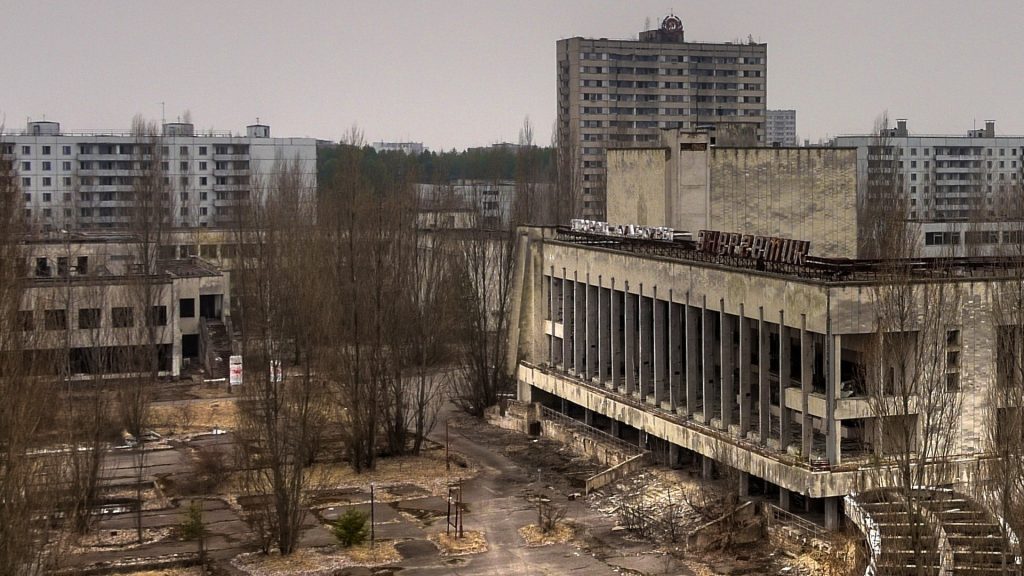
In their article “Dark and Toxic Tourism in the Chernobyl Exclusion Zone,” Ganna Yankovska and Kevin Hannam describe the Chernobyl exclusion zone as a site of both dark and toxic tourism. Through interviews with tour guides and agents, Yankovska and Hannam explore the various motivations of tourists depending on nationality and age. The researchers highlight how the exclusion zone lies at the tricky crossroads between entertainment and education and as such, tour guides must interpret and alter their presentations depending on the desired effect.
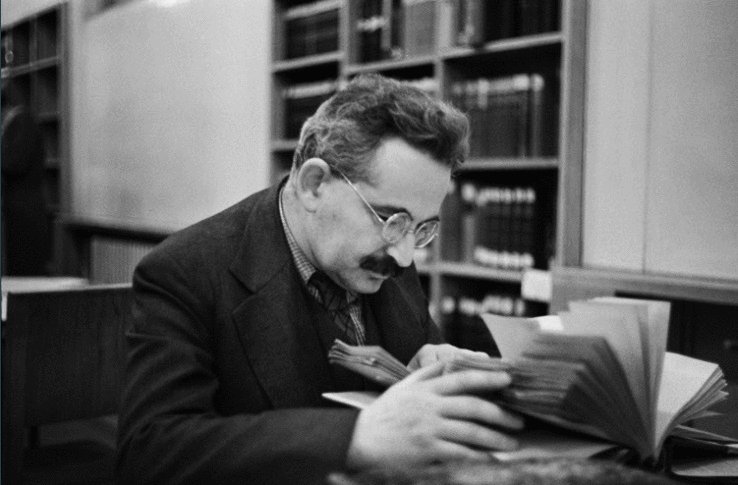
In reading this article, I was reminded of one of the first articles we read this year by Walter Benjamin, “The Storyteller,” in which Benjamin explores the notion of storytelling in a contemporary context in which information, press, and technological inventions threaten “…the art of storytelling…” (Benjamin 362). The role of the storyteller—as described by Benjamin through the language of “advice,” “instruction,” “useful,” and “wisdom”— seems a particularly accurate account of the role of the Chernobyl tour guides who often cited in interviews their educational function and the wisdom they hope to imbue on tourists (Benjamin 364).
And yet, while storytelling by tour guides often falls under this category of ‘useful wisdom,’ in the case of Chernobyl, there is an additional expectation of entertainment value and adventure that complicates the traditional role outlined by Benjamin. For example, in an interview with Yankovska and Hannam, Tour Guide C notes, “Interpretation is the main part of my work” (Ganna 935). Similarly, Tour Guide B says that “People believe in these games and horror movies too much. Consequently, they are not interested in real history and valid information anymore” (Ganna 936). These two accounts introduce certain questions: At what point are tour guides embellishing or altering history in order to appeal to demand? Is a “true” account possible within the commercial context of a museum or memorial? What is the difference (if any) between stories and history? As we get generationally further from historical events, their retelling can easily become skewed, either by simple mistake or to satiate consumer demand. We’ve talked in class about truth and its limitations and I think this article is relevant within that discussion – particularly within today’s context in which fake news and alternative facts are normalized.
This conflict between information and stories is a central theme in Yankovska and Hannam’s article. The article notes that interactions with local residents carry greater interest to tourists than the factual information itself (Ganna 935). The personal and even physical interactions thus trump the appeal of information, perhaps because they tap into “…the psychological connection of the events…” which allows “…an amplitude that information lacks” (Benjamin 366). Does this emotional, psychological component of these real-life interactions make the stories more real or truthful, or does it relegate them to a fantasy world of imagination and adventure, thereby removing them from practical application and real-world relevance? Are the local residents people or characters?
Physical interaction is a valuable tool in understanding and conceptualizing trauma, especially when that trauma is so large and geographically distant that it feels too abstract to engage with. Benjamin reminds us of the quote “‘an attic fire in the Latin Quarter is more important than a revolution in Madrid’” (Benjamin 365). Proximity is an important factor in determining how we relate to events and news. Dark tourism and toxic tourism may have a dark side (no pun intended), but they also speak to a human need to experience on a physical, intimate level a reality too hard to otherwise grasp. Sometimes, fantasy and imagination are the only way to comprehend the incomprehensible.
References:
- Benjamin, Walter. “The Storyteller: Reflections on the Works of Nikolai Leslov.” Ed. Dorothy J. Hale. The Novel: An Anthology of Criticism and Theory: 1900-2000. Malden MA: Blackwell, 2006. 361-78. Print.
- Ganna Yankovska & Kevin Hannam (2014). “Dark and toxic tourism in the Chernobyl exclusion zone,” Current Issues in Tourism, 17:10, 929-939, DOI: 10.1080/13683500.2013.820260
- The Ghost Town of Pripyat after the Chernobyl Meltdown of 1986. N.d. KonsciousKloud. Web. 12 Apr. 2017. <konsciouskloud.com/science/chernobyl-disaster/>.
- Untitled Photo of Walter Benjamin. N.d. RHYSTRANTER.COM. Web. 12 Apr. 2017. <rhystranter.com/2016/06/16/walter-benjamin-the-storyteller/>.