To make this post more interesting than it is, I decided to put all of the text I wrote for this class (excluding projects) into an online word counting engine which excludes only common words, and otherwise returns the frequency of words used, and ranks them
very
29
people
28
think
24
self
23
person
19
game
18
just
17
world
16
many
15
story
15
foreign
15
gam
15
First, it’s obvious I talked about games a lot. Something went wrong with the code and it miscounted the amount of times I said game, but it’s in the thirties, and should probably be on the very top. It’s interesting, because I play games very selectively and I don’t really have a lot of time to play them, but the ones I do I enjoy analyzing and breaking down. I think they are very interesting because they are so new, but the craft of video games contains within it theories and understanding from all other fields: archit- (damn, I had to stop mid word to realize I’m writing about games again lol, anyways) -ecture, drawing, psychology, sculpture, music, communication, math, etc. You get it. They encompass everything and anything, and I think it’s beautiful, like a joined playground. Also, most of the games that I play are very related with death, and the way each one of them tackles it can be a post of its own.
I talk about the world and being foreign a lot as well. I remember that paper by Kocurek really stuck with me throughout this class. I felt it was so much deeper than just green blood in video games, and I could see a reflection of the paper’s point in so many other forms of media. I think it especially rang true with my experience here on earth, being that wherever I go, I’m considered foreign (I’m a third culture kid). And being foreign has its pros and cons which drastically shape the way you think about life, people, cultures, and conflicts, both global and local.
I also talk about stories a lot. I find narratives very intriguing, and especially how they tie into the world today, with social media, the internet, and level of globalization that never existed to this point. How our online digital narrative reflects who we are as a person (as explored by the episode of Black Mirror, Be Right Back), how well we truly know each other, and what our online secrets can tell us about ourselves. I remember watching a video by Slavoj Zizek, a modern day philosopher, who said that it’s exactly in the anonymous, fake profiles we might make as a joke on Facebook, that we reflect who we truly are. I would agree to some extent, but argue that we as people are much more multifaceted than what meets the eye, that our narratives can be both one thing and another. That our anonymous persona is just a thread in a larger narrative that encompasses what it means to be a person. That our digital self is just one dimension of our true selves.
I close then by saying, this statistic (word frequency) I drew on my own posts is also just one way of looking at the overarching narrative that I’ve told throughout this class. There are many ways to look at it, and I think personalities should treated as such, as multifaceted, with many perspectives, and no one ultimate perspective. I say this because it ties into the entire idea of who we are, how does technology change us, and if we uploaded all of this information about us, would we still be us. If we died in a time when technology allowed us to upload our brains into a computer, would we still be dead? My conclusion is that we would. Death in the digital age is no different than death in any time before. Death never changes, only life can do that.
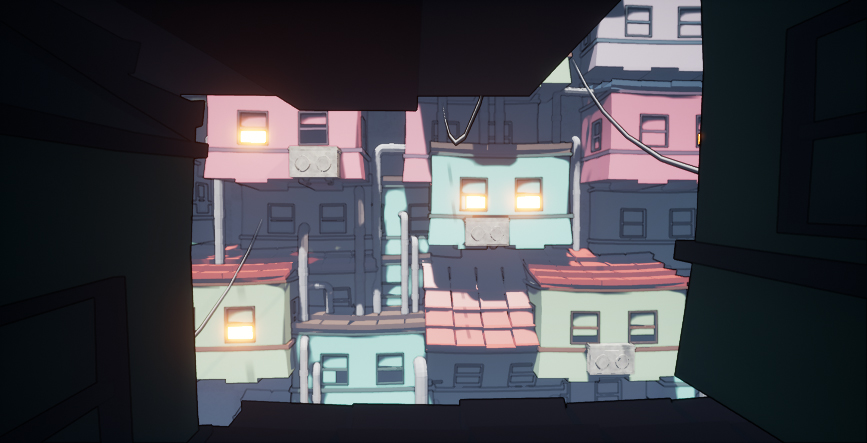
A screenshot from the video game I’m working on, which is heavily influenced by all of the digital studies classes I’ve taken, and I believe it deserves a place in what could be my final post in the digital studies field.
P.S. I used the word frequency as an interesting way of quoting myself, just to keep things interesting. The final sentence of the post is my grand takeaway from this class.
I was just reading through some of the posts and stumbled on Dusan’s post about power cuts in Serbia. I figured it’d be interesting to post one of my own experiences of the same situation in Montenegro.
So my family is sitting on that balcony, I’m inside the house (sorry, no pictures of the interior), watching some the very primitive TV we have available. I’m not really paying attention. In any case, it comes to be very late when suddenly everything just shuts off. Now, we’re not near the city, we’re in a village. A power cuts means complete darkness. It’s an interesting feeling being unwillingly exposed to the darkness, it feels very invasive actually. In any case, we all kind of conglomerate on the balcony to see what we’re going to do. My brother finds one of those wind-up lanterns, and before we know it, we notice wind-up lanterns and flashlights start going off on the balconies and porches of other nearby houses.
The first thing that follows is some form of communication between neighbors which usually never talk to one another when there is power. We wave our lantern, they wave there’s. There’s little background noise, soon we start shouting to one another across the field that is in the middle of all these houses (visible in the first picture). Before you know it, the entire neighborhood is throwing jokes from their own porches and balconies, usually serious people now making noises at each other and laughing. Inevitably, being that the power is out for so long, everyone conglomerates in the field in the middle, people bring food, and we sit around these windup lanterns talking about life, acting like a larger family. All conflicts are set aside, stories are being told, laughs are being shared. And then we hear distant yelling, and we know what it means. A nearby village has gotten power. I look over (again visible in the first picture, but not too well) the valley that’s beside our village, and spot a wave of lights turn on in different villages across the country. We start cheering as well, the lights go on in our village. We all separate, and tomorrow, everyone goes back to not talking and just minding their own business.
It really reminded me of some of the moments in Station Eleven, and I can’t get any of these images out of my head when we read the book. This post isn’t an argument against technology, but more of an interesting insight on a possible effect of a temporary lack of technology. I’m sure that if the power cuts lasted for much longer, that camaraderie would soon turn into chaos.
Nether isn’t exactly the best example for what I’m going to write about, but it is a good example nevertheless (and a personal one, which is more important)!
Basically, Nether was marketed as a game with a lot of potential, and it certainly stood out from its counterpart online survival horror experiences. It stood out because of its incredibly stunning visuals and vertical level design, which is very unique in the genre. Most online survival horror games are very flat, in that they span over large amounts of land, and the buildings are usually never actually tall. I don’t know why it took so long for someone to make a survival horror game in a city, but it doesn’t matter. What’s more important is how this game has simulated the apocalypse in a way it couldn’t even anticipate.
What started off as a very successful marketing campaign, and many followers, is now a dead game, with about 8 empty servers still running. It’s a meta-apocalypse that no designer intentionally accounted for, but playing through it the last few days, has made me think how incredibly effective it actually is. So I used to play this game when I had some free time a few years back, when it was full of players, and full of player killing. It was a very action-packed experience, with many conflicts and many climactic moments in ever playthrough.
Playing it last night was a completely new experience, and I actually loved it. The server was entirely empty. Basically, I was the last person alive, other than a few merchants in the game. And the experience was so much more immersive, I felt so alone and vulnerable. I realized the importance of other people in a horror game like this. There was nobody to clear the safe zones! So all the safe zones were overrun constantly, and I had to just hide out from building to building, snacking on some things I’d find to eat and drinking the occasional bottle of water. Being that the safe zones were overrun, I could never reach the merchants to store items, so everything I did had so much more gravitas.
It’s interesting, and I don’t think it would work in any other scenario. It’s not a single player game, so when it becomes single player, the experience is incredibly unique. I don’t think if the game was designed to be single player, the effect would be the same. In fact, I’m certain it wouldn’t. It was the lack of design for this to be a single player game that made it so incredibly new and fresh.
With the modification for ARMA called DayZ and arguably the introduction of Minecraft to the gaming world, we witnessed a surge of post-apocalyptic themed video games. The surge in these video games is a direct result of the huge demand these games were producing. These games are widely successful and considered the most immersive video games across all genres (the ones that were finished and done properly). Most of the times, they are also very simplistic in nature. There are usually no actual goals other than surviving for as long as possible. The player has a bunch of variables (hunger, thirst, health, sometimes temperature, and rarely sanity meters) which have to be maintained for the video game character to survive, and that’s pretty much it. There are only backstories in these video games. The narrative being directly derived from the experience of the game itself. The visuals (with the exception of the referenced screenshot from Nether, which truly has stunning visuals) are usually sub par, focusing on quantity versus quality (worlds are usually huge).
What these games have going for them however is atmosphere and immersion. Atmosphere comes form sound design, which is mostly minimalist, having the player constantly aware of potential threatening sounds amidst the usual calm ambient. The immersion is rooted in the fact that people actually love the post-apocalyptic rulebook (or the lack of a rulebook (in that the rules are that there aren’t many rules, other than your survival)). Similarly to my comment on Philip’s post, I argue that it’s exactly that no rules approach that is so appealing about these games, and why people keep coming back to them. It’s a chance for escapism, except the character is a reflection of some anarchistic instinctual and primal version of yourself (or something like that (it’s basically a playground where you can get away with any crime)). It’s a little scary how badly we want games like these and how huge their following is then. If we think about it, it’s like, there’s a lot of pent up anarchistic energy in people and we’ve finally been given a place to exhaust it, and it’s crazy how high the demand is.
You know, the reason I say it’s scary is when you’re playing one of these games with a friend, and that friend befriends another person from the game world, and they spend hours working together, and then your friend shoots that other friend in the back and collects all the hours worth of collected loot – and you sit there wondering if this is going to happen to you as well. And you never see your friend the same way again, because now you KNOW they’re capable of backstabbing in virtual reality – it says something about them doesn’t it? Jokes aside, it’s a fascinating thing to watch people show a much darker and sinister version of themselves when granted the opportunity where the results aren’t actually real.
With the introduction of the internet to our lives the dynamic of communication has changed forever. One significant change is the fact that our present is most different from any other time in our history, or at least has the potential to be. What I mean by that is that we aren’t using the full potential of the internet and our present technology to change our current reality. We’re merely adapting this new technology to our old ways. Instead of using the internet to better communicate and prevent propaganda and ignorance, we use it to further confuse and manipulate reality.
Kocurek writes about using green blood for enemies in video games to make killing them seem less impact and important. That enemy, with green blood, is someone other, someone unlike me, so it’s okay. This is a very troubling line of thinking which we actually employ heavily in the western world. Take a look at Hollywood for instance, and count how many villains are foreign people. It’s troubling, because xenophobia is an incredibly dangerous phobia which can one day even end the world, or at least the human race. Making a villain foreign is the equivalent of giving the villain green blood. The only difference is that being foreign is a very common thing, having green blood isn’t real. The green blood in our reality comes in the form of accents we’re used to seeing on “bad guys” in any kind of media.
The sad thing is it’s just bad writing. The problem isn’t that the villain is foreign, but that most times, the villain isn’t given the spotlight enough to connect with the audience. It’s actually a very powerful and important part of writing, that when executed successfully, tends to create much better stories. The Dark Knight is a great example of that, but there are many others. The Joker becomes a character we understand better and in many ways sympathize with. When a “bad guy” is shot, and the only thing we ever learn about them is that they have an accent, or they’re wearing a turban or whatever, then that’s just shallow writing. I am a firm believer that viewers of all media should always care when a death happens. We shouldn’t be desensitizing people to death, we should be working towards an approach where we treat the deaths of others like we do of our own.
I personally find the most fulfillment in creating things that don’t already exist. Bringing imagination into some form of reality (in this case virtual) through which the realm and idea can be shared is something I strive for. Having said that, what better way to share an idea than through a video game. I find the power of strong visuals in combination with audio to be very powerful in immersing an audience. For this project, I wanted to create an alternate scenario, versus something grounded in our current reality (I figured there would be a lot of the former as project decisions, and little of the prior). I decided to use the unreal engine (which is known for its powerful graphics capabilities) and give it a retro twist, both in sound and visuals. The decision came about after re-reading Kirkland’s Resident Evil’s Typewriter Survival Horror and Its Remediations. For my haunted media project to feel more like a relic or bridge to the past, it made sense to make use of a technological aesthetic that is from the past as well. The pixelated graphics and 8-bit music tap into the origins of digital technology and given the background story of the Space Memorial, it would make sense why our robot successors have a more meaningful connection to the advent of digital technology. (Their own creation was most greatly influenced by the digital age – apparently) The space memorial itself is haunted by ghosts which will harm the player in their endeavor to explore the space memorial. The whole point of a haunting is that it instills some kind of emotional effect on the one who experiences it. Usually fear. So I tried, in the limited time to actually build and code the experience, to create some semblance of fear in the player.
There is a whole art to creating emotions in players and an audience in general, and it usually requires a little more composition on the part of the creator to be effective (due to time constraints, there almost were no ghosts). Coding AI for a horror video game is challenging in that the AI must, in its idle state, be roaming the world, so that the player can never be certain about what lurks around the corner. This is in line with the whole goal of creating a haunting, a haunting isn’t cool (cool? attractive?) unless it’s uncertain.
My inspiration for the ghosts comes from a video game I played when I was young (unfortunately, never learned the name of the game, I played it on my cousin’s console). The sounds, poses and general feel of the ghosts was something that really stuck with me growing up. I had a few chances to play the game when I was younger, and it was devastating. I literally couldn’t even play it. I’d start, and I’d hear that terrible moan that the ghosts would make, and I’d drop the controller (I was young, okay?). Fast forward, I’m older now, and still scarred (and scared, no pun intended). The point is, I learned something, and I wanted to use that to my advantage in this project. From the get-go I knew what I wanted the haunting to be. It was just the execution that became the difficulty. Needless to say, after a lot of work, I had created something that is just slightly what I imagined, but it was something.
Of course, creating ghosts means there need to be hiding spots, safe zones for the player to fully relax. I used the whole concept from Amnesia: The Dark Descent, hiding in closets and cabinets does one thing specifically to further the feeling of being in danger. Hiding in closets means that whoever you’re hiding from reigns over the rest of the domain, and your “safe space” is actually a secondary space in the grand scheme of things. It’s a powerful way to say that, you are second to some other creature, you don’t belong here, and you should stay in the closet. All of this sounds exciting and potent in theory, but of course, again, given the time limit, it was difficult to really execute the idea to its full extent. I wish that the player has to mostly traverse through vents, closets, and side routes (inside walls and whatnot) – so that the player never feels like they belong to the world. The idea is there nevertheless.
Moving on. You have a lantern, which gives you some control over your surroundings. You can light dark areas, and see details that are otherwise not visible in the old space memorial. The lantern attracts ghosts however (not actually, because I didn’t have time to code that), but the effect is that your actions in the game can directly endanger you, even those actions which seem to be helpful, can at times be your greatest source of danger. (AGAIN, this all is how it should work in theory, and as much as I actually implemented a lot of these feature, it takes much more than pure intent to actually execute these ideas effectively ala Amnesia).
The setting is an homage to the works of Mobeius, Sergio Toppi, and Tsutomu Nihei. All three are very inspirational artists (first), graphic novelists and comic artists. The world is meant to be monotonous in that it uses a very repetitive pattern, but spectacular in scale and vision. The idea behind it that it is created by robots, and computers tend to specialize in certain aspects and lack in others. For instance, a calculator can calculate at incredible speeds, but cannot learn a language. Back to the project, the setting is in many ways extremely ambitious (an enormous space memorial with huge hallways, bridges, and constructions), made in a very repetitive way with little consideration for beauty and pattern-breaking.
Another important point of inspiration came from Kocurek’s article Who hearkens to the monster’s scream? Death, violence and the veil of the monstrous in video games. I figured, when we talk about a haunting, the “antagonist” is a person from the past. Usually due to some unresolved issue from their life, they remain in our realm to send messages, warn people, harm people, scare people, but in some way communicate. For my project, I wanted to further this idea. The ghosts that roam around are nothing more than dangerous apparitions with no backstory or personality. They are stripped of their own story and purpose, and instead are just one of (presumably) many others stranded in our world, with nothing to do other than hiss and roam around. When we think of othering in the form that Kocurek speaks about, we usually think about things unrelated to “us”. What I mean by that is that we other things we find foreign. I thought it’d be interesting if this was a robot world in which we, humanity, is the “other”.
I attempted to create an experience of a haunted space memorial created by robots in commemoration to their, now gone, creators. The memorial is haunted by the ghosts of our past. But more so than the literal haunting in the project, I was aiming at the meta-haunting which is our species haunting another species. We’ve always been on the end of the chain, looking back at “common ancestors” and histories we didn’t belong to. It’s entirely possible that one day, we become someone’s common ancestor, that one day, humanity will be a collection of data and information, or a digital footprint for other intelligent species to decode and learn from. It is an interesting notion, to think that maybe one day, none of us will exist any more, in the capacity that we witness each other. The notion that we move from the spotlight, into a display (like in a museum) of intelligent life, and none of it will matter to us, because the last of us will be gone. It is a somewhat tragic notion, but interesting nevertheless.
In conclusion, I had a strong vision which I wanted to bring to the digital realm in all its glory. Of course, I would not say that I was successful in fully (arguably even partly sometimes) translating the theories and effects I wanted to. However, the concept is there, and the intent as well. With such a time constraint, it is the closest my vision would become a reality. Technical difficulties are many when creating any project, but this project was deceivingly costly on the processing end of things. Correcting errors and moving through technical obstacles was the greatest issue I had, and it is the reason many features either didn’t work the way they were intended, or didn’t end up in the final version. The experience, despite its horror theme, is supposed to be meditative, with moments of tranquility in which players can just immerse themselves in this world, take a moment, and consider a world without humans, but with humanity. What I mean by that is, humanity seems like it can live on even without us, and it can be the greatest gift we impart on our successors, or our excavators (in the case that we don’t have a successor, but an intelligent species that is able to observe us or find us and our physical and digital remains).
From their very origins, human beings opted to survive in groups, rather than alone.[1] This came with the realization that there is strength in numbers. But even more so than just numbers, there is efficiency and more room for growth in teamwork, task allocation, and dependency on one another. Individuals can specialize and focus on certain tasks which help the collective, trusting that others will do the same, and the entire group will prosper as a result. When a community is formed, its problems and threats are diminished. It is only natural to assume that this behavior, so crucial to our progress and survival, remains an integral part of what it means to be human. To be human, beyond the individual level, means being a part of a collective consciousness where skills like empathy and understanding are necessary for healthy development. As such, over the centuries, like a vestigial organ, our ability to thrive alone has almost disappeared. We are specialized versions of our ancestral selves, thriving in an environment into which we are molded through our childhood, learning necessary social skills to simply pick up where everyone has left off. Having said all of that, it then becomes evident how problematic for an individual, completely dependent on society and others, it is to survive alone. Like throwing a person that never learned to swim, in the sea, the effects of isolation are not an illusion, they are real, and they can adversely affect health[2] and as an extension facilitate fear.
This knowledge isn’t anything groundbreaking and novel, it is common to us all and it’s safe to assume that we’ve all at some points in our lives experienced some separation from those we love and the panic that ensued. It seems logical as well that when in a state of stress and fear, caused by isolation for instance, we experience other fears more intensely[3]. Horror stories exploit this fear of being isolated, to generally create a more terrifying experience. However, the effect is achieved to varying degrees of success. I find the effect to be most effectively conveyed in video games actually due to their interactive nature. Empathy is only so effective in subjecting a viewer to the difficulties a character in a book or film feels. A video game’s interactivity places your very own interests at stake, creating the strongest bond between character and “audience” since arguably the beginning of all storytelling. In this analysis I will explore how isolation is used as a tool to evoke fear in players, how the narrative and game world supplant that fear, and what the varying effects can be in subtly different approaches and design decisions. The games which I will analyze are Outlast (2013) and Call of Cthulhu: Dark Corners of the Earth (2004).
In Outlast the player takes on the role of freelance journalist Miles Upshur who receives anonymous intel that there are inhumane experiments being conducted at Mount Massive Asylum. The premise sets a powerful tone for the story. It uses common tropes and themes to literally “cut to the chase”, the setting is not at all something unique and fresh, but it gets the job done. The job being letting the player know they’re in for a terrifying ride. It’s clear the game does not set out to create a narrative that’s never seen before, instead, it plays up the fact that it’s a game, offering a fresh gameplay experience first and foremost, everything else is secondary. Ever since you start the game you are alone, you reach the asylum by car and cannot use the front entrance, you must find an alternate route, further emphasizing that you are not welcome and that you do not belong. Being unwelcome is a crucial part of feeling alone and isolated. For example, we feel alone if we find ourselves in a situation where others around us do not want us around in the first place. Outlast uses every trick in the book to isolate you as much as it can. Everyone you talk to is either insane, wants to kill you, or both. Needless to say, it is very effective in its methods. As a bonus, there is no method of combat, stripping you of all power in your surroundings – you’ve guessed it, alienating you even more.
Call of Cthulhu: Dark Corners of the Earth[4] is a far more outdated game, and despite the many game-breaking bugs present in its final release, it belonged to an era of video game development when developers were more inclined to experiment and the mainstream was still in the process of being defined. Call of Cthulhu employs many similar “tactics” to instilling fear in its players, yet still does it in way that’s very different to Outlast. The game opens with a cinematic in Arkham Asylum (unrelated to Batman, and yes, Asylums are used a lot in horror stories), then moves into the first section of gameplay at a manor inhabited by obscure cult members who are holding off a police siege. The protagonist, Jack Walters, manages to enter the manor, witness a mass suicide of cult members, meet the leader of the cult who subsequently dies in the siege, and find a secret entrance to a basement in which the protagonist goes insane, upon which he is admitted to the Asylum shown in the opening sequence. This is all very confusing in the beginning and it is by design, the player is supposed to be confused, experiencing some of the madness of the situation first hand. Six years later, Jack Walters investigates a missing person report in a small port town called Innsmouth. This is where the main story actually begins. The town of Innsmouth is unwelcoming and moody to say the least. NPCs visually all reside in the lowest depths of the uncanny valley, their voices are contorted and odd, and they generally give off the vibe that you should not be here, and that you should leave soon. The atmosphere of the game is incredible in further conveying this feeling. A dark moody setting, decrepit buildings, cold weather, odd conversations between NPCs, the occasional terrifying hallucination due to your character being a recovering asylum patient, and the scripted sequences where you see yourself through the eyes of a stalking creature wandering on the roofs and through the dark alleys of Innsmouth all play into the incredibly powerful atmosphere. The game starts out with no combat, as an investigative puzzle-solving detective game, and turns into an all-out shooter by the end. The game supports both sneaking and combat as playable methods. There is also no HUD, which helps the immersion of the game. And even more notably than the HUD, is the insanity meter, which fluctuates dependent on how many terrifying or grotesque things your character encounters in the game. A full insanity meter causes the protagonist to commit suicide.
Both games are very successful in maintaining a sense of alienation and isolation. Whether it’s by making a player feel unwelcome, or just generally through gameplay aspects mentioned above. Where the comparison between the two becomes important is the varying degrees to which the player is made to feel isolated based on a few crucial differences in approach. In Outlast you enter an Asylum where from the get-go, you not only feel unsafe and unwelcome, but you know that your first encounter with anything breathing will be very unpleasant. In Call of Cthulhu once you reach Innsmouth, the population of the town is displays its xenophobia, but you are generally safe to wander around, speak to people, and although made to feel unwelcome, you can at least speak to people and so you don’t feel as alone. This feeling is dramatically contrasted with the moment the whole town turns against you and becomes very hostile towards your presence. It feels like you walk into a den of lions who are at first disinterested in you, causing tension with every next step to increase, because they are very much aware of your presence, and you know that it’s only a matter of time before you become the prey. This method of contrasting is incredibly powerful in making the hostile parts of the game seem even more, because you are provided a point of reference when you could at least coexist with those around you. Outlast on the other hand doesn’t provide this contrast, as mentioned earlier, opting to barrage you with tension and hostility from the moment you enter the Asylum.
This brings me to the next point. Call of Cthulhu then becomes a stealth game where you are trying to escape the town to save your life. Along the way, you meet characters who seem to be normal, which serve as brief moments to catch one’s breath. Again, Outlast opts for breathers in the forms of entering a ventilation shaft where you know you can’t be caught, but other than logistical and physical barriers, there is no comfort in the presence of “normal” people. Somewhere in Call of Cthulhu you manage to escape the town, and all seems well, until you find yourself in an FBI vehicle headed back for a factory in the town. The horror is real when you finally breathe a sigh of relief that you escaped, only to realize you are going back into the hell which you worked so hard to get out of. This time around you are well equipped, and you have allies. The cruel aspect of this is that just as quickly as they appear, they are one by one picked off. More interesting than this “trope” of losing team members, is how quickly you grow attached to normal people in such bizarre scenarios.[5] It happens once more in the game when you are fighting alongside even better equipped marines, who also all meet their untimely deaths. The game gives you comfort only to take it away and remind you how cold and lonely the game world really is. In contrast to Outlast which maintains the same circumstance, and never attaches you to the idea that there is any person you can trust in the asylum. Going back to the sense of attachment, Call of Cthulhu, by design or not, is able to introduce characters you truly care about, without ever providing backstory, or any important character details. The catch is that in the circumstance, our hardwired ancestral need for teamwork kicks in, there is another normal, conscious individual who is witnessing and experiencing the horrors of this world with you. Madness is such a large theme in Lovecraft’s work, it’s a sigh of relief when you’re not the only one experiencing the insanity and terror of the world.
One must ask themselves, upon playing the two games, which method of approaching the horror of isolation is more powerful. The two options seem to be either isolating a player entirely from the start, with no hopes of return, or offering glimmers of hope only to quickly jolt you back into your terrifying hellish reality. Both methods have their own advantages and disadvantages. Namely, the first option creates a very stressful experience for the player. You are constantly on your toes. It feels like you are holding your breath the entire time you’re playing. However, humans are adaptable by nature, as such, it is entirely possible to grow desensitized to the tension and understand that there is no hope, and that this reality is there to stay. On the other hand, the second option gives a chance to players to take a breath, offering them artificial moments of lowered tension. It’s like walking through a terrifying unwelcoming dark hallway, into a well-lit welcoming room, knowing that you can’t stay there forever, and that the next door leads to another dark hallway. The reluctance to move forward and back into the dark can sometimes become crippling. Having said that, the moments where you can catch your breath can sometimes actually be very helpful in maintain ones composure and actually completing the narrative. There is no one right way. As mentioned, each method has its drawbacks and strengths, and it really depends on the person experiencing the situation. Regardless, it stands that horror is best experienced when made to feel isolated, not by chance, but by nature.
[1] Boyd, Robert, and Peter J. Richerson. “Culture and the Evolution of Human Cooperation.” Philosophical Transactions of the Royal Society B: Biological Sciences 364.1533 (2009): 3281–3288. PMC. Web. 2 Mar. 2017.
[2] Ye Luo, Louise C. Hawkley, Linda J. Waite, John T. Cacioppo, Loneliness, health, and mortality in old age: A national longitudinal study, Social Science & Medicine, Volume 74, Issue 6, March 2012, Pages 907-914, ISSN 0277-9536, dx.doi.org/10.1016/j.socscimed.2011.11.028.
[3] V. Vachiratamporn, R. Legaspi, K. Moriyama and M. Numao, “Towards the Design of Affective Survival Horror Games: An Investigation on Player Affect,” 2013 Humaine Association Conference on Affective Computing and Intelligent Interaction, Geneva, 2013, pp. 576-581.URL: ieeexplore.ieee.org/stamp/stamp.jsp?tp=&arnumber=6681492&isnumber=6681389
[4] Based on Shadow Over Innsmouth by H.P. Lovecraft
[5] Interestingly, this is kind of exactly what Kocurek talks about in his paper, except it’s extended the other way as well. In the game you are fighting monsters, and it is clear they are otherworldly, alien, and not to be cared about. On the other hand, the game does an incredible job of attaching the player to allies in the game, to characters we should care about, who we do not want to see die, and whose deaths are meaningful. This is very important as many games are not able to create this sense of attachment, and usually suffer from not evoking the player’s empathy. It is a very strong, albeit small, aspect of Call of Cthulhu which is worth being inspired by.
After reading Kocurek’s paper, I was compelled to expand the point of the paper into a broader, more extensive topic. I decided to explore the role and nature of antagonists in video games. I read through papers, articles, interviews, blogs, and forums to try and find some common ground or some idea which was worth investigating. The idea that I find most troubling which seems to surface in every work I read, and that Kocurek’s paper covers is “bad guys”.
The term “bad guy” is used with kids as a shortcut when explaining that some person shouldn’t be trusted, is dangerous, or is generally just someone a child should stay away from. It’s a way of avoiding any explanation and analysis about a situation that a child is usually not capable of at their age, or lacks the experience to connect the pieces even if an explanation was provided.
So why do adults use it in English? (I say in English, because there’s no such thing in either Serbian or Greek, however my knowledge of languages does not extend beyond these three languages, so I can only speak for English) I hear adults use the term all the time, even on TV. I’m sure I recall times when journalists use it to cut to the chase. And it’s a little problematic. As adults, and capable individuals, we shouldn’t ever fall back to such a juvenile way of thinking (it’s not about the term itself, it’s about the connotation of the word and its usage). Are we not capable of understanding another person’s reasons, feelings, and circumstances? To cut to the chase, at its core it displays a lack of empathy (something that children learn to develop over time as they begin to understand their role in the world) (something adults should already have).
There is no such thing as a bad guy. No person is born evil, and no one person is purely evil. Any such belief will only further divide us and create nothing but tension, distrust, and ultimately conflict between people. There are evil acts (acts that violate the rights of others), and people are capable of them. It is still important to evaluate all situations for what they are, setting aside any absolute views and ideas that are purely subjective (bad guys).
“The presentation of military conflict – particularly military conflict based on real – world historical events– as a conflict with monstrous others can be particularly disturbing as it echoes long-standing military propaganda strategies.” – Kocurek
As a person of Slavic descent (with no noticeable accent) that grew up in Eastern Europe, I used to wonder why all “bad guys” had accents like my parents when they spoke English. My parents are great people (that’s an understatement, they are some of the best people), but why do so many villains in both video games and movies have these accents. As a kid I didn’t understand, but I was soon introduced to the reality of the Cold War (which is very much alive, and I believe very heavily perpetuated by this very portrayal of Slavic people as inherently violent, tyrannical, and Communist – all of which are entirely false). My point being that the media usually does a terrible job of showing any kind of empathy, instead opting for a more profitable mainstream popular view (remnants of various propaganda).
In summation, Kocurek is right, and even beyond his point, all media has an incredible power to “other” others, to create even larger cultural and ideological gaps, and even to control our way of thinking. I think it’s important for any individual who believes themselves to be analytical and aware, to see beyond tropes, stereotypes, and ideologies. Behind the scars and hard Slavic accents of my parents, are some of the warmest hearts you will ever get a chance to meet – if you give them a chance in the first place.
Both The Exorcist and the Black Mirror episode “Be Right Back” share a common theme in questioning the meaning and nature of the “self”. What does it mean to be a person? What defines that person? Their memories? The memories others have of them? Both? Their physical self?
I would argue it’s not the physical self, meaning the person incarnate, and I believe many would agree. Our physical selves are constantly changing, reforming, like the Ship of Theseus. So if not in the physical plane, where does the “self” exist? It’s fascinating to think that such a crucial part of being human exists entirely outside of any measurable and quantifiable plane. As many questions as science has answered, and will answer in the future, it is entirely realistic to consider that maybe the “self”, the “consciousness”, the “ghost in the machine” will forever remain outside the reaches of any scientific method, and as such, outside the reaches of “solid evidence”. Maybe that makes sense. There is no solid evidence for something that doesn’t exist in any state, for something that hovers outside the reaches of all physicals laws. Are we looking for something that doesn’t exist? Can we just trust our instinct, our gut feeling that we do truly exist on another plane?
In Black Mirror we are shown an example of how a simulation of the “self” ultimately falls short of the true self. This is the very blatant point the show tries to make, but I like to point out something that I find much more interesting.
Let me begin by splitting the “self” in three categories. The “outer self”, the “inner self”, and the “deep self”. The outer self is a combination of everyone’s memories of us, how we exist in other “selves”. The “inner self” is our experience of ourselves and our life, which not only define us, but how we are going to live every next moment of our life. The “deep self” is the purely instinctual or the suppressed self which on extremely rare occasion surfaces.
In Black Mirror Ash has some of his outer self, very little of his inner self, and a substitute to his deep self in the form of generic behavioral patterns. Even if he had all of these fully transferred from Ash, he still wouldn’t be Ash. Not because he wouldn’t be convincing, but because his code can be traced back to its origin. This is the most defining factor of the “self” which goes beyond the aforementioned three categories and is the most important. The human “self” cannot be traced back, the code cannot be broken down and followed to its roots. Memories can change, as well as ideas, but the essence of consciousness is in its unique nature.
In The Exorcist we get another example of someone losing their “self” in the form of possession. I find this example a lot less intriguing as the girl has no recollection of her possession and as such only further emphasizes how the physical “self” doesn’t exist. While she was possessed, she was not herself, and when she returns, she reverts to her “self”.



 Source

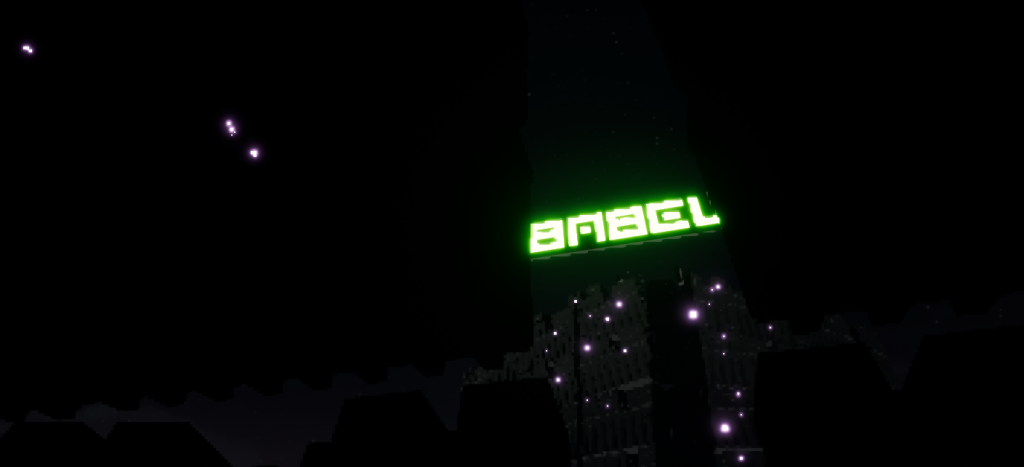

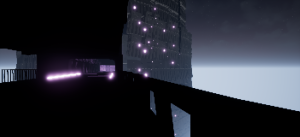
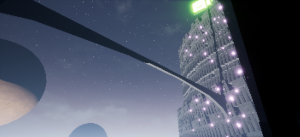
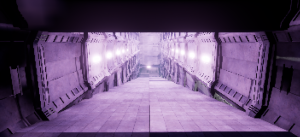
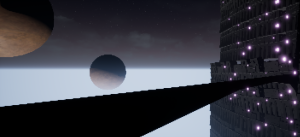
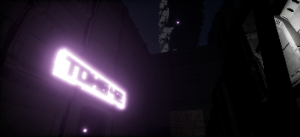
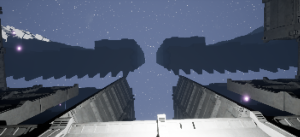
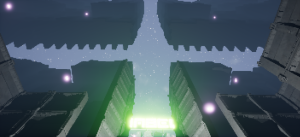
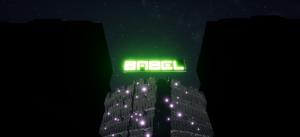
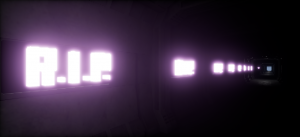
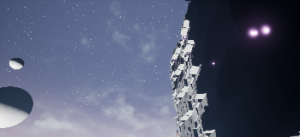


 Image picked up from


