Looking back at my past blog posts, I have a little trouble nailing down a unifying theme that encompasses my posts (other than death in the digital age, that is)–I mean, they ranged topics from Baudrillard’s simulacra (my first post) to radioactive wolves (my final post on the blog before this reflection) after all. The most accurate characterization that I can think of would be that, in writing my posts, I generally intended to connect experiences I had with other works (often in other media) to our own course material.
But then again, any other student in our class could probably make the same claim; all the same, it is the only one that I feel can apply to my posts. What I can do to a greater capacity is track some of my thinking. I notice that my posts started out concentrating heavily on the intersections between other academic experiences that I have been through. With that first post, I noticed a connection between DIG 215, my documentary film class, and an earlier English class that I felt compelled to explore. Likewise, with my post on “The Yellow Wallpaper,” I found a connection between a favorite English reading in high school that I knew informed A Headful of Ghosts.
I can also identify some subjects that I particularly enjoyed writing about and would be interested in exploring. It may just be my inner nerd, but I definitely enjoyed bringing in interactive media (read: video games) into my writing and connecting them with works in other media, especially in my essay for our comparative horror project. I had hoped to integrate a similar mixing of media for our final paper–hoping to use Westworld (2016-) and a game called Soma (2014) to explore the value of artificial life–though I realized it would not be possible given the limits on the assignment. And of course, I would love to continue studying horror films and TV shows, and perhaps even expand into other medium like comics as well.
Ultimately, I happily found myself covering a wealth of topics that caught my interest and tying them all back into my work for this class–an opportunity that I had never truly encountered before this class.
While procrastinating on other work this week, I watched a documentary that was posted on Reddit that I thought might be of some relevance to our class (and could extend the examination of the social media site I started with my Haunted Media project). Thinking back to some of the concepts we looked at in early April, I was mainly drawn to the Reddit post by a title that, at best could be described as clear hyperbole and at worst, as an outright attempt at clickbait–“Radioactive Wolves Of Chernobyl Scary Mutations (2013).” Meanwhile, the documentary in question is simply entitled Radioactive Wolves and aired in 2011 as part of PBS’s Nature documentary series.
Although the Reddit post exaggerates certain aspects of the hour-long documentary, it channels the spirit that the documentary invokes to hook viewers into watching what is essentially the first episode of the twenty-ninth season of a nature TV show on PBS. Necessarily, under the guise of providing background information, the documentary taps into the same human fascination with disaster that the dark and toxic tours capitalized on in the Yankovska and Hannam article. There is even a segment that indulges in our morbid fascination with kenopsia as it explores the abandoned cityscape of Pripyat (complete with shots of the abandoned amusement park, forgotten children’s toys, and disturbing graffiti to drive the creepiness home).
These small segments of the hour-long episode certainly tap into the fascinations of popular culture; however, they take a backseat to the main focus of the documentary–the wolves of the Chernobyl exclusion zone. The documentary actually follows the research of biologists and ecologists who are curious about the long-term effects of radiation on the local gray wolf population. They encounter rumors fed by popular opinion that say the area is home to over three hundred wolves of abnormal size (which would make it the biggest population of gray wolves in the world). Eventually, they find that the rumors, much like the clickbaity title, are wrong and that their numbers and size are fairly normal. What the scientists were surprised about was how well the surrounding area seemed to be doing despite the long-term radiation exposure. In the absence of humankind, the local animals and plant species all thrived and showed no signs of the adverse effects of the radiation.
Of course, such an end could seem like a disappointment compared to the “Scary Mutations” we were led to expect. The comments on both the Youtube video and the Reddit post mimic each other in tone and spirit. Ranging from issues with the title to jokes about Russia, the Fallout franchise, cute animals, and Trump, the most popular comments seem to want to talk about anything else besides the phenomenon observed with Chernobyl’s ecosystem, the wolves’ well-being, or even the disaster itself. Digging deeper within the comments yields some better fruits and gets at the greater significance of the documentary. With this film, viewers confront the uncomfortable truth that humans could prove to be a more dangerous ecological threat than even nuclear catastrophe.
Nature: Season 29 Episode 1 “Radioactive Wolves” (2011) via PBS
The Queen’s Premature Social Media Death via Mirror
In reading Emily St. John Mandel’s Station Eleven, I found myself drawn back to the earlier parts of the novel in St. Deborah by the Water, specifically those concerning the sinister prophet and the bizarre burial customs he seemed to impose on the town. While the prophet’s grasp over the town is clearly implied to have some fairly disturbing results (his request of Alexandra as a peace offering!), what I find myself particularly interested in and perturbed by is this premature funeral habit of his.
It certainly says something about his attitude and behavior towards death. From what little we have seen of him, this small-town prophet seems to exercise an almost godlike power over the people of St. Deborah by the Water, rattling on about his purity and as he wields unquestioned power. With the burial’s for those that are not actually dead (rather are “dead” to him), the prophet extends his godlike control to death itself.
Though the prophet’s power over death at first seems all too human–it becomes a tool of dominance and oppression rather than a universal process to respect the dead–I find myself unusually disturbed by his near-deific redefiniton of the concept of death.
We have certainly spent time discussing literal and figurative death before, touching on the latter with instances where a person would often be mistakenly declared “dead” by social media. With the practices of St. Deborah by the Water, we see a chilling analog to this premature Twitter or Facebook death. While it seems easy for a premature post or obituary about someone to become viral, it seems distinctly more complicated to convince an entire settlement to change their own conceptions of death–which only hints at the terrible stranglehold the prophet has on the town to be able to redefine death.
In their article about dark and toxic tourism, Yankovska and Hannam mention the video game franchise S.T.A.L.K.E.R., which centers around an alternate history take on the Chernobyl Exclusion Zone. For them, the games stand as representative of the popular mass-media distortion of the disastrous events at Chernobyl.
But although it certainly does misrepresent the event, I don’t think S.T.A.L.K.E.R. intends to exploit the victims of the accident. Rather, I think the game series acts as a manifestation of our fascination with disaster and devastation (particularly the kind that involve nuclear causes) as mentioned in our earlier reading by Susan Sontag (“The Imagination of Disaster”). Other game series deal with similar kinds of devastation, perhaps most notably the Fallout franchise.The game series themselves are quite dissimilar in tone and subject matter–S.T.A.L.K.E.R. uses a pseudo-horror lens to show an alternate take on a real event, whereas Fallout gives an action/adventure-RPG look at a fictional nuclear apocalypse.
However, they do overlap in their portrayal of fictional nuclear destruction on the real world. Both game series incorporate real world locations to revel in the horrifying destruction that comes with nuclear apocalypse–S.T.A.L.K.E.R. with its semi-realistic depictions of Chernobyl and Pripyat, Fallout with its imagined ruins of Washington, D.C. and Boston (among others). In this manner, the games tap into the dark and toxic tourism discussed in the article. They capitalize on the same fascination that the tours do, acting as virtual dark and toxic tours while also engaging a wider than the tours ever could.
In discussing death and its relationship with technology, we devoted a considerable amount of time and energy to discussing how technology can expand the ways in which we both encounter and engage with death—be they via memorialized accounts, digital wills, or even cyber cemeteries. What we have not spent as much time or effort considering is whether technology can trivialize real-world death.
We have certainly talked about technology’s desensitizing aspects in discussing video games; it almost seems like an unavoidable pairing—violent video games and claims about desensitization. In fact, we read an article by Carly A. Kocurek (“Who hearkens to the monster’s scream? Death, violence and the veil of the monstrous in video games”) in which she focuses primarily on violence and attempts to mitigate that violence through dehumanization and the monstrous. Kocurek finds that a common side effect of these attempts, however, is desensitization to violence that echoes “long-standing propaganda strategies…used to justify real-world violence against marginialised groups [sic]” (Kocurek, 88). With her article, Kocurek cautions against the unquestioning acceptance of video games’ treatment of violence, especially as it relates to the finality of death.
In addition to the dehumanization that she points out, video games also exemplify the manner in which technology warps the impact and consequences of death. In most games today, death is not permanent (games that do have “permanent” or more consequential deaths or often marketed on those aspects themselves). Rather, it is a temporary setback, often even designed as a hook to get the player to keep playing rather than discourage him or her to quit. Some games even attempt to make death entertaining—coming in the form of everything from a simple fall in a Mario game or the graphic disembowelment of Mortal Kombat. A host of games even let the player re-watch or re-experience their own death like the Kill Cam in Call of Duty or the Super Meat Boy deaths replays, crafting that enjoyment of mortality into the core element of their games.
Other evidence applies similar arguments to other forms of media. With her article “Media Exposure and Sensitivity to Violence in News Reports: Evidence of Desensitization,” Erica Scharrer suggests that video games are certainly not the only desensitizing agents in our lives; television and films also do their part to desensitize us to violence, and, as relatedly, to death. She actually goes on to say that “extreme” forms of violent media—like horror movies or violent video games—are not the only contributors to our desensitization; rather, even “daily exposure…” to commonplace depictions of violence and death as seen in places like “ordinary news media outlets” can weaken our emotional responses to and perceptions of violence and death (Scharrer, 301-302).
Still, most news outlets tend to treat these subjects with professional respect and reverence. Newspaper and local news affiliates, especially, seem to honor their material by reporting appropriately concerning the topics of death or violence—as they usually intend to foster ties with the community and also only have a limited amount of time or space to which they can devote their coverage. Essentially, there are limits imposed by these means of “daily exposure[s]” on their coverage.
The “daily exposures” that are cable news networks are a whole different manner. These businesses unabashedly milk tragedies for all their worth, relying on them for steady income and viewership. Networks liked CNN or Fox News or MSNBC trivialize death by covering it on repeat and rehashing the same sad looks, phrases, and statistics to maximize their viewership.
But cable news networks are nothing new, and clearly not what one would call technological innovation. Instead, the digital successor to the “daily exposure’ of cable news would be social media. After all, what else besides social media and could devalue everything it hosts through sheer overexposure in the manner that cable news does. With social media, death again takes on the familiar form of entertainment as it did with video games or network news, also stemming from similar reasons. Like video games, death on social media is means of temporary form of amusement, whether it comes as a silly Darwin Awards-esque video or an article to get incensed about briefly, we always end going back to back to browsing through friends’ profile pictures. It is only on social media that an article concerning a group of students dying in a fire is essentially giving the same weight as cute puppy gif.
This devaluing of death was actually the motivating idea for my Haunted Media Project. At first, I intended to tell a story about death via social media—specifically a mystery about the death of a group of students solvable through hints dropped on social media platforms. I was hoping to represent the entertainment value of death, essentially seeking to amuse the reader with a story of death in commentary on the relationship between that media, the story, and the audience.
However, I encountered several problems with that approach. First and foremost was one of logistics. It was admittedly quite difficult to juggle all the accounts that I had intended to use—hard keeping track of everything, but even more difficult registering them, as most websites, especially Facebook and Reddit, require numerous identity verification steps all throughout the process. As such, I re-evaluated my goals, and instead strove to represent the desensitization to death that I have described above, creating a subreddit, two websites, and about twenty-four accounts to populate these digital spaces.
Rather than tell the mystery that I first set out to do, I intended to model the devaluation of death into a fleeting form entertainment via social media. I still kept elements of my first project idea, keeping the budding fictional metropolis of Springfield, North Carolina. I made a subreddit for it (r/SpringfieldNC), drawing inspiration from the subreddits of other cities (and other subreddits in general), and proceeded to populate that subreddit with a host of fairly vacuous posts, ranging from a post about an annual Police barbecue to an unanswered request for gym recommendations. The one relevant post (and fairly meaningful one outside of the protesting picture) is the one concerning the fire at the local university, sandwiched between a post about a hot dog stand called Wonder Wieners and a question looking for a reptile guy for a kid’s party. If one were not specifically told what to look for, one would likely miss that post completely, as there is nothing besides title that sets it apart from the other posts.
Clicking on the fire post leads the reader to a barebones local newspaper article that goes over the details of the fire in brief without really saying much requiring much attention. This is meant to parallel the kinds of articles that are often linked via social media sites like Reddit. Rather than read a detailed article, many users might read the headline or post title and go directly to the comments, where the article will often be summarized (either by another user or a bot) in a single line starting with the acronym TL;DR (standing for “too long, didn’t read). Or, even more helpful than the summaries, is the user that gives live updates in the comments about culled from Police Scanners, Tweets, live broadcasts—a user overeager to get involved in the gritty details of the events depicted in my project.
Here, the over-helpful user gives a link to the site of the university where the accident happened. This site is intended to poke fun at institutional responses to tragedy—especially those that happen via the Internet. Here the university offers up a relatively cold, formulaic response to tragedy that echoes the detached nature of its online medium—complete with a flickering candle gif for people that died in a fire. The help they offer is not quite helpful at all, and the site constantly links to error pages as the University site was not prepared to handle the traffic at the magnitude it was. Additionally they talk of hosting and moderating a group memory page for the deceased individuals, but there is very little headway made there at all, suggesting an overall disinterest in the grief of others.
Of course, along with the gung-ho white knights, there come trolls. We have seen the damage trolls can do with articles like Whitney Phillips’s “LOLing at tragedy: Facebook trolls, memorial pages and resistance to grief online,” but, with the general devaluing of and detachment from death that is propagated by technology and social media, we also see can see a change in the trolls. As a result of that detachment, there’s less personal involvement (both from trolls and normal users) within the comments section of a post about death; in fact, sometimes even the users that are involved in the constructive (or at least non-trolling) discussion in the comments might still end up making a tasteless joke. Yet the divorce of the users from the subject matter and serious tone allow for those kinds of jokes, which are often received well with numerous up-votes on the site. Together, these elements are intended to model the devaluing and detaching nature of social media as it related to death and technology.
Works Cited:
Kocurek, Carly A. “Who Hearkens to the Monster’s Scream? Death, Violence and the Veil of the Monstrous in Video Games.” Visual Studies 30.1 (2015): 79–89. Taylor and Francis+NEJM. Web.
Phillips, Whitney. “LOLing at Tragedy: Facebook Trolls, Memorial Pages and Resistance to Grief Online.” First Monday 16.12 (2011): n. pag. firstmonday.org. Web. 6 Apr. 2017.
Rogers, Katie. “What Is a Constant Cycle of Violent News Doing to Us?” The New York Times 15 July 2016. NYTimes.com. Web. 6 Apr. 2017.
Scharrer, Erica. “Media Exposure and Sensitivity to Violence in News Reports: Evidence of Desensitization?” Journalism & Mass Communication Quarterly 85.2 (2008): 291–310. Print.
So far in class, we’ve spent a fair bit of time discussing what happens to a people’s digital accounts once they die, yet we’ve spent little time talking about what happens to one’s account once a service itself dies.
Kashmir Hill’s Fusion article “This Start-Up Promised 10,000 People Eternal Digital Life—Then It Died” focuses on that very concept as it examines the death of Intellitar, a Black Mirror-esque online memorial service that closed its doors in 2012. The service that Intellitar offered seemed very much like a modern-day precursor to robo-Ash in Black Mirror’s “Be Right Back”–the company charged $25 a month to turn a collection of personal data provided by users to create an “immortal” avatar of the user.
Intellitar CEO Don Davidson’s “Immortal” Avatar via Popular Science
But we see in the article that one’s avatar, and therefore, one’s digital immortality, is contingent upon the lifespan of the company. As Hill points out, the text files, photos, and other media uploaded to Intellitar might be easy to back up. However, the more complicated proprietary parts of the service–the avatars themselves and the technology behind them–could not be backed up by the basic user.
We entrust so much of ourselves–literally our own identity and memories, in this case–to these digital sites and services without considering the mortality of the site or service. But digital services die frequently too.
Online game services provide a similar (albeit lower stakes) scenario to that of Intellitar. Game services like World of Warcraft, EVE online, and even Club Penguin (rest in peace, it dies today on March 29) have provided digital spaces for people to sink countless hours and dollars into, but those games last only as long as their servers run. Once they’re taken offline, everything the user has given them–time, money, effort, even pieces of themselves–dies too.
How to Sign the Guestbook at a Funeral or Memorial Service via Everplans
In her article “David Bowie and the Rise of the Grief Police,” Megan Garber argues that, sometimes, the act of grieving online (often publicly, such as via Facebook) does not have to be a “deeply insincere” act as Camilla Long tweets. Rather, it can be a “declaration of support to the deceased’s family and friends,” almost like a virtual “condolence card” for the loved ones (even if it is personally addressed to the deceased).
Plenty of condolence cards and memorial flowers come from people who did not have a close relationship with the deceased (or any at all). Though these condolences can be touching and personal, they may also simply express sorrow for the family’s loss–a universally human sentiment that can still carry some weight for the loved ones regardless of the sender’s actual relationship to the deceased. As Garber points out, that does not make them much different from memorial posts online.
In class, I brought up a similar idea in our small group’s discussion. What makes a memorial post much different than signing a guest book at a wake? On the one hand, posting on a memorial page is often in a more public forum, which certainly lends the post many of the negative aspects associated with other public posts–this is something that the poster wants you to see, something that is curated and meant to communicate a certain message or agenda.
On the other hand, we can focus on different aspects of a memorial post. If it’s posted on a page created specifically to mourn or memorialize a certain person’s passing, that page is often not ostensibly meant as a place for people to gain social capital; rather it may be created by family, friends, or loved ones for those affected by the deceased. Like a sizable crowd at a funeral, a mailbox packed with condolence cards, or a completely full guest book, a populated memorial page can help the loved ones of the deceased deal with the unendurable–it can comfort someone knowing that their deceased loved one had a tangible impact on so many different people.
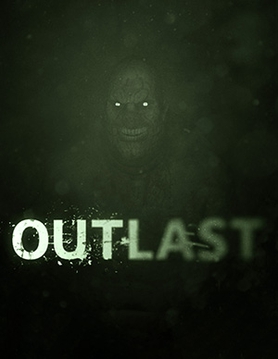
The Blair Witch Project (1999) Box Office Artwork via WikipediaOutlast (2013) Promotional Art via Wikipedia
A forest, an asylum. A film crew, a reporter. A witch (maybe), mental patients (and worse).
On the surface, The Blair Witch Project (1999 horror film) and Outlast (2013 horror game) seem to share little more than the same overarching genre. Looking at simply a narrative level, the common ground does not improve greatly. The Blair Witch Project comes from independent directors Daniel Myrick and Eduardo Sánchez, presented as found-footage shot by film student Heather and her crew members (Joshua and Mike) for a documentary about the titular Blair Witch. Meanwhile, Outlast, by independent studio Red Barrel Inc., follows investigative reporter Miles Upshur as he documents his attempts to verify a tip about inhumane practices at the private Mount Massive Asylum for the Criminally Insane. Perhaps one of the few aspects they do share is a certain critical subgenre fatigue that clashes with their mostly positive reviews. Found-footage seems to be collapsing under collective weight of all the Paranormal Activity movies and Blair Witch remakes, while first-person games have to suffer the baggage of every iterative first-person action-shooter.
Paranormal Activity 4 (2012) Box Office Art via Rotten Tomatoes
Where these two works explicitly do intersect is in their similar use of technology, specifically that of the camera. The Blair Witch Project and Outlast both rely on footage from diegetic cameras operated by the main character(s) and shot mostly in real-time, making both of them works of first-person “vérité horror” as coined Barry Keith Grant in his essay“Digital Anxiety and the New Vérité Horror and SF Film” (Grant 153). This common visual and narrative framing found its popular start with The Blair Witch Project in 1999 and has since then been adapted and tweaked by interactive media to a crystallized form represented by Outlast in 2013. Together these two works form a dialogue that offers a chronological record of its evolution and informs the vérité horror mode as a whole.
Though it certainly was not the first instance of vérité horror in film (many would argue that the title goes to Ruggero Deodato’s Cannibal Holocaust in 1980), The Blair Witch Project was certainly the film that popularized both the subgenre and its subcategory, found-footage. As such, The Blair Witch Project exemplifies much of the characteristics identified by Grant as vérité horror. The entirety of the film is shot on the two diegetic cameras that the documentary film crew carries with them into the woods in Burkittsville, Maryland. Additionally, whether conscious or not, the actors channeled cinema vérité’s respect for “real-time” in their depiction of real-life duration of events. And, even more effectively, these amateur filmmakers (both the directors and the actors) convincingly represented “real-space,” prompting viewers to “anxiously search the periphery of the screen for…something that simply [was] not there” in the words of Scott Dixon McDowell (qtd. in Grant, 165). In keeping with its style of shooting that would come to be known as “shaky cam,” The Blair Witch Project presents flawed, impartial, or even obscured glimpses of the film’s horrors purposefully in a skillful ploy to up the suspense of the film as audiences wait for a big reveal that never comes. Instead, audiences find themselves stuck, eating up the amateur aesthetic of “real” fear while simultaneously wishing it would break its own rules.
The real-life directors of the film took vérité horror a step further, having their actors film their trip, improvise their lines, and actually camp alone in the woods for long stretches of time–“method filmmaking” in the words of Myrick (qtd. in Heller-Nicholas, 97). This “method filmmaking” functions much like cinema vérité, dissolving the boundaries between “the artificial” and “the real” so that the audience has trouble telling the two apart. The Blair Witch Project certainly succeeded in walking that line, as a large part of its popularity surrounded whether or not it was “real.” Accompanied by a strong (mostly Internet) marketing campaign, seemingly encouraged the controversy of its veracity. No matter the audience opinion, these calculated advertising pushes kept the film at the forefront of conversation for a sizable amount of time.
These extratextual reminders of the controversy and the medium itself serve to evoke in viewers a further elevated sense of reality, striving for an effect labeled “hypermediacy” by Jay David Bolter and Richard Grusin–a sort of hyper-self-awareness in regards to media and technology possessed by certain works. The Blair Witch Project touts hypermediacy even within the text itself, its characters almost revelling in their acknowledgements of the camera, juggling of filming, mocking of the documentary process, and even direct address of the (intended) audience of the film.Together with its marketing, these elements work in conjunction to create a hypermediacy that further elevates the vérité horror of The Blair Witch Project.
Further adding to the hypermediacy resulting from the online marketing and authenticity debate, film critic Alexandra Heller-Nicholas argues that the creators of The Blair Witch Project engineered an “alternative reality game” (ARG)–an interactive narrative using transmedia storytelling that often acts as promotional material–that made viewers “actively partake” in part of the production of The Blair Witch Project’s vérité horror. This added enticement to involve the viewer comes on top of the first-person perspective that the film employs, and is further amplified by the inherent “interactivity” that Grant argues is significant to the vérité horror subgenre. He argues that when the diegetic “camera operator interacts with profilmic event” (the event happening in front of the camera), the film encourages the viewer to abandon their abstract detachment from the film and subconsciously identify with the camera and camera operator. With this its additions to vérité horror’s built-in interactivity, The Blair Witch Project sets a remarkably high standard for audience involvement.
In discussing interactivity in horror, the mind might naturally jump to horror video games. Grant spends a considerable amount of time comparing cinematic vérité horror to horror video games, especially survival horror games. Grant provides a strong definition for survival horror, which he defines as a subgenre where “the player fights monsters” with limited means of resistance, “often in enclosed, maze-like spaces while searching for hidden items that will allow movement to new areas…or provide various means for staying alive” (Grant, 163). He traces this term back to the 1996 release of the first Resident Evil, a fixed-camera zombie game that depended on its confusing spatial design, challenging puzzles, and (most importantly), its extreme scarcity of ammo and resources. In the almost two decades since then, survival horror has bled into the first-person market–the result of which has recently pushed the subgenre to an extreme. After the critical and financial success of 2010’s Amnesia: The Dark Descent, first-person survival horror games have embraced an almost complete powerlessness in contrast not only to the recent glut of action-oriented first-person games (think shooters like Call of Duty and Halo), but also to even Resident Evil’s limited combat. Outlast follows in this vein, emphasizing from the very beginning that you, the player character, cannot fight, rather you can only run and hide, and you have no weapons or tools except for a night vision-enabled camcorder with which to “record” the events of your investigation.
Outlast’s camera interface (plus incredibly big scissors!) via Giphy
With this mechanic, Outlast creates an unusual relationship with the player and the character, as you interact with the game world in an unusually passive manner for a first-person game, yet you actively spectate these interactions by recording with the diegetic camera. Despite this paradox of control, Outlast still essentially takes the immersive nature of vérité horror to another level.
Perron highlights a distinction between emotional reactions to horror mythology and conventions. Among other types of responses, he distinguishes between “fiction emotions” and “gameplay emotions,” which he defines as “emotions rooted in the fictional world” and “emotions that arise from the gamer’s actions in the game-world,” respectively. Whereas films, invoke fiction emotions, video games elicit both fiction and gameplay emotions, giving you the player an emotional reason to immerse yourself fully into the game. Outlast provides a unique combination of these emotional enticements, placing more emphasis on the fiction emotional stimuli while still supplying the gameplay emotional stimuli that its interactivity guarantees.
In addition to the added emotional investment, the game also includes diegetic, non-diegetic, and extradiegetic features to heighten the realism of your immersion. The sound plays a crucial role in the immersiveness of the game, with diegetic elements like heaving breath, dripping blood, beeping ripping body parts to draw you into Outlast’s vérité horror experience and nondiegetic sound effects to amplify the effectiveness of the horror without removing you from the experience. One of the more effective immersive details comes in the form of the extradiegetic vibrating controller feedback that adds to the emotional responses of the experience.
By far the most immersive factor in Outlast is its treatment of the diegetic camera. The experience of using this camera acts contrary to most other first-person implementations of the mechanic. Unlike many other video games, Outlast attempts to make using its diegetic technology as transparent as possible, channeling the “immediacy” of media and technology as coined by Bolter and Grusin and contrasting The Blair Witch Project’s hypermediacy. Outlast’s immediacy acts as a boon to the player, since it increases the immersiveness despite the fact that the game positively reinforces the camera’s use with both story and gameplay. Yet, for better or worse, that immediacy means that many of the actual limitations of night-vision camcorders are applied to the diegetic camera, ranging from light blindness to battery-life issues that turn the game into a terrifying battery scavenger hunt.
While in other more action-oriented games, the immersion from this first-person gameplay might be “replaced by the sense of agency” in the words of Film Studies professor Bernard Perron, Outlast instead partially invokes the passivity of the filmic experience. But unlike cinematic vérité horror, Outlast’s video game vérité horror places you in control of the camera operator, rather than only allowing you to identify with him or her. As such, it strikes a unique compromise between the distance between audience and experience, allowing the player control over the focus of events (except in scripted cutscenes), but discouraging some of the mitigating mechanisms that are effective with films (closing your eyes or covering your face, for example). Consequently, Outlast’s vérité horror experience becomes infinitely more graphic than The Blair Witch Project’s earlier cinematic version–embracing its identity as postmodern horror by displaying all the camcorder-captured mutilation, decapitation, and evisceration it can.
Though both The Blair Witch Project and Outlast exemplify first-person vérité horror, they act as bookends of a still-changing subgenre. The Blair Witch Project may have created the current popularity (and fatigue) that surrounds the found-footage and vérité horror in general. However, Outlast currently stands as distillation of the spirit of vérité horror, making the player actually step into the role of the camera operator rather merely identify with the camera in spite of the uncanny (or just plain unrealistic) nature of video game graphics. Yet as graphics and computing technology improve alongside that of virtual reality, we find vérité horror has strayed beyond both both The Blair Witch Project and Outlast to take on different, even more immersive form.
Works Cited:
Bolter, Jay David, and Richard Grusin. Remediation: Understanding New Media. Revised ed. edition. The MIT Press, 2000. Amazon. Web. 26 Feb. 2017.
Grant, Barry Keith. “Digital Anxiety and the New Verité Horror and Sf Film.” Science Fiction Film and Television 6.2 (2013): 153–175. Print.
Heller-Nicholas, Alexandra. Found Footage Horror Films : Fear and the Appearance of Reality. Jefferson NC, US: McFarland, 2014. ProQuest ebrary. Web. 1 March 2017.
Perron, Bernard. “Sign of a Threat: The Effects of Warning Systems in Survival Horror Games.” ResearchGate . Web. 26 Feb. 2017.
Ghost Hunters‘ Grant Wilson (Left) and Jason Hawes (Right) via Sloss Fright Furnace
When reading Natalie Zarelli’s article about Thomas Edison’s spirit phone, I couldn’t help but think of one of the guilty pleasures of my middle school years–paranormal TV shows, particularly Syfy’s Ghost Hunters. And at the very end of the article, Zarelli puts my thoughts on paper, mentioning ghost hunters in the context of their equipment and its connection to Edison’s spirit phone.
The now-cancelled show’s titular ghost hunters came in the form of ex-Roto-Rooters Jason Hawes and Grant Wilson and their TAPS team (The Atlantic Paranormal Society–yes, they included“the” in their acronym), who certainly followed in the paranormal footsteps of Edison. The Ghost Hunters used some pretty expensive equipment, ranging from FLIR thermographic cameras, EMF meters, night vision cameras, digital thermometers, and normal video cameras in addition to some interesting one-off uses of devices like geiger counters, geophones, ion generators, and white-noise generators. The equipment functioned much in the same way that I use it here; it basically is meant to sound scientific and lend credibility where there is little (thankfully I have the Internet on my side to tell me what these devices are supposed to do and some knowledge of the scientific method).
If the Ghost Hunters consciously or subconsciously used Edison and his spirit phone as inspiration for their work, that’s the extent of scientific influence on their process. Prominent skeptic Benjamin Radford puts it nicely, saying “…you may own the world’s most sophisticated thermometer, but if you are using it as a barometer, your measurements are worthless.”* The Ghost Hunters used all their high-tech equipment in a rather unscientific manner, misusing devices, making up functions, and drawing little connection between paranormal evidence and their gear. To the show’s credit, it almost acknowledged its faulty methodology, shifting focus to become almost as much about the TAPS team’s interpersonal relationships as it was about ghost-hunting (a docu soap in the vein of Deadliest Catch).
Despite the show’s questionable nature, it met with immense popularity and was even one of Syfy’s longest running reality shows. It also acted as a harbinger of a cultural movement, an indicator of renewed fascination with the paranormal that inspired both a host of other ghost-hunting shows and a surge in amateur ghost-hunting. In fact, Ghost Hunter’s popularity seems to mark a revival of the spiritualism of the 1920’s that Edison sought to tap with his spirit phone–a phenomenon that demonstrates a continued desire to bridge the gap between the living and the dead in our modern day.
Dead Set: Season 1 Episode 1 (2008). 13 Feb. 2017 via Wonder Alliance
Perhaps it’s just me, but I find myself stuck in postmodern-analysis mode, so I couldn’t help but focus that lens on the first two episodes of Dead Set. As part-time of zombie-aficionado, I found myself wondering: have any of the characters on Dead Set ever seen a zombie movie? It seems as if zombie-media doesn’t exist in the universe of the show (although Big Brother certainly does, and Big Brother “stars” have cameos throughout these two episodes). Many other zombie narratives take a similar approach, separating their characters from the cultural zeitgeist of zombies–even in parodies of the genre like Shaun of the Dead (2004) and Zombieland (2009) that revel in the fact that they are zombie movies. Maybe this is my inner armchair-zombologist speaking or maybe it’s the requisite irrationality of the horror genre or maybe it’s even the stupidity of some of the characters but, quite frankly, the characters on Dead Set make some pretty dumb decisions during the zombie apocalypse.
Such lack of knowledge would indicate an unfamiliarity with the zombie subgenre. Yet the characters seem intimately familiar (if not obsessed) with TV and the medium as whole. The fictional show takes place partially on the set of a real-life TV show, and the characters playing the crew reference past seasons and characters from the same TV show. Plus Dead Set plays on Big Brother’s audience and the nature of reality tv itself, depicting the audience’s shallowness and distance from reality before slaughtering them in one big “fuck you” (in the show’s parlance) to the devotees of the reality game show. And if that isn’t enough, they bring up real-world TV shows repeatedly, ranging from a brief mention of I’m a Celebrity to a distraction technique inspired by One Man and His Dog.
The kicker however, comes in the beginning of the second episode. Here, they rattle off zombie-movie tropes, blaming bioterrorism (“loony gas”), unbridled scientific ambition from the government or military (“GM foods”), and finally the dreaded “Wi-Fi” for the outbreak. With this moment, Dead Set cements styles itself with some of the self-awareness that characterized the horror-comedies mentioned above. Though the infection itself is played much straighter than those of Shaun of the Dead and Zombieland, the show itself doesn’t shy away from some of the darkly funny moments that accompany its death and destruction, using this balance to help viewers focus on other messages of the show (which we have yet to see completely) rather than just the horror or comedy that’s used to communicate them.