End to Screen Culture

If I were to choose one line that resonated with me the most, it would be where Joquin quotes the King James version of Revelation 20:13, saying

“And the sea gave up the dead which were in it; and death and hell delivered the dead which were in them: and they were judged every man according to their works.”

While I still dislike the way in which he presented this, I think he hit the nail on the head when it comes to summarizing the situation.  Dead Set shows us an apocalyptic zombie outbreak through the lens of a screen society, and I prefer to believe Joquin when he says that everything may be happening because a God “is judging our culture, and smiting us accordingly.”  Let’s face it, in the show and in today’s world, screens are everywhere, and society can seem to revolve around staring at a screen for long periods of time.  I’d venture to say that we’re all already somewhat zombie-like, and condemning society  to literal zombification for eternity might not be that big of a change(on a large scale of course, for you and I being a zombie might shake things up a bit).  The participants of society are simply changing form, and they’re continuing to do the same things that they were doing before, staring at screens.

For me, Dead Set creates an all appropriate, and terrifying, ending for the screen culture of today.
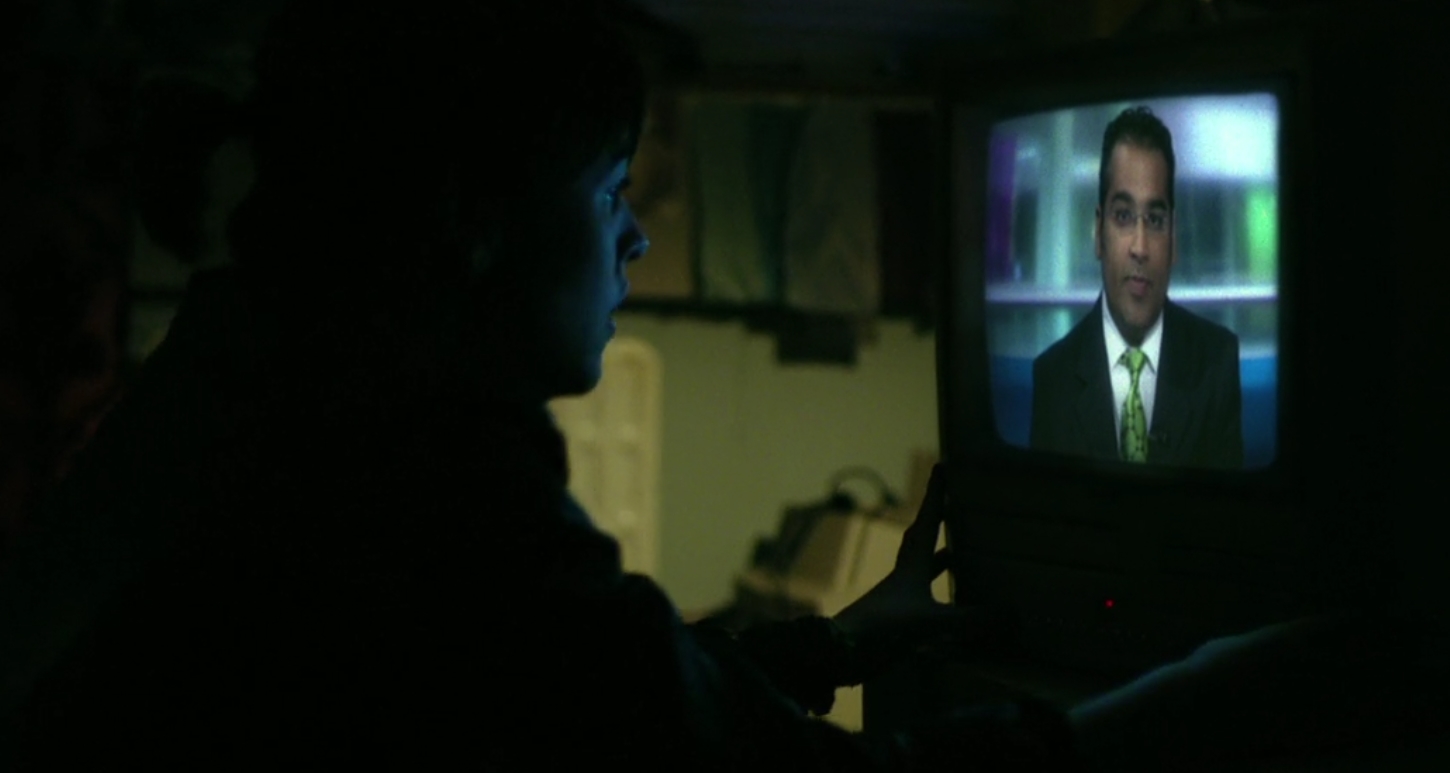
Kelly turns to the television in an attempt to find out what is happening. Captured from Dead Set episode 1 via Netflix

Sources:
Bishop, K. W. (2010). American Zombie Gothic: The Rise and Fall (and Rise) of the Walking Dead in Popular Culture. Jefferson, NC: McFarland & Company, Inc.

Brooker, C. (Producer). (2008). Dead Set. United Kingdom: Zeppotron.

~~~~~~~~~~~~~~~~~~~~~~~~~~~~~~~~~~~~~~~~~~~~~~~~~~~~~~~~~
Totally aside from the ideas above, isn’t the idea of a life-and-death battle with the dead pretty cool, less cool if the dead win I suppose
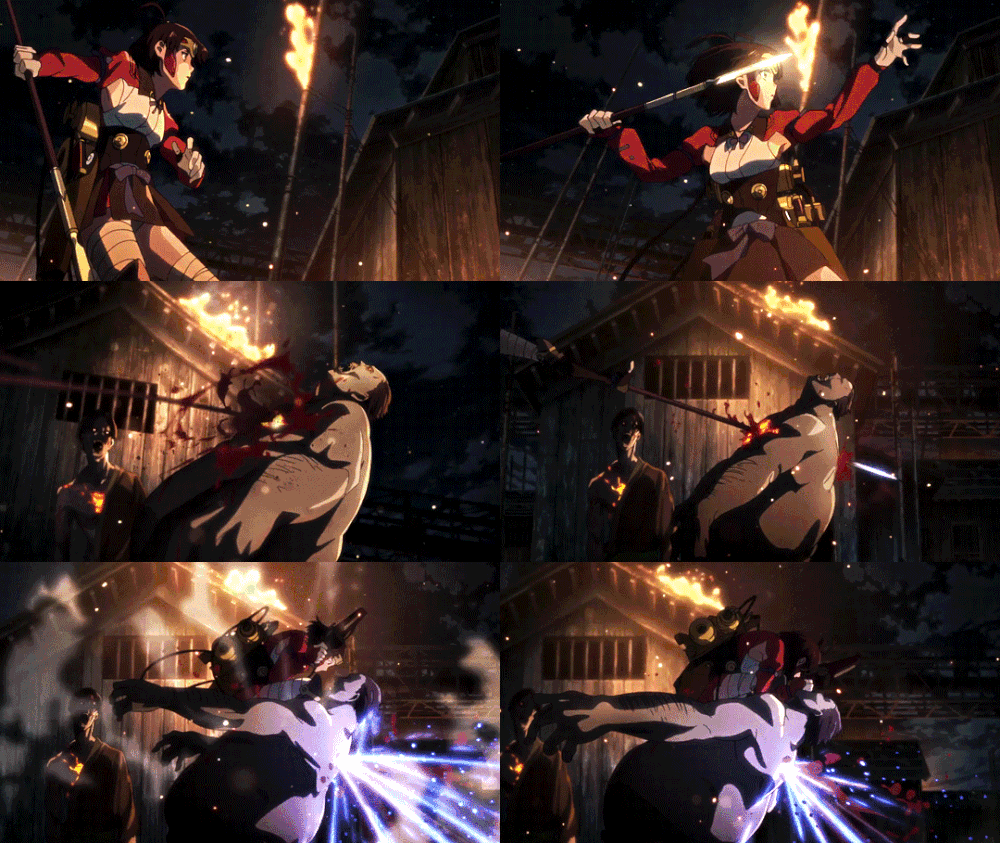
Captured from Kabaneri of the Iron Fortress Episode 2


Forgetting The Possession

Throughout A Head Full of Ghosts, I had always thought that adding “The Last Final Girl” blog chapters, which analyze the show and surrounding events directly, put more space between myself the reader and the supposed real events recanted by Merry in the book.  I was still unsure of what purpose it served within the story of A Head Full of Ghosts as a whole, other than to give us information about the Possession’s actual television episodes.  I had been wondering why Tremblay would create this alias (Karen Brissette) for Merry to write about the show, instead of just having her recall the episodes as they pertained to events that happened, drawing conclusions, comparing, and contrasting the two side-by-side, rather separating them.

Towards the end of the book, I learned of what happened to the family during the end of the show and post-production, i.e. the poisoning.  With this new information, I realized just how painful all of the memories related to the show must be.  It began to make more sense to me why Merry would create an alias to write about the show as if she had not experienced it.  It seemed to me like she was trying to convince herself that she had not lived those experiences, and I think Rachel puts it perfectly when she asks Merry how she found the “distance” (pg. 257) to write about the events of the show.  I believe that the blog was a way for her to create that distance.  In the blog “Karen,” while speaking about the dinner on the show the night of the exorcism, writes “Mmmm . . . Chinese Food. . .” as if the Merry behind those words had not recalled never being able to stand the taste of the Chinese duck sauce because of that night.

Merry writes the blog as Karen, in order to create a much-needed distance between herself and the events related to the show, in order to help her forgetfully remember the traumatic experiences.

Image from: here

Works Cited:
Tremblay, Paul. A Head Full of Ghosts: A Novel. New York, NY: William Morrow, an Imprint of HarperCollinsPublishers, 2015. Print.