In reading Ganna Yankovska and Kevin Hannam’s “Dark and Toxic Tourism in the Chernobyl Exclusion Zone,” I found myself disgusted with tourism as an oppressive, passive, and ignorant system. Throughout the article we see tour guides state how many tourists come to be “entertained” and “fascinated” by a tragic event in which people still suffer from the aftermath of radiation. I find it hard to believe that these tourists go to Chernobyl to mindfully educate themselves on a disaster that has helplessly sought support and activism. We live in a day and age where Google, databases, books, and vlogs can shed light to so much more information than what they may take away from one tour. These tourists visit Chernobyl to essentially be in their version of a virtual-reality horror story. As soon as they get back on their plane to America or Western Europe, they can take their VR goggles off at any time and go right back to their ignorant and passive existence.
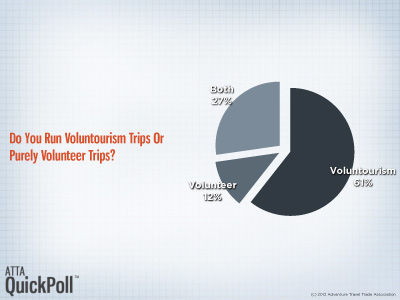
This article made me think about a similar concept commonly referred to as “voluntourism.” An article criticizing voluntourism mentions seven great criticisms to the wasteful and ineffective industry of going on “service trips” to foreign countries.
I encourage you to read all seven criticisms, but one that relates to my sentiments on the Yankovska and Hannam article is that these trips are an “egregious waste of money.” The voluntourism article gives some stats like “Two weeks on a medical trip to Tanzania can cost you $3,040, not including airfare, which is roughly $2,000. If six people go on this two week trip, that’s more than enough money to pay for a local doctor’s annual salary. Let that sink in.” Now if tourists to Chernobyl would like to genuinely help Chernobyl in its political, environmental, societal, and economic efforts, then the thousands of dollars they spend on plane tickets and tour agencies can instead be directly given to those already experienced social activists, journalists, and scientists in Chernobyl.
For my haunted media project, I chose to create a Google Drive that belongs to a Davidson College senior named Daniel Watson, also known as Dan, also known by many nicknames: Dan, Lit Dan, Dan the Man, and Danny. Daniel has a pretty flawless reputation on campus: He is an active member of a controversy-free fraternity on campus, serves on the Student Government Association, consistently does well in all of his classes, has nothing but positive things to say about everyone, comes from a wealthy family, has a high-paying banking job lined up after graduation, is popular and has a high traffic Instagram to prove it. The username/email to the account is “littyAFdan@gmail.com” and the password is “Watson2017”. For the sake of this story, Daniel’s brother knows his password and is easily able to have access to this account.
The Death of Dan the Man:
One day, on April 6th, President Quillen sends out a school-wide email to the student body informing everyone that Daniel Watson has been in a fatal car collision and was pronounced dead at noon that day, but it is inconclusive as to whether foul play was involved. The death of this charismatic and well-known student brings public outcry within the campus. Soon after the family is informed of Dan’s death, Charles (Dan’s brother) goes through Dan’s internet history to try to find out if there are any leads he can find on his own. Charles, informs the family that Dan’s internet history is very normal. Dan had checked a couple emails, watched some Netflix, was on his Google Drive throughout the day, and scrolled through his Instagram feed a handful of times. Nothing was out of the ordinary. Dan’s Google Drive consisted of a couple of class papers, a resume, class schedule, to-do list, and so on. It was not until a couple days later that Charles realized that a couple things were off in Dan’s Google Drive. There were a couple files that were illegible with gibberish like the following file “To-Do List”:
This is a screenshot of the “To-Do List” file on Dan’s Google Drive.
Charles realized that this file is encrypted. Luckily Dan left behind a hint on the document for the password to decrypt this file: “a man’s best friend.” Naturally, this hint makes Charles think of their childhood pet dog Maximus (you as the third party can know this by looking through Dan’s Instagram posts which are also conveniently on Dan’s Google Drive in the form of screenshots on a Google Slides file). If you click the “Protect File” tab at the top of this file and click “Decrypt,” type in the password “Maximus” and the gibberish will change into the following:
Screenshot
Looking at this decrypted to-do list, Charles is confused as to what Dan was delivering and who Mark is. Dan’s to-do list, its encryption, his paying someone for “supplies,” and his asking about an potential expansion all imply that there is secretive and illegal activity. Charles makes note that the tasks stopped being checked off starting from “ask Mark about expanding.” Charles is inclined to believe that Dan’s asking about “expanding” led to some trouble with Mark. Daniel’s death was not an accident by any means, rather it was a contracted killing.
Charles is thoroughly freaked out and begins to look through all of his brother’s files on his Google Drive in the hopes to find out what is behind Dan’s illegal activities and sudden death. Charles sees Dan’s schedule for the week. It is filled out with his classes for the day but there are mysterious 30-minute chunks of time that are blocked off in red with no description. By referencing the to-do list, Charles sees that the number of deliveries on the to-do list match the number of red boxes for every day. Dan was pronounced dead at noon, but according to this schedule there was a red box at 11:30. Maybe this was Dan’s meeting with Mark and Mark felt threatened by Dan’s savvy entrepreneur mind. Maybe Mark took care of it. The puzzle pieces were starting to fit.
There was one last document that Charles did not open which was titled “Look Here.” When he opened the document it was encrypted, too:
Screenshot
The hint this time was “best place on Earth.” Charles took a little longer to find this out, he tried “home” or his home city “NYC” or even “Davidson College,” but then he recalled all the times Dan talked so fondly of the family beach house in Hawaii, and surely “Honolulu” works to decrypt this final document. (In Dan’s Instagram, there is a post that has Honolulu as a geotag).
Screenshot
Charles must now decide whether to delete Dan’s Google Drive or to submit this information to the police with the hopes to investigate and prosecute Dan’s murderer to receive justice for his brother’s death.
Theoretical Analysis:
In making this haunted Google Drive, I raise a couple of questions regarding death in the digital age. First, should Charles comply to Dan’s last requests? Second, to what extent does the information on this drive belong to the purview of the public versus the private?
The letter encrypted in “Look Here” is, in an essence, Dan’s digital will. Though it is by no means a typical digital will, it is his one last request upon his death. Ending this story without resolution was an intentional decision because it leaves it up my audience to put themselves in Charles’ shoes and think about what they would have decided on amid unclear moral lines. This cliff hanger also makes it uncertain as to what will follow: closure for the Watson family, or the beginning of a complicated pain. In one of our class readings it explicates that “one of the defining features of postmodernism is the blurring of boundaries” (Pinedo 17). Gitlin, a postmodern and political science scholar, expands this definition by describing the postmodern era as a time where moral clarities are blurred (353). For Charles, the information on this drive leads to much confusion, inner turmoil, and a blurring of what is right and wrong. If Charles fulfills Dan’s wishes, he must come to terms with not fully knowing the story behind his brother’s murder. If he turns in this information into the police to for further investigation, then not only would Dan’s death become a scandal but his life’s flawless image and family’s great reputation would become tainted too.
This project taps into another debate brought up in one our class readings, in which we discussed the case of Mario Costeja Gonzalez and how he was protected by the “right to be forgotten” (Senemar). The article explains how “the data that ‘represents’ you on the internet, for the most part, does not belong to you. In fact, it often isn’t even created by you — it’s generated passively, an idle consequence of your living in a world in which all ‘things’ can be connected by the internet. So who really owns ‘your’ data?” (Senemar). Even if Charles decided to share the context of this Google Drive with the police, we must ask if this is fair and to whom. Does he still not have the right to be forgotten even though he is dead? The Watson family may feel that they have the right to know what happened to Daniel. However, if these rights are at odds with one another, which party deserves to be appeased?
Artist Struggles
I had a lot of fun creating this project, but it did not come without extra research and experimenting to figure how to make certain components of the Google Drive work or look aesthetically pleasing/appropriate for the storyline. For this project, I originally started with the idea of a simply email account that show email exchanges between Daniel and his close friends while he was still living. Once I made the account however, I realized that a Google Drive could encompass more platforms of sharing digital information (such as a using a slideshow for social media screenshots, class schedule, documents, unique passwords, etc.). When I questioned how to make it more haunted I thought about making the drive like an escape the room type of game, where one has to use the information they have access to to use as clues or codes to get to the next stage. I Googled how to password protect individual Google files and the only encrypt-able type of file on Google Drive was a Google sheet. I got the template and instructions from here. For this template to work I had to keep certain text in certain boxes, however this text was not relevant to the storyline, so I worked around this by making the text color the same as the cell’s background color to make it essentially invisible.
Regarding the Instagram screenshots, I got the template from here which allowed me to customize a profile picture, the number of likes, the geotags, and the captions. I wanted these images to look as real as possible so I made sure to make the handles and hashtags in the same blue font that Instagram uses for these specific linked words.
There are a couple of files that were not relevant to Dan’s death but were added for the aesthetic of being a college student. These files are not my own work. I copy and pasted from Wikipedia and resume samples online which are linked here: ENG 350, ECO 101, Resume.
Works Cited
Gitlin, Todd. “Postmodernism: Roots and Politics.” Cultural Politics in Contemporary America. Ed. Ian Angus and Sut Jhally. New York: Routledge, 1989. 347-60.
Pinedo, Isabel Cristina. Recreational Terror: Women and the Pleasures of Horror Film Viewing. Albany, N.Y.: State University of New York Press, 1997.
Senemar, Alex. “What Happens To Your Data When You Die?.” A Medium Corporation. 27 Jul. 2015. Web.
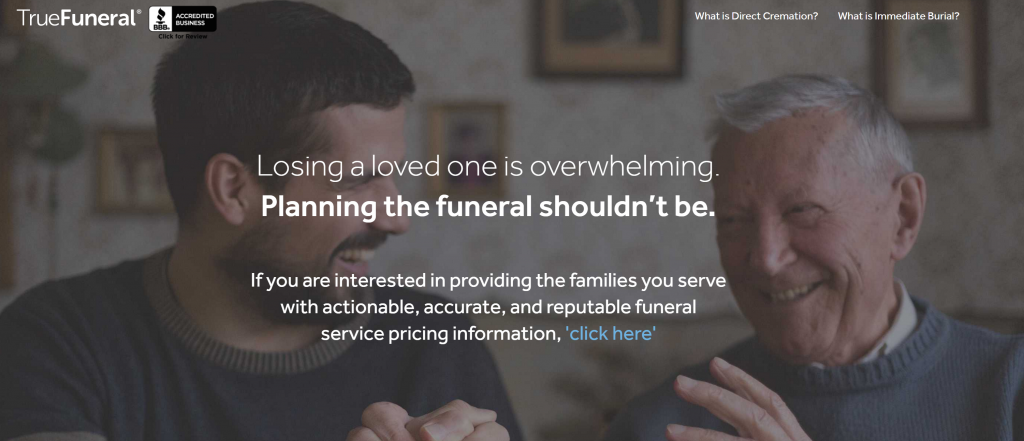
In the midst of stressful job applications, one of my apartment-mates told me about an interesting startup that she had applied for called TrueFuneral. Basically, their whole mission is to provide “online platform that empowers families with accurate and actionable funeral service pricing information” (quoted from their LinkedIn page). A couple things about this startup company strikes me as interesting with respect to our class discussion and readings. I checked out their TrueFuneral’s website, which was very straight-forward, clean, and simplistic in design. The first image that is spread across the home page is a young man and an old grandfather seeming to be in mid-laughter during a conversation. The words spread over their faces in large font size but non-aggressive font are “Losing a loved one is overwhelming. Planning the funeral shouldn’t be.” I immediately notice how this website and this company make the topic of death as “happy” and life-like as possible. No one is mourning, natural-like lighting is used for the photograph, people are laughing and living, there isn’t a funeral, coffin, ern, or any implication of a recent death in sight.
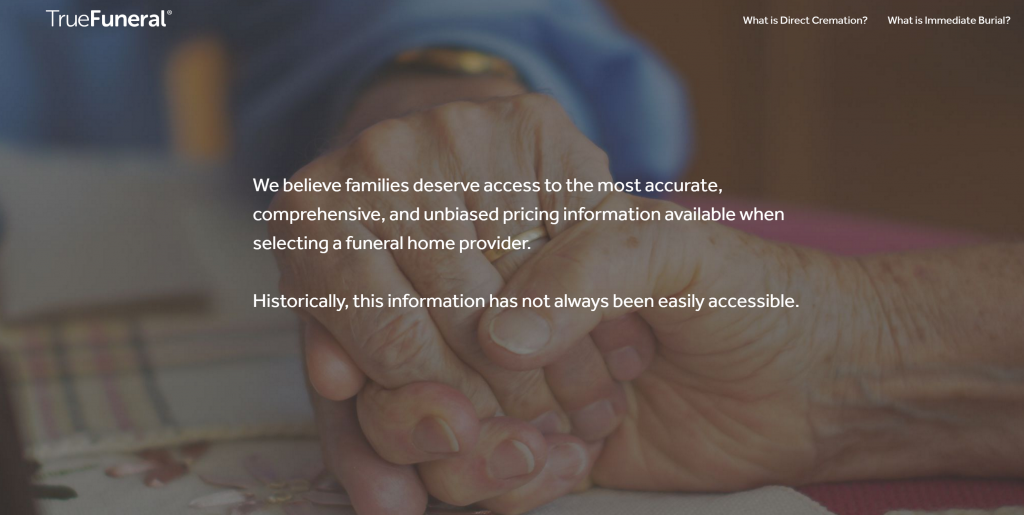
If you click the “About Us” link, more general information about the company shows up with similar photos. Mainly young people or families apparently dealing with a recent loss of their loved one. The only picture that displays old people is a zoomed in photo of a couple holding hands, but the frame of the image contains only their hands that are holding. Knowing that TrueFuneral is a company trying is profiting off of individuals and families grieving the loss of a loved one, whether there is mal-intent or not, this makes me feel a little conflicted. This company seems to do a good job of showing the best prices and options available for funeral services (or at least their website is doing a good job of convincing me of this). However, the fact that this company seems fixated on making its branding as far from death as possible makes me think about who is behind the scenes saying something along the lines of “Hmm… If we use this picture, will it attract more people to use our services over others and subsequently bring in more money for us?” This website made me think about the Australian memorial page that we looked at in class, and how the memorial pages that got the most “likes” were of those who were the least likely to have been associated with death (a natural one at least). I think it is also important to mention that my apartment-mate said that the company is going through a name change! Instead of TrueFuneral, the company will soon be called TrueSolace! So even the name of the company shifted its attention from the dead to the mourning. I guess it makes sense, this company can’t profit off of the dead!
screenshot from the “About Us” page on TrueFuneral
Though in class we discussed and read in class on whether there is a place for us to police grieving, I think in this case my policing of this company is different from that of our class’ criticisms on the Australian memorial page. The pages on the Australian website were made by those who were mourning. The TrueFuneral website, however, is made by a company trying to target those who are grieving.
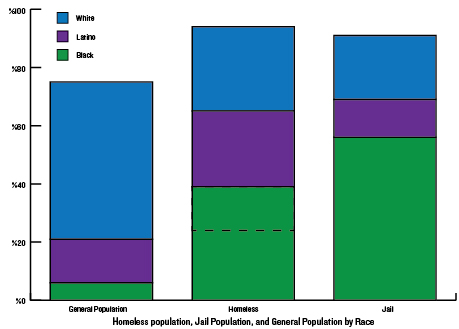
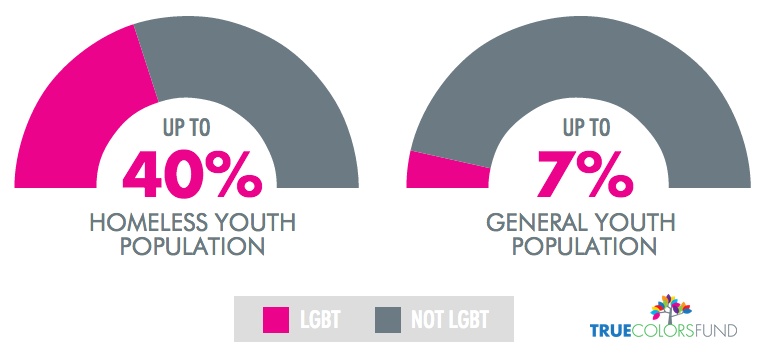
Manu Saadia brings up critical points on societal and economic implications in his article “If death becomes optional, will only the rich get to live forever?” I cannot help but to think Saadia is right in inferring that the rich will have a monopoly, or at least much more access, on life extension technology. As Saadia pointed out, poorer people on average die younger than rich people. Additionally, data shows that there are disproportionate rates of queer youth and people of color who are poor and homeless. I cannot help but wonder how access to life extension that is limited to the wealthy will further perpetuate systemic and institutional oppression. Will life-extending advancements just be another way to maintain and gain power over others?
Saadia uses a quote from Steve Jobs to convey his opinion on the topic “death is very likely the best invention of life. It’s life’s change agent. It clears out the old to make way for the new.” I also agree; because the world and society is constantly changing (now more quickly than ever due to advancements in technology). I feel as though the youth will be in touch the most with what social injustices exist and how to fix them. For example, many of us have that well-intended uncle or bigoted grandmother who does not understand the gravity of police brutality on Black lives. Even our parents are out of touch from “hip” lingo and social media platforms. If people who are currently in power live forever (or for a very long time), they may push for initiatives and beliefs that are outdated, irrelevant, and/or harmful to those less privileged.
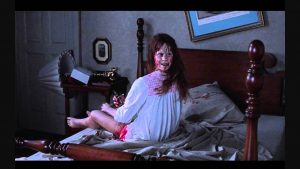
A common trope in the genre of horror is that the monster or the object of possession and perversion is often female. For example, the 1973 post-modern horror film, The Exorcist, centers a prepubescent young girl being possessed by a demon. The audience witnesses her turn from innocent and loving, to tortured and pained, to evil and destructive. An additional and more recent example of an overcome female is in a recent horror podcast series The Bright Sessions. This fictional series consists of episodes that are a therapist’s secret recordings of her “strange and unusual” patient sessions. The patient of the first episode is a 25-year-old woman who gradually reveals during her first session that she can time travel. These two works both portray a girl or woman as a crazed and these characters embody a cultural imaginary of people no longer being bound by what is normal or human. It is through comparing these two works that I argue that The Exorcist and episode one of The Bright Sessions tap into a deeper cultural anxiety—that if an individual were granted with capabilities that exceeded human limits, then he or she would live a life of pain, destruction, and loneliness.
A frame of possessed Regan in The Exorcist. Source: Blum House.
The Exorcist
The film The Exorcist was an extremely popular horror film during its time. It led to major box office success followed by multiple imitation films throughout the decades (The Devil Within Her, Abby, Cathy’s Curse, Lisa and The Devil, To the Devil—A Daughter, Audrey Rose, and The Sexorcist). Creed graphically summarizes in her psychoanalysis of The Exorcist the horrid actions of the main character. “Regan, the young female protagonist… is a truly monstrous figure. She spews green bile, utters foul obscenities, tries to fuck her mother, causes inanimate objects to fly, rotates her head full circle on her neck, knocks men to the floor with one punch, tries to castrate a priest, murders two men, and in her spare time masturbates with a crucifix” (Creed 31). One common trope in horror films and a central one to this plot is the perversion of what is good an innocent. The film initially introduces the audience to a prepubescent “pure” girl who has a loving relationship with her mother. However, as the demonic possession progresses both Regan’s purity and warm maternal relationship dilapidate. She begins to levitate, make furniture fly across the room, and her skin corrodes and mutates to look undead. Possessed Regan looks and has obtained abilities that are beyond human. To extend what Creed argues, the possession not only contorts Regan to be socially improper, sexually impure, and unstoppably violent, but this perversion also excuses her actions and is “perversely appealing” (31). Particularly within post-modern thought, society questions and blurs the lines of authority, religion, and truth. When Regan becomes possessed, she simultaneously challenges religion, parental control, and sexual repression. The obeying of authority and the policing of sexuality are two major social norms on which the demon pushes back. In this vein, the film serves as an outlet through which the audience can liberated from societal repressions. It is important to note, however, that this liberation comes at the cost of the well-being Regan and she harms those that love and want to help her along the way.
Thumbnail of The Bright Sessions podcast. Source: SoundCloud.
The Bright Sessions
The Bright Sessions, is a relatively new podcast (episode 1 was released in 2015) which has received popularity and high acclaim within the horror podcast genre. To summarize the premise of the series, the therapist Dr. Bright has placed an ad in the paper offering “therapy for the strange and unusual.” Dr. Bright secretly records her sessions for research and each episode in the series is the recording of one patient’s session. As a disclaimer, I will be analyzing and comparing The Exorcist to only the first episode of this podcast series for this is a scope I can appropriately and responsibly cover. Episode 1 walks its listeners through the first session of a patient named Samantha Barnes (or Sam). Sam came to see Dr. Bright after seeing the ad in the paper and Sam discloses that she came with the understanding that she sees herself as “strange and unusual.” Throughout the episode, the listener learns that Sam can time travel. The unexpected part of the session is not her superhuman ability though. The surprise is that she does not reveal her secret with fascination or wonder, but more accurately, Sam—similar to how one would confess to a Catholic priest—confesses her time-traveling ability to Dr. Bright with guilt and pain. Sam up until this point has pent up her frustration and paranoia of her secret ability over which she has no control. The mere act of time traveling is out of Sam’s control and it brings her much bodily pain. Throughout Sam’s session she vents about how time traveling “sucks” and how she was “scared” when it first happened to her. She describes her experience time traveling in the following lines:
Sam: They can never see me, I’m just there. It’s like being stuck inside someone’s memory or something. I can move around but I can’t talk. I’m basically a ghost. Or a reverse ghost. Not dead or visible. Or not even born yet, I guess. Ugh, I don’t know.
Dr. Bright: That… that must be difficult.
Sam: It’s horrible.
In Sam’s line “it’s horrible,” listeners can hear the pain in Sam’s voice. This moment in the podcasts merits more analysis into the podcast as a medium and how it effectively contributes to the empathy listeners feel. Understanding podcasts as a medium is particularly important to understanding how listeners feel Sam’s pain. Merely looking at these few transcribed lines and reading Sam’s pain and frustration on a page is one thing, but podcasts offer more intimacy and relatability than other digital media. Podcasts are absorbed only through hearing. Various scholars analyze the intimacy of radio and podcasts: Crisell notes that much like radio channels, podcasts are a “blind medium” through which listeners “cannot see its messages, they consist only of noise and silence” and they must imagine the scenery in their own minds (15); “voice is an intimate key to audiences’ hearts…” and “podcasts with headphones further emphasizes the individual’s experience of listening to a conversation with a friend” (Lindgren 27). Throughout this episode, listeners do not just passively listen to Sam’s story, but in a way, listeners recreate it in their imaginations and empathize with it. Sam’s deep exhale after confessing her strange and unusual ability, or the tightness in her throat when she talks about her bodily pain, or the acceleration in her speech as she laments her loneliness and frustrations—all of these extra-textual components cue listeners to internalize and feel Sam’s resentment and despair instead of merely read it on a page or see it on a television screen. Though Sam has a super capability that, in most fictional worlds, would seem “cool” and heroic, listeners realize that Sam’s reality could not be more opposite. Sam has been living in hiding with no family or friends and her secret is more of a curse than it is a blessing. The ability has brought Sam physical pain, emotional turmoil, and deprived human connections.
The Bigger Picture
Now what do these two works, published on completely different digital mediums, have to do with each other? As I have laid out, there are many thematic similarities between the two: the possession of a young girl/woman, the confessing and seeking of help from a higher authority (whether that be a pastor or a professional therapist), and uncontrollable extraterrestrial capabilities being assaulted onto a human being. However, these texts relate in a way that is a microcosm of a deeper cultural anxiety. Humankind evolves and adapts to survive and progress in a world where its existence—no matter the advancement of technology—will ultimately come to an end. Regan’s being possessed by a demon and Sam’s having the uncontrollable ability to time travel tap into the human fantasy of obtaining unimaginable and unlimited abilities. The heartbreak of these two works lie in man’s wish to be infinite. Regan and Sam embody the tragic, and arguably more realistic, repercussions of coming across a remedy to finite and insignificant existence. These two character show its audiences that obtaining these abilities would hurt them and hurt their loved ones rather than offer an abundant and beautiful life. Ultimately both Regan and Sam lead a life of heartbreak and loneliness.
In The Exorcist, Regan originally symbolizes innocence, love, and youth and then becomes the very opposite of what the audience treasures: destructive, perverse, and squeamishly abject. The Bright Sessions observes a girl who experiences immense pain from a supernatural ability for which she never asked. These two works speak to the collective horror story of what it could potentially be like for man to obtain a remedy to the universal fear of death and insignificance. Instead of superhuman power offering a life of catharsis and relief, it would only bring about pain, loneliness, and destruction.
Works Cited
Creed, Barbara. The monstrous-feminine: Film, feminism, psychoanalysis. Psychology Press, 1993.
When reading Natalie Zarreli’s “Dial-a-Ghost on Thomas Edison’s Least Successful Invention: The Spirit Phone” I was particularly intrigued by how “for Edison [speaking to the dead] was a matter of strict science” (Zarreli). She goes on to explain that Edison theorized that “like our bodies, our personalities have a physical form, made of tiny ‘entities’ similar to our current view of atoms. He thought these entities might exist after humans passed away—a personality-based residue of loose memories and thoughts, containing part of who a person was during life” (Zarreli). Our personalities are “indestructible” and in a way, this follows the law of conservation of mass. Our personalities—per Edison’s theorizing—cannot be created nor destroyed, only rearranged and transformed.
A diagram of how solar panels work. Source: Simmons, Tucker. “Alternative Energy.” Auburn University. 5 Jan. 2017.
This scientific approach was surprisingly convincing to me. Through the advancements of science, we have so much understanding of energy and its transformations. For example, through solar panels we take energy from the sun, convert solar energy to electricity, this powers our outlets, which powers our lamps, these lamps give off heat that we absorb, so on and so on… The energy is never created or destroyed, just transferred. By no credentials am I a scientist, but with this logic, I feel oddly convinced by Edison in that our personalities should still exist after our time, but just in another form. After reading Zarreli’s article, I not only feel as though spirits after death exist, but that there must in fact be a way to contact these spirits through technology. I doubt this spirit communication device looks similar to Edison’s original spirit phone, but maybe through more time, funding, and energy to this field we will be able to find out in our lifetime.