
Yankovska and Hannam’s “Dark and Toxic Tourism in the Chernobyl Exclusion Zone” prompted me to attempt to recall other examples of dark tourism in the world … and I struggled – so I Googled. What I found was that “dark tourism,” which has made its name known more recently as socially unaware tourists choose to post macabre selfies from sites of death and tragedy on social media, has been around for a long time. Mark Twain wrote of Pompeii in Innocents Abroad, the Taj Mahal is a tomb on just about everyone’s travel bucket list, and tourists flock to bloody sites such as Gettysburg battlefields and Holocaust concentration camps.
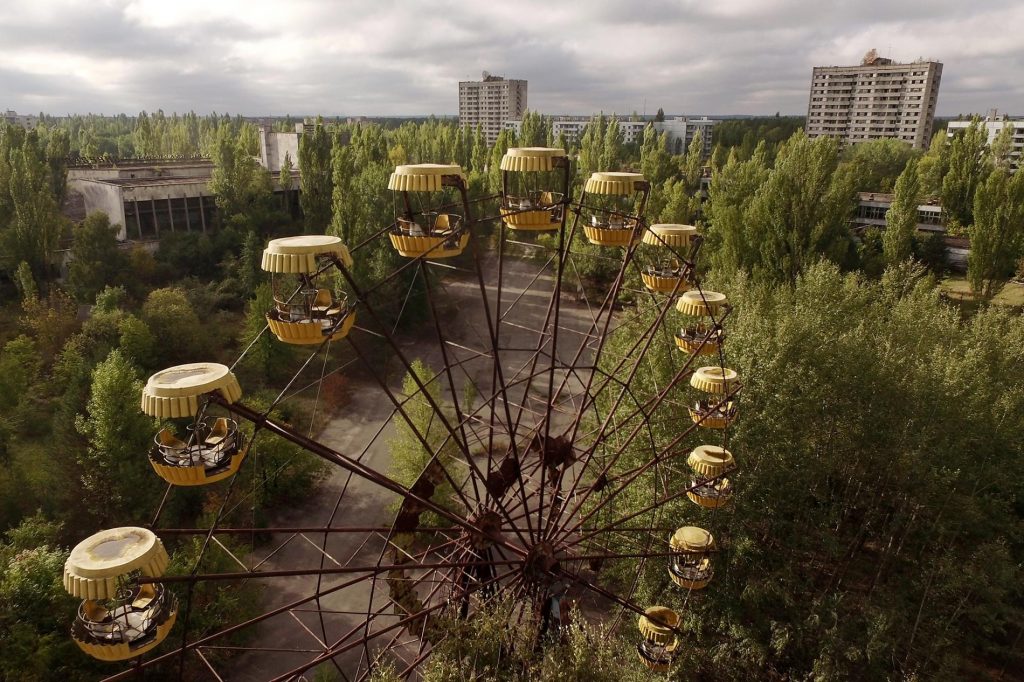
In “Is ‘Dark Tourism’ OK?” Robert Reid argues that while dark tourism is certainly nothing new, the way in which it is represented and marketed definitely is. Reid maintains that what makes or breaks the acceptability of a dark tourism site is the intention behind the place. The commodification of death and tragedy might leave a bad taste in our mouths, but I think it comes down to why the sites are marketed as tourist destinations in the first place. Sites such as Auschwitz, for instance, are places of historical significance and can serve as a space for healing and recognition of the gravity of events that took place there.
So my question is: where do we draw the line? Visitor centers? Cafés? Gift shops? At what point does the commodification and touristic tendencies of these sites taint the experience of the grave atmosphere of such places?